
Water Softener Care for Seasonal Homes and Cabins

A water softener in a seasonal home needs a closing routine and an opening routine, not just a bypass handle turned off. While the house is empty, the resin bed sits in still water where bacteria can grow, and the salt in the brine tank can fuse into a bridge. Regenerate and bypass the softener when you leave. When you return, break any salt bridge, sanitize, regenerate and test.
None of this is complicated, but the order matters, and most owner's manuals cover it in a single line about the bypass valve. This guide covers both failure modes and gives each routine step by step. It also covers low-use permanent households, which face the same stagnation problem without ever leaving.
The Two Ways a Softener Fails When It Sits Idle
A softener in a full-time home has water moving through it every day and regenerates every few days. That routine keeps it healthy without anyone noticing. Take it away and two things start to happen.
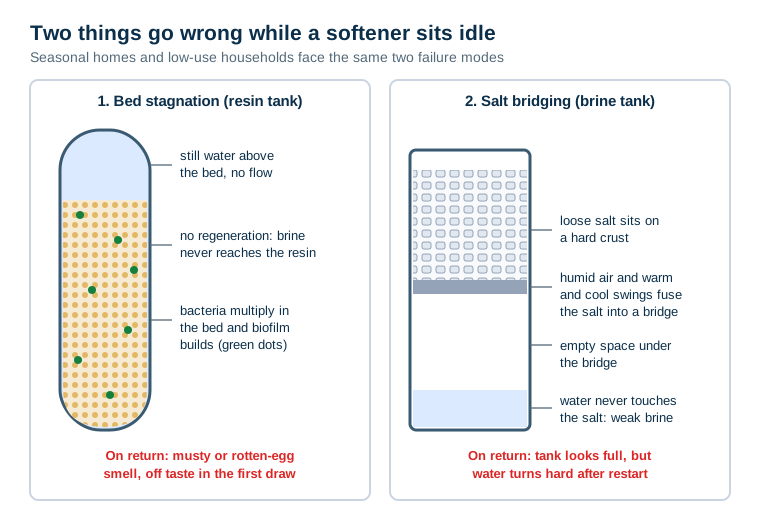
Bed stagnation in the resin tank
A resin bed is a large surface area of plastic beads sitting in water. With water flowing and regular brine washes, bacteria have little chance to settle in. With the water standing still for weeks, they do.
This is not guesswork. DuPont, one of the largest resin makers, says in its technical note on preventing biological growth on ion exchange resins that "most biological growth problems are caused by inactivity of the resin during extended storage in the vessel or under pH neutral conditions, such as water softeners." Its fix for industrial systems that must sit idle is to fill the vessel with concentrated salt solution, which is "biostatic," meaning it stops growth.
What that means for a cabin:
- Warm rooms are worse. A softener in a heated but empty house sits at room temperature for months.
- Well water has no disinfectant in it. City water carries a chlorine residual, although it fades in water that stands still. A private well has none to start with.
- You usually smell it first. A musty, earthy or rotten-egg smell in the first water drawn after opening, sometimes with slime in the brine tank.
Bridging in the brine tank
A brine tank left with a lot of salt in it, in a humid or unheated space, often hardens. Moisture from the brine below and swings between warm and cool days dissolve and recrystallize the surface layer until it forms a hard crust. Sometimes that crust spans the tank with an empty space underneath.
The tank looks full. The water below never touches the salt, so when the softener restarts it draws weak brine, the resin only partly regenerates, and hard water arrives within days. Water softener salt bridge covers how to find and break one.
Water Softener in a Seasonal Home: Heated or Not, Water On or Off?
The right closing routine depends on two questions. Will the house be heated? And will the main water supply be left on?
| Your situation | What to do with the softener |
|---|---|
| Heated, main left on, someone checks the house regularly | Can stay in service with a day override set, so it keeps regenerating on schedule. Each brine wash cleans the bed |
| Heated, main shut off | Bypass it. Use the closing and opening routines below |
| Unheated, any chance of freezing | Bypass, drain and winterize. Freezing is the bigger risk |
| Rented out between your own visits | Leave in service. Regular guests keep water moving. Check salt between bookings |
Why leaving it running only works with the water on. A softener cannot regenerate without supply pressure. If the main is off and a scheduled regeneration starts, the valve steps through its cycle dry. Most owners of empty houses shut the main, and they should, because a burst pipe in an empty house runs for weeks. In that case the softener goes in bypass.
If the house is unheated, everything below still applies, but draining the unit comes first. How to winterize a water softener covers draining the valve and bypass passages that a simple gravity drain leaves full.
Water Softener Seasonal Home Closing Routine
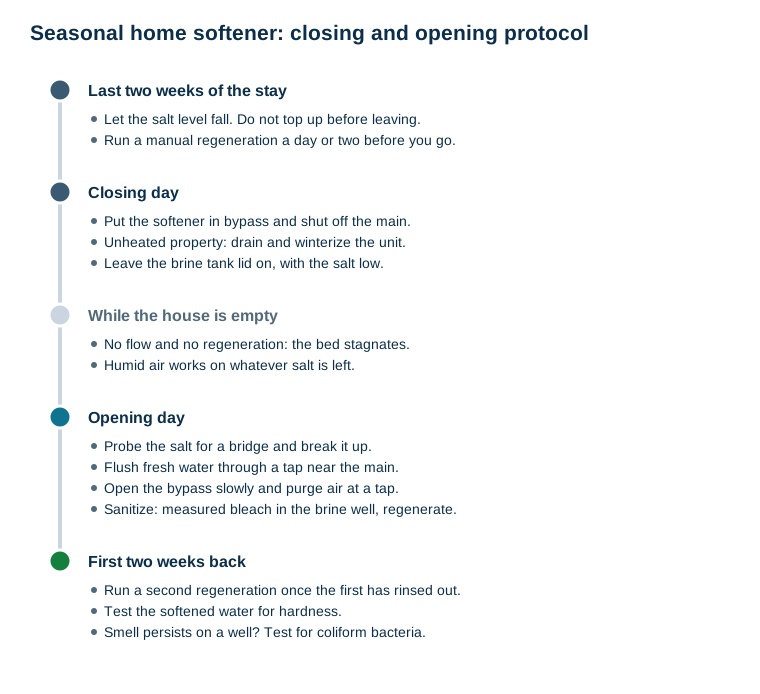
In the last two weeks of the stay:
- Let the salt level fall. Stop topping up the brine tank. The less salt that sits in the tank all season, the less there is to bridge or mush, and the easier it is to clean out if it does.
- Regenerate a day or two before you leave. This leaves the resin fully charged and freshly rinsed, and it sends a last dose of brine through the bed. Most controls have a manual regeneration button. Let the whole cycle finish.
On closing day:
- Put the softener in bypass. On a single-handle bypass, move it to bypass. On a three-valve bypass, close the inlet and outlet valves and open the bypass valve.
- Shut off the main and open a tap to relieve the pressure.
- Deal with the power. Unplugging is fine for most units, but the clock will need resetting when you return. Some controls keep their settings for days or weeks without power, and a few lose them. Write down the settings before you leave either way.
- If the house will be unheated, drain and winterize now. Do not skip this because the brine tank "won't freeze." The valve, bypass and resin tank will.
- Close the brine tank lid and leave it on. It keeps out dust, insects and mice.
- Leave a note on the valve: "Bypassed [date]. Sanitize and regenerate before use."
The Opening Routine: Restart and Sanitize
On opening day, restart the softener in this order:
- Look into the brine tank first. Probe the salt with a broom handle. If it stops on a hard layer above the water, break the crust up. If the bottom has turned to mush, scoop it out.
- Flush fresh water through the house before it reaches the softener. With the softener still in bypass, turn on the main and run a cold tap near the main for several minutes. On a well this also clears water that has stood in the pressure tank and pipes all season.
- Return the softener to service slowly. Move the bypass partway, let the tank fill and hiss, then fully open it. Open a cold tap to purge the air.
- Plug in the control, set the clock and check the settings against the note you left.
- Add salt. Only a few bags for now. You can top up after the first regeneration.
- Sanitize and regenerate. Pour a measured dose of plain, unscented bleach into the brine well and start a manual regeneration. The brine draw carries it through the bed, and the rinses flush it to drain. The dose is small, about 1.2 fluid ounces of 5.25% bleach per cubic foot of resin in Fleck's and Hellenbrand's manuals. More bleach damages resin. How to sanitize a water softener has the full dosing table and the chlorine check that tells you when the water is back to normal.
- Run a second regeneration a day or two later, after the first has completed and rinsed, so the bed is fully restored.
- Test the softened water for hardness, then check again a week later. A reading that creeps up points to a salt bridge you missed or weak brine.
Is the sanitize really needed? Culligan's Gold Series owner's guide lists an inspection of the entire system "after infrequent use (idle for one week or more)" and says that on private supplies, musty or rotten-egg odors "may indicate a need for the system to be sanitized." A seasonal home is idle far longer than a week. Sanitizing at each opening costs a few ounces of bleach and one regeneration, which is far less than chasing an odor later.
On a well, the softener is not the whole story. If the smell is in the raw water too, before the softener, the source is the well or the water heater, and sanitizing the softener will not fix it. If the smell persists after sanitizing, or anyone is drinking the water, test for coliform bacteria with a certified lab before relying on it.
Low-Use Permanent Households: The Same Problem Without Leaving
A single retiree, a couple who travel often, or a large softener in a small household can all run into stagnation without the house ever being closed. The cause is the same: too long between regenerations.
A metered softener regenerates when it has treated a set number of gallons. In a low-use home, that can take weeks.
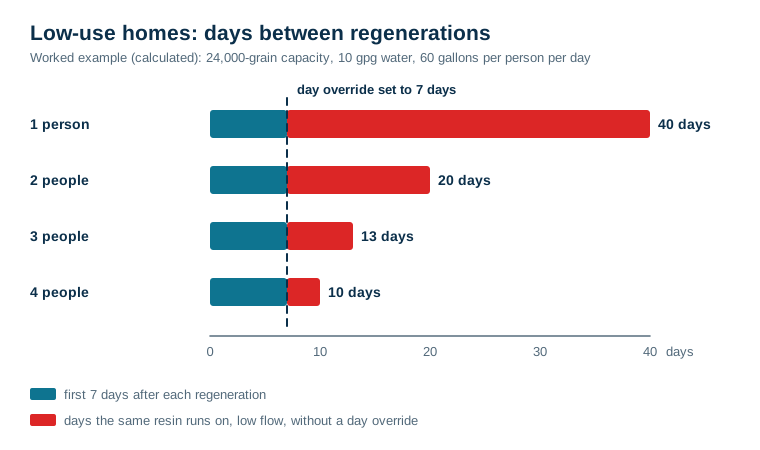
Worked example: a 24,000-grain softener on 10 gpg water can treat about 2,400 gallons between regenerations. At 60 gallons per person per day, that is 40 days for one person, 20 for two. The reserve setting shortens this slightly.
Water still flows through the bed every day, so it is not as bad as a closed house. But the resin goes weeks without a brine wash, and the brine tank sits with a full load of salt in humid air. Low-use homes are where odor complaints and salt bridges show up most often.
The fix is the day override, a setting on most metered controls that forces a regeneration after a set number of days, whatever the meter says. The Fleck 5600SXT service manual describes it as "the maximum number of days between regeneration cycles": "A metered system will regenerate regardless of usage if the days since last regeneration cycle equal the day override setting." Clack and most other valves have the same feature under a similar name.
How to set it for a low-use home:
- Set the day override to about 7 days. That keeps the gap between brine washes to about a week, which matches the idle period after which Culligan schedules an inspection.
- Lower the salt dose per regeneration. A one-person home on 10 gpg uses only about 4,200 grains of capacity a week. Regenerating the full bed with a large salt dose every week wastes salt. Most valves let you reduce the salt dose, and some reduce the brine fill automatically when less capacity was used.
- Keep the brine tank only partly full. A third to half full is plenty when salt use is low. Less salt sitting in the tank means less to bridge.
- Check the smell once a month. Run the kitchen cold tap for a few seconds each morning. An odor is the first sign that the interval is too long.
When the softener is replaced, size the new one for the household that lives there now, not the family that used to. A softener with far more capacity than the household uses is the root cause of long gaps between regenerations.
What You Find on Opening Day, and What It Means
| What you find | Likely cause | What to do |
|---|---|---|
| Musty or rotten-egg smell in softened water only | Bacteria in the resin bed or brine tank | Clean the brine tank, sanitize, regenerate twice |
| Smell in unsoftened water too | Well, pressure tank or water heater | Treat the source. The softener is not the cause |
| Hard water within a week of restart | Salt bridge, weak brine, or settings lost | Probe the salt, check the settings, regenerate |
| Salty taste after restart | Rinse cut short or brine tank overfilled | Let a full regeneration finish, then flush a cold tap |
| Blank or flashing display | Power loss, lost clock or settings | Reset the time and reprogram from your notes |
| Water around the base or at the valve | Seals dried out, or freeze damage | Put it back in bypass and inspect before continuing |
What These Routines Cannot Fix
- They do not replace winterizing. In an unheated house, draining comes first. Bacteria are a smaller risk than a cracked valve.
- They cannot clean a contaminated well. Sanitizing the softener treats the softener. A well with bacteria needs its own treatment and a lab test.
- They will not save resin that is already damaged. Resin that has dried out and cracked, or has been damaged by too much bleach, needs replacing.
- They do not make an oversized softener suit a small household. A day override and a smaller salt dose help. The right-sized unit is the lasting fix.
For shorter absences, a week away or a month, the routine is lighter. Water softener vacation mode covers which steps you can skip for each length of trip.
Frequently Asked Questions
What do you do with a water softener in a seasonal home?
Before you leave, regenerate it, put it in bypass and shut off the water. If the house will be unheated, drain and winterize it as well. When you come back, break up any salt bridge, return the softener to service slowly, sanitize it with a measured dose of bleach in the brine well, and regenerate. Then test the softened water for hardness.
Can bacteria grow in a water softener that is not used?
Yes. DuPont, a major resin manufacturer, states that most biological growth problems on ion exchange resin are caused by inactivity during extended storage, and names water softeners as an example. Still, room-temperature water in a resin bed with nothing flowing gives bacteria time to multiply. The usual sign is a musty or rotten-egg smell in the first water drawn after the property reopens.
Should I turn off my water softener when I leave for the season?
If you are shutting off the main water supply, yes: put it in bypass. A softener cannot regenerate without water, and a regeneration that starts with the main off can leave the valve in an odd position. If the house stays heated and the water stays on, leaving it in service with a day override can keep the bed cycling, but only if someone checks on the house.
Why is my water softener salt hard as a rock after winter?
That is a salt bridge or a solid salt mass. Months of humid air and temperature changes fuse the top layer of salt into a crust, sometimes over an empty space. Probe it with a broom handle and break it up before you restart, or the softener will make weak brine and deliver hard water.
Do I need to sanitize my water softener after it sits unused?
After months idle, yes, it is a sensible part of restarting. Culligan's owner's guide schedules a system inspection after the unit has been idle for a week or more and says musty or rotten-egg odors may mean it needs sanitizing. For a seasonal home, sanitizing at each opening is cheap insurance: a measured dose of bleach in the brine well followed by a regeneration.
How often should a water softener regenerate if it is barely used?
Set the day override so it regenerates at least every week or so even if the meter has not called for it. A metered softener in a one- or two-person home can otherwise go three to six weeks between regenerations. Pair the shorter interval with a lower salt dose so each regeneration only restores what the household actually uses.
