
Why a Water Softener Drain Needs an Air Gap
A water softener drain air gap is open air between the end of the drain tube and the flood rim of whatever it drains into. It is required because, without it, a backed-up drain plus a drop in water pressure can pull waste water back through the softener and into your household supply. Manufacturers call for twice the line diameter, at least 1 inch.
Below is the scenario that makes that happen, the gap you actually need for your line size, and the terminations that pass or fail.
The Backflow Scenario, Step by Step
Backflow through a softener drain is not a theory. It is a short chain of ordinary events, each of which happens in real houses.
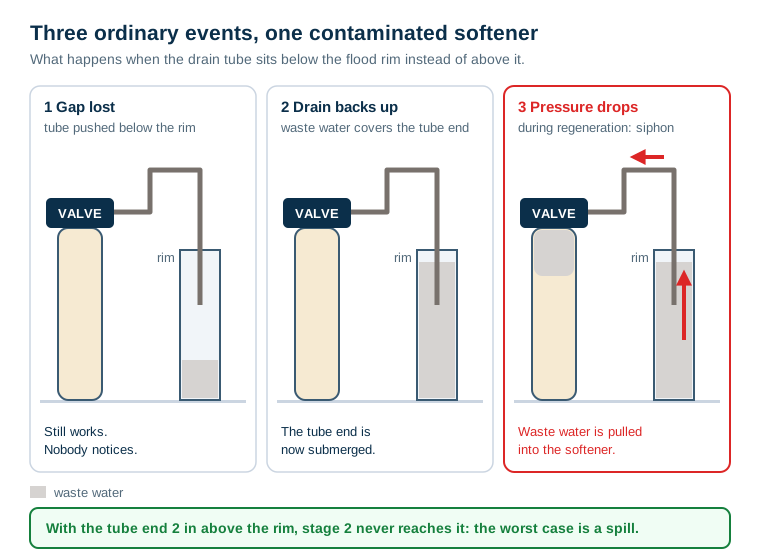
Stage 1: the gap is lost. Someone pushes the tube down inside the standpipe to stop it splashing, or tapes it into the opening. Everything still works, so nobody notices.
Stage 2: the drain backs up. The house drain slows down, or a washing machine empties into the same standpipe. Waste water rises in the standpipe and covers the end of the softener tube.
Stage 3: pressure drops while the softener is regenerating. A water main breaks, the fire department opens a hydrant, the well pump loses power, or someone opens a low faucet while the supply is off. During regeneration the control valve deliberately connects the resin tank to the drain line. With pressure falling in the house, the drain tube becomes a straw. Water-Right's manual describes exactly this: "A negative pressure in the building combined with the unit being in regeneration could cause a siphoning to the building" (Water-Right Impression manual).
Waste water then flows up the tube, through the valve and into the resin tank, which sits directly on your cold water supply.
With an air gap, stage 2 cannot connect to stage 3. The tube end is above the rim, so however high the waste water rises it spills onto the floor before it can reach the tube. The worst case becomes a visible puddle instead of an invisible contamination.
Why Softener Drains Get Extra Scrutiny
Most fixtures drain through a trap and never connect back to the supply. A softener is different in two ways:
- It is plumbed into the supply and the drain at the same time. The control valve is a set of seals and ports that route supply water to drain on purpose during regeneration.
- It regenerates at night, unattended. Pressure events such as main breaks and power cuts do not wait for daylight.
This is why the requirement shows up in so many places at once. Fleck's 5600SXT manual states: "You must have an air gap on the drain line to prevent back flow of drain water into the system." Water-Right's manual says: "Never insert a drain line into a drain, sewer line, or trap." And the International Plumbing Code treats indirect waste as something that discharges through an air gap or air break into a trapped, vented receptor.
How Big the Water Softener Drain Air Gap Must Be
The gap is measured vertically, from the lowest point of the tube's opening to the flood rim of the receptor. The flood rim is the level at which water would start to spill over the top.
| Drain line inside diameter | Fleck: 2 × diameter, 1 in minimum | Water-Right: 1-1/2 in or 2 × diameter, whichever is greater | IPC 802.3.1: 2 × effective opening |
|---|---|---|---|
| 1/2 in | 1 in | 1-1/2 in | 1 in |
| 5/8 in | 1-1/4 in | 1-1/2 in | 1-1/4 in |
| 3/4 in | 1-1/2 in | 1-1/2 in | 1-1/2 in |
| 1 in | 2 in | 2 in | 2 in |
The code wording is from the International Plumbing Code 2024, Section 802.3.1: the air gap "shall be not less than twice the effective opening of the indirect waste pipe" (IPC 2024, Chapter 8, via UpCodes). The EPA's cross-connection control manual gives the same general rule for air gaps: twice the supply pipe diameter, never less than one inch (EPA Cross-Connection Control Manual).
The practical answer: for any residential drain line up to 1 inch, a clear 2-inch gap satisfies all three. Check the edition your jurisdiction adopted and its local amendments before treating any single figure as the rule.
Compliant and Non-Compliant Terminations Side by Side
The rule is simple. The ways people break it are not always obvious.
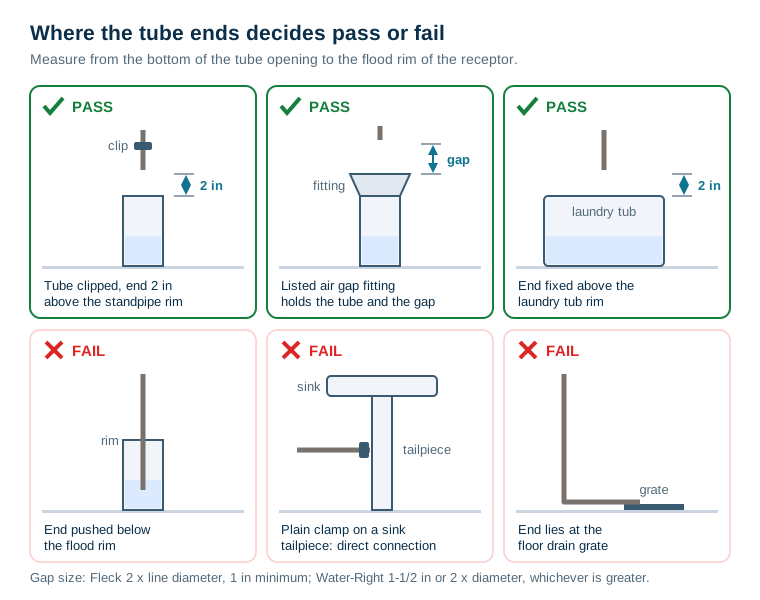
| Termination | Pass or fail | Why |
|---|---|---|
| Tube clipped to the wall, end 2 in above a standpipe | Pass | Open air between end and rim; held in place |
| Listed air gap fitting on top of the standpipe | Pass | The fitting holds the tube with a built-in gap |
| Tube end fixed above a laundry tub rim | Pass | Tub is the receptor; the gap is above its rim |
| Tube pushed 6 in down inside the standpipe | Fail | End is below the flood rim |
| Tube clamped to a sink tailpiece with a plain fitting | Fail | Direct connection to the drain |
| Tube lying in a floor drain grate | Fail | End is at or below the rim; a backup covers it |
A standpipe needs its own proportions to work at all. The same IPC chapter requires standpipes to extend 18 to 42 inches above the trap weir (Section 802.4.3). If yours is much shorter, a backwash surge can overflow it; if it is much taller, the trap may not behave as designed.
Air Gap or Air Break?
You will see both terms in codes, and they are not the same thing.
- Air gap: the pipe ends above the receptor's flood rim. Waste water cannot reach it, even if the receptor overflows.
- Air break: IPC 802.3.2 requires the break to be "between the indirect waste pipe and the trap seal of the waste receptor." The pipe can extend below the rim, as long as it stays above the trap seal.
An air break protects against the normal case but not a receptor that fills to the brim, which is exactly stage 2 above. Which one your jurisdiction accepts for a softener depends on how it classifies the discharge. The manufacturers settle it for you: Fleck and Water-Right both specify an air gap, and an air gap satisfies an air break requirement, while the reverse is not true.
Fittings That Make a Compliant Gap Easy
Most failed air gaps started as a fix for a nuisance, usually splash or a tube that kept falling out. These parts remove the nuisance without removing the gap:
- Standpipe air gap fitting. A funnel-style fitting that sits in or over the top of a 1-1/2 or 2 inch standpipe. The tube clips into it, the gap is built in, and the funnel catches splash. Buy one that is listed for the purpose and sized for your standpipe.
- Tube clip or bracket. A simple wall clip or pipe strap that holds the tube end vertically over the centre of the standpipe. Cheap, and it solves the tube that whips out when backwash starts.
- Rigid drop. A short length of rigid pipe on the end of flexible tubing keeps the end straight and at a fixed height.
- Listed air gap device for sink drains. Where a sink tailpiece is the only receptor, a device made and listed for this job keeps an internal air gap. An ordinary compression tee does not.
For the tubing and elbow connection at the valve end, and for size and length limits on the run itself, see water softener drain line requirements.
Splash and Overflow: Fix the Receptor, Not the Gap
The EPA manual is candid that air gaps have a drawback: excessive splash can occur at higher flows, and the gap "may be easily defeated" if the required height is compromised on purpose or by accident. With softeners, splash is almost always one of these:
- The receptor is too small for the backwash rate. A few gallons a minute is a lot for a narrow standpipe. Use a larger receptor or a funnel fitting.
- The receptor is partly blocked. A standpipe that fills during backwash is telling you the drain downstream is slow. Clear it; the softener is only the first thing to reveal it.
- The tube is aimed at the pipe wall. Clip it so it discharges straight down the centre.
Never solve splash by pushing the tube lower. If the drain line is also leaking along its length, that is a separate repair covered in why a water softener drain line leaks.
What an Air Gap Does Not Protect Against
- Backflow on the supply side. The drain air gap protects the drain connection only. Whether your house also needs a backflow preventer or check valve on the supply is a separate question, covered in does a water softener need backflow protection.
- A drain that cannot take the flow. The gap turns a backup into a visible spill. It does not make a slow drain faster.
- Unsuitable destinations. A perfect gap above a sump pit or a storm drain is still discharging somewhere it may not be allowed. Acceptable receptors are compared in where can a water softener drain.
- The brine tank overflow. That line needs its own gap at its own termination.
Two-minute check for your own softener: find the end of the drain line. You should see daylight between the tube and the rim of the receptor, at least 1 inch for a 1/2 inch line and about 2 inches to cover every manual. The tube should be held so it cannot slip down. If you cannot see open air, fix it before the next regeneration.
Frequently Asked Questions
Does a water softener drain need an air gap?
Yes in practice. Softener manufacturers require one: Fleck's 5600SXT manual says you must have an air gap on the drain line to prevent back flow of drain water into the system, and Water-Right says never to insert the drain line into a drain, sewer line or trap. U.S. model plumbing codes treat softener discharge as indirect waste that ends through an air gap or air break. Your local code edition sets the exact rule.
How big should the air gap be on a water softener drain?
Fleck asks for twice the drain line diameter with a 1 inch minimum. Water-Right asks for 1-1/2 inches or twice the pipe diameter, whichever is greater. The International Plumbing Code asks for at least twice the effective opening of the indirect waste pipe. For any drain line up to 1 inch, a 2 inch gap satisfies all three.
Can I put my water softener drain line inside the standpipe?
Not below the flood rim. Pushing the tube down inside the standpipe removes the air gap, and if the house drain backs up the tube end sits in waste water. Clip the tube above the rim, or use an air gap fitting made to sit on top of a standpipe, which holds the tube in place and still leaves open air around it.
What is the difference between an air gap and an air break?
With an air gap, the end of the drain pipe is above the receptor's flood rim, so waste water can never reach it. With an air break, the pipe may extend below the rim but stays above the trap seal. The International Plumbing Code defines both. An air break is weaker because a receptor that floods can cover the pipe end. Softener manuals ask for an air gap.
Can a water softener drain connect to a sink drain?
Only through a device made and listed for that job, which keeps a real air gap inside it. Clamping the softener tube to a sink tailpiece with an ordinary fitting creates a direct connection to the drain and removes the protection. If a sink is the only option, check what your local code accepts before buying a fitting.
Why does my softener drain splash out of the standpipe?
Usually because the backwash flow is more than the receptor can take, the standpipe is partly blocked, or the tube end is aimed at the side of the pipe. The EPA's cross-connection manual notes that splash is a known drawback of air gaps at high flow. The fix is a larger or clearer receptor, or a funnel-style air gap fitting, not pushing the tube deeper.
