
How to Put a Water Softener in Vacation Mode

Water softener vacation mode depends on how long you will be away. For up to two weeks, leave the softener in service with enough salt. For two weeks to a couple of months, put it in bypass, shut the main, and regenerate when you get back. For a season or longer, shut it down fully. Whatever the length, a softener in an unheated house must be winterized, and a softener must be in bypass whenever the main is off.
Most softeners have no vacation button. The reason length matters is that a resin bed left in still water for weeks can grow bacteria, and the longer the absence, the more your return routine has to deal with it. The two diagrams below cover the whole cycle, from leaving to getting back.
Water Softener Vacation Mode: Why Trip Length Matters
A softener stays healthy through two routines: water flowing through it every day, and a regular brine wash when it regenerates. A trip interrupts both.
DuPont, a major resin manufacturer, says in its technical note on preventing biological growth on ion exchange resins that "most biological growth problems are caused by inactivity of the resin during extended storage in the vessel or under pH neutral conditions, such as water softeners." A week of still water rarely matters. Months often do. In between, the answer depends on the water, the temperature, and whether the softener keeps regenerating while you are gone.
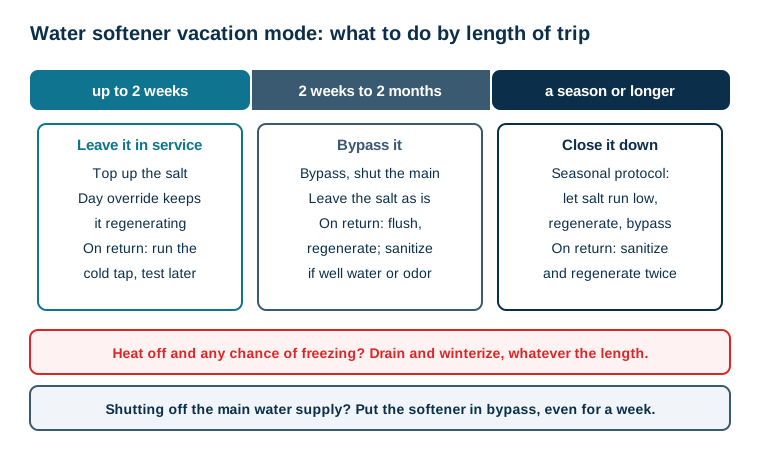
| Trip length | Softener | Main water supply | On return |
|---|---|---|---|
| Up to 2 weeks | Leave in service, salt topped up | Can stay on | Run the cold tap, then carry on |
| 2 weeks to 2 months | Bypass | Off | Flush, regenerate; sanitize on a well or if there is an odor |
| A season or longer | Full shutdown | Off | Break any salt bridge, sanitize, regenerate twice, test |
| Any length, heat off with a freeze risk | Drain and winterize | Off | Spring restart |
Trips of up to Two Weeks: Leave It Running
For a normal vacation, the least effort is also the right answer. Leave the softener in service.
Before you go:
- Top up the salt. A softener that regenerates while you are away needs brine to do it.
- Check the day override. A metered softener regenerates when enough water has passed through it, and with nobody home that may not happen. The day override is the setting that forces a regeneration anyway. The Fleck 5600SXT service manual defines it as "the maximum number of days between regeneration cycles," so "a metered system will regenerate regardless of usage if the days since last regeneration cycle equal the day override setting." If yours is off, a setting of 7 to 14 days keeps the bed cycling.
- Leave the main on, or put the softener in bypass if you shut it. Many people shut the main for any trip, which is sensible protection against a burst pipe. If you do, the softener cannot regenerate, so bypass it. Then follow the two-week-to-two-month steps on return.
Timer softeners regenerate on their schedule whether water is used or not. That costs a little salt and water while you are away, and it keeps the bed from sitting in still water.
On return: run the kitchen cold tap for a minute. If it looks, smells and tastes normal, there is nothing else to do.
Two Weeks to Two Months: Bypass, Then Regenerate on Return
For a longer trip, the main is usually off, and the softener goes in bypass.
Culligan's Gold Series owner's guide names this as one of the times to bypass: "If you are going away on vacation and do not want the unit to recharge."
Before you go:
- Put the softener in bypass. On a single-handle valve, move it to bypass. On a three-valve loop, close the inlet and outlet valves and open the bypass valve.
- Shut off the main and open a tap briefly to relieve the pressure.
- Leave the salt as it is. There is no need to top up, because nothing will regenerate.
- Leave the control plugged in if you can. It keeps the clock right. If the unit is not in a regeneration, unplugging will not harm most units, but the clock may need resetting when you return.
Why not just unplug it? Unplugging stops regenerations but leaves the softener connected. If the main stays on, water still flows through a softener that never regenerates, so the house slowly gets hard water. If the main is off, unplugging adds nothing. Bypass is the cleaner choice. Never unplug a softener partway through a regeneration.
Some newer controls have a vacation or away setting. What it does varies. Some suspend regenerations, some reduce them, and some just change the display. Read your manual before relying on it.
A Season or Longer: Close It Down
A whole summer or winter away is a different job. Bacteria have months to grow in the bed, and the salt in the brine tank has months to bridge in humid air. The closing and opening routines for that are longer, and they start two weeks before you leave. Water softener care for seasonal homes and cabins covers them step by step, including low-use households that face the same problem without leaving.
If the heat will be off, freezing is the bigger risk. A softener left full of water in an unheated house can crack its valve, bypass and tank. How to winterize a water softener covers draining the passages a simple gravity drain misses.
Coming Home: The Restart Sequence
The restart order matters more than anything you did before leaving.
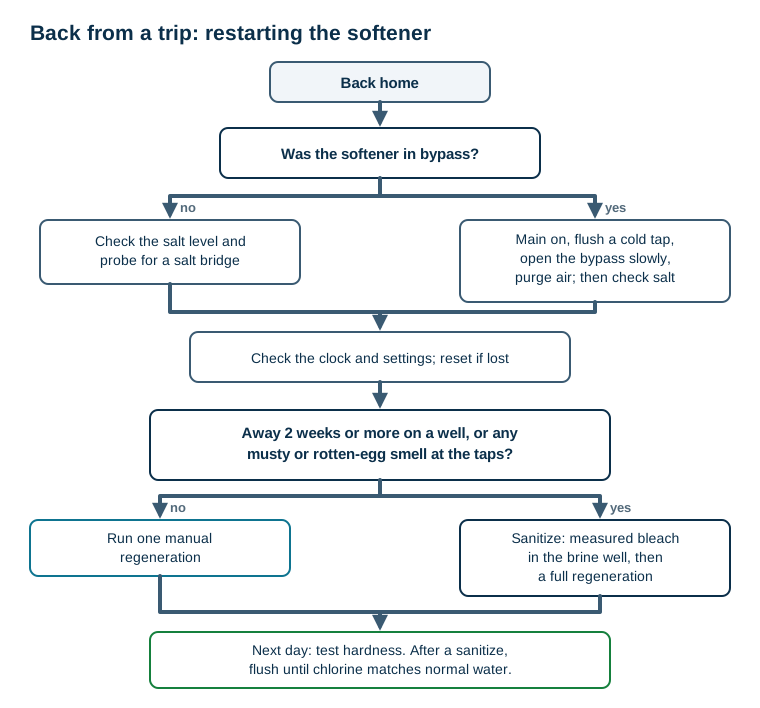
If the softener was in bypass:
- Turn the main back on and run a cold tap near the main for a few minutes. This flushes water that has been standing in the pipes, and on a well, in the pressure tank.
- Return the softener to service slowly. Move the bypass partway, let the tank fill, then fully open it. Open a cold tap until the air stops sputtering.
- Check the salt. Press down on it with a broom handle. If it stops on a hard crust above the water, break it up.
- Check the clock and settings. A control that lost power may have lost the time of day, and sometimes the settings too.
- Regenerate or sanitize, as below.
- Test the softened water for hardness the next day.
If the softener stayed in service, skip steps 1 and 2. Check the salt and clock, then run the cold tap. A manual regeneration is optional for a trip under two weeks, and a good idea if the day override was off.
How to start a manual regeneration depends on the control. On most you press and hold one button. How to manually regenerate a water softener covers the common valves and what to check at each stage.
When a Sanitize Is Warranted
A sanitize is a regeneration with a small, measured dose of bleach poured into the brine well first. It is quick, and it is not needed after every trip. Sanitize when any of these apply:
| Situation | Sanitize? |
|---|---|
| Away 2 weeks or more, private well | Yes. Well water has no disinfectant in it |
| Away 2 weeks or more, city water, no odor | Optional. A regeneration is usually enough |
| Any musty, earthy or rotten-egg smell in softened water | Yes, after checking the smell is not in the raw water too |
| The house flooded, or the brine tank took in dirty water | Yes, after cleaning the brine tank |
| Away a season or longer | Yes, as part of the seasonal restart |
| Away under 2 weeks, nothing unusual | No |
Culligan's guide supports this threshold. Its maintenance schedule lists an inspection of the entire system "after infrequent use (idle for one week or more)," and says that on private supplies, musty or rotten-egg odors "may indicate a need for the system to be sanitized."
Keep the dose small. Manufacturer manuals give around 1.2 fluid ounces of 5.25% bleach per cubic foot of resin, and stronger bleach needs less. Too much bleach damages the resin permanently. How to sanitize a water softener has the dosing table and the chlorine check that tells you when the water is back to normal.
Smell in the raw water too? Then the softener is not the source. Run a tap that bypasses the softener, such as an outdoor faucet. If it smells too, the problem is in the well, the pressure tank or the water heater, and sanitizing the softener will not fix it.
What Vacation Mode Will Not Protect Against
- A burst pipe. Bypassing the softener protects the softener, not the house. Shutting the main does that.
- Freezing. Bypass does not drain anything. An unheated house needs the softener drained.
- A power cut during a regeneration. It can leave the valve partway through a cycle. Check that it has returned to service when you get home.
- A salt bridge that was already there. Check the salt before you leave for a long trip, not just when you get back.
For most trips, this is a five-minute job: top up the salt, check the day override, go. The longer the trip, the more the return routine matters.
Frequently Asked Questions
Should I turn off my water softener when I go on vacation?
For a trip of up to about two weeks, no. Leave it in service with enough salt, and let it carry on. For longer trips, or any time you shut off the main water supply, put it in bypass. Culligan's owner's guide lists going away on vacation as one of the times to bypass the softener.
Does a water softener have a vacation mode?
A few controls have a vacation or away setting, but most household softeners do not. On most units, vacation mode means one of three things: leaving it in service with a day override set, putting it in bypass, or shutting it down completely for a long absence. Check your manual for any away setting and what it actually does.
Will my water softener regenerate while I'm on vacation?
A timer softener will, on its normal schedule. A metered softener regenerates when it has treated enough water, so with no one home it may not, unless it has a day override set. The day override forces a regeneration after a set number of days whatever the meter reads. If the main is shut off, the softener should be in bypass so it does not try to regenerate without water.
Is it OK to unplug a water softener while away?
It will not harm most units, but it does not help much either. Unplugged, the softener cannot regenerate, the water in it still sits still, and the clock may need resetting. If you want it out of action, put it in bypass instead. If you do unplug it, never do it during a regeneration.
What should I do with my water softener when I get back?
If it was bypassed, turn on the water, flush a cold tap, and return the softener to service slowly to purge air. Check the salt for a bridge, check the clock, and run a manual regeneration. If you were away two weeks or more on a well, or you smell anything musty or like rotten eggs, sanitize it with a measured dose of bleach first.
Do I need to add salt before going on vacation?
For a short trip with the softener left in service, yes: make sure there is enough salt for any day-override regenerations while you are gone. For a long absence with the softener in bypass, no. Leave the salt as it is, or let it run low before a season-long closure, because salt sitting for months in a humid tank tends to bridge.
