
Where Can a Water Softener Drain?
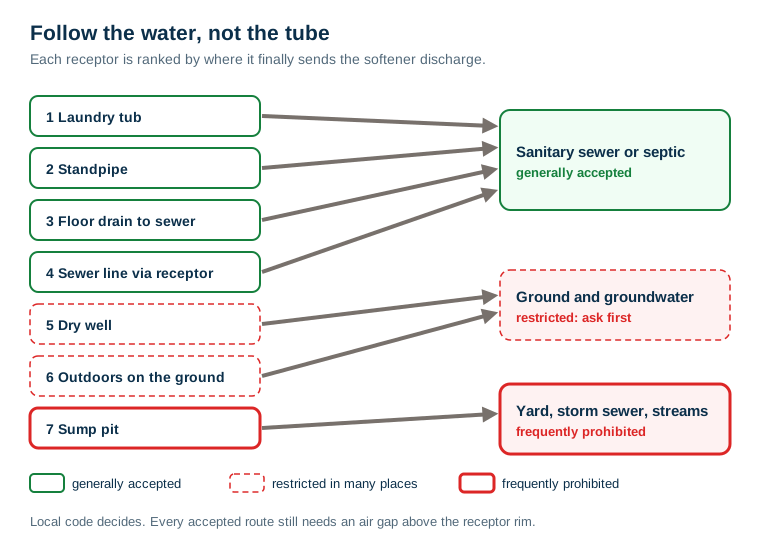
Where can a water softener drain? It comes down to where the water finally ends up. Receptors that feed the sanitary sewer or a septic system, such as a standpipe, laundry tub or sewer-connected floor drain, are generally accepted with an air gap. Dry wells and outdoor discharge are restricted in many states. Sump pits and storm drains are frequently prohibited.
The ranking below covers all seven destinations people ask about, with the catch and the usual failure for each.
Where Can a Water Softener Drain? The Ranked Table
Ranked from the most widely accepted to the most often prohibited. "Position" is the general pattern, not a promise: your state and local code decide, and some add amendments.
| Rank | Destination | Position | The practical catch | How it usually fails |
|---|---|---|---|---|
| 1 | Laundry tub | Generally accepted | Tube must be fixed above the rim, not lying in the basin | Stopper left in, or a washer emptying into the tub at the same time, overflows it |
| 2 | Standpipe | Generally accepted | Must be tall enough and clear enough for the backwash flow | Shared with a washer: both discharge together and it overflows |
| 3 | Floor drain | Generally accepted if it goes to the sanitary sewer | Some basement floor drains go to storm, a dry well or daylight | Tube pushed into the grate loses its air gap; debris slows the drain |
| 4 | Sewer line or septic, via a receptor | Accepted through an indirect connection | Never a direct connection; an overhead sewer needs a trap and air gap | A plain fitting into a pipe creates a cross-connection |
| 5 | Dry well | Restricted in many states | Counts as underground injection; well setbacks apply | Salt reaches the groundwater your own well draws from |
| 6 | Outdoors on the ground | Restricted in many places | Setbacks, nuisance rules, freezing, dead grass | Line freezes in winter; salt kills plants along the discharge |
| 7 | Sump pit | Frequently prohibited | The sump pump sends water to the yard or storm sewer | Brine leaves the property untreated; pump corrosion and extra cycling |
Water-Right's installation manual shows exactly the top three as its "typical drain line installations": floor drain, standpipe and laundry tub (Water-Right Impression manual). Whatever the receptor, the same manual says never to insert the drain line into a drain, sewer line or trap, and to keep an air gap of 1-1/2 inches or twice the pipe diameter, whichever is greater. The reasons behind that gap are in why a water softener drain needs an air gap.
Why the Final Destination Decides It
A softener's regeneration discharge is mostly water carrying the salt used to regenerate, plus the calcium, magnesium and anything else the resin removed. Where that goes decides whether anyone regulates it:
- Sanitary sewer or septic. The discharge joins household waste water and goes where it is treated or dispersed by design. This is the default acceptable path.
- The ground. Salt goes into soil and potentially groundwater. States treat this differently, and setbacks from wells are common.
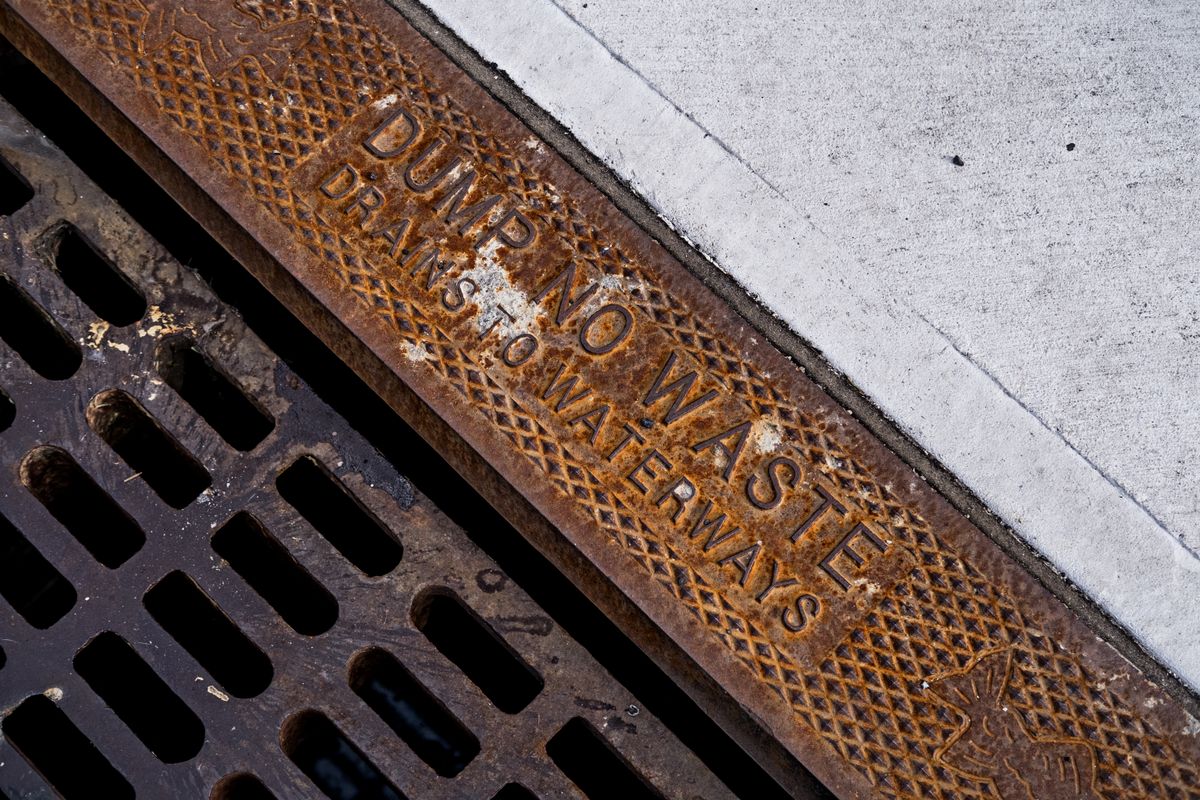
- Storm sewer or surface water. Storm systems usually discharge untreated to streams and lakes. Discharging to them is the most commonly prohibited option. Many storm grates carry the warning in cast iron.
That framing sorts the seven destinations fast. Ask where each receptor sends its water, not just whether the tube fits.
The Three Generally Accepted Destinations
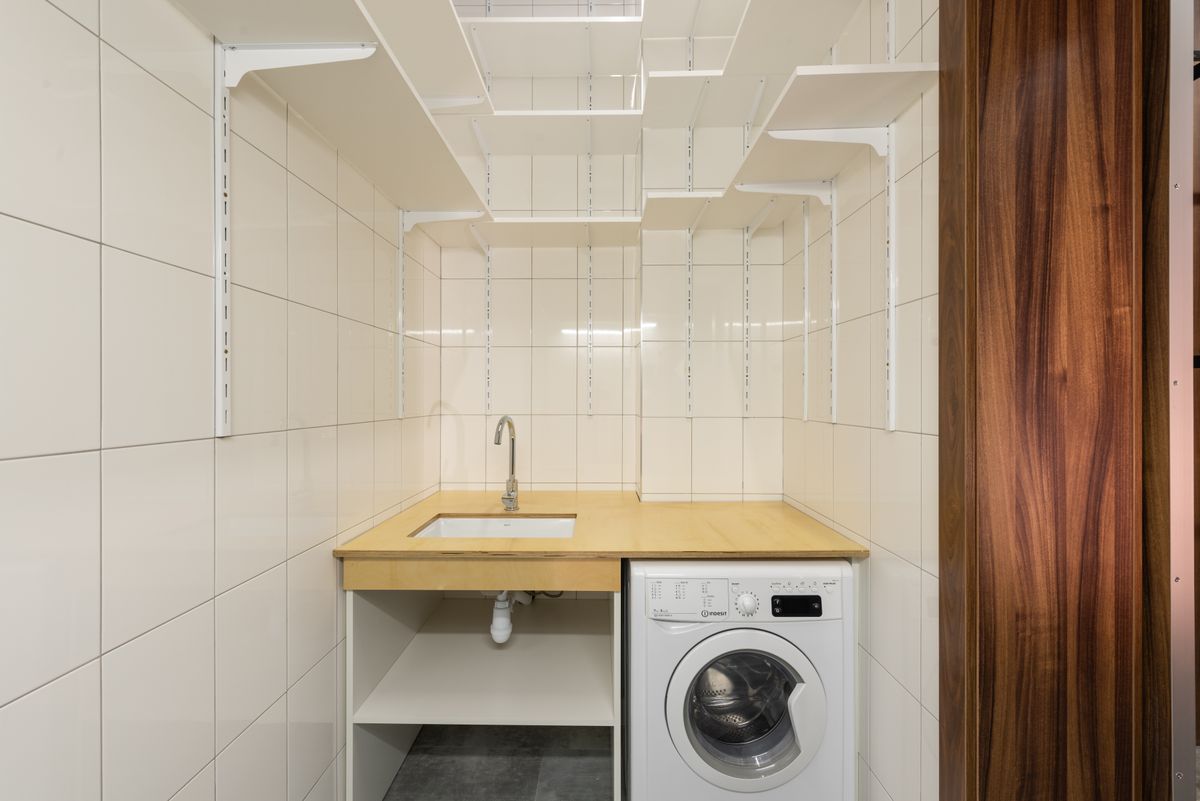
Laundry tub. The easiest to get right. The tub is a large receptor that tolerates a high backwash flow, and the air gap is easy to see. Clip the tube above the rim so it cannot drop into the basin. The failure mode is operational: a tub with the plug in, or a washer draining into it at the moment the softener starts backwash.
Standpipe. The International Plumbing Code requires standpipe receptors to extend 18 to 42 inches above the trap weir (IPC 2024, Section 802.4.3). A dedicated standpipe for the softener is ideal. Sharing the washing machine's standpipe is common and works if the two never discharge together, which is one reason softeners regenerate in the small hours.
Floor drain. Fine when it connects to the sanitary sewer. The catch is that not every basement floor drain does. In some older homes the floor drain runs to a storm lateral, a dry well or out to daylight. If you do not know, a plumber can trace it, or your local building department may have records. Mount the tube end above the grate; do not push it through.
Sewer Lines and Septic Systems
Every accepted route ends in the sanitary sewer or a septic system; the question is only how you get there.
- Direct connection: no. Gluing or clamping the softener line into a sewer pipe, a trap arm or a sink tailpiece with an ordinary fitting removes the air gap.
- Overhead sewer line. In basements where the sewer leaves high on the wall, Water-Right specifies a sink-type trap with an appropriate air gap. The softener then has to push its discharge up to that height, which costs pressure; how much lift a valve can manage is covered in water softener drain line requirements.
- Septic systems. The Minnesota Department of Health lists a properly sized subsurface sewage treatment system as an allowable destination and warns that the extra water "could potentially overload" a system that is undersized or near the end of its life (MDH water softeners fact sheet). The detail on sizing, timing and salt dose for septic homes is in water softener with a septic system.
The Restricted Group: Dry Wells and Outdoor Discharge
These are allowed in some places, conditionally, and prohibited in others. Treat them as "ask first."
Dry wells. A dry well is a gravel-filled pit or perforated chamber that lets water soak into the ground. The EPA classes shallow disposal systems that drain fluids into the ground, including stormwater drainage wells and septic leach fields, as Class V injection wells, which "are not allowed to endanger underground sources of drinking water" (EPA Class V wells). States run these programs and set their own conditions. On a property with its own well, a softener dry well is also putting salt into the aquifer you drink from.
Outdoors on the ground. Minnesota's fact sheet is a good example of the conditions that apply where it is allowed. For the public water systems it covers, it lists the ground surface and the soil as allowable, but:
- not to surface waters,
- not "in a manner that creates a nuisance,"
- at least 50 feet from a well, and
- at least 100 feet if the well has less than 50 feet of casing or does not penetrate at least 10 feet of clay.
Other states and municipalities are stricter, and some communities restrict salt-regenerating softeners entirely because of what the brine does downstream; see water softener brine restrictions. Practical failures come first, though: an outdoor line freezes, Water-Right warns against drain lines anywhere below 33°F, and repeated brine kills grass and shrubs along the discharge point.
The Sump Pit: Frequently Done, Frequently Prohibited
The sump pit deserves its own warning because it is the most common wrong answer. It is right there in the basement, it has a pump, and the pump takes water away. The problem is where it takes it.
- Where the water goes. A sump pump exists to move groundwater from around the foundation. Its discharge normally goes to the yard, a storm sewer or a dry well. Brine drained into the pit therefore ends up in the restricted or prohibited groups above, just by a longer route.
- Why local rules often say no. Many jurisdictions limit what may enter a sump to foundation drainage for exactly this reason. We cannot give you a national rule because there is not one; your building department can tell you in one call.
- What happens to the pump. Backwash alone runs at several gallons a minute for minutes at a time; at 5 gpm, ten minutes is 50 gallons. The pump cycles more often and sits in salty water it was not chosen for.
- The one legitimate version. If the only option is a pumped discharge, the right equipment is a basin whose pump discharges to the sanitary sewer, not the sump. That is a dedicated drain pump setup, with its own float and alarm, not a shared sump.
How to Pick Yours in Four Questions
- Is there a standpipe, laundry tub or sewer-connected floor drain within reach? Use it, with an air gap. You are done.
- Is the only receptor higher than the softener? Check whether the valve can lift that far on your pressure, or plan a drain pump into a basin that goes to the sewer.
- Is the only option the ground, a dry well or a sump? Call the building department before you run the tube. Ask where softener discharge may go, whether a permit is needed, and what setback applies to your well.
- Is the house on septic? Confirm the system is sized for the added volume.
What No Drain Location Changes
- The softener still needs its air gap. A legal destination with the tube pushed below the rim is still a cross-connection.
- The brine tank overflow needs somewhere to go too. It is a separate gravity line and must end lower than its fitting.
- The discharge volume is the same wherever it goes. Picking a different receptor does not reduce the water or salt a regeneration uses; only settings and efficiency do.
- A softener does not make its discharge harmless. It concentrates the hardness it removed and the salt it used into that stream. That is why the destination is regulated at all.
Frequently Asked Questions
Where should a water softener drain?
Into a trapped, vented receptor that connects to the sanitary sewer or a septic system, such as a standpipe, a laundry tub or a floor drain that goes to the sewer, with an air gap above its rim. Water-Right's manual shows exactly those three as the typical drain installations. Anything that sends the discharge to the ground, a storm sewer or surface water is restricted or prohibited in many places.
Can a water softener drain into a sump pit?
It is common but frequently not allowed. A sump pump normally sends water outside or to a storm sewer, so brine drained into the pit ends up on the ground or in surface water rather than the sanitary sewer. It also adds regeneration volume to a pump sized for groundwater and exposes it to salt. Ask your local building department before using a sump, and expect the answer to be no in many areas.
Can a water softener drain outside?
In some places, with conditions. Minnesota's Department of Health lists discharge onto the ground surface or into the soil as allowable for the public water systems it regulates, but not to surface waters, not in a way that creates a nuisance, and at least 50 feet from a well, or 100 feet from a sensitive well. Other states and municipalities are stricter. Salt also damages lawns and plants, and an outdoor line can freeze.
Can a water softener drain into a floor drain?
Usually yes, if the floor drain connects to the sanitary sewer and the tube ends above the grate with an air gap. Check where the floor drain goes first: some older basement floor drains discharge to a storm sewer, a dry well or daylight, which puts the softener discharge in the restricted group. The drain also has to take the full backwash flow without backing up.
Can I drain a water softener into the washing machine standpipe?
Generally yes, with an air gap above the rim. The catch is capacity: if the washer and the softener discharge at the same time, the combined flow can overflow the standpipe. Setting the softener to regenerate at night, when the washer is not running, avoids that.
Can a water softener drain into a septic system?
Many septic systems take softener discharge, and the Minnesota Department of Health lists a properly sized subsurface sewage treatment system as an allowable destination. The added volume matters for a system that is undersized or near the end of its life. Some jurisdictions and septic designers have their own rules, so check before connecting.
