
Common Water Softener Repair Costs Explained
A water softener repair cost is usually a cheap part plus an hour or so of labour. That puts most repairs at roughly $150 to $450 installed. A Fleck 5600 seal kit sells for about $28 and a drive motor for about $98. Two repairs cost far more: a complete control valve at roughly $580 to $880 and a resin rebed at roughly $480 to $930. Those two are where the repair-or-replace question starts.
This page sets real part prices beside illustrative installed prices, so you can check a quote rather than just accept it.
Water Softener Repair Cost by Part
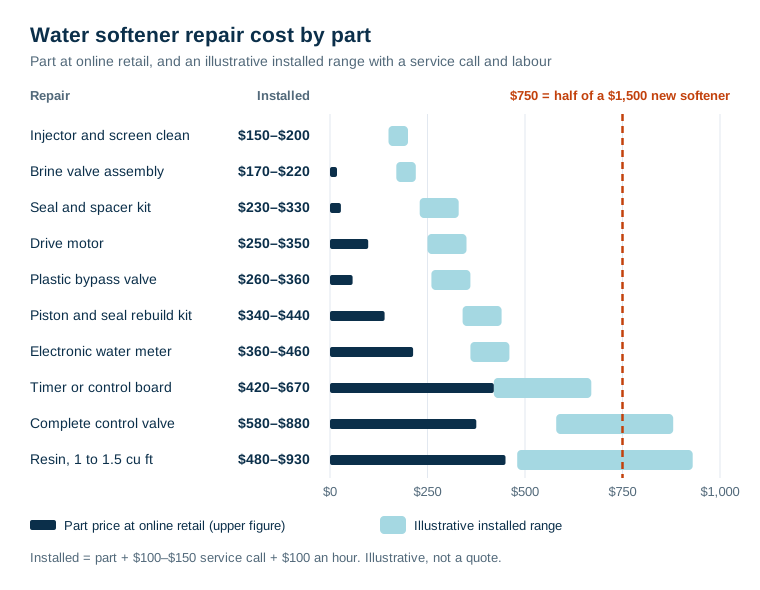
The part numbers below are for the Fleck 5600SXT, one of the most common residential valves in the US, and come from Pentair's Fleck 5600SXT service manual. The part prices were listed by an online Fleck parts retailer on 26 September 2026. Other valve brands have their own parts at different prices, but the pattern is the same.
| Repair | Example part (Fleck 5600SXT) | Part price, online retail | Labour | Illustrative installed | Owner job? |
|---|---|---|---|---|---|
| Clean injector and screen | None | $0 | ½ hour | $150–$200 | Yes |
| Brine valve assembly | 60032 | $18 | ½ hour | $170–$220 | Yes |
| Seal and spacer kit | 60125 | $28 | 1–1½ hours | $230–$330 | With care |
| Drive motor | 16944 | $98 | ½–1 hour | $250–$350 | Yes |
| Plastic bypass valve | 60049 | $58 | 1–1½ hours | $260–$360 | With care |
| Piston, seals and brine valve rebuild kit | Rebuild kit | $140 | 1–1½ hours | $340–$440 | With care |
| Electronic water meter | 60626 | $213 | ½–1 hour | $360–$460 | Yes |
| Timer or control board | 61673 or 61672 front panel | $272–$420 | ½–1 hour | $420–$670 | Yes |
| Complete control valve | Metered 5600SXT head | $280–$375 | 1½–3 hours plus fittings | $580–$880 | Plumbing skills |
| Resin | 1 to 1.5 cu ft of standard resin | $150–$300 per cu ft | 2–3 hours plus gravel | $480–$930 | Heavy, messy |
How the installed column is worked out: the part, plus a $100 to $150 service call, plus labour at $100 an hour, plus fittings or gravel where needed. Those labour figures are placeholders, not survey data. Rates vary a lot between regions and between an independent plumber and a brand dealer. Replace them with the rates on your own quote. The method is the useful part.
How an Installed Repair Price Is Built
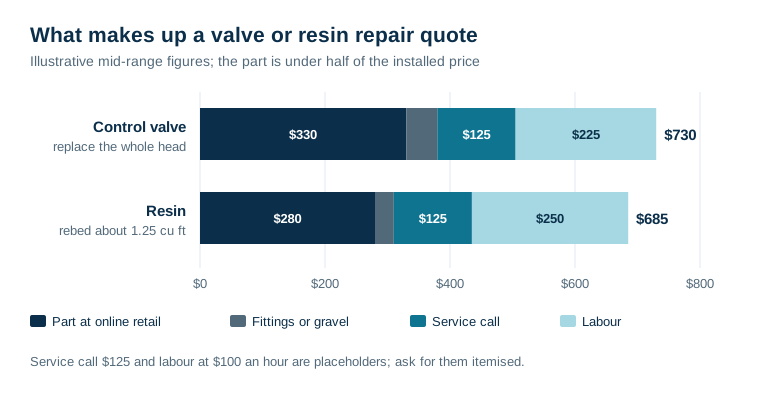
A quote has four parts, and a fair one shows all of them.
- The part. Expect it to cost more than the online price. The installer is carrying stock, making a trip to fetch it, and taking back a faulty one if it fails. A modest markup is normal. A part billed at three or four times its retail price without explanation is not.
- The service call. A flat charge for turning up, which often includes the first half hour of diagnosis.
- Labour. Billed by the hour or as a flat rate for the job. A seal kit on a common valve is about an hour of work for someone who does it regularly. A quote for four hours of labour on a seal kit needs an explanation.
- Sundries. Fittings and flexible connectors for a valve swap. Gravel, a new distributor tube and a funnel for a resin change. Disposal of old resin.
Because labour and the call-out are fixed, a cheap part and an expensive part can produce surprisingly similar bills. That is why a $28 seal kit becomes a $230 to $330 repair. It is also why fixing two things on one visit is better value than fixing them on two.
The Two Repairs That Start the Replacement Conversation
Eight of the ten repairs in the table cost under half the price of a new installed softener, taken here as $1,500. Two can cross that line. When they do, the answer depends on the age of the unit and the condition of the tank. That decision is set out in full in should you repair or replace an old water softener.
Control valve replacement
A complete valve head is the most expensive single part, and often it is not needed.
- Rebuild before you replace. Water running to drain, a unit stuck in one cycle, or salt use drifting upwards are usually worn seals and spacers or a scored piston. A rebuild kit at about $140 fixes those. How to diagnose and do it is in servicing a water softener control valve.
- Replace when the valve body is the problem. A cracked valve body, stripped tank threads, a control board no longer made, or a proprietary valve whose parts you cannot buy are all reasons to replace the head.
- Take the chance to upgrade. If the old valve is a timer, a replacement head can be a metered, demand-initiated model. That cuts salt and water use for the rest of the tank's life.
- The tank and resin usually stay. Most residential mineral tanks use a standard 2½-inch threaded top opening, and a new head from a common valve family will thread straight on. Check the tank size and distributor tube diameter against the new valve's specification before you order.
Other manufacturers publish their own parts diagrams. Clack, for example, publishes a drawings and service manual for its WS1 valve. If your valve is a common brand like these, a quote can be checked against published parts. If it is not, see the section on proprietary valves below.
Resin replacement
A resin rebed is the other large bill. It is also the repair most often quoted when something cheaper would do.
Before you pay for new resin, confirm that the resin is the problem. Hardness coming through well before the end of each cycle, even though the unit regenerates on schedule and draws brine, points to resin. Hard water with no brine draw points to the injector or a salt bridge instead. Then look at a sample of the beads:
| What the beads look like | What it means | Cheaper fix? |
|---|---|---|
| Firm, amber, rust-coloured coating | Iron fouling | Often yes. A resin cleaner may restore capacity |
| Swollen, soft, mushy, fine particles | Oxidised by chlorine or chloramine | No. The bed needs replacing, and carbon ahead of it next time |
| Normal beads, but the bed is much lower than it should be | Resin lost to drain through a broken distributor or a failed screen | Replace the distributor, then top up |
| Normal beads, normal depth | Resin is not the problem | Look at the valve, injector and settings |
When resin does need replacing, the volume depends on the tank. A 9 × 48-inch tank holds about 1 cubic foot and a 10 × 54-inch tank about 1½. Online retailers listed standard softening resin at roughly $150 to $300 per cubic foot in September 2026. The bed life you can expect, and how chlorine and iron shorten it, is in water softener resin life and replacement.
Repairs That Should Cost Little or Nothing
A good share of service calls end with no part fitted at all. Try these before you book one.
- Salt bridge. A crust over a hollow in the brine tank stops brine forming. Break it with a broom handle. Cost: nothing.
- Blocked injector or screen. The most common cause of "not using salt" with a clear brine tank. Cleaning takes about 20 minutes, as set out in how to clean a water softener injector.
- Clock lost after a power cut. The unit regenerates in the middle of the day and seems to fail. Reset the time.
- Bypass left partly open after plumbing work. Hard water mixes into the soft water. Turn the bypass to service.
- Wrong hardness setting. A unit set below your real hardness runs out before it regenerates. Test raw water and reset it.
- Kinked or lifted drain line. It can cause flooding or a failed regeneration. Reposition it and secure it.
If a technician fixes one of these, a service call charge is fair. A new valve or new resin is not.
Six Checks for Any Repair Quote
- Is the part named, with its number? "Valve repair, $450" is not checkable. "Fleck 60125 seal and spacer kit and 60102 piston, plus one and a half hours" is.
- Is the labour time reasonable for the job? Compare it with the labour column above. Ask what takes longer, if anything.
- Was the diagnosis shown to you? For resin, ask to see a sample. For a valve, ask which seal or part has failed and why.
- Will you get the old part back? It confirms the part was actually replaced.
- How long is the work guaranteed? Parts and labour should each have a stated period.
- Is it a proprietary valve? If only this dealer can supply the part, get a second opinion on whether a standard replacement head is the cheaper route.
Proprietary Valves: The Hidden Multiplier
Standard valves from companies like Fleck and Clack are sold through many distributors. Their parts are listed openly, and many plumbers and independent water treatment companies service them. Some dealer brands use their own valve designs, and parts reach homeowners only through that dealer network.
That does not make those valves worse, but it does change the repair economics. Without published prices you cannot check a quote. If the local dealer closes, parts may be hard to find. Before you buy a softener, ask who else can service it and where you would buy a seal kit. After you own one, the same question decides whether a big repair is worth doing.
What a Repair Will Not Fix
- A softener that is too small. New parts restore the rated capacity, and no more. If a household has outgrown the unit, it will still run out.
- Water chemistry that wrecked the old parts. Chlorine that dissolved the resin, or iron that fouled it, will do the same again unless pretreatment is added.
- A failing mineral tank. Bulging, cracking or weeping at the tank base or neck is not a repair job. It means a new tank at least, and usually a new softener.
- Health contaminants. No softener repair changes what a softener removes. It never treated bacteria, nitrate or lead.
Price the part first, then the labour, and only then decide. A water softener repair cost that is mostly labour on a sound tank is usually worth paying. One that approaches half the price of a new unit on an old one is the point to stop and compare.
Frequently Asked Questions
How much does it cost to fix a water softener?
Most repairs fall between about $150 and $450 installed in the illustrative ranges on this page, because the parts are cheap. A Fleck 5600 seal and spacer kit was listed at $28 and a drive motor at $98 by an online retailer. Two repairs cost far more: a complete control valve at roughly $580 to $880 installed and a resin replacement at roughly $480 to $930. Local labour rates move all of these.
Is it worth repairing a water softener?
Usually, if the mineral tank is sound and the fault is in the valve. Seals, pistons, motors, brine valves and meters are inexpensive and restore the unit to full working order. It becomes questionable when the repair costs more than half the price of a new installed softener on a unit over about ten years old, or when the tank itself is cracked or bulging.
How much does it cost to replace water softener resin?
Standard softening resin was listed at roughly $150 to $300 per cubic foot by online retailers in September 2026. A typical household softener holds 1 to 1.5 cubic feet. Doing it yourself costs the resin plus a little gravel. A professional rebed, including labour and a service call, comes to roughly $480 to $930 in the illustrative range here.
How much does a new water softener control valve cost?
A complete Fleck 5600SXT metered valve head was listed at about $280 to $375 by online retailers. Installed, with fittings, a service call and one and a half to three hours of labour, that becomes roughly $580 to $880 in the illustrative range on this page. A dealer-only proprietary valve can cost considerably more because only the dealer can supply it.
Can I repair a water softener myself?
Many repairs are owner jobs: cleaning the injector and screen, breaking a salt bridge, resetting the clock, replacing a brine valve and changing a drive motor. Seal and piston replacement needs the valve depressurised and the right puller tool on some models, and a resin change involves lifting the valve off a tank of wet resin. Follow the manufacturer's service manual, and stop if the tank neck or threads are damaged.
Why is a repair quote so much higher than the part price?
Because the part is usually the smaller share. In the illustrative breakdown here, the part is under half of a valve or resin quote. The rest is the service call, labour, fittings or gravel, and the installer's markup, which pays for carrying stock and standing behind the work. A fair quote names the part, shows the labour hours and says how long the work is guaranteed.
