
Installing a Softener in an Older Home With Galvanized Pipe
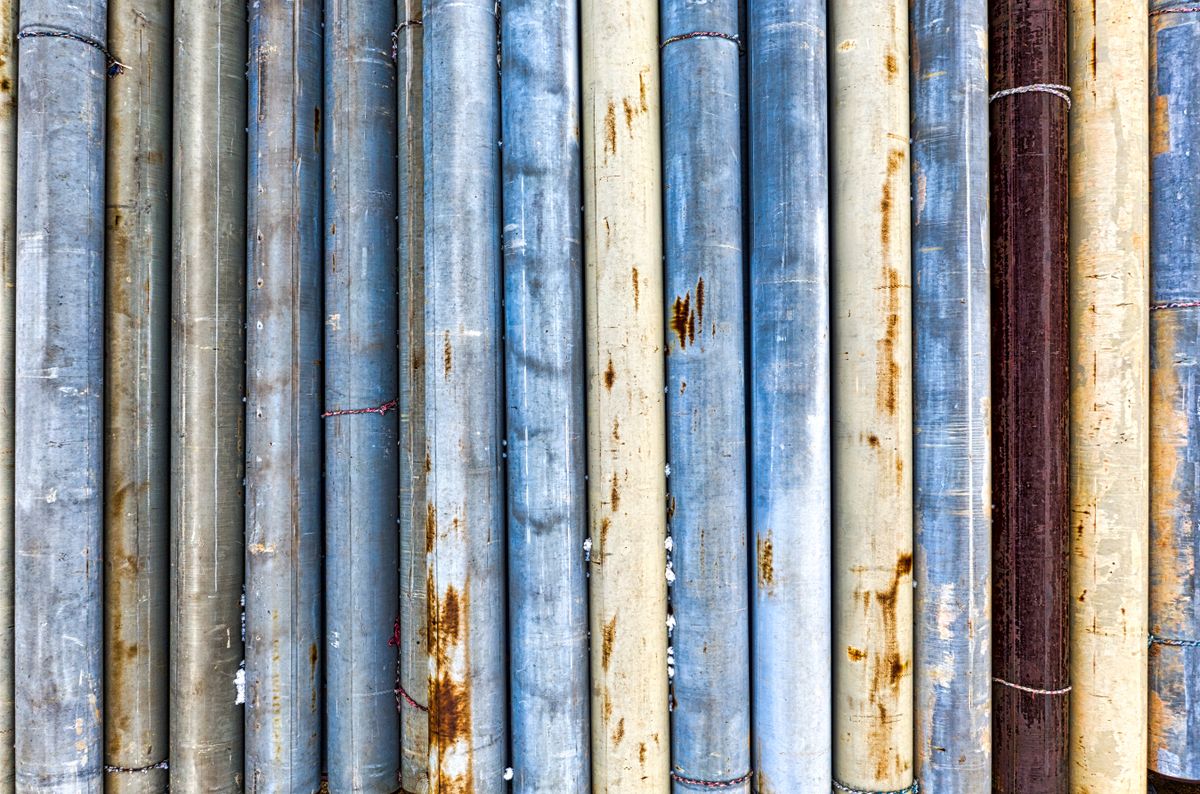
A water softener on galvanized pipe is usually fine, but in badly corroded pipe it can uncover damage that hard water scale was hiding. Decades of scale often coats over the rust pits inside old steel pipe. Softened water stops new scale forming, and the old layer slowly sheds. Expect discolored water for a few weeks. Occasionally a thinned wall starts to leak. Check the pipe before you buy.
This page does not try to talk you into a softener. Sometimes the right order is repipe first, soften second. The steps below help you tell which case you are in.
The Honest Answer on a Water Softener and Galvanized Pipe
Galvanized pipe is steel dipped in zinc. The zinc corrodes first and protects the steel, but it wears away over decades. After that the steel itself rusts. It forms pits in the wall and lumps of rust, called tubercles, that grow into the bore. If your water is hard, calcium carbonate scale builds up over all of it at the same time.
That scale does two things. It narrows the pipe, which is one reason scale and corrosion reduce household water pressure. It also covers the pits, and in places it is the only thing holding back water at a spot where the steel is nearly gone.
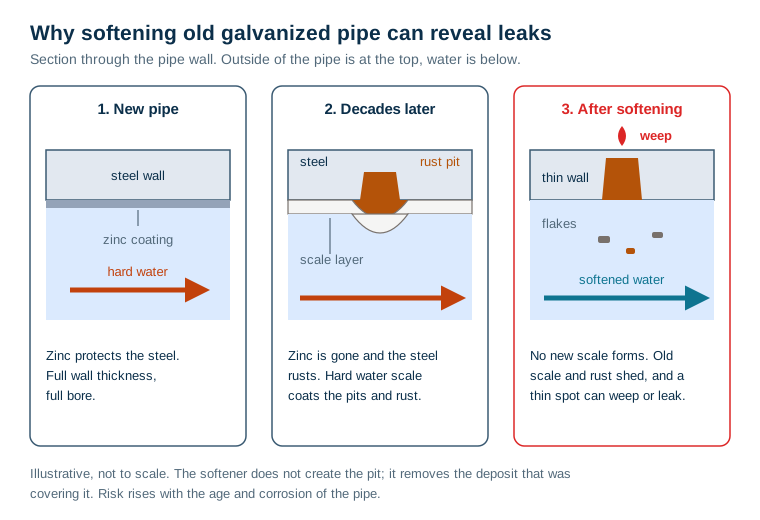
A softener changes the water the pipe sees. Softened water has no calcium or magnesium to deposit, so fresh scale stops forming. Over weeks, some of the old deposit loosens and travels downstream as grey or rust-colored flakes. The same process in copper and other pipe is covered in why a hardness test reads zero but scale remains. Galvanized pipe adds the extra risk: when the flakes come from over a deep pit, what is left behind can weep.
The effect is real, but it is uneven. Plenty of homes with 50-year-old galvanized pipe soften without a single leak, and some develop a drip at a threaded joint within months. The difference is how far corrosion had gone before the softener went in, and you can judge most of that in advance.
What Softening Does and Does Not Do to Galvanized Pipe
Much of what gets said about softened water and old pipe is overstated in both directions. Here is what actually changes:
| Claim | What actually happens |
|---|---|
| "Soft water eats pipes" | Ion exchange swaps calcium and magnesium for sodium. It does not make water acidic. Sound pipe is not dissolved by it |
| "A softener will clean out old pipes" | It stops new scale and some old scale sheds slowly. Rust tubercles do not dissolve, so a choked bore stays choked |
| "The softener caused my leak" | The pit was already there. Removing the scale over it exposed a leak that was coming anyway, possibly years earlier than it would have |
| "Soft water protects pipes" | It protects fixtures and water heaters from new scale. It does nothing for steel that has already lost its zinc |
The broader question of softened water and pipe life, across copper, PEX and steel, is covered in does soft water damage or protect pipes. The short version for galvanized pipe is that the softener only shows you what condition the pipe is already in.
There is one more reason to care about scale in old plumbing. EPA lists "the presence of protective scales or coatings inside the plumbing materials" among the factors that decide how much lead gets into drinking water (EPA, lead in drinking water). Galvanized pipe can hold lead particles picked up from an upstream lead service line. So in an older home, changing the water chemistry is a reason to test, not only a reason to watch for leaks.
Assess the Pipe Before You Buy: A 30-Minute Procedure
You need a flashlight, a fridge magnet, a 5-gallon bucket, a phone timer and a white cup.
- Confirm it is galvanized. Galvanized pipe is dull grey, joined with threaded fittings, and a magnet sticks to it. Copper is not magnetic and lead is soft, dull and also non-magnetic. Old houses often have a mix, with galvanized branches off a copper main or the other way round.
- Map where it runs. Note which sections are galvanized: the main from the meter, the water heater connections, the branches to bathrooms. The main is where the softener will connect. The branches are where shed deposits will end up.
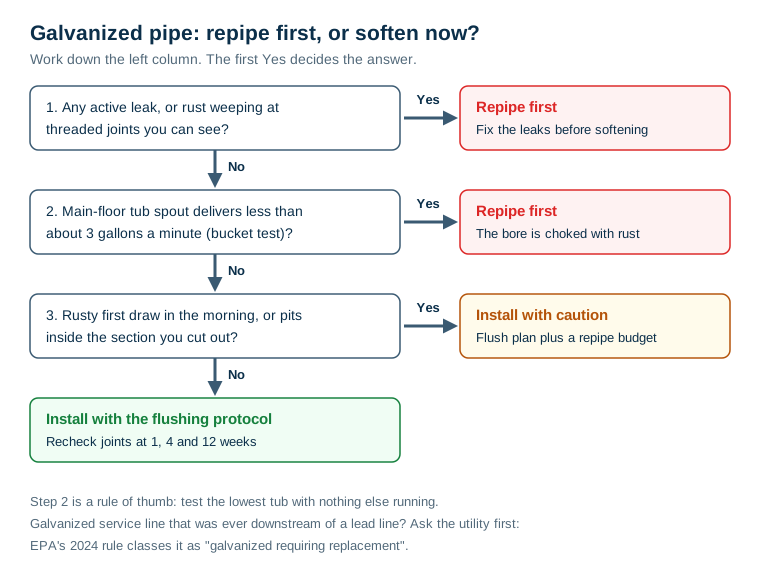
- Inspect every visible threaded joint. Threads are the thinnest part of the pipe, because cutting them removes wall. Look for rust staining, white or orange crust, or damp spots around fittings. Any of those means water is already getting through.
- Do the bucket test. Run the main-floor tub spout fully open, with nothing else running, and time how long it takes to fill a 5-gallon bucket. Divide 300 by the seconds to get gallons per minute. Under about 3 gallons a minute points to a badly restricted bore. That figure is a rule of thumb, not a standard.
- Check the first draw. After the water has sat overnight, fill a white cup from a cold tap before anything else runs. A tinge of rust that clears after a minute of flushing means the pipe itself is shedding iron.
- Ask about the service line. EPA's 2024 lead rule defines a galvanized requiring replacement service line as one that "currently is or ever was downstream of a lead service line" (EPA service line fact sheet). Your utility's service line inventory will show what it has on record for your address. If the service line is flagged, sort that out with the utility before changing anything else. How a softener fits around lead line work is covered in lead service line work and your water softener.
Then put the findings through the decision tree.
The manufacturer guidance points the same way. Pentair's Fleck 5600SXT service manual says existing plumbing "should be free from lime and iron buildup" and that "piping that is built up heavily with lime and/or iron should be replaced." A dealer who skips the pipe entirely and quotes you a softener is not following the valve maker's own instructions.
Where the Softener Meets Old Steel
The connection point gives you one more piece of evidence. To fit the softener you cut out a section of the main. Look at the cut ends before you throw that section away.
- Clean bore, thin even scale, sound wall: good news for the rest of the main.
- Bore half closed with rust lumps: the branches are probably worse, because they are smaller.
- Pits you can see into the wall at the cut face: treat the whole system as the "install with caution" case.
Three connection details matter more with galvanized pipe than with anything else:
Do not wrestle old threads. Galvanized pipe is weakest at the threads, and a pipe wrench on a 60-year-old joint can snap the pipe inside the fitting, often inside the wall. Where you can, cut through straight pipe and make the transition there instead of unscrewing old fittings.
Transition to copper or PEX before the softener. Most installers run new pipe from the cut to the softener's bypass. Where copper meets galvanized steel, a dielectric union or an approved brass transition keeps the two metals from corroding each other at the joint. Your local code decides which it accepts.
Keep the electrical ground continuous. In many older homes the metal water pipe forms part of the electrical grounding path. A plastic bypass valve or a dielectric union breaks that path. Manufacturer instructions typically call for a bonding jumper clamped across the gap, and your local electrical code governs how it is done.
The Flushing Protocol for the First 12 Weeks
The aim is to get loosened scale and rust out of the pipes in a controlled way, and to spot a new leak while it is still a drip.
Day 0: before the softener goes into service
- Remove and clean every faucet aerator and showerhead screen, then refit them. You want a clean baseline so you can see what sheds later.
- With the softener in bypass, open each cold tap at full flow for 2 to 3 minutes, starting nearest the softener and working outward, then the same for hot taps.
- Photograph every visible threaded joint in the basement or crawl space.
Week 1: soften and watch
- Put the softener in service. Check every visible joint each day for the first week, with a dry paper towel wrapped round any joint you are unsure of.
- Clean aerators at the end of the week. Grey or tan flakes are old scale. Orange grit is rust.
Weeks 2 to 4: flush the water heater
- Drain a few gallons from the water heater's drain valve into a bucket. Shed scale settles in the tank, and a galvanized system sends a lot of it there.
- Clean aerators weekly and note how much you find. The amount should drop each week.
Weeks 4 to 12: confirm the trend
- Re-photograph the joints at week 4 and week 12 and compare them with day 0.
- Keep an eye on ceilings under bathrooms and walls behind showers. Joints you cannot see are the ones most likely to surprise you.
Use this table to read what you see:
| What you see | What it means | What to do |
|---|---|---|
| Discoloration and flakes that fade week by week | Old scale leaving, as expected | Keep flushing aerators until clean |
| Rust color that stays the same or gets worse after 8 weeks | Active corrosion, not scale | Plan to repipe the worst runs |
| New damp or rust stain at a threaded joint | A pit or thread has opened | Repair that joint now; inspect its neighbors |
| Pressure drop at one fixture | Flakes lodged in a valve or cartridge | Clean the cartridge or screen |
| Leak inside a wall or ceiling | The pipe has reached the end of its life | Bypass the softener if it helps you isolate, repair, and get a repiping quote |
The Case for Repiping First
This is advice that may delay a sale, which is why it is worth saying clearly. In a house where galvanized pipe is already leaking, badly restricted or rusting at the first draw, the pipe is the problem and the softener is not the fix.
Repiping first has four practical advantages:
- You pay for disruption once. Walls opened for repiping can take the softener loop, the drain and the bypass at the same time.
- The softener's first months are clean. It is not straining shed rust and scale from a hundred feet of old pipe.
- You get the flow back. A softener cannot open up a bore narrowed by rust tubercles. New pipe can.
- Leak risk goes down instead of up. You avoid the window where softening exposes weak spots faster than you can repair them.
If the budget does not stretch to a full repipe, prioritise. The main from the meter to the softener and water heater carries all the water in the house and should go first. Hot lines are usually in worse condition than cold. Bathroom branches you can reach from a basement are cheap to replace. Every place where new copper meets old galvanized steel needs the same transition fitting described above.
The softener's size does not change after repiping. Capacity depends on hardness and water use, not on pipe material. So you can buy it now and install it later, once the plumbing is done.
What a Softener Cannot Fix in an Old Galvanized House
- It cannot restore pressure lost to rust. Scale shedding may improve flow a little. Rust tubercles stay.
- It cannot stop the steel corroding. Once the zinc is gone, the steel rusts with or without softening.
- It does not remove lead. A softener is not a lead treatment, and lead held in old galvanized pipe is a reason to test, not to assume.
- It cannot remove rust coming from the pipe itself. Iron that the house pipe adds after the softener never passes through it.
If the assessment comes out clean, install with the flushing protocol and keep checking the joints. If it doesn't, get a repiping quote first.
Frequently Asked Questions
Can you install a water softener on galvanized pipes?
Yes, and many older homes run softeners on galvanized pipe without trouble. The risk depends on the condition of the pipe, not the material alone. Galvanized pipe that is heavily corroded, choked with rust or already weeping at joints should be repaired or replaced before softening. Pentair's Fleck 5600SXT manual says piping that is built up heavily with lime or iron should be replaced before the softener goes in.
Will a water softener make galvanized pipes leak?
A softener does not eat through sound pipe. What it can do is stop new scale forming, so old scale that was covering corrosion pits slowly sheds. Where a pit has thinned the steel almost through, losing that deposit can expose a weep or pinhole leak. That is why badly corroded galvanized systems sometimes develop leaks in the months after a softener goes in.
Is soft water more corrosive to galvanized pipe?
Ion exchange swaps calcium and magnesium for sodium. It does not add acid, and it barely changes pH. The clearer effect on galvanized pipe is that softened water stops laying down fresh scale. Unprotected steel stays exposed instead of being coated over. The evidence that softened water speeds corrosion by itself is mixed, so the practical question is the condition of your pipe.
How long does rusty water last after installing a softener on old pipe?
Shedding usually shows up as discolored first draws and grit in aerator screens for a few weeks, and it should get less each week. If it is not tapering off after two or three months, or it is getting worse, you are looking at active corrosion rather than old scale leaving, and the pipe needs attention.
Should I repipe before installing a water softener?
Repipe first if you already have leaks, rust weeping at joints, or flow so restricted that a tub spout struggles to deliver about 3 gallons a minute. Otherwise you can install with a flushing plan, inspect the joints over the first 12 weeks and keep a repiping budget in reserve. Repiping first also means the softener never has to cope with the rust flakes the old pipe sheds.
Do I need a dielectric union to connect a softener to galvanized pipe?
Where copper tubing meets galvanized steel, plumbers use a dielectric union or an approved brass transition to keep the two metals from corroding each other at the joint. Your local plumbing code decides which is acceptable. A dielectric union also breaks electrical continuity, so if the metal water pipe is part of the electrical grounding, a bonding jumper must bridge it.
