
How Lead Service Line Work Can Affect a Softener
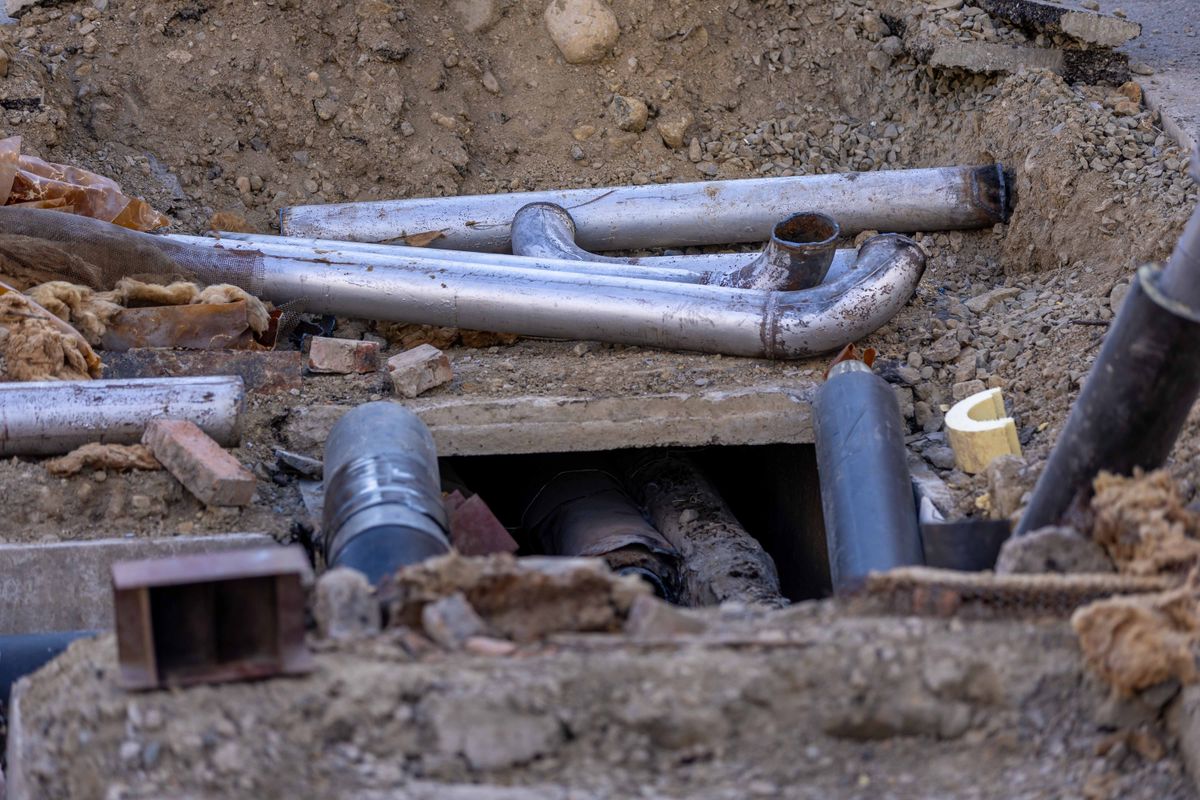
During a lead service line replacement, water softener owners have one job before the crew arrives: put the softener in bypass. The work shakes loose lead particles, scale and sediment. The first flush needs full flow through every tap, and the softener should not be the thing that catches the debris. Bring it back after the first flush. Drink filtered water for six months, and test at one month and at six.
The softener is not lead protection at any point in this process. Why ion exchange cannot be counted on for lead is covered in what a water softener does not remove. This page is about the practical side: what the work does to your water, what it can do to the softener, and the order to do things in.
What Happens to Your Water During the Work
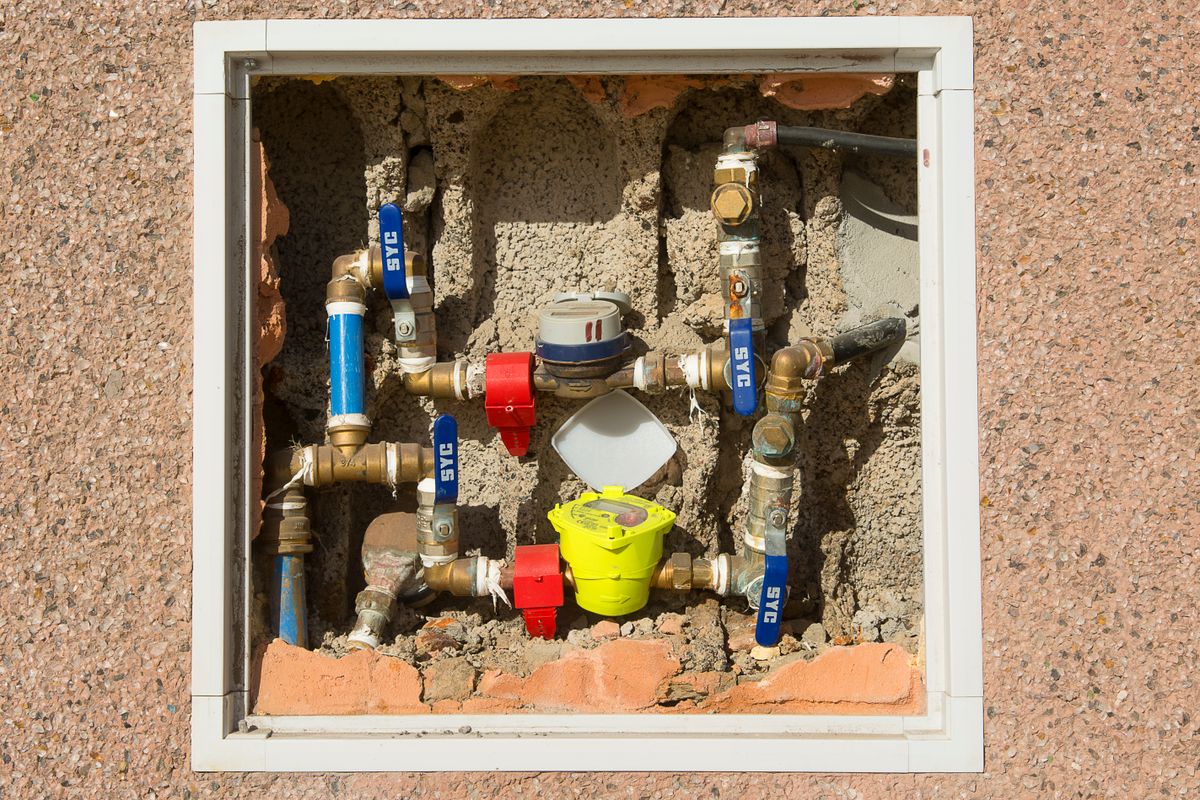
A service line is the pipe between the water main in the street and your house. When any part of it is lead, the utility replaces it, usually with copper, from the main to the house. The day typically runs like this:
- The water is shut off, sometimes for most of the day.
- The crew digs at the main, at the curb stop or meter, and often at the foundation wall.
- The old line is cut out and the new one is connected.
- Water comes back on carrying air, sediment and whatever the disturbance knocked loose.
The disturbance is the problem. Cutting, bending and reconnecting pipe breaks up scale that has built up for decades, and lead-bearing particles break off with it. The same can happen from pipe that stays in place. Galvanized steel that sat downstream of a lead line can hold lead in its scale, which is why EPA's rules treat it as needing replacement too. Water main work, meter swaps and connector replacements can all release particles in the same way.
The regulations behind the work. EPA's Lead and Copper Rule Improvements, finalized in October 2024, require most water systems to replace lead and galvanized-requiring-replacement service lines within 10 years. The rule's compliance date is November 1, 2027. It also lowers the lead action level to 0.010 mg/L (10 ppb). It bans partial replacements except for emergency repairs and certain infrastructure projects. It requires systems to give consumers filters certified to reduce lead after a replacement, and after disturbances from meter, meter setter, connector or main work. Each system's replacement plan must include flushing instructions for particulate lead.
The rule is being challenged in court by the American Water Works Association, with oral argument in the D.C. Circuit scheduled for September 30, 2026. Replacement programs are running in the meantime, and the earlier 2021 rule still applies until the new one takes effect, so your utility's own notice is the document that governs your street.
Lead Service Line Replacement: Water Softener Bypass Comes First
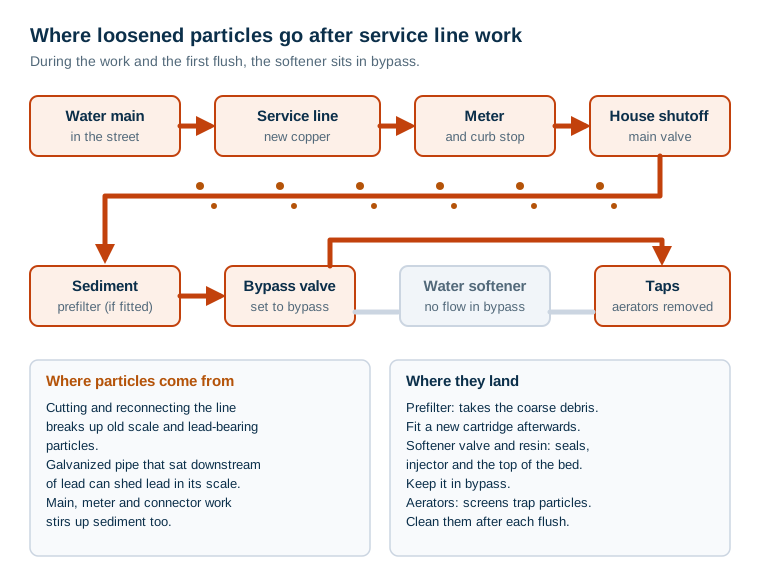
The new service line ends upstream of the softener, so everything the work loosens heads straight for it. There are four reasons to take the softener out of the path first.
1. Flushing needs full flow. The official flushing instructions from New Jersey's Department of Environmental Protection, which draw on AWWA's C810 standard for replacing and flushing lead service lines, say to "turn off or bypass any water softener or filtration system to allow for maximum flow." A softener's valve and resin bed add pressure drop, and flushing works by moving water fast. Why water pressure drops after a softener explains how much a unit can cost you.
2. Sediment damages the valve. Sand, scale flakes and pipe debris score the seals and spacers in the control valve and plug the injector. It is the same damage a failed prefilter causes, described in servicing a softener control valve.
3. The resin bed is not a lead trap. Particles that reach the bed lodge in its top layer. Backwash sends some of them to drain, but a softener is not designed, tested or certified to hold particulate lead. No one publishes data on how much a residential bed retains, or when it lets go. Keeping lead-bearing debris out of the bed is simpler than wondering where it went.
4. Air and pressure surges. The water comes back on with pockets of air and a pressure surge. A softener in bypass does not have to take either.
What bypass does not do. It does not protect the house plumbing downstream, which is why the flush covers every tap. It also does not make the water safe to drink during the disturbance period. Only a certified filter does that.
The Bypass, Flush and Return Sequence
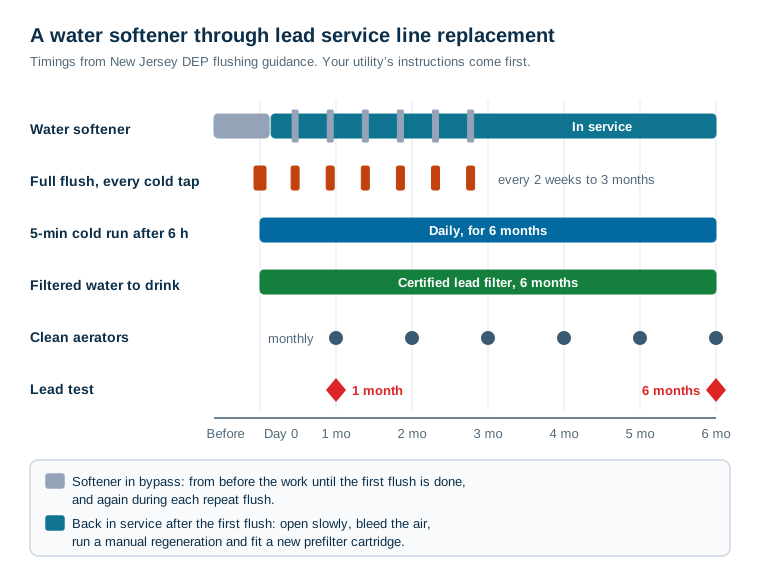
The flushing steps below come from New Jersey's flushing guidance following lead service line replacement. Where your utility's instructions differ, follow theirs.
Before the crew starts
- Put the softener in bypass. On a single-handle bypass that means the handle across the pipe. On a three-valve loop, close the inlet and outlet valves and open the bypass valve. If the bypass has not been moved in years, test it first, using how to inspect and exercise a bypass valve.
- Unplug the softener, or set it so it cannot start a regeneration while the water is off.
- If you have a whole-house sediment or carbon filter, bypass that too.
Immediately after the work
- Throw away ice, and switch off the ice maker.
- Do not drink or cook with tap water, including water from the fridge filter, until the flush is finished.
- Do not open the hot taps. Keeping them shut also keeps disturbed water out of the water heater.
The first full flush
- Run an outside tap at full flow for at least 10 minutes, longer if particles are still visible.
- Remove the aerators and screens from every faucet, and take off the showerheads.
- Starting on the lowest floor, open every cold tap fully, then work upward floor by floor.
- Leave them all running for at least 30 minutes.
- Turn them off in the order you turned them on.
- Clean the aerators and screens, soaking them in white vinegar if needed, then refit them.
Returning the softener to service
- Plug the softener back in and check the clock, since a long outage can reset it.
- Open the bypass partway into service so the tank fills and vents slowly. Then open it fully and bleed the air from the nearest tap. Why air appears in faucets after softener service covers the sputtering that follows.
- Start a manual regeneration. The backwash lifts the bed and sends any fines that did reach it to the drain. The steps are in how to start a manual regeneration safely.
- If there is a sediment prefilter, fit a new cartridge now rather than at its scheduled date. It has just taken the heaviest load it will see all year. When to replace a sediment prefilter before a softener covers the gauge check.
The next three to six months
- Repeat the full flush every two weeks for three months. Put the softener back in bypass for each one.
- For six months, run the cold water for at least five minutes before drinking or cooking whenever it has sat for six hours or more. That water can go through the softener as normal. Showers and laundry count toward the flushing.
- Clean the aerators once a month for six months.
- Drink and cook with filtered water for six months. Denver Water gives its customers the same six-month instruction.
Does Softened Water Put the New Pipe at Risk?
The new service line never carries softened water, because the softener is downstream of it. The corrosion question applies to the plumbing inside the house.
Two public-health sources raise it. New Jersey's lead guidance says softeners and RO units can make water more corrosive to lead solder and plumbing, and that installing them at the point of entry in homes with lead plumbing should be done under the supervision of a qualified professional. The Minnesota Department of Health says softening can corrode pipes and contribute to elevated lead and copper. For new copper plumbing, it advises not running the softener for at least the first few weeks, so the pipe can form a protective mineral layer.
What that means in practice:
- If only the service line was replaced, the interior plumbing is the same as before. Return the softener after the first flush.
- If the plumber also replaced interior piping with new copper, for example from the meter to the first branch, consider Minnesota's advice and leave the softener in bypass for the first few weeks.
- If the house was built before 1986 or has galvanized pipe, lead solder or lead-bearing scale may remain inside. Ask the utility whether its corrosion control assumes unsoftened water, and test after the softener is back in service, not before.
Reading Lead-Free Marks on the Parts a Plumber Installs
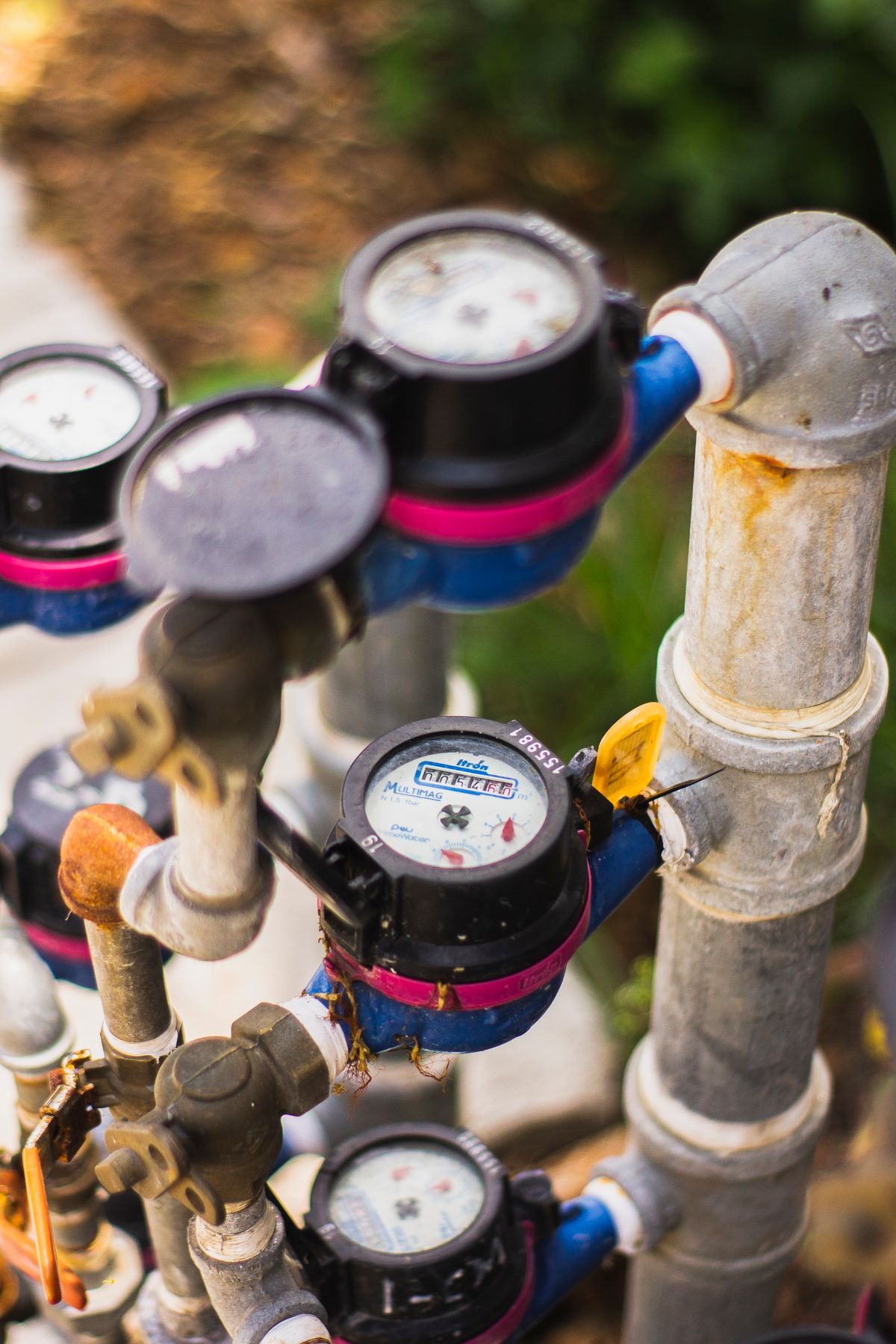
Line replacement often leaves you buying a new main shutoff, a meter-side fitting or a re-plumbed softener loop. EPA's guide to identifying lead-free certification marks explains how to check these parts.
The legal definition. "Lead free" means no more than a 0.25% weighted average of lead across the wetted surfaces of pipes, fittings and fixtures, and no more than 0.2% in solder and flux. It does not mean zero lead. Since September 2023, manufacturers and importers have had to certify that these products meet the requirement.
Who can certify. EPA lists eight ANSI-accredited certification bodies: ALS Global, CSA Group, IAPMO R&T, ICC-ES, Intertek, NSF, UL Solutions and WQA. Each has its own mark, and it comes with identifier text naming the standard.
| Mark text you see | What it tells you | What it does not tell you |
|---|---|---|
| NSF/ANSI/CAN 372 or NSF/ANSI 372 | Lead content meets the 0.25% weighted-average limit | Anything about other metals or chemicals leaching |
| NSF/ANSI/CAN 61 or NSF/ANSI 61 | What the part leaches into water was tested, metals and non-metals. Since October 2017, 61 has required 372 compliance for non-exempt products | Older stock marked 61 only may predate that change. Check the listing |
| NSF/ANSI 61-G, NSF-61/9-G (Annex G) | A retired lead-content mark, still found on older products | Nothing newer than when it was made |
| "LLC" or "Low Lead Content" next to a CSA mark | CSA's identifier for NSF/ANSI/CAN 372 compliance | Leaching performance |
| "Lead free" or "LF" printed by the maker, with no certifier mark | A manufacturer's statement | Third-party verification. Look up the listing or ask the maker |
| NSF/ANSI 44 on the softener | The softener's performance, material safety and structural integrity | Lead reduction. NSF/ANSI 44 has no lead claim |
Exempt products. Some items sit outside the lead-free requirement entirely, including toilets, bidets, urinals, fill valves, flushometer valves, tub fillers, shower valves and service saddles. A shower valve without a lead-free mark is not breaking the rule. That is one reason kitchen and bathroom sink faucets, which are covered, are the ones to check.
Testing After the Work: When and What to Ask For
A test result, not a date on the calendar, tells you when the disturbance is over. New Jersey's guidance sets out when to sample:
| When | Why |
|---|---|
| Within 72 hours of a partial replacement | Shows the immediate effect of the disturbance. Coordinate with the utility if they did the partial |
| At least one month after replacement | After the flushing period and normal use |
| Six months after replacement | Once water chemistry has re-established |
How to sample. Let the water sit unused for at least six hours. Take a first-draw sample, the first water out of the tap, then a second sample after five minutes of flushing. The first shows what the faucet and nearby plumbing add. The second represents the service line. EPA's new rule uses a similar idea for its own compliance sampling, collecting the first and the fifth liter at homes with lead lines.
Pick your tap deliberately. Use a cold kitchen tap you drink from, and note on the sample form whether it is softened. If one sample is high and the other is not, the difference points to where the lead is coming from. The pattern is explained in why softened water has a metallic taste, which uses the same first-draw and flushed comparison.
Use a lab certified for lead in drinking water. Many utilities offer a free kit with a replacement.
What the Softener Cannot Do Here
- It cannot reduce lead reliably. There is no NSF/ANSI 44 lead claim. For lead, EPA recommends a filter certified to reduce lead to 5 ppb or less under NSF/ANSI 53, with Class I particulate reduction under NSF/ANSI 42.
- It cannot tell you when the water is safe. Only the one-month and six-month tests can.
- It cannot protect itself from debris unless it is in bypass. The resin bed and valve take whatever arrives.
- It cannot undo corrosion downstream. Softening can make water more aggressive to old solder and brass, which is the opposite of what you want during a disturbance.
The 7-Step Checklist
- When the utility sends notice, find and test the bypass. Note whether you have a sediment prefilter.
- The morning of the work, put the softener and any whole-house filters in bypass, and unplug the softener.
- When the water comes back, skip the hot taps and the ice, and do not drink until the flush is done.
- Flush: outside tap for 10 minutes or more, aerators off, every cold tap for 30 minutes or more, lowest floor first.
- Return the softener: open slowly, bleed the air, run a manual regeneration, and fit a fresh prefilter cartridge.
- For three months, bypass the softener for each repeat flush every two weeks. For six months, run the cold tap for five minutes after water has sat, and drink filtered water.
- Test at one month and at six months, first-draw and five-minute samples, from a tap you drink from.
Lead service line replacement is one of the best things that can happen to a house's water. For a lead service line replacement, water softener care comes down to bypass, flush, return and test. Done in that order, the softener comes through undamaged and stays out of the lead question, where it never belonged.
Frequently Asked Questions
Should I bypass my water softener during lead service line replacement?
Yes. New Jersey's flushing guidance for lead service line replacement tells homeowners to turn off or bypass any water softener or filtration system before flushing, so the house gets maximum flow. Bypassing also keeps the sediment, scale and lead particles loosened by the work out of the resin bed and control valve. Put the softener in bypass before the crew shuts off the water and leave it there until the first full flush is done.
How long should I flush my pipes after a lead service line is replaced?
New Jersey's guidance is at least 10 minutes from an outside tap at full flow, then at least 30 minutes with every cold tap in the house running, with the aerators removed. Repeat that full flush every two weeks for three months. For six months, run the cold water for at least five minutes before drinking or cooking whenever it has sat for six hours or more. Follow your own utility's instructions if they differ.
Will my water softener remove lead after the service line is replaced?
Do not rely on it. NSF/ANSI 44, the softener standard, has no lead reduction claim, and the lead released by line work is often particulate. Use the filter your utility provides, or one certified to NSF/ANSI 53 for lead and NSF/ANSI 42 for Class I particulate reduction, for drinking and cooking water for at least six months.
How long does lead stay high after service line replacement?
Lead can rise for a while after replacement because the work disturbs deposits in the remaining pipe and in household plumbing. That is why utilities recommend filtered water for about six months, and why New Jersey's guidance calls for tests at least one month after the work and again at six months. Your own test results are the only way to know when your water has settled.
Can I use softened water to flush the pipes after replacement?
Flush with the softener in bypass. The first flush is meant to move particles out of the pipes as fast as possible, and a softener's valve and resin bed restrict flow and catch debris. Once the first flush is complete, return the softener to service. The daily five-minute cold-water runs can go through the softener as normal.
What does NSF 61 or NSF 372 on a plumbing part mean?
NSF/ANSI/CAN 372 certifies lead content: no more than a 0.25% weighted average on wetted surfaces, and 0.2% for solder and flux. NSF/ANSI/CAN 61 certifies what a part leaches into water. Since October 2017 it has also required 372 compliance for non-exempt products. Neither mark means the part removes lead, and lead free does not mean zero lead.
