
Best Water Softeners for Large Homes, Chosen by Flow Rate
The best water softeners for large homes are chosen for flow before capacity. A big house usually has grains to spare, but several showers, a tub and the laundry running together can pass more water than a narrow resin bed carries, and pressure drops. Size the tank and valve to your busiest moment first. In practice that means a 13-inch tank on a 1-inch valve, or two tanks in parallel above about 14 gpm.
So this guide starts with a worksheet that turns your fixtures into a minimum flow, then lists only the softeners whose tank and valve can carry it.
Disclosure: Hard Water Solved may earn a commission if you buy through links on this page, at no extra cost to you. It does not change which products we include or how we rank them. Read our disclaimer.
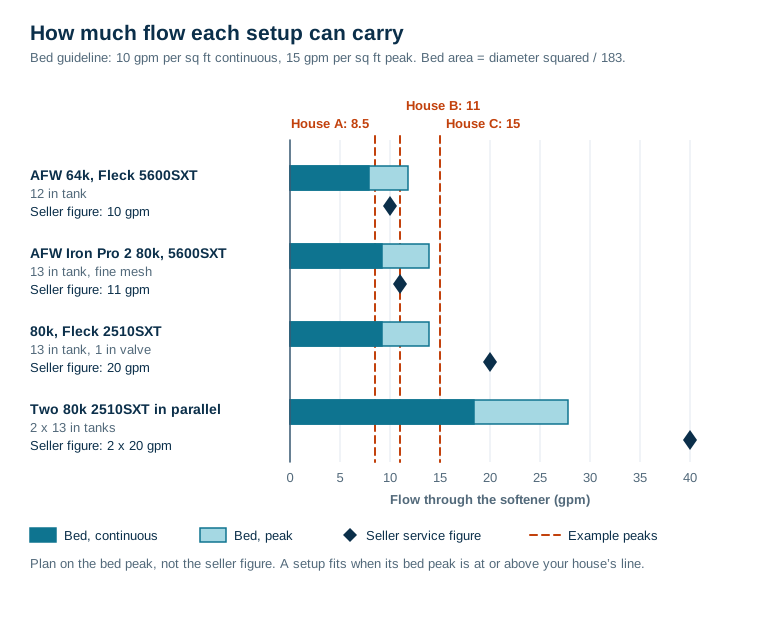
Method. No unit here was physically tested by us. Each candidate's flow was judged two ways: the seller's quoted service flow, and the flow its resin bed carries at the design guideline of 10 gpm per square foot continuous and 15 gpm per square foot peak. Bed area is the tank diameter in inches squared, divided by 183, from Water Conditioning & Purification's surface-loading guidance. A unit qualifies when its bed peak covers the house's busiest moment. Only salt-based systems sold new on Amazon.com were considered.
Prices are not listed here because they change often. Use the buttons to see the current price on Amazon.
Step One: The Fixture Worksheet
List what genuinely runs at the same time in your house at its busiest, usually a weekday morning or a weekend evening. Use real flows:
- Showers. EPA WaterSense figures are 2.5 gpm for a standard showerhead and no more than 2.0 gpm for a WaterSense model. A multi-head or rain shower uses the sum of every outlet.
- Tub fillers, washing machines and taps. Time each one filling a 1-gallon jug at full flow. 20 seconds is 3 gpm, 15 seconds is 4 gpm.
Three example houses, with the tub filler and washing machine flows as timed in the example:
| Fixture | Flow each | House A | House B | House C |
|---|---|---|---|---|
| WaterSense showers | 2.0 gpm | 2 (4.0) | 2 (4.0) | 2 (4.0) |
| Standard shower | 2.5 gpm | 0 | 1 (2.5) | 1 (2.5) |
| Soaking tub filler | 4.0 gpm (timed) | 0 | 0 | 1 (4.0) |
| Washing machine | 3.0 gpm (timed) | 1 (3.0) | 1 (3.0) | 1 (3.0) |
| Kitchen tap | 1.5 gpm | 1 (1.5) | 1 (1.5) | 1 (1.5) |
| Busiest moment | 8.5 gpm | 11.0 gpm | 15.0 gpm |
The plumbing-code method, which counts fixture units rather than timing fixtures, gives a higher, more conservative figure. A house with four full bathrooms and a bar sink comes to about 19.6 gpm by that method. The full method, including the code tables, is in grain capacity vs peak flow rate. Use the practical figure to choose, and the code figure to make sure a rare all-at-once moment costs pressure but does not choke the house.
Take irrigation off the softened line
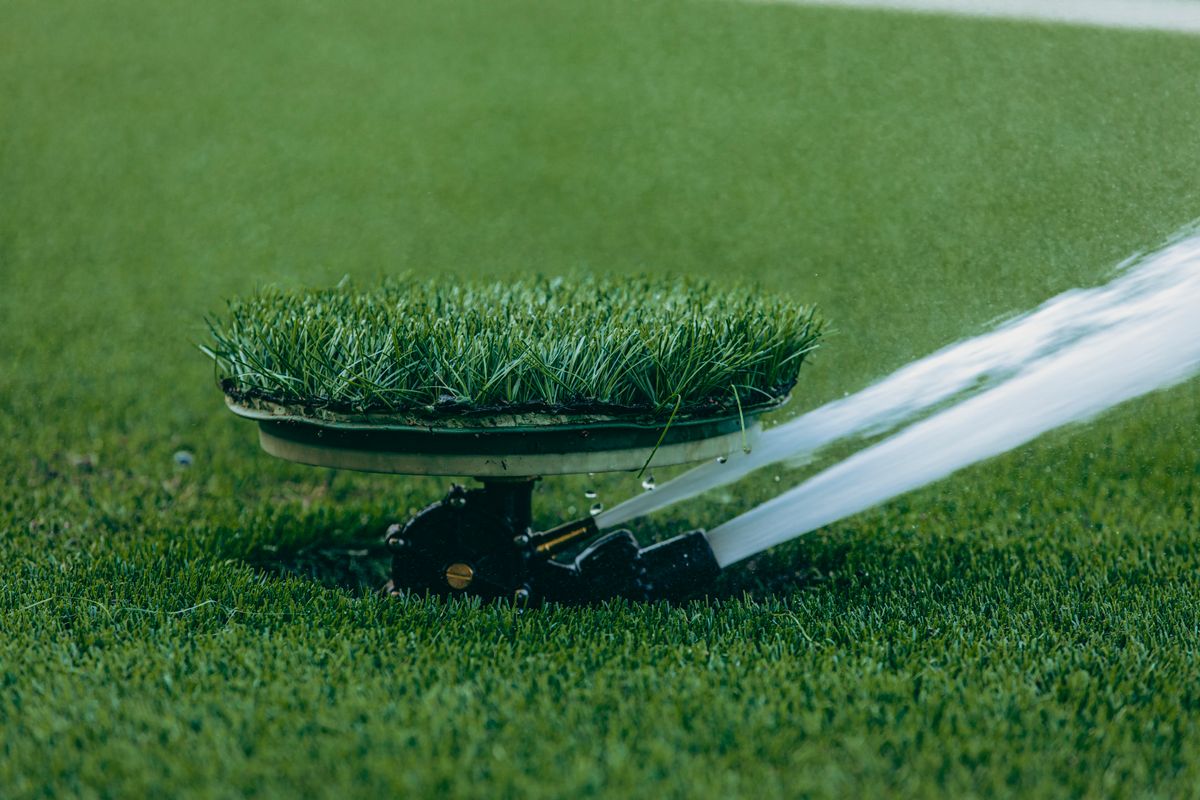
Sprinkler zones and hose bibbs are the biggest single flows in most large properties, and the water does not need softening. If they are on the softened loop, a single irrigation zone can push the busiest moment past anything a residential bed carries, and it spends salt on the lawn. Plumbing them ahead of the softener is usually the cheapest flow upgrade available. If a bathroom was added after the softener went in, resizing a softener after adding a bathroom shows how to rerun the numbers.
Step Two: Match the Busiest Moment to a Tank and Valve
Two parts of a softener limit flow. The resin bed limits it by its cross-section, so a wider tank carries more. The control valve has its own ceiling. Pentair rates the Fleck 2510 valve alone at 19 gpm at a 15 psi drop, and the Fleck 7000 at 28 gpm. The whole system always passes less than the valve alone.
| Tank | Bed area | Continuous | Peak | Suits a busiest moment of |
|---|---|---|---|---|
| 12 in | 0.79 sq ft | 7.9 gpm | 11.8 gpm | up to about 9 gpm with margin (House A) |
| 13 in | 0.92 sq ft | 9.2 gpm | 13.9 gpm | up to about 12 gpm with margin (House B) |
| Two 13 in in parallel | 1.85 sq ft | 18.4 gpm | 27.8 gpm | above about 14 gpm (House C) |
Why the margin matters. Pressure loss through a softener rises roughly with the square of the flow, as worked through in water softener pressure drop. A unit running near its limit at your busiest moment can cost 10 to 15 psi. Leaving about 30 percent headroom keeps the loss under about 9 psi.
Capacity follows. Six people using a measured 58.6 gallons each a day at 15 grains per gallon remove about 5,300 grains a day. A 2.5 cubic foot bed at an efficient 6 lb salt dose gives about 52,500 grains, roughly nine days with a day held in reserve. The full method is in how to size a water softener.
The Best Water Softeners for Large Homes, by Busiest Moment
| Busiest moment | Pick | Tank and valve | Amazon |
|---|---|---|---|
| Up to about 9 gpm (large but quiet house) | AFWFilters Fleck 5600SXT 64k | 2.0 cu ft, 12 in, 5600SXT | Check price on Amazon |
| Up to about 12 gpm, well with iron under 3 ppm | AFWFilters Iron Pro 2 80k | 2.5 cu ft fine mesh, 13x54, 5600SXT | Check price on Amazon |
| Up to about 12 gpm | 80k softener with Fleck 2510SXT | 2.5 cu ft, 13x54, 1 in 2510SXT | Check price on Amazon |
| Above about 14 gpm | Two of the 80k 2510SXT units, in parallel, plus plumbing | 2 x 13x54 | Check price on Amazon |
Best Overall for Large Homes: 80k Softener With Fleck 2510SXT
- What it is: 2.5 cubic feet of high-capacity resin in a 13x54 tank on the 1-inch Fleck 2510SXT metered valve, with an 18x33 round brine tank that holds about 250 lb of salt.
- Name at the seller's store: AFWFilters lists it as the Fleck 2510AiQ, formerly 2510SXT.
- Flow: the seller quotes 20 gpm service. The 13-inch bed carries about 9.2 gpm continuous and 13.9 gpm at peak, and that is the figure to plan on. The 2510's 1-inch internal ports pass more water than a 5600-class valve, so the valve is not the limit here. The bed is.
- Fits: House B, a busiest moment of about 11 gpm, with headroom.
- Wrong for: iron wells (standard resin), busiest moments above about 14 gpm, and buyers who want warranty terms on paper. The listing says only "manufacturer warranty", so ask the seller before ordering.
Best for Large Homes on Iron Wells: AFWFilters Iron Pro 2 80k
- What it is: 2.5 cubic feet of fine-mesh resin in a 13x54 tank on a Fleck 5600SXT. The seller rates it for ferrous iron up to 6 ppm and quotes 11 gpm service, 16 gpm peak and 4.5 gpm backwash.
- The valve is the visible difference. It shares the 13-inch bed of the 2510SXT pick, but the seller's service figure is 11 gpm against 20. Plan on the bed either way, and treat this unit as the choice for wells where fine-mesh resin matters more than the last few gpm.
- Warranty (seller): 5 years on the control head, 10 years on the mineral tank.
- Wrong for: iron above 3 ppm or any rusty water (iron filter first), and well pumps that cannot hold 4.5 gpm for the backwash while the house draws water.
Best for Large but Quiet Houses: AFWFilters Fleck 5600SXT 64k
- What it is: 2.0 cubic feet of standard 8 percent resin in a 12-inch tank on a Fleck 5600SXT, with an 18x33 brine tank. The seller quotes 10 gpm service and 15 gpm peak.
- Fits: a large floor area with few people, or a household that rarely runs more than two showers and an appliance together. That is House A, at about 8.5 gpm.
- Warranty (seller): 5 years on the control head, 10 years on the mineral tank.
- Wrong for: House B and above, and any house where guests or teenagers regularly stack showers.
Above About 14 gpm: Two Tanks in Parallel
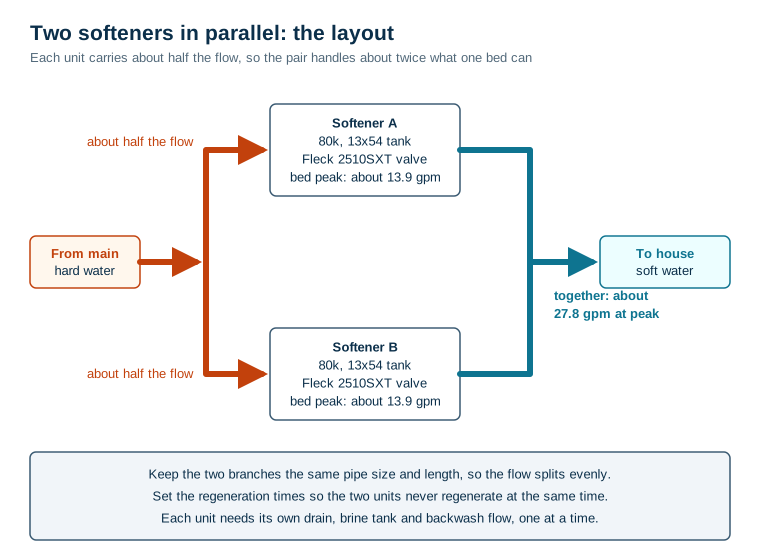
House C, at about 15 gpm, is beyond what any single 13-inch bed carries at peak. Two of the 80k 2510SXT units, plumbed side by side, give a combined bed area of about 1.85 square feet, or about 18.4 gpm continuous and 27.8 gpm at peak.
Three rules make a parallel pair work:
- Equal branches. Use the same pipe size and length to each unit, so the flow splits evenly. An uneven split overloads one bed while the other idles.
- Separate regeneration times. A single-tank valve sends untreated water through to the house while it regenerates, usually for up to about two hours. Set the two units at least that far apart overnight, so one is always softening.
- Two of everything else. Each unit needs its own brine tank and drain connection.
When Two Tanks in Parallel Beat One Oversized Tank
The alternative to two 13-inch tanks is one much larger tank on a high-flow valve. A 16-inch tank, for example, has a bed area of about 1.40 square feet, carrying about 14 gpm continuous and 21 gpm at peak. It would need a valve like the Fleck 7000, which Pentair rates for softener tanks up to 24 inches.
| Two tanks in parallel | One oversized tank | |
|---|---|---|
| Peak flow | Higher for the same total resin | Lower for the same total resin |
| Backwash demand on a well | One tank's backwash at a time | The whole large bed at once, which needs much more flow |
| If a valve fails | Half the softening keeps working | No softening until repaired |
| Parts | Two of everything, both standard residential | One of everything, larger and less common |
| Availability as complete systems on Amazon | Yes, using the 80k 2510SXT twice | We found no complete 14-inch-plus system we could verify |
Parallel wins on wells with a modest pump, in houses that cannot be without soft water, and wherever you want standard parts any supplier stocks. One large tank wins where the supply easily covers the backwash, space is short and an installer wants one valve to program.
What a twin-tank softener does not do. A twin alternating unit, such as a Fleck 9100SXT, keeps soft water flowing during regeneration but does not add flow: only one tank is in service at a time. AFWFilters quotes the same 10 gpm service for its twin 64k as for its single 64k in the same 12-inch tank. The trade-offs are covered in single tank vs twin tank water softeners.
Considered and Not Picked
- Fleck 7000SXT systems on Amazon (64k in a 12x52 tank and 48k in a 10x54). Both Amazon listings showed "currently unavailable" on 1 October 2026. Even when in stock, the 7000 valve's 28 gpm is wasted on these tanks: a 12-inch bed carries about 11.8 gpm at peak and a 10-inch bed about 8.2 gpm.
- SpringWell salt-based SS+. SpringWell's site lists an 80,000-grain model in a 13-inch tank rated at 20 gpm. We could not open its Amazon listing to confirm which sizes it carries, so it is not ranked.
- Dealer systems. Culligan, Kinetico, EcoWater and RainSoft sell high-flow residential softeners through dealers, not on Amazon. A local quote is the way to compare them.
Buy None of These If…
- Your busiest moment is under about 8 gpm. A large floor area does not make a large demand. An ordinary 1.5 or 2.0 cubic foot softener is cheaper to buy and run.
- Your well cannot supply the flow. A softener rated for 15 gpm does nothing if the pump delivers 10. Measure the supply first, as described in well pump flow and softener backwashing.
- Pressure is already low before any treatment. Find the cause first. A bigger softener only keeps its own loss small.
- Hardness is under about 3.5 gpg. No softener is needed, whatever the size of the house.
The best water softeners for large homes are the ones whose resin bed covers your busiest moment with room to spare. Count what runs at once, take irrigation off the line, and choose the tank before you look at the grain rating.
Frequently Asked Questions
What size water softener do I need for a large house?
Size it for flow first. Add up the fixtures that really run at the same time, such as showers, a tub filler, the washing machine and the kitchen tap, using real flow rates. Then choose a softener whose resin bed can carry that flow at its peak guideline. A 12-inch tank carries about 11.8 gpm at peak, a 13-inch tank about 13.9 gpm, and two 13-inch tanks in parallel about 27.8 gpm. Grain capacity almost always follows comfortably.
What is the best water softener for a 5-bathroom house?
It depends on how many of those bathrooms are in use at once, not on how many there are. If the busiest moment is about 11 gpm, such as three showers, the washing machine and a kitchen tap, an 80,000-grain softener with a 13-inch tank on a 1-inch Fleck 2510SXT valve fits. If the busiest moment is nearer 15 gpm, with a tub filling as well, two such softeners in parallel are the safer choice.
Is a twin-tank softener better for a large house?
Only for continuous soft water, not for flow. A twin alternating softener keeps one tank in service while the other regenerates, so it never sends hard water to the house. It does not pass more gallons per minute than one of its tanks. AFWFilters quotes the same 10 gpm service flow for its twin 64k as for a single 64k in the same 12-inch tank.
When should I put two water softeners in parallel?
When your busiest moment needs more flow than a single residential resin bed can carry, roughly above 14 gpm, or when your well pump cannot supply the backwash flow a single very large tank would need. Two identical softeners in parallel split the flow between them and backwash one at a time. Keep the branches the same size and length, and set the regenerations at different times.
Do I need a 1.25 inch or 1.5 inch softener valve for a large home?
Not always. The valve sets one ceiling and the resin bed sets another. A 1-inch Fleck 2510 valve is rated at 19 gpm alone at a 15 psi drop, more than a 13-inch bed can carry at its peak guideline. A 1.25-inch Fleck 7000-class valve rated at 28 gpm only pays off on a tank wide enough to use it, typically 14 inches or larger.
Does irrigation water need to go through the water softener?
Usually not, and in a large house it should not. Outdoor taps and sprinkler zones add a lot of flow and use up softening capacity on water that does not need it. Plumbing irrigation and hose bibbs ahead of the softener removes them from the peak flow calculation and saves salt.
