
How to Resize a Softener After Adding a Bathroom
To resize water softener after remodel work, first split the change into two numbers. New fixtures raise peak flow, the gallons per minute that run at once. New people raise daily load, the grains the softener must remove each day. A bathroom added without more occupants usually needs a flow check, and sometimes a bigger valve, rather than more grain capacity.
That distinction saves real money. Many homeowners, and some installers, treat a new bathroom as a reason to buy a bigger softener. A bigger softener adds capacity the household will not use, while the problem the new bathroom actually creates, too much water running at once, is set by the valve and tank diameter.
Resize Water Softener After Remodel Work? Check These Two Numbers
A softener has two separate limits, and they come from different parts of the unit.
| Limit | What sets it | What changes it in a home |
|---|---|---|
| Grain capacity (how long between regenerations) | Resin volume and salt dose | Number of people, water use per person, hardness |
| Service flow (how many gpm it can pass) | Valve port size and tank diameter | Number of fixtures that run at the same time |
The two are independent. A household can double its peak flow without using one extra gallon a day, and it can double its daily use without ever running more than two taps at once. The full difference between the two ratings is explained in grain capacity versus peak flow rate.
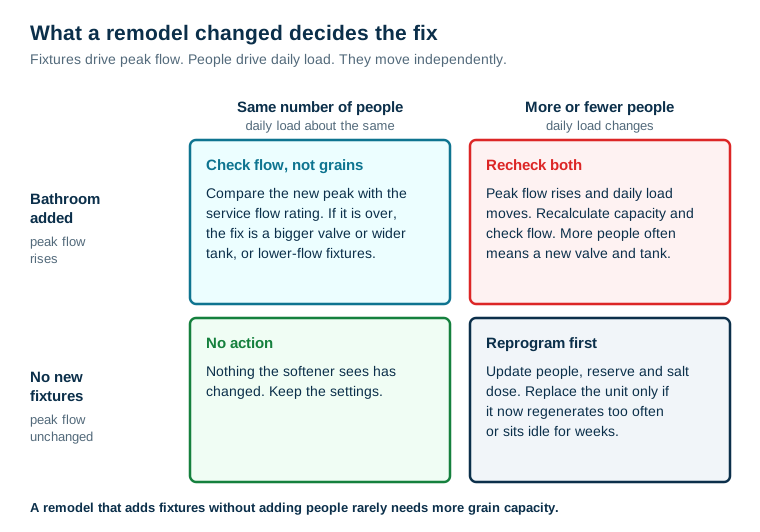
A remodel can move either number, both, or neither. The four outcomes need four different responses.
Why a New Bathroom Barely Moves Daily Load
Water use follows people, not rooms. A family of four showers four times a day whether the house has two bathrooms or three. The extra bathroom spreads those showers across more rooms and lets more of them happen at once. It does not create more showers.
Penn State Extension's guide to water softening sizes capacity from people and use, not fixture count. Its worked example multiplies 75 gallons per person per day by the hardness and the number of people to get the daily grain load. Nothing in that sum counts bathrooms.
There are exceptions, and they are specific:
- A large soaking tub. It uses more water per bath than a shower does, so if someone switches from showers to baths, daily volume rises.
- Multi-head or rain showers and body sprays. These add both flow and volume per use. A shower with two 2.5 gpm heads uses twice the water of one, every time.
- A bathroom that brings people with it. An in-law suite or a basement bathroom built for a new tenant adds occupants, which is an occupancy change as well as a plumbing one.
- Guests. A guest bathroom used a few weekends a year adds a little load in those weeks. The softener's reserve should absorb it.
If none of these apply, the grain capacity you had before the remodel is still right.
Peak Flow: Where the New Bathroom Actually Shows Up
Every new fixture is another draw that can open at the same time as the others. The busy half hour on a weekday morning, with showers, basins and the kitchen all running, is when the softener meets its hardest test.
A softener has a service flow rating, the continuous gallons per minute it can pass while still softening properly. Push water through faster than that and two things happen. Pressure drops across the valve and bed, so every fixture weakens. And water spends less time in contact with the resin, so some hardness can slip through during the peak.
To estimate your new peak, add up what can realistically run at once. EPA WaterSense lists the federal standard for showerheads at 2.5 gpm, with WaterSense models at no more than 2.0 gpm. For bathroom faucets the figures are 2.2 gpm and 1.5 gpm.
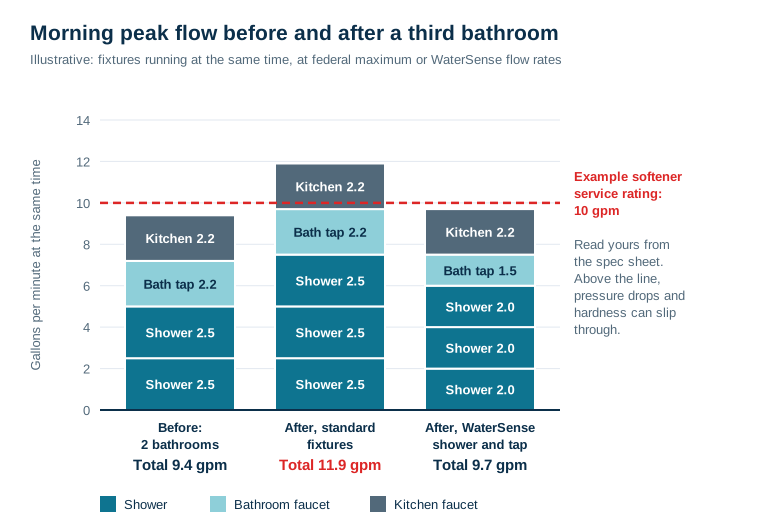
The chart is illustrative, and the 10 gpm line is an example rating, not a standard. Read the real figure from your softener's spec sheet or the data plate on the valve. Two points hold whatever your numbers are:
- One extra shower adds 2.0 to 2.5 gpm to the peak. That is enough to push a unit that was close to its limit over it.
- Fixture choice can undo it. Fitting WaterSense showerheads in all three bathrooms and a 1.5 gpm basin faucet brought the example back under the line without touching the softener.
If the new peak is over the rating, the softener fix is flow, not grains:
| Upgrade | What it does | When it is enough |
|---|---|---|
| Lower-flow showerheads and faucets | Reduces the peak at the source | Peak is only slightly over the rating |
| Larger valve port (for example 3/4 inch to 1 inch, or 1 inch to 1.25 inch) | Less restriction through the control valve | The valve, not the tank, is the bottleneck |
| Wider mineral tank | More bed area, so water moves through slower | Tank diameter limits the flow rating |
| Both, as a new valve and tank | Raises the flow rating fully | Peak is well over the rating |
Pressure problems that appear after a remodel are not always the softener. A pinched supply line, a clogged prefilter or an undersized branch pipe can cause the same symptom. Measure pressure before and after the softener with water running before you blame it.
Occupancy Changes With No Plumbing Work at All
The other half of the problem arrives with no contractor involved. Households change size, and the softener's program does not update itself.
| Change | What it does to daily load | What to change |
|---|---|---|
| Young children become teenagers | Rises, often sharply: longer showers, more laundry | Raise the people count or daily use; check reserve |
| A child leaves home | Falls by about one person's use | Lower the people count; check days between regenerations |
| A parent or relative moves in | Rises by one person | Raise the people count |
| Someone starts working from home | Rises a little: more daytime use | Usually nothing; the meter handles it |
| Everyone leaves but two | Falls by half or more | Reprogram, lower the salt dose, set a day override |
Rising load is easy to spot. Hardness appears before the next regeneration, usually late in the cycle, and the salt level drops faster than it used to. If the unit is metered and reprogrammed with the right number of people, it often copes by regenerating more often. It only needs replacing if it would now regenerate every day or two.
Falling load is invisible. The water stays soft and the salt lasts longer, so nothing prompts a check. But a bed that now waits three or four weeks between regenerations sits idle for too long, which brings its own problems, covered in whether a water softener can be too large. The fix is a lower salt dose and a day override, not a new unit.
Fixtures That Change Both Numbers at Once
Some bathroom features move peak flow and daily load together, and they are the ones most likely to justify a larger softener rather than just a larger valve.
- Multi-head showers. Two or three heads at 2.0 to 2.5 gpm each can add 4 to 7.5 gpm to the peak on their own, and every shower uses more water.
- Large soaking tubs. They fill at the tub spout's flow rate, which can be well above a showerhead's, and each fill adds a lot of volume.
- Steam showers. They use a modest amount of water, but the generator needs softened water to avoid scale, so they should be on the softened branch.
If the remodel includes any of these, recalculate capacity with the new daily volume and check the flow rating against the new peak. Both answers may point to a bigger unit. When they do, comparing softeners for large homes by the flow their tank and valve can carry starts from the same fixture count.
A Before-and-After Worksheet
Fill both columns. Only the rows that change tell you what to do.
| Step | Before the remodel | After the remodel |
|---|---|---|
| 1. People in the house | ||
| 2. Daily use (people × about 75 gallons, or read the softener's meter over a week) | ||
| 3. Compensated hardness (gpg) | ||
| 4. Daily grain load (step 2 × step 3) | ||
| 5. Usable capacity at current salt dose (from the manual) | ||
| 6. Days between regenerations (step 5 − one day's load, ÷ step 4) | ||
| 7. Fixtures likely to run at once, with gpm | ||
| 8. Peak flow (sum of step 7) | ||
| 9. Softener service flow rating (spec sheet) |
Reading the result:
- Step 6 still 4 to 8 days, step 8 under step 9: keep everything. At most, update the people count.
- Step 6 still reasonable, step 8 over step 9: a flow problem. Try lower-flow fixtures first, then a larger valve or tank.
- Step 6 now under 3 days: a capacity problem. The unit will regenerate constantly; resize it.
- Step 6 now over 14 days: oversized for the smaller household. Reprogram and set a day override.
The full method for step 5 and for choosing a new size if you need one is in how to size a water softener.
Plumbing Checks While the Walls Are Open
A remodel is the cheapest time to fix softener plumbing, because the pipes are exposed. Worth checking before the drywall goes up:
- Is the new bathroom on the softened side? New branches are sometimes tied into the nearest cold line, which may be upstream of the softener. Test the new fixtures for hardness once they are running.
- Is the branch pipe sized for the fixtures? A new bathroom on an undersized branch will have weak pressure however good the softener is.
- Does the new toilet need softened water? Most homes soften it; some owners choose not to. Either way, decide on purpose.
- Is there a place for a bigger unit later? If a larger valve or tank might be needed, check floor space, the drain and a power outlet now.
The wider list of decisions for a softener during building work is in water softener planning during a remodel.
What Resizing the Softener Will Not Fix
- Low supply pressure or flow. A softener cannot deliver more water than the service line or well pump provides. On a well, the pump sets the ceiling.
- Water heater recovery. Running out of hot water with three showers going is a water heater problem, not a softener one.
- An undersized branch pipe. Weak flow at the new bathroom alone, with good flow everywhere else, points at the branch.
- Contaminants other than hardness. A softener does not treat lead, nitrate, bacteria or most other health-related contaminants, as Penn State's guide points out.
The Short Version
- Work out whether the remodel changed fixtures, people, or both.
- If only fixtures changed, compare the new peak with the softener's service flow rating.
- If the peak is over, try lower-flow fixtures before replacing the softener, then a larger valve or wider tank.
- If people changed, reprogram first. Replace the unit only if it now regenerates every day or two, or sits idle for weeks.
- Check the new bathroom is on softened water before the walls are closed.
Frequently Asked Questions
Do I need a bigger water softener if I add a bathroom?
Not always. A new bathroom rarely changes how much water the household uses per day, because the same people still shower once each. What it changes is how many fixtures can run at the same time. If your softener's service flow rating already covers the new peak, keep it. If not, the fix is often a larger valve and wider tank rather than more grain capacity.
How do I know if my water softener can handle another bathroom?
Add up the flow of every fixture likely to run at the same time after the remodel, using the gpm printed on showerheads and faucets. Compare that total with the continuous service flow rating on your softener's spec sheet or data plate. If the peak is above the rating, expect a pressure drop and some hardness slipping through during busy mornings.
Does the number of bathrooms determine water softener size?
Bathroom count is a rough proxy for peak flow, not for capacity. Grain capacity is sized from people, water use per person and hardness. Bathroom count matters when choosing the valve port size and tank diameter, because those set how many gallons per minute the softener can pass without losing pressure or letting hardness through.
What size water softener do I need for 3 bathrooms?
Three bathrooms usually means a peak somewhere between 9 and 12 gpm, depending on fixtures. Many homes at that size use a 1-inch valve on a 10 or 12 inch tank, but the right answer comes from your own fixture flows and household size. Size capacity from people and hardness, then check the valve and tank can pass your peak.
Should I reprogram my softener when kids move out?
Yes. Fewer people means fewer grains removed per day, so a metered softener regenerates less often. If it would now go more than about two weeks between regenerations, lower the salt dose, reset the reserve and set a day override so the resin does not sit idle.
Can low-flow fixtures avoid a softener upgrade?
Often. EPA WaterSense showerheads use no more than 2.0 gpm and WaterSense bathroom faucets no more than 1.5 gpm, compared with federal limits of 2.5 and 2.2. Fitting them in the new bathroom, and swapping the older showerheads, can bring the new peak back under the softener's rating without touching the softener.
