
Single-Tank vs Twin-Tank Water Softeners
The single tank vs twin tank water softener choice comes down to one difference. A twin-tank softener never sends hard water to the house, because one tank is always in service while the other regenerates. A single tank bypasses untreated water during regeneration, which is why it is set to run at night. For most households that gap is small, and the twin tank's extra cost is not repaid.
For some households it is. The useful question is not whether twin tanks are better in general. It is whether your house is one of the few where the gap actually matters.
Single Tank vs Twin Tank Water Softener: The One Real Difference
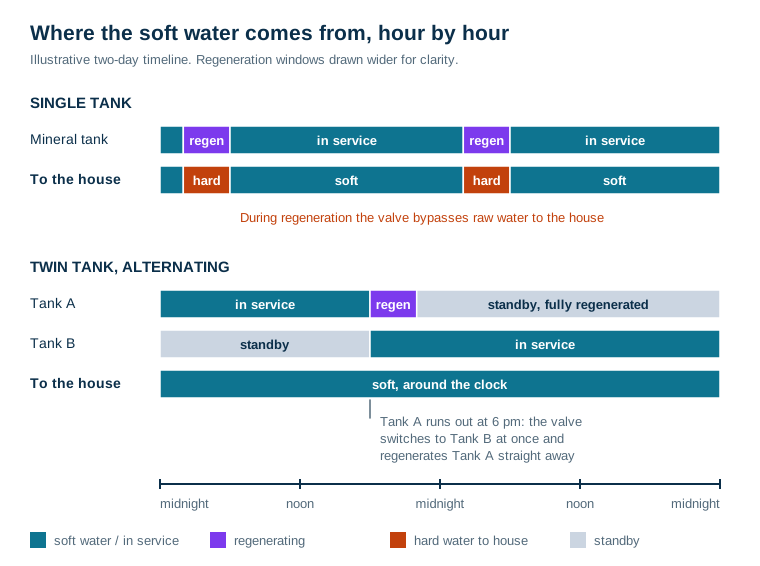
A single-tank softener has one bed of resin and one control valve. When the bed is exhausted, the valve takes it out of service for regeneration, which on most residential units takes around two hours. During that time the valve connects the incoming water straight through to the house. Anything drawn then is hard.
A twin-tank softener has two beds and one valve that switches between them. When the tank in service is exhausted, the valve switches to the standby tank at once, then regenerates the used tank. The house gets soft water the whole time.
Two smaller differences follow from that.
- When regeneration happens. A single tank waits until a set time, usually around 2 am, even if the bed ran out in the evening. A twin tank regenerates as soon as a bed is exhausted, at any hour.
- Reserve capacity. Because a single tank has to last until 2 am, the valve holds back a reserve, normally about one day's use, and regenerates early to protect it. A twin tank needs no reserve. Each bed runs until it is genuinely exhausted.
Everything else, from the resin to the salt to the quality of the soft water, is the same.
Why Most Households Do Not Need Two Tanks
The single tank's weakness is the hard water it lets through during regeneration. For a typical household that regenerates at 2 am every five to eight days, the exposure is small:
- Nobody is usually using water at 2 am.
- The water heater fills from what was drawn the evening before and refills in the morning, after regeneration has finished.
- A well-set reserve means the bed does not run out before regeneration starts.
The occasional hard water from a toilet flush at 2:30 am makes no practical difference to scale or laundry. Paying for a second resin tank, a more complex valve and more floor space to remove it rarely makes sense.
The same holds for the "never run out of soft water" pitch. A correctly sized single tank with a properly set reserve does not run out either. When a single tank does run out, the cause is almost always undersizing or a wrong setting, not the single-tank design. Sizing the bed to your actual daily load is covered in how to size a water softener.
The Households Where a Twin Tank Genuinely Pays
The second tank earns its cost when the hard-water gap, the reserve, or the size of a single tank becomes a real problem.
| Household | Why a single tank struggles | What the twin tank fixes |
|---|---|---|
| Water used at all hours (night shifts, large families, shared houses) | There is no quiet time for regeneration | Regenerates whenever needed with no hard-water gap |
| Very high hardness | A single tank big enough to last several days is very large, or it must regenerate almost daily | Two smaller tanks alternate, each regenerating often at a modest salt dose |
| Well with limited backwash flow | A large-diameter tank needs more backwash flow than the pump can deliver | Two narrower tanks each need less backwash flow |
| Home business (hair salon, day care, home laundry service) | Hard water during a regeneration disrupts work, and use is heavy and irregular | Soft water every hour the business runs |
Irregular schedules. The 2 am regeneration assumes the house is asleep. In a home where someone works nights, showers at 3 am and runs the dishwasher at 4 am, there is no safe window. Regeneration always overlaps with someone's use.
Very high hardness. At high hardness, a single tank sized for about a week between regenerations becomes big and expensive, and a big bed brings its own problems. A single tank sized smaller has to regenerate every day or two, which means frequent hard-water windows and a large reserve held back each time. Two moderate tanks alternating handle the load more gracefully.
Well systems with limited backwash flow. Backwash flow rises with the area of the bed, so a wide tank asks the well for more gallons per minute than a narrow one. Where the pump cannot supply the backwash a single large tank needs, two narrower tanks can deliver the same total capacity with each needing less backwash flow. Many twin designs also regenerate using softened water from the other tank. How to check your well's flow against a tank's backwash need is set out in sizing a softener for a low-yield well.
Home businesses. A salon washing hair, a day care running a dishwasher and laundry all day, or a home laundry service may use water heavily at irregular times and depend on its quality. For them, a twin tank is closer to a business tool than a luxury.
The Efficiency Case, Properly Stated
Twin tanks are sometimes sold as more efficient. That can be true, for specific reasons.
No wasted reserve. A single tank regenerates when remaining capacity falls below its reserve. The unused reserve is recharged with fresh salt along with the exhausted part of the bed. A twin tank runs each bed to exhaustion, so every regeneration recharges resin that was genuinely used.
Small beds at modest salt doses. Resin uses salt more efficiently at lower doses. Two smaller beds regenerated more often at a low dose can remove the same hardness with less salt than one big bed regenerated at a high dose.
Always demand-initiated. A twin tank has to meter or sense the water to know when to switch, so it is inherently demand-initiated. The Department of Energy's Building America guide to water softeners notes that softeners using a fixed time-clock schedule do not qualify for an efficiency rating, and that time-clock regeneration can waste large volumes of water.
What that does not mean. A metered single-tank softener, set up well, is also efficient. The difference between a well-set metered single tank and a twin tank is modest for most households. The much larger difference is between either of them and an old timer-based unit, which is covered in metered vs timer-based water softeners.
What a Twin Tank Costs You
- Price. A second tank of resin and a more complex valve cost more up front. At the top of the range, the Kinetico review works out the installed price at which a non-electric twin tank breaks even against a metered Fleck twin over 15 years.
- Space. Three tanks instead of two, with room to reach all of them.
- Complexity. The valve has more positions and more seals. When it does need service, there is more to diagnose.
- Regeneration water. Per year it is about the same as a well-set metered single tank. If the unit regenerates with soft water from the other tank, that soft water is part of the cost.
None of those are reasons to avoid a twin tank where it fits the household. They are reasons not to buy one simply because it is the premium option.
Cabinet vs Two-Piece: A Space Decision, Not a Performance One
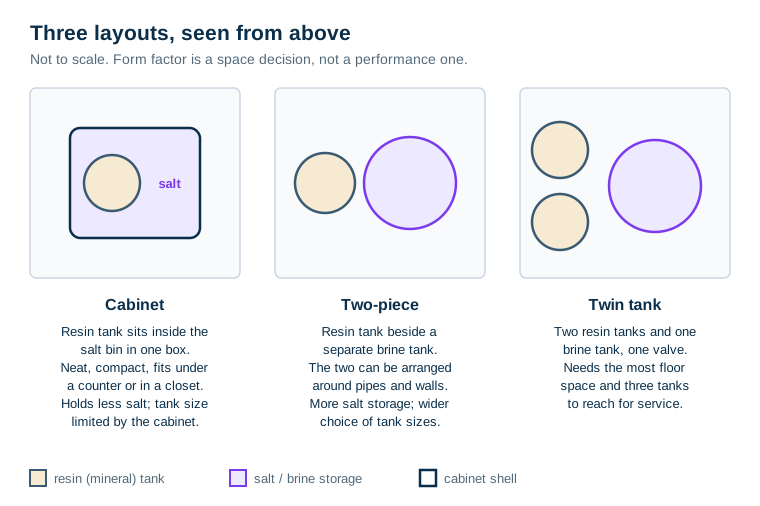
Separate from the number of tanks is how they are packaged. Single-tank softeners come in two forms, and the choice between them is about where the unit has to fit.
| Cabinet | Two-piece | Twin tank | |
|---|---|---|---|
| Layout | Resin tank inside the salt bin | Resin tank beside a separate brine tank | Two resin tanks plus a brine tank |
| Floor space | Least | Moderate | Most |
| Salt storage | Smaller | Larger | Larger |
| Tank size choice | Limited by the cabinet | Wide | Wide |
| Fitting around obstacles | One fixed box | Tanks can be placed apart | Three tanks to arrange |
| Best fit | Closets, laundry rooms, under counters | Basements, garages | Where the twin benefits apply and space allows |
Choose a cabinet when space is tight or the unit is on show, and when your hardness and household size fit one of the tank sizes available in cabinet form. Expect to add salt more often.
Choose a two-piece when you need a particular tank size, want larger salt storage, or have to fit the tanks around a water heater, pipes or a floor drain.
Measure before you choose. Allow room above the valve for service, space to lift a salt bag over the brine tank, and access to the bypass valve. The full list of clearances is in how much space a water softener needs.
A Quick Decision Checklist
Answer each question honestly.
- Does anyone in the house regularly use water between midnight and 5 am?
- Is your hardness high enough that a single tank sized for a week would be very large, or would need to regenerate almost daily?
- Are you on a well that cannot supply the backwash flow a single large tank would need?
- Does a business in the home depend on soft water throughout the day?
No to all four: a single-tank metered softener is the right choice. Pick cabinet or two-piece based on your space.
Yes to one or more: a twin tank is worth pricing, and the more yeses the stronger the case. Comparing twin-tank softeners by how they switch tanks and what the premium over a single tank costs is the place to start.
What a Twin Tank Will Not Do
- It does not soften better. The resin and the softened water are the same as a single tank's.
- It does not handle more iron. Iron fouls both tanks equally. Significant iron needs its own treatment.
- It does not add flow. Service flow depends on the valve and tank diameter. Two narrow tanks alternating do not pass more gallons per minute than one of them.
- It does not remove contaminants other than hardness. Penn State Extension's guide to water softening notes that softeners will not necessarily remove more serious drinking water contaminants. That is true of both designs.
The Bottom Line
A twin-tank softener solves one problem well: it keeps soft water flowing during regeneration. For households that use water at all hours, have very hard water, run a business from home, or have a well that cannot backwash one large tank, that is worth paying for. For everyone else, a correctly sized metered single tank regenerating at 2 am gives almost the same result for less money and less space.
Frequently Asked Questions
What is the difference between a single tank and twin tank water softener?
A single tank softener has one resin tank. While it regenerates, usually for about two hours at night, the valve sends untreated water to the house. A twin tank softener has two resin tanks and one valve that switches between them, so one is always in service while the other regenerates or waits on standby. The house gets soft water around the clock.
Is a twin tank water softener worth it?
For most households, no. A single tank that regenerates in the early hours, when nobody uses water, gives nearly the same result for less money and space. A twin tank pays off where water is used at all hours, where hardness is very high, where a well cannot supply the backwash flow of one large tank, or where a home business needs soft water continuously.
Do twin tank water softeners use less salt?
They can. Because a twin tank switches to the standby tank at the moment one is exhausted, it does not need to hold back reserve capacity for the rest of the day. Every regeneration uses a fully exhausted bed. Smaller tanks regenerated more often at a modest salt dose can also be efficient. The saving depends on how the unit is set up.
Do I get hard water when my softener regenerates?
With a single tank softener, yes. During regeneration the control valve bypasses untreated water to the house, which is why most are set to regenerate at around 2 am. Anyone running hot water at that time fills the water heater with hard water. A twin tank softener avoids this because the second tank keeps supplying soft water.
How much space does a twin tank water softener need?
More than any other layout. It has two resin tanks and a brine tank, and all three need to be reachable for service. A two-piece single tank needs a resin tank and a brine tank side by side. A cabinet unit, with the resin tank inside the salt bin, is the most compact.
Is a cabinet water softener as good as a two-piece?
The softening process is the same. The differences are practical: a cabinet unit takes less floor space and looks tidier, but it usually holds less salt and offers fewer tank sizes. A two-piece unit holds more salt, comes in a wider range of sizes and lets you arrange the two tanks around obstacles.
