
Can You Use Water While a Softener Regenerates?
Can you use water during regeneration? Yes. A single-tank softener does not shut the water off while it regenerates. The control valve sends untreated water around the resin to the house, so taps, toilets and appliances keep working. The catch is what you get: hard water for the whole cycle, which also ends up in the water heater, and a real risk of salty water later if you draw heavily during the brine stage. A glass of water or a toilet flush is fine. A long hot shower is the one to put off.
Pentair's manual for its whole-house water softening system states it directly: "The system diverts hard water to the home during regeneration. If any water is drawn during regeneration, some hard water will enter the plumbing system and possibly the hot water tank." It adds that the cycle "can last up to two hours after the starting time". That is the whole practical answer. The rest of this page is what it means at each stage, and why the hot side behaves differently from the cold.
What Reaches the Tap in Each Stage
Regeneration runs through a sequence of valve positions. The stages themselves are explained in how water softener regeneration works. What matters here is that on a single-tank softener, the house is on bypass water for most of the sequence.
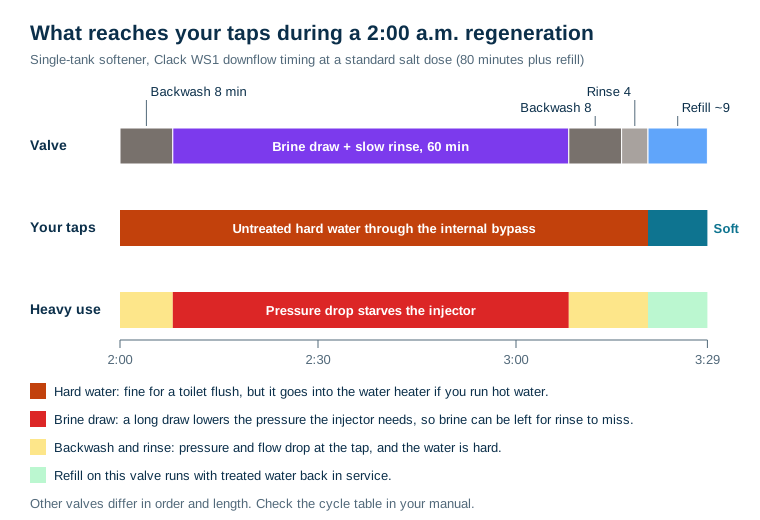
The timeline uses the downflow cycle times from Clack's WS1 valve manual at a mid-range salt setting. Other valves run a different order, but the pattern is the same.
| Stage | Typical length | What reaches your tap | Using water here |
|---|---|---|---|
| Backwash | 6 to 10 min | Untreated hard water. Pressure and flow may drop, because the supply is also feeding a 2 to 3.5 gpm backwash | Harmless apart from hardness |
| Brine draw and slow rinse | 45 to 75 min | Untreated hard water | The riskiest stage. Heavy use lowers the pressure the injector needs |
| Second backwash or fast rinse | 3 to 10 min | Untreated hard water, reduced pressure | Harmless apart from hardness |
| Brine refill | a few minutes to about 15 | Depends on the valve. Clack's manual says that "when in the fill mode, the system is providing treated water" | Usually fine |
So "can I use water?" has a different answer at 2:05, 2:40 and 3:25. For a single flush or a drink, the answer is always yes. The answer changes for a shower, the dishwasher or a load of laundry.
Why Hot Water Stays Hard Longer Than Cold
Cold taps are simple. Hard water flows only while the valve is bypassing. Once the cycle ends, the few gallons in the cold pipes clear in seconds of running.
The hot side is different, because the water heater is a storage tank. Every gallon of hot water you draw is replaced immediately by a gallon from the supply. During regeneration that replacement water is hard. It does not pass through and leave. It stays in the tank and mixes with the soft water already there.
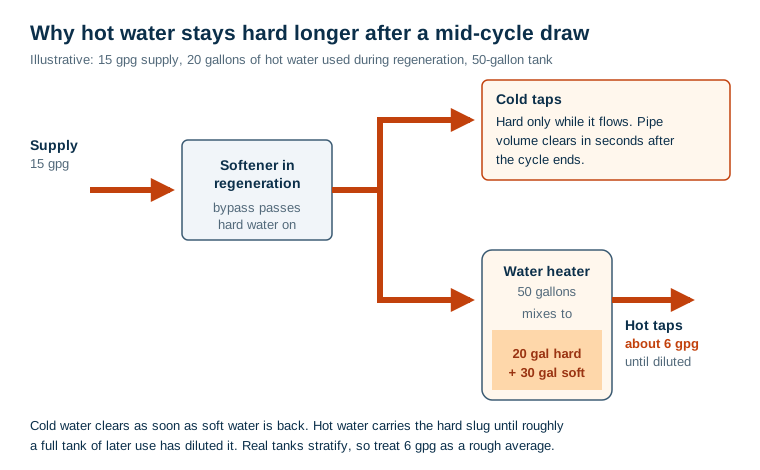
An illustrative example: 15 gpg water, a 50-gallon heater, and a 20-gallon hot shower during the cycle. The tank now holds 20 gallons of hard water and 30 of soft. Mixed, that is about 6 gpg until later use dilutes it. That takes roughly another full tank of hot water. Real tanks stratify, with cold water entering near the bottom, so it will not be perfectly even, but the effect is real.
This is also why a heater that sees regular hard water from mid-cycle use slowly collects scale even though the house has a softener. If your hot water tests harder than the cold on the day after a regeneration, and fine on other days, timing is the likely cause. If it is always harder, look at the plumbing instead: hot water hard but cold water soft separates the two.
The Specific Risk During the Brine Draw
This is the part people are not told. The injector pulls brine from the brine tank using the pressure of the water passing through it, the way a venturi works. It needs a minimum pressure to do it. Pentair's troubleshooting table lists low operating pressure as the first cause when the valve fails to draw brine, and the fix as verifying at least 20 psi. The same table lists low water pressure as a cause of salt water to service. Its suggested fix is checking the injector size and increasing the brine/slow rinse time.
Heavy use during the brine stage pulls the house pressure down. On a well with a pressure switch set to 30/50, a long shower plus a washing machine can take the pressure to the bottom of that range and hold it there. The injector draws more slowly. The brine draw stage is timed, not measured, so when its minutes run out, the valve moves on regardless. Two things can follow:
- Brine left in the resin tank. The slow rinse and fast rinse are sized to flush out a normal dose of brine. A dose that was drawn late may not be fully rinsed before the valve returns to service. The first water afterwards tastes salty.
- Brine left in the brine tank. If the draw is cut short, some brine stays behind. The refill then adds a full dose of water on top of it, and the level creeps up cycle after cycle.
Either way, the resin gets less brine than it was meant to, so it regenerates to less than its rated capacity. The house runs out of soft water early in the next cycle.
On city water with stable pressure, the effect is usually small. On a well, or on any system near the bottom of its pressure range, a long draw during the brine stage is the clearest reason to wait. If you keep getting salty water after regeneration even when nobody used water, the problem is in the softener, not the timing. The usual faults are in why softened water tastes salty.
How to Tell a Regeneration Is Running
The quickest check is the valve display, which on most electronic valves shows the stage and the minutes left; water running to the drain with no tap open confirms it. The sounds and signs at each stage are described in how water softener regeneration works. If you catch a cycle running in the afternoon, the valve's clock is usually wrong rather than an extra cycle running.
When It Is Fine, and When to Wait
| Use during regeneration | Verdict |
|---|---|
| Toilet flush, hand washing, glass of water | Fine. A few gallons of hard water |
| Cold-water laundry rinse | Fine for the machine. Detergent works less well on hard water |
| Dishwasher cycle | Better to wait. Hard water means spotting, and the hot fill goes through the heater |
| Shower or bath | Wait if you can, especially during the brine draw |
| Filling a hot tub or pool | Wait. Large volume, all hard |
| Outdoor irrigation on a softened line | Wait. Large draw lowers pressure during the brine stage |
If the regeneration regularly clashes with someone's shower, the fix is the schedule, not willpower. Move the start time to the house's real quiet window. Choosing that window, and when to switch to immediate regeneration instead, is its own settings decision.
The Twin-Tank Contrast
A twin-tank softener removes the question. One tank is always in service while the other regenerates, so there is no bypass, no hard water and no brine-stage pressure risk. Fleck's 5600SXT manual notes that on twin-tank systems with soft-water regeneration, the reserve should be set to the volume of water used during regeneration, because the tank in service also supplies the regeneration water.
For most houses that is not worth paying for. A single tank that regenerates at 2 a.m. meets nobody. It is worth it where there is no quiet window: homes with night-shift workers, large households using water around the clock, and buildings with several units on one softener. The trade-off is set out in single-tank vs twin-tank water softeners. If your house is one of those, comparing twin-tank softeners on per-tank size and price is the next step.
What Timing Cannot Fix
- It will not make bypass water soft. Whatever you draw during the cycle is untreated. No setting changes that on a single tank.
- It will not fix a softener that regenerates by day. If regeneration keeps landing in the afternoon, the clock is probably wrong, often after a power cut. That is a clock-backup problem, not a timing choice.
- It will not fix low pressure. If the brine draw fails even when nobody is using water, the pressure, injector or drain line needs attention.
- It will not fix a softener that is always hard. Hard water outside the regeneration window means capacity, programming or resin, not timing.
Use what you need during a cycle, avoid long hot-water draws, and keep the brine draw clear. If regeneration and your household keep colliding, move the start time or look at a twin tank.
Frequently Asked Questions
Is it OK to use water when the water softener is regenerating?
Yes. On most single-tank softeners the control valve passes untreated water through to the house during regeneration, so taps, toilets and appliances keep working. The water is hard for the length of the cycle, and pressure can dip during backwash. Short uses such as a toilet flush or a glass of water do no harm. Long hot-water uses are the ones to avoid.
What happens if I run a shower during softener regeneration?
You get hard water at the shower head, and the hot water you use is replaced in the water heater by hard water. That hard water stays in the tank and mixes with the soft water already there, so the hot side stays partly hard for a while after the cycle ends. A long shower during the brine draw can also lower the pressure the injector needs to pull brine, which is one cause of salty water afterwards.
Can using water during regeneration damage a softener?
Not normally. The valve is designed to bypass water to the house during the cycle. The risks are to water quality rather than the equipment: hard water in the heater, and on some systems a slower brine draw that leaves brine in the resin tank when service resumes. If the pressure at the valve falls below its minimum, typically about 20 psi, the injector may not draw brine at all and that regeneration is wasted.
How long should I wait to use water after the softener regenerates?
Until the cycle has finished, which is typically 1 to 2 hours after the start time. Pentair's manual for its whole-house softener says the cycle can last up to two hours after the starting time. Many displays show the stage and minutes remaining. On valves that refill the brine tank as the last step, soft water may already be available during the refill.
Why does my water taste salty after the softener regenerates?
Brine reached the service line. The usual causes are too much water in the brine tank or a brine draw that was too slow, from low pressure, a partly blocked injector or heavy water use during the brine stage. Run a cold tap for a minute. If it keeps happening after cycles when nobody used water, the fault is in the softener, not the timing.
Does a twin-tank softener let you use water during regeneration?
Yes, and the water stays soft. A twin-tank softener keeps one tank in service while the other regenerates, so there is no hard-water bypass and no timing to plan around. That is its one real advantage over a single tank, and it matters most in homes that use water at all hours.
