
Why Hot Water Is Hard but Cold Water Is Soft
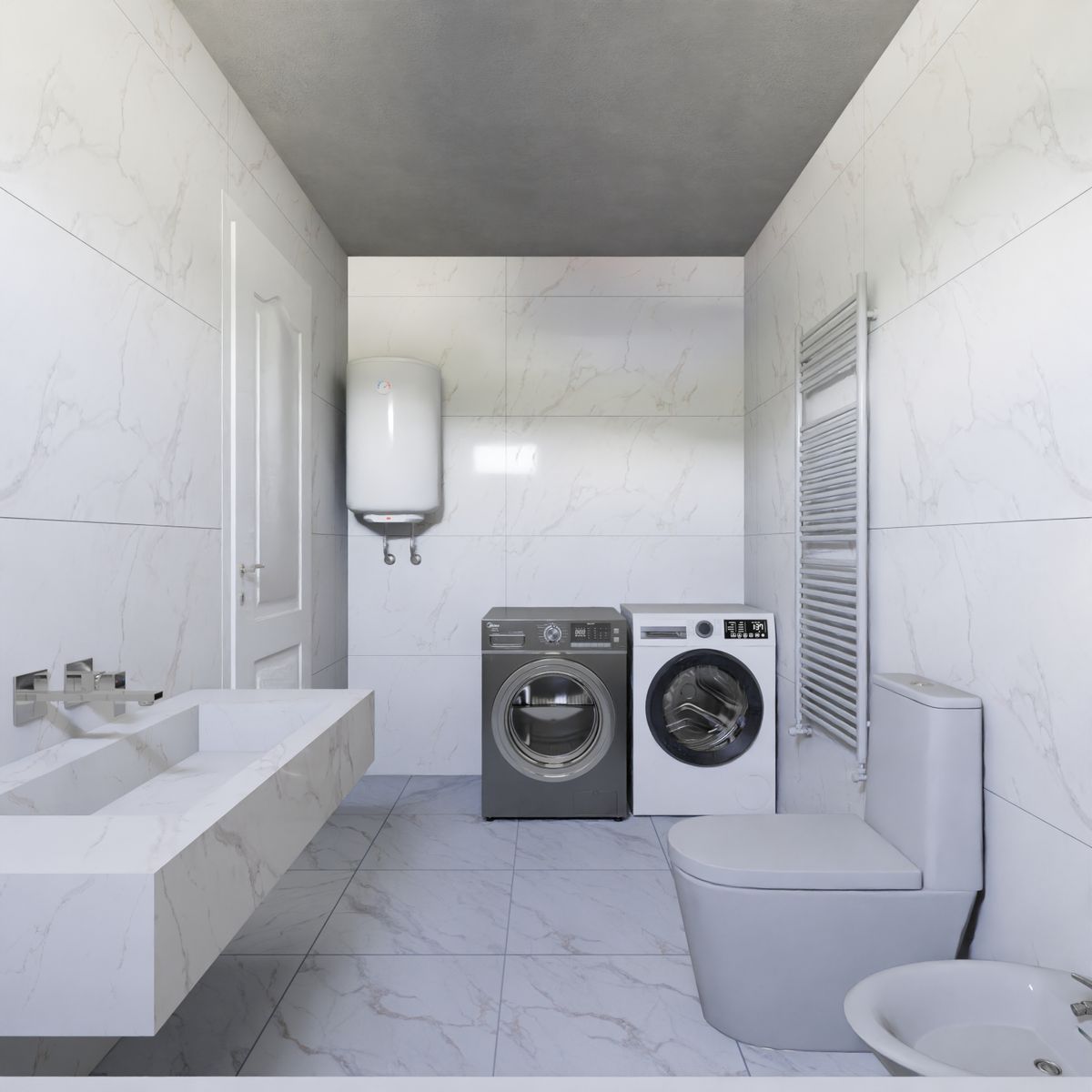
Hot water hard and cold water soft has two causes, and only two. Either the water heater's cold feed was plumbed upstream of the softener and will never receive treated water, or the heater is still full of the hard water and scale it held before installation.
They look identical on day one. They diverge completely by day seven: legacy water flushes out and improves; a plumbing error never does.
The One-Week Test That Separates Them

Do not open any pipework yet. Run this first — it costs nothing and settles the question.
- Test hardness at a cold tap. Confirm it reads zero, or close to it. If it does not, the problem is the softener itself and lives in why water is still hard after installing a softener.
- Test hardness at a hot tap, run for 30 seconds first. Write the number down with the date.
- Use the house normally for seven days. Showers, laundry, dishes. Do not conserve hot water — you want turnover.
- Retest the hot tap on the same day of the week, at the same time, same method.
| Day 7 hot-water result | Cause | Fix |
|---|---|---|
| Fallen substantially, heading towards zero | Legacy hard water in the tank | Nothing — or drain the tank to finish it faster |
| Fallen slightly and stalled | Partial flush, or an unsoftened branch feeding part of the hot loop | Drain the tank, then retest |
| Unchanged | Heater is plumbed ahead of the softener | Reroute the cold feed |
| Higher than day 1 | Scale shedding from inside the tank, or softener now failing | Flush the tank, recheck the softener |
That third row is the plumbing error, and no amount of waiting fixes it. The first row fixes itself.
Cause One: The Tank Is Still Full of the Old Water
A storage water heater holds 40 to 80 gallons. On the day the softener was commissioned, every one of those gallons was hard, and the tank bottom held whatever scale had accumulated over its life.
A storage heater does not empty and refill. Cold water enters near the bottom through a dip tube, hot water leaves from the top, and the contents mix. So the hardness in the tank falls by dilution, not by replacement.
The turnover calculation. Each time you draw a volume equal to the tank capacity, roughly two thirds of the remaining hardness is displaced. Mathematically the remaining fraction after drawing n tank volumes is about e⁻ⁿ:
| Tank volumes drawn | Hardness remaining | 50-gal tank, family of four |
|---|---|---|
| 1 | ~37% | End of day 1 |
| 2 | ~14% | End of day 2 |
| 3 | ~5% | Day 2–3 |
| 4 | ~2% | Day 3–4 |
| 5 | Under 1% — undetectable on a strip | Day 4–5 |
A typical US family of four uses roughly 45–60 gallons of hot water a day, so a 50-gallon tank turns over about once daily. Five days gets you to undetectable. A retired couple in a house with an 80-gallon tank might take two or three weeks to reach the same point — and will be convinced something is wrong the whole time.
Two things extend it beyond the arithmetic:
- Scale already in the tank. A heater that ran on hard water for years has a mineral bed on the bottom element or burner plate. Softened water is slightly more aggressive towards that deposit and will slowly dissolve and dislodge it, which keeps hardness measurable for longer and can release grit. This is the deposit described in hard water sediment in a storage water heater.
- Low usage. Vacations, a second bathroom nobody uses, a guest suite. No turnover, no dilution.
To skip the wait, drain the tank. It replaces the whole volume at once and removes the sediment in the process:
- Switch off power (electric) or set to pilot/vacation (gas). Do not drain a live electric heater — exposed elements burn out in seconds.
- Shut the cold inlet valve.
- Connect a hose to the bottom drain valve and run it somewhere that tolerates very hot water.
- Open a hot tap upstairs to break the vacuum.
- Drain fully. Then open the cold inlet briefly, several times, to stir and flush sediment.
- Close the drain, refill until the open hot tap runs steadily with no air, then restore power or gas.
Before you start: old plastic drain valves frequently fail to reseal once disturbed. Have a replacement valve or a brass cap on hand. If the heater is more than about ten years old and has never been flushed, weigh the risk — sediment can also block the valve mid-drain.
Cause Two: The Heater Is Plumbed Ahead of the Softener
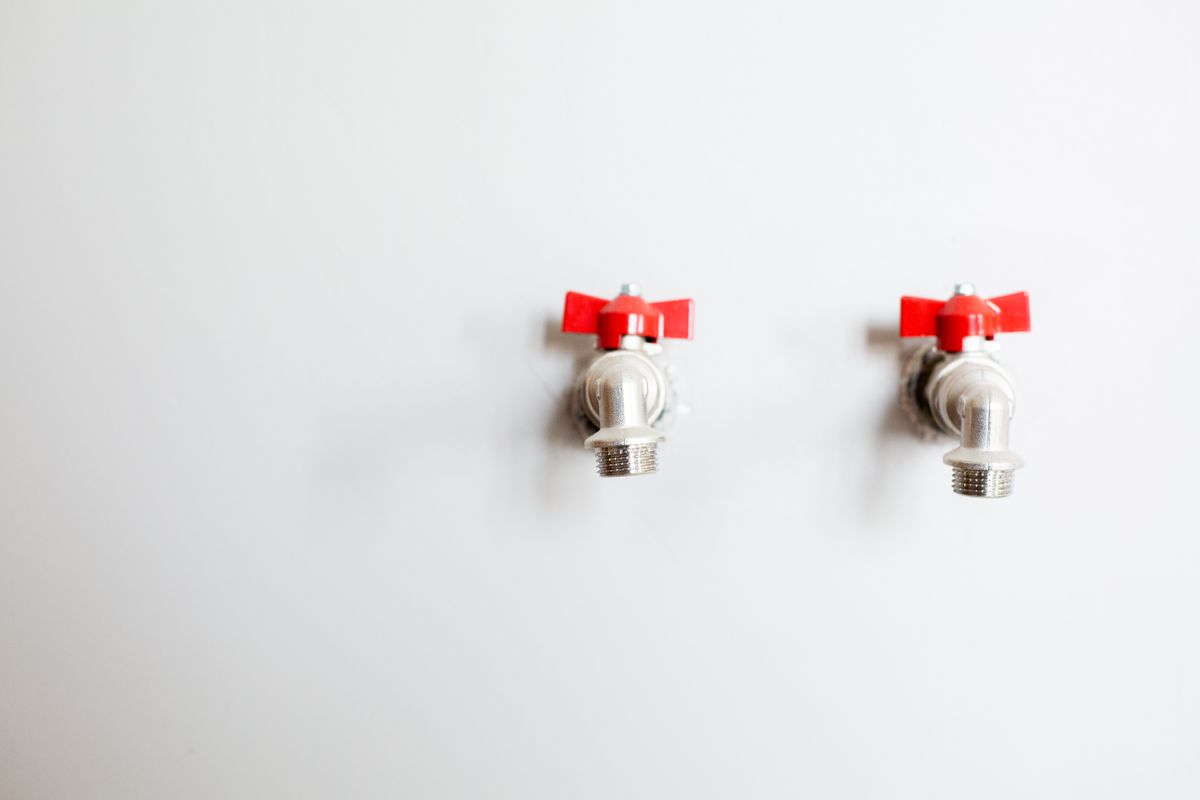
If the hot water never softens, the heater is taking its cold feed from the untreated side of the system.
This happens for three reasons, and only one of them is deliberate:
- Installation error. The softener was fitted to the main after the tee that feeds the heater. Common in basements and crawl spaces where the pipe runs are not obvious.
- A pre-existing branch. The heater was fed from a line that also serves an outdoor bib or a utility sink, and the whole branch sits upstream.
- Deliberate, and usually wrong. Some installers soften only part of the house to reduce salt use. Softening the cold and not the hot is the worst possible version of this, because scale protection for the water heater is the largest single financial benefit of owning a softener.
How to trace it without opening walls:
- Start at the top of the water heater and follow the cold inlet pipe — usually marked blue or labelled, and it is the one that feels cold when the heater is hot.
- Follow it back towards the point of entry. You are looking for where it joins the main.
- Compare that junction against the softener's inlet and outlet. Upstream of the softener inlet means untreated.
- If the softener has a bypass valve, confirm it is in the service position and not left in bypass — an astonishingly common finding, and it would normally make the whole house hard rather than just the hot side.
- Test a hose bib or utility tap close to the heater. Untreated there too points at a shared upstream branch rather than a heater-specific error.
What correcting it involves. Rerouting the heater's cold feed to the softened side is a small job for a plumber where the pipework is accessible, and a much bigger one where it is buried. Get the diagnosis right before you commit — confirm the softener outlet itself is producing zero hardness, so you are not paying to reroute a pipe feeding a unit that has stopped regenerating.
Why Heat Makes Hardness Worse in the First Place
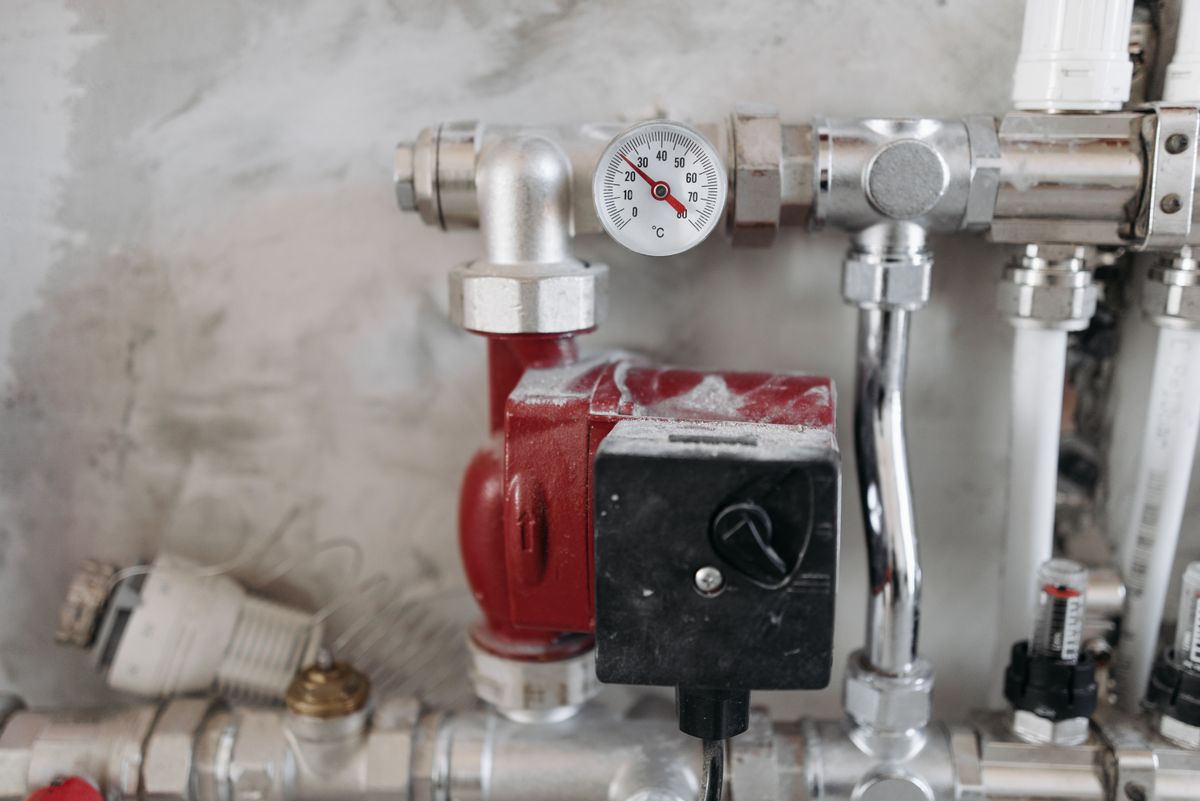
Understanding this explains why the hot side is where everything shows up first.
Calcium carbonate is inversely soluble — unlike almost everything else, it becomes less soluble as temperature rises. Heat the water and dissolved calcium comes out of solution and deposits on the hottest surfaces it can find: the element, the burner plate, the tank bottom, the heat exchanger. The USGS explanation of hardness in water covers the chemistry, and the practical consequences are worked through in why hot water causes more scale than cold.
What that means for this diagnosis:
| Observation | Implication |
|---|---|
| Hot side scales, cold side does not | Normal chemistry, not a fault |
| Hot water carries visible white grit | Scale shedding from inside the tank |
| Hot water hardness reads above the cold feed | Dissolving legacy deposits — should fall over weeks |
| Hot side recovers after a tank flush | Confirms the deposit, not the supply |
| Tankless unit, hot water hard | Different problem — see below |
On a tankless heater the whole legacy-water explanation disappears. There is no stored volume, so there is nothing to flush and nothing to dilute. Hot water on a tankless unit is whatever arrived at its inlet thirty seconds ago. If it is hard, the feed is unsoftened — full stop. Scale inside the exchanger is a separate and more urgent matter, covered in scale in a tankless water heater.
Ruling Out the Look-Alikes
A few things produce the same complaint and need different answers:
- Only one hot tap is hard. Then it is not the heater — it is that branch. Map it with why only some faucets have soft water and confirm the pattern using why hardness test results differ between faucets.
- Hot water is cloudy rather than hard. Cloudiness that clears from the bottom up is dissolved air coming out of solution when heated — not hardness at all. See why softened water looks cloudy.
- Hot water is discoloured. Brown or yellow hot water points at the tank, the anode or iron, not hardness. Start with why softened water looks yellow.
- Both hot and cold are hard by afternoon. That is capacity, not plumbing — the bed is exhausting before its next regeneration, diagnosed in when hardness returns before regeneration.
- A recirculation loop. Homes with hot water recirculation mix returning water back into the heater feed. If any part of that loop taps untreated water, it contaminates the whole hot system continuously.
Test method matters here more than usual. Hot water can throw off some test chemistries and will degrade strips. Let the sample cool to room temperature in a clean glass before testing, and use the same method for hot and cold so the comparison is fair — the sampling traps are listed in common water hardness sampling mistakes.
Should the Heater Be on Softened Water at All?
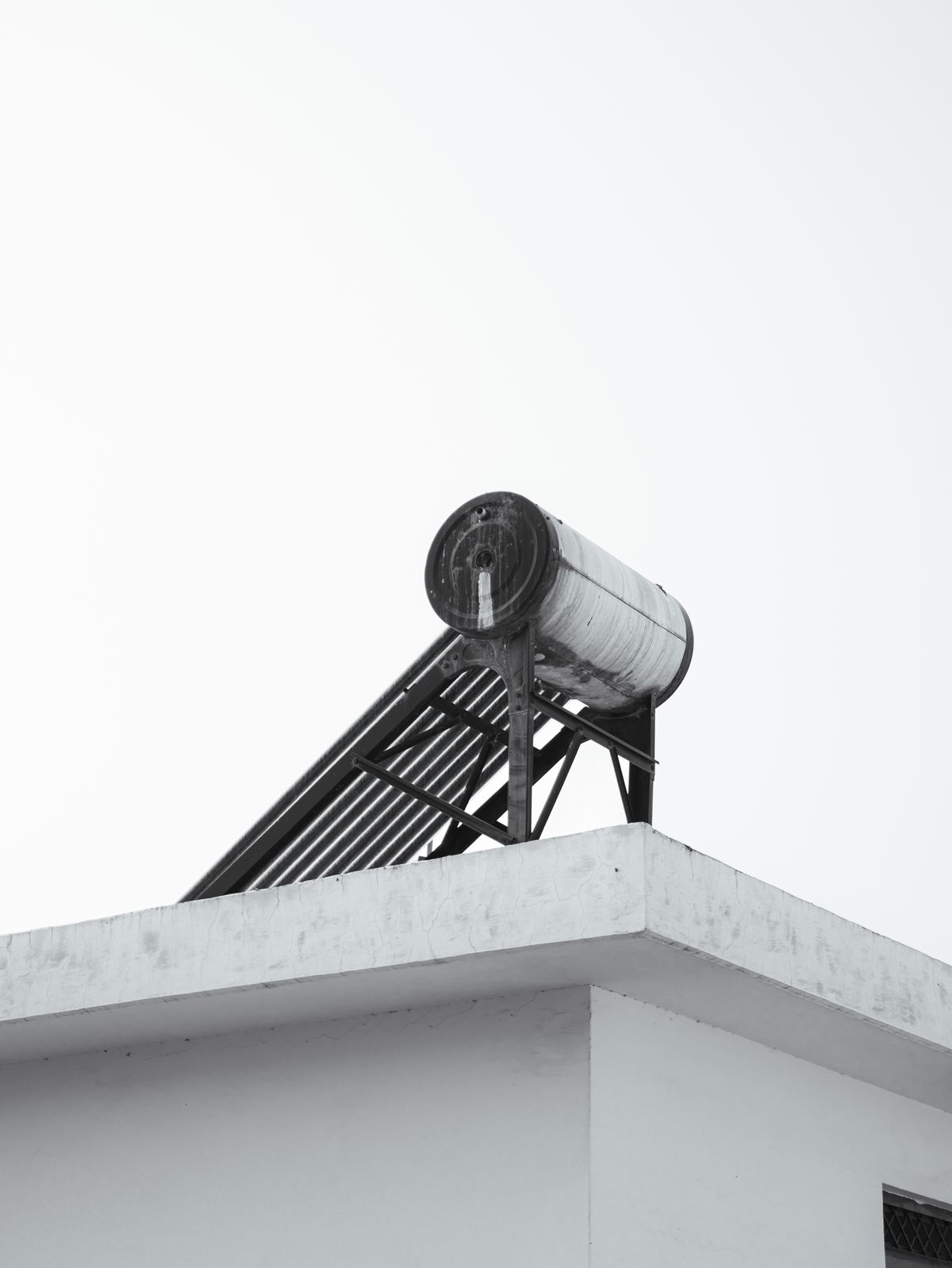
Yes, in almost every case, and it is worth being clear about why — because the "soften only the cold" arrangement is still occasionally sold.
The case for softening the heater feed:
- Scale on an electric element acts as insulation. The element runs hotter to deliver the same output, which costs energy and shortens element life.
- Scale on a gas burner plate does the same, and a scaled tank bottom is a common cause of the rumbling that precedes failure.
- Tank life is materially shorter on scaling water.
- Scale reduces effective tank volume — you paid for 50 gallons and are storing rock in some of it.
- On a tankless unit, scale in the exchanger is the dominant failure mode and descaling becomes an annual chore.
The arguments raised against it, and what they are worth:
| Argument | Assessment |
|---|---|
| Softened water is corrosive to the tank | Overstated. Softening raises the Langelier index slightly; on low-pH water the concern is real and belongs with the pH, not the softener |
| It wastes salt | Modest. Hot water is a minority of household use |
| Sodium in hot water matters for drinking | Hot water should not be used for drinking or cooking regardless |
| Voids the heater warranty | Check your specific manufacturer — some set a maximum hardness, which requires softening |
If your water is also acidic, the aggressiveness question is legitimate and needs to be handled properly rather than by refusing to soften — the interaction is set out in interpreting pH and hardness together. Penn State Extension's guide to water softening covers where the genuine trade-offs sit, and the EPA's secondary drinking water standards set out the aesthetic thresholds that frame the sodium discussion.
What to Do, In Order
- Test the cold tap. Not zero? Stop — you have a softener problem, not a plumbing one.
- Test the hot tap, cooled to room temperature, and record the number and date.
- Use the house normally for seven days. No conserving.
- Retest. Falling means legacy water and you are already fixing it. Unchanged means the plumbing is wrong.
- If it is falling, either wait or drain the tank to finish the job and clear the sediment while you are there.
- If it is unchanged, trace the cold inlet at the top of the heater back to where it meets the main, and compare against the softener's inlet.
- Confirm the softener outlet reads zero before paying anyone to move a pipe.
- Reroute the heater feed to the softened side if the branch is upstream.
- Retest hot and cold two weeks after any change, and flush the heater annually afterwards.
The reassuring version of this diagnosis is the common one: nothing is broken, the tank is just full of last month's water, and the problem removes itself. The seven-day test is what tells you whether you are in that case or the other one — and it is worth running before anyone opens a wall.
Frequently Asked Questions
Why is my hot water hard but my cold water soft?
Two causes, and they need opposite responses. Either the water heater's cold feed was connected upstream of the softener, so the heater receives untreated water permanently, or the heater is simply still full of the hard water and scale it contained before the softener was installed. The test is time: run the house normally for a week. Legacy water flushes out and the hot water gradually softens. A plumbing error never improves, because untreated water keeps arriving.
How long does it take for hot water to become soft after installing a softener?
Usually three to seven days of normal household use, sometimes up to two weeks on a large tank in a low-use home. A storage water heater does not empty and refill — incoming cold water mixes with the stored volume, so hardness falls exponentially rather than dropping to zero at once. Each full tank volume drawn removes roughly two thirds of what remains. A typical family turns over a 50-gallon tank once or twice a day, which is why a week is the usual answer.
Can I speed up flushing hard water out of my water heater?
Yes. Draining the tank through its bottom drain valve and refilling with softened water replaces the whole volume at once instead of waiting for dilution. It also removes accumulated scale sediment, which is a worthwhile job on its own. Connect a hose to the drain valve, shut off the cold inlet, open a hot tap to break the vacuum, and drain fully. Old tanks sometimes will not reseal a neglected drain valve, so have a replacement ready before you start.
Should a water softener be installed before or after the water heater?
Before — meaning the softener treats the main line at the point of entry, and the heater takes its cold feed from the softened side. That protects the heater from scale, which is the single most expensive thing hardness does to a house. The only water that should normally bypass the softener is outdoor irrigation and, if the household prefers, the kitchen cold drinking tap. Feeding the heater from an unsoftened line defeats a large part of the reason for owning a softener.
Does hot water become harder than cold water naturally?
Not in dissolved concentration, but heating does change hardness behaviour. Calcium carbonate is inversely soluble, so heating causes it to precipitate out of solution and deposit as scale. That means a heater on hard water accumulates a mineral reservoir and can shed particles into the hot line, making hot water appear worse than cold. It is why scale forms in water heaters and kettles rather than in cold pipes, but it is not a reason for a softened house to have hard hot water.
What if the hot water stays hard after flushing the heater?
Then it is a plumbing error, and the fix is a pipe change rather than a setting. Trace the cold inlet pipe at the top of the heater back towards the point of entry and establish whether it tees off before or after the softener. If it comes off before, that branch needs rerouting to the softened side. Confirm with a hardness test on the softener outlet first, so you are not chasing a plumbing fault when the unit is simply not regenerating.