
How to Dispose of Old Softener Resin and Components
To dispose of water softener resin, drain the tank, rinse the resin until the rinse water no longer tastes salty, drain it again and double-bag it for household trash, if your local rules allow. The rest of the softener goes to different places. The control valve and transformer go to e-waste, the brass and copper fittings to a scrap yard, and the tanks usually to bulky waste. The one exception is resin from water containing radium or uranium, which needs a call to your state before it goes anywhere.
Before you take anything apart, check whether you need to dispose of it at all.
Before You Take It Apart: Haul-Away, Resale or Re-Bedding
Three options avoid the disposal job entirely:
- Installer haul-away. If a replacement is being installed, the installer will usually take the old unit away. It is often included in the price or offered for a small fee. Get it written into the quote.
- Re-bedding. If the problem is worn resin but the tanks and valve are sound, replacing only the resin keeps everything else in service. Water softener resin life and replacement covers how to tell whether the resin is really the problem, and pricing a re-bed by tank size, DIY or by a pro tells you whether it beats a new unit.
- Selling or giving away a working unit. A softener that works but no longer fits the house, such as one removed during a remodel, can go to someone who will use it. Be honest about its age and hardness setting.
If you are still deciding whether the old unit is worth keeping, repair or replace an old water softener works through that decision first.
Where Each Component Goes
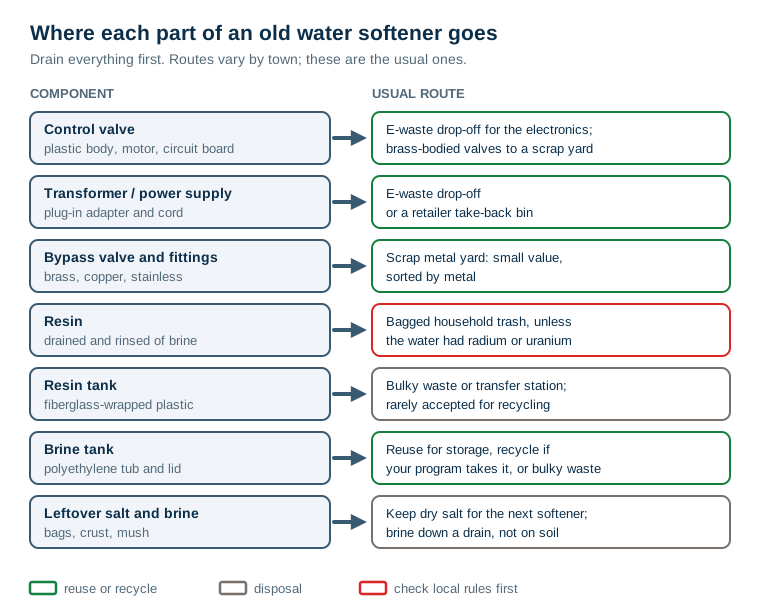
An old softener breaks down into seven parts, and each has its own route.
Control valve
The valve head combines a plastic or brass body, a small drive motor, and on metered units a circuit board and a turbine. The electronics belong at an e-waste drop-off, not in the trash. EPA's guide to electronics donation and recycling notes that electronics are made from valuable metals, plastics and glass, and points to certified recyclers. If the valve body is brass, which is more common on older units, a scrap yard will take the whole head once the circuit board is removed.
Before you drop it off: remove any batteries. Some controls have a backup battery for the clock. EPA warns that lithium-ion batteries should never go in household garbage or recycling bins.
Transformer and cord
The plug-in power supply is small electronics. It goes to the same e-waste drop-off, or to a retailer's take-back bin if your area has one.
Bypass valve, pipe and fittings
This is where any scrap value is. Bypass valves are often brass or stainless steel, and the loop that connects the softener is usually copper with brass fittings. A scrap yard sorts these by metal and pays by weight. For a typical home installation the total is modest. It will probably cover the trip, and it keeps the metal out of a landfill.
Separate before you go: cut off plastic parts, PEX and push-fit fittings, since a scrap yard pays more for clean metal than for mixed pieces.
Resin tank
Most residential resin tanks are a polyethylene liner wrapped in fiberglass composite. That combination is not accepted by most curbside recycling programs. Drain it, empty it, and take it to a transfer station or put it out with bulky waste. Some older tanks are steel. Those can go to a scrap yard once they are empty.
Some tanks have a layer of gravel under the resin. Clean gravel is inert. Use it as fill, or bag it with the resin.
Brine tank
The brine tank is a large polyethylene tub, often with the recycling code on the bottom. Many programs will not take an item that size curbside, but a transfer station may. The simplest route is often reuse: a clean brine tank with its lid makes a good storage bin for garden supplies or outdoor gear. Do not use it for food, drinking water or animal feed.
Leftover salt and brine
Dry salt still in its bag keeps well, so hold on to it for the new softener. Crust and mush from the tank bottom go in the trash once they are drained. Pour liquid brine down a floor drain or laundry sink, not onto the lawn or a garden bed. Storing, changing and disposing of softener salt covers what to do with salt in more detail.
How to Dispose of Water Softener Resin: Rinse and Drain First
Most disposal problems come from skipping this step. A softener taken out full of water and brine is heavy and awkward, it drips salt water wherever it is carried, and bagged resin that is still full of brine leaks.
- Put the softener in bypass and shut off its supply. Open a cold tap to relieve pressure.
- Unplug the control.
- Empty the brine tank first. Bail or siphon the brine down a floor drain. Scoop out the remaining salt and mush.
- Disconnect the resin tank from the plumbing. Keep a bucket and towels ready, because the loop drains when you open it.
- Remove the valve head from the tank. It unscrews from the tank neck, sometimes with a lot of force. Lift the valve and the distributor tube out together.
- Pour the tank contents into a bucket lined with a piece of window screen or a mesh laundry bag. The water drains through and the beads stay behind. A full tank is heavy. Tip it slowly and get help if you need it.
- Rinse the resin by filling the bucket with clean water, stirring, and draining it again. Repeat until the rinse water no longer tastes salty. Usually two or three rinses is enough.
- Let it drain for a few hours, then double-bag it and seal the bags.
Safety: wear gloves and eye protection, since old brine and fouled resin can be grimy. If the unit ever had a resin cleaner or bleach through it, rinse extra thoroughly.
Resin That Needs a Different Route
Almost all household resin follows the path above. Two cases need a closer look.
Resin from water with radium or uranium
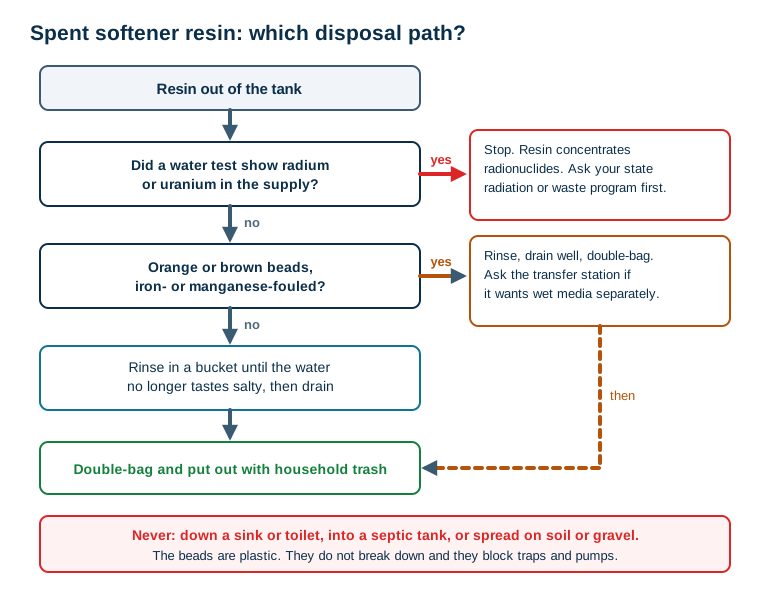
Softening resin removes more than calcium and magnesium. It also captures radium, which behaves like calcium chemically. EPA's page on drinking water treatment residuals notes that ion exchange softening removes about 95 percent of the radium in the water, and that "radionuclide content eventually builds up in the beads after prolonged usage." That page is written about public water systems, and EPA notes it does not regulate private wells. The same chemistry applies to a home softener on a well with radium.
If a well test ever showed radium or uranium, do not bag the resin yet. Call your state radiation control program or solid waste program and ask how they want it handled. Rules vary by state, and some will want the resin tested first. If you do not know whether your well water contains radium, check your old water test reports. It is often part of a full panel in areas where it occurs.
Iron-fouled resin
Resin that is orange, rust-brown or black with iron and manganese is not a hazardous material in itself, but it is messier. It stains, holds more water and smells worse. Rinse it more thoroughly, drain it longer, and double-bag it. Some transfer stations prefer wet, stained media bagged separately from household trash, so ask when you drop it off. If the fouling came from an iron problem the new softener will face too, deal with that iron before the new bed goes in.
Who to Ask Before You Load the Car
Disposal rules are local, and the fastest way to get a straight answer is to know who handles each question. One phone call or web page for each usually settles it.
| Question | Who answers it | What to ask |
|---|---|---|
| Can bagged resin go in household trash? | Your town's solid waste or public works department | "Can I put drained, bagged ion exchange resin from a water softener in household trash?" |
| Will they take the tanks? | The transfer station or bulky-waste pickup | Size limits, whether tanks must be empty and cut, and any fee |
| Where do the electronics go? | Your county or state e-waste program | Drop-off sites for small electronics and adapters |
| What is the fitting metal worth? | A local scrap metal yard | Whether they take small loads and how they want brass and copper sorted |
| Does resin from my well need special handling? | Your state radiation control or solid waste program | Only needed if your water tests show radium or uranium |
| What is actually in this resin? | The resin's safety data sheet, from the manufacturer or the dealer | Its classification and any disposal notes |
Keep the paperwork you already have. The softener's manual names the resin type, and old water tests show whether radium, uranium or heavy iron were ever an issue. Those two documents answer most of the questions above before you make a call.
If a dealer is re-bedding the softener, ask whether they take the old resin. Many do, since they are handling it anyway, and it saves you the rinse, bag and trip.
What Not to Do
- Do not pour resin down a drain or toilet. The beads are small, heavy and do not dissolve. They settle in traps and sewer laterals and damage septic pumps.
- Do not empty resin into a septic tank. It will not break down, and it adds solids to a tank that has to be pumped.
- Do not spread resin on soil, gravel or garden beds. It is plastic. It stays there, and brine rinsed out of it adds salt to the soil.
- Do not dump brine on the lawn or in a storm drain. Put it down a sanitary drain.
- Do not burn anything. The tanks, resin and valve are plastics and composites.
- Do not throw the whole unit in a dumpster full of water. Drained, it is manageable. Full, it is heavy, and it leaks salt water all the way to the curb.
What Disposal Does Not Settle
Getting rid of the old unit is only part of the job. The new softener still sends brine to drain every time it regenerates, and that has its own rules in some areas. Where water softener regeneration waste goes covers that side. And if the old resin failed early, find out why, or the new bed will go the same way.
Frequently Asked Questions
How do you dispose of old water softener resin?
Drain it, rinse it in a bucket until the rinse water no longer tastes salty, drain it again, and double-bag it for household trash, as long as your local rules allow. The beads are plastic and do not break down, so never pour them down a drain, into a septic tank or onto soil. If your water tested positive for radium or uranium, contact your state's radiation or solid waste program before disposing of it.
Is water softener resin hazardous waste?
Resin used only to soften ordinary water is generally handled as ordinary solid waste, but check your resin's safety data sheet and your local rules. The exception is resin that softened water containing radium or uranium. EPA notes that radionuclides build up in ion exchange beads with prolonged use, so that resin can need special handling.
Can I put a water softener in the trash?
Not as one piece in most places. The control valve and transformer contain electronics that belong at an e-waste drop-off, the brass and copper fittings are worth taking to a scrap yard, and the tanks are usually bulky waste. Drain it completely first, because a softener full of water and salt is heavy and leaks brine.
Is there scrap value in an old water softener?
A little. The brass bypass valve, copper pipe and brass fittings are the valuable parts, and some older control valves have brass bodies. Most modern valves are plastic. Expect the scrap value of a typical household unit to cover the trip to the scrap yard, not much more, but it keeps metal out of the landfill.
Will a plumber take away my old water softener?
Usually, if they are installing the replacement. Haul-away is often included in an installation quote or offered for a small fee. Ask before the job so it is written into the quote, and ask how they dispose of it.
Can I reuse the tanks from an old softener?
Often, yes. If the resin is worn out but the tank and valve are sound, replacing only the resin, called re-bedding, reuses both tanks and the valve. A clean brine tank also makes a good lidded storage bin, though not for anything you will eat or drink.
