
Do You Need a Permit to Install a Water Softener?

Is a water softener permit required? It depends on where you live. The rule is set locally, by the city, county or state office that issues plumbing permits for your address, and it varies widely. Many places do require a plumbing permit, because a softener connects to both the drinking water supply and the drain. One phone call to that office, with the six questions below, gets you a definite answer.
That answer matters most when you sell the house. That is when unpermitted plumbing work most often comes to light.
Why There Is No Single Answer
Three separate rules get mixed together in most online answers. Keeping them apart makes the phone call much shorter.
- The permit is decided by whoever enforces plumbing code at your address. That is usually a city building department, or a county office in unincorporated areas. In some states it is a state agency.
- The license decides who may do the work. It is usually set by the state. The Minnesota Department of Labor and Industry, for example, defines a water conditioning system as one that treats water to alter, modify, add or remove mineral, chemical or bacterial content. Anyone doing that work there must be licensed or registered with the department, and licensed plumbers are covered. Other states handle softener installation under different rules, and some do not license it separately at all.
- The code decides what the installation must look like: the drain, the air gap, backflow protection. It is whatever plumbing code edition your jurisdiction adopted, with its own local amendments.
A city can require a permit for a softener in a state that does not license softener installers. It can also skip permits for replacements in a state that licenses them strictly. That is why nobody can give you a correct national answer, and why a state-by-state list online can easily be out of date for your street.
Water Softener Permit Required? The One Phone Call That Settles It
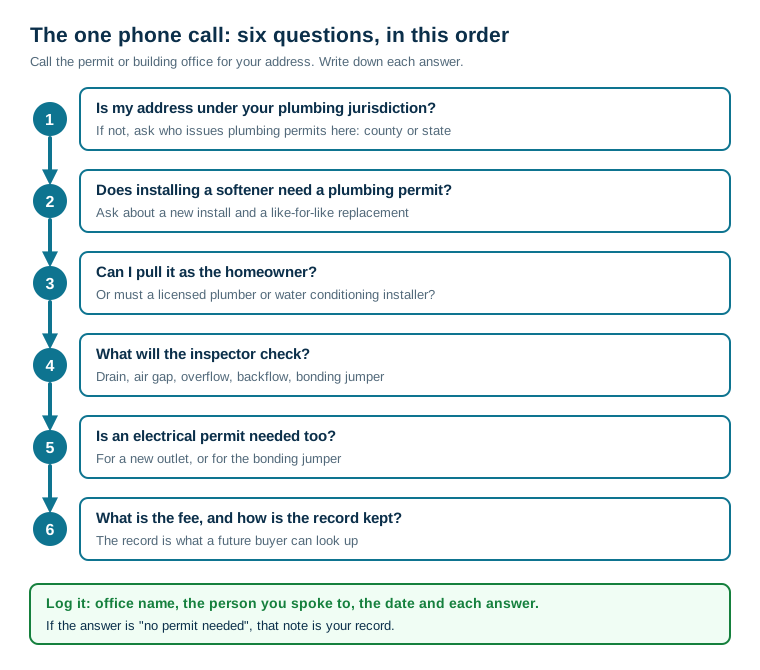
Look up the building or permit office for your city. If you live outside city limits, look up your county's. Then ask these six questions, in this order.
- "Is my address under your plumbing jurisdiction?" Give the full address. If they say no, ask who does issue plumbing permits there, and call that office instead. This one question prevents most wrong answers.
- "Does installing a water softener need a plumbing permit? What about replacing an existing one with a similar unit?" Ask both. Some offices treat a new installation, which adds a drain connection and a loop, differently from a swap on existing plumbing.
- "Can I pull the permit as the homeowner, or does a licensed plumber or water conditioning installer have to?" In Minnesota, the City of Brooklyn Park lists water softeners among the changes to the plumbing system that need a plumbing permit. It also explains that state plumbing code lets you do your own plumbing work and apply for the permit if you are homesteading, meaning living in, the home.
- "What will the inspector check?" You want the list before you cut pipe, not after. Common items are the drain connection and air gap, the brine tank overflow, any required backflow protection, and the bonding jumper on metal pipe.
- "Is a separate electrical permit needed?" Two situations raise this: adding an outlet for the valve, and installing the bonding jumper across the softener. Some offices cover both under the plumbing permit and some do not.
- "What is the fee, how do I schedule the inspection, and how is the record kept?" The record is the part you will want years from now. Ask whether it is searchable by address.
Write down every answer, with the office name, the name of the person you spoke to and the date. If the answer is "no permit needed for that," the note is your record. It is not as strong as a permit, but it shows you asked and when.
What to Have in Hand Before You Call
The call goes faster, and the answers are more reliable, if you can describe the job precisely. Permit clerks answer the question they are asked. "Can I put in a water softener?" gets a vaguer answer than a specific description.
- The full street address, including whether it is inside city limits.
- New installation or replacement. Say whether there is already a loop, bypass and drain connection, or whether new pipe will be cut in.
- Where it will drain. Floor drain, laundry tub or standpipe, and whether that drain already exists.
- The pipe material at the install point: copper, galvanized, PEX or CPVC. This decides whether the bonding question comes up at all.
- Power. Whether there is an existing outlet within reach, or a new one is needed.
- Who is doing the work. You, a plumber, or a dealer's installer.
If the unit is not a conventional softener, describe it anyway. A salt-free conditioner has no drain, but it still cuts into the supply. A whole-house filter ahead of the softener is a second connection. Some offices treat all water treatment equipment the same way, and others draw distinctions. Ask about the complete set of equipment you plan to install, not only the softener.
Finally, ask for the answer in writing if the office offers it, or ask where the rule is published. Many building departments post a list of work that does and does not need a permit. A link to that list is a better record than a phone note.
What an Inspector Actually Looks At
Where a permit is required, the inspection mostly focuses on the parts of the install that can harm the water supply or the building. The work itself is small, so each item is quick to check.
- The drain connection and air gap. The softener discharges regeneration water to a drain. The end of that line must not be able to siphon wastewater back into the supply. This is the item most often done wrong. The details are in why a water softener drain needs an air gap and water softener drain line requirements.
- The brine tank overflow. It needs its own gravity line to a drain. It must not be capped, and it must not be teed into the pressurized drain line.
- Backflow protection on the supply, if your local code calls for it at a water treatment device.
- The supply connections and bypass. Approved materials and fittings, accessible shutoffs, and a way to isolate the unit.
- Electrical continuity on metal pipe. A softener cut into copper or galvanized pipe can interrupt the electrical bonding path through the plumbing. A jumper restores it. How that works, and why it can fall under the electrical code, is in water softener plumbing bonding and grounding.
An inspector checks the installation against code. They do not check whether the softener is the right size, is set correctly or suits your water. A passed inspection does not tell you the water will be soft. That is what the startup and a hardness test are for.
Homeowner, Plumber or Water Treatment Installer
Question 3 on the call is often the one that changes plans.
- Homeowner permits. Many jurisdictions let the owner-occupant pull a plumbing permit for their own home, as Brooklyn Park does. It usually applies only to a home you live in, not a rental or a house you are flipping.
- Licensed plumbers can do softener work almost everywhere a license is required.
- Water conditioning or water treatment licenses exist in some states. They let a specialist install and service softeners without a full plumbing license, sometimes with limits on what other plumbing they can touch. Minnesota's system is one example.
- Dealers. A dealer quoting an install should know the local requirement. Ask them directly whether they will pull the permit. If they say one is not needed, ask which office told them that.
If you hire someone, the permit is normally theirs to pull, and it should appear in the quote.
The Resale Consequence: Why This Matters in Practice

Most unpermitted softener installs never cause a problem while the owner lives there. The water is soft, nothing leaks, and no one asks. The question comes up when the house is sold.
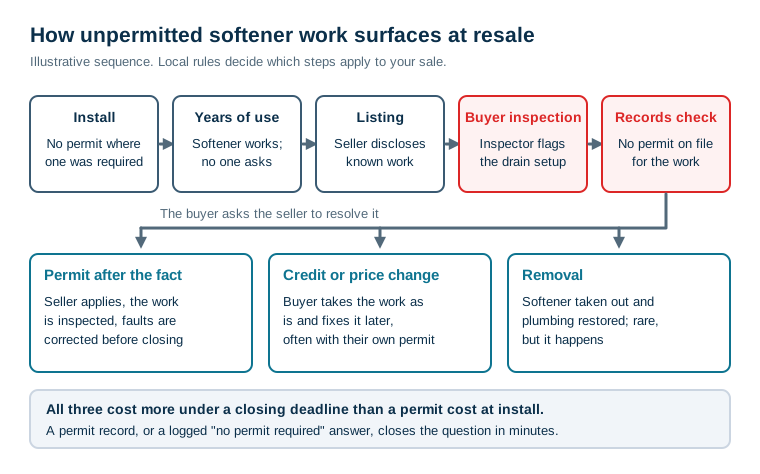
A buyer's home inspector will usually look at a softener. The drain line is the most visible fault: a hose pushed into a standpipe, with no air gap, is easy to spot. A missing bonding jumper is often noted too. Some buyers, lenders or agents then check permit records for the address, and there is nothing on file for the work.
What happens next depends on the local rules and on the negotiation, but it usually goes one of three ways:
- A permit after the fact. The seller applies, the work is inspected, and any faults are fixed, all before closing.
- A credit or price change. The buyer accepts the work as it is and deals with it later, often under a permit of their own.
- Removal. Occasionally the simplest option is to take the softener out and restore the plumbing.
None of these is a disaster for a small job like a softener. All of them cost more when they have to fit around a closing date than a permit would have cost at install time. On the buyer's side, the same checks belong in inspecting a water softener after moving in.
If You Already Installed Without Asking
Make the same call now. Ask the six questions, then ask one more: "If a permit was required, how do I get one for work that is already done?" Most offices have a process for it. Fixing the drain, the air gap and the jumper before the inspector comes is usually most of the work. A self-installed softener with a good air gap and a jumper is usually a short inspection.
What a Permit Cannot Tell You
A permit shows that the installation met the local code on the day it was inspected. It does not show that:
- the softener is the right size for your hardness and water use
- the hardness setting is right
- the unit still works years later
- the water needed a softener rather than a different treatment
A softener removes hardness minerals and some dissolved iron. It does not disinfect the water or remove most health-related contaminants. A permit adds nothing to what the softener itself can do.
The short version: is a water softener permit required where you live? Ask the office that would issue it, and write down the answer.
Frequently Asked Questions
Do I need a permit to install a water softener myself?
It depends on where you live. Some places require a plumbing permit for any softener installation, some only for new installations, and some require none. Where a permit is required, many jurisdictions let a homeowner pull it for the home they live in. Brooklyn Park, Minnesota, for example, lists water softeners among work needing a plumbing permit and lets homesteading owners apply. Call your local permit office to find out.
Does replacing a water softener require a permit?
Sometimes. Some jurisdictions treat a like-for-like replacement differently from a new installation, and others require a permit for both. Ask about replacement specifically when you call, because the answer for a new install does not always apply.
Do you need a licensed plumber to install a water softener?
Licensing is set by the state and sometimes by the city, and it varies. Minnesota, for example, requires anyone doing water conditioning work to be licensed or registered with the Department of Labor and Industry, and licensed plumbers can do that work. Other states treat softener installers differently. Your permit office can tell you who is allowed to do the work at your address.
What happens if I install a water softener without a permit?
Often nothing, until the house is sold or something goes wrong. A buyer's inspector may flag the drain connection or the missing bonding jumper. A records search then shows no permit, and the seller may be asked to get one after the fact, fix the work, or give a credit. Local rules decide whether fines apply.
How much does a water softener permit cost?
Fees are set locally and vary. Many residential plumbing permits cost a modest flat fee, and some jurisdictions add an inspection fee. Your permit office will quote the exact figure when you call.
What does a plumbing inspector check on a water softener?
Usually the drain connection and its air gap, the brine tank overflow, any backflow protection the local code requires, and the connections to the water supply. The electrical bonding jumper on metal pipe may be checked too, sometimes under a separate electrical permit. Ask the office what their inspectors look at before you install.
