
Why White Spots and Soap Scum Remain After Softening
White spots remain after a water softener because zero hardness is not zero residue. Ion exchange removes calcium and magnesium and nothing else, and at least three other things dry into the same white mark on glass, tile and chrome.
Before you call the installer, it is worth knowing that the most common cause of this complaint is not the equipment at all — it is a detergent dose nobody changed after the water did.
First: Confirm the Water Is Actually Soft
Everything below assumes hardness is genuinely zero at the fixture where you see spots. Test before you theorise.
- Test at the spotted fixture, not at a convenient tap. Branches differ.
- Test cold, after running for thirty seconds.
- If a strip reads anything above zero, the diagnosis is different and lives in why water is still hard after installing a softener.
- A reading of zero on a strip but visible scale still forming is its own specific case, covered in when a hardness test reads zero but scale remains.
Only once hardness is confirmed at zero does the rest of this article apply. If it is not zero, stop here — you have a softener fault, not a residue puzzle.
The Four Things That Leave a White Mark
Three are in the water and one is on your shelf. Identify which before spending anything.
| Cause | Removable by a softener | Dissolves in vinegar | Feels like | Typical giveaway |
|---|---|---|---|---|
| Calcium/magnesium scale | Yes — should be gone | Yes, in minutes | Gritty, hard | Hardness test is not actually zero |
| Silica | No | No | Smooth haze, like fine frosting | Worse on glass than on chrome; won't wipe off |
| Sodium and other dissolved solids | No | Partly | Fine powdery film | Appears on surfaces left to air-dry |
| Detergent overdose | Not a water problem | No — smears | Slippery, soapy | Appeared or worsened after softening |
That last row is the one to test first, because it is free to check and it is the answer more often than the other three combined.
The Detergent Test That Settles It in One Cycle
Soft water changes detergent economics completely. With no calcium and magnesium to neutralise, every bit of surfactant is free to work — which is the same reason soap suddenly lathers so easily, described in why soap will not lather properly in hard water.
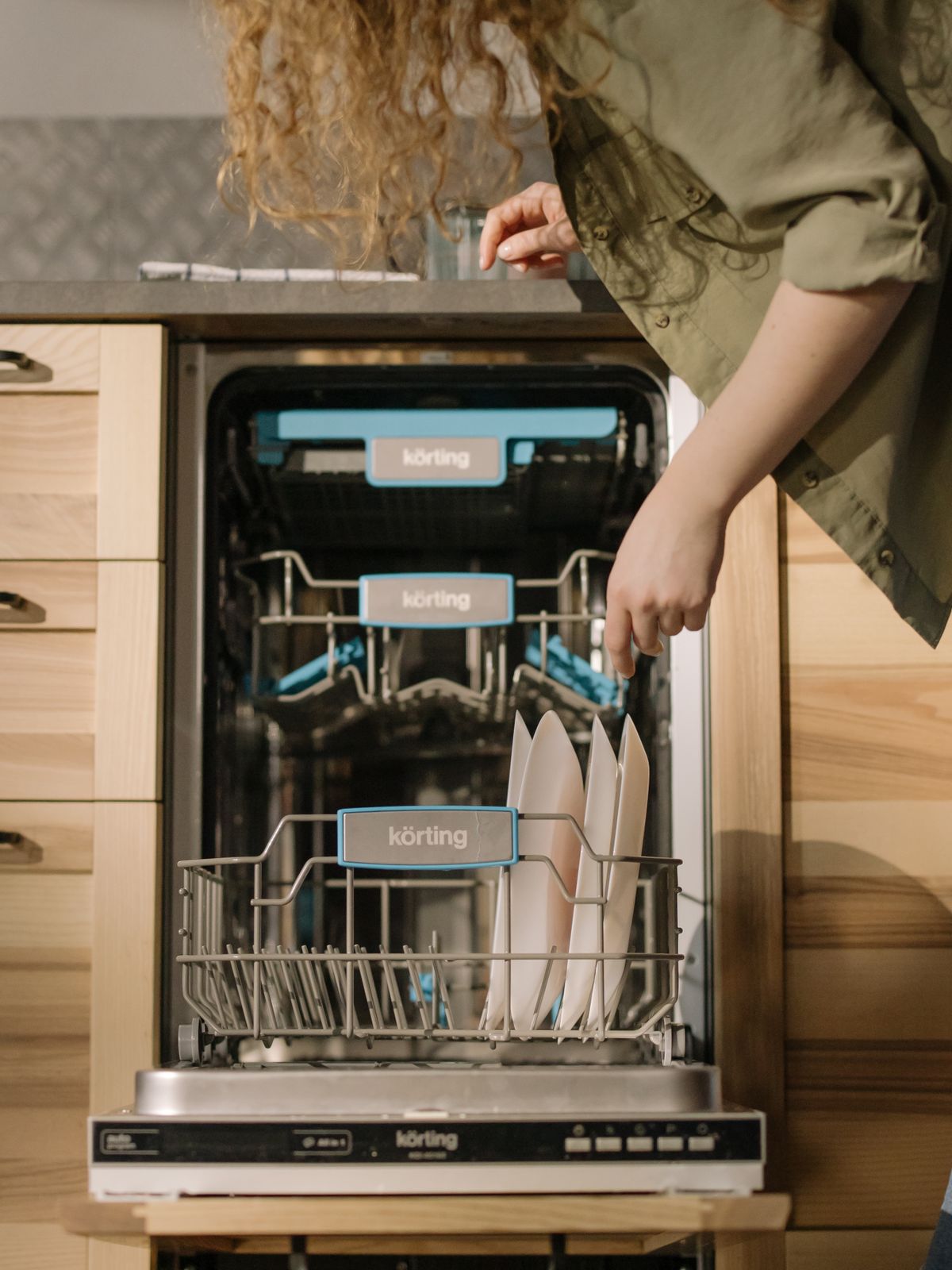
The practical consequence: a dose calibrated for hard water is now a large overdose, and the excess has to go somewhere. It goes onto your glasses.
Run this before changing anything else:
- Load the dishwasher with already-clean glasses — nothing greasy, nothing with food.
- Add no detergent at all. None.
- Run a normal cycle with your usual drying setting.
- Inspect the glasses under a light, at an angle.
Read the result:
| Outcome | Conclusion | Next step |
|---|---|---|
| Glasses come out clean | Detergent dose was the entire problem | Cut the dose and stop here |
| Glasses come out better but not clean | Detergent plus something in the water | Cut the dose, then vinegar-test the remainder |
| Glasses come out exactly as spotted | Residue is from the water, not detergent | Move to the silica and TDS section |
| Glasses come out worse | Rinse-only cycle redeposited old film | Run one cleaning cycle, then retest |
If the dose was the problem, cut it properly. Halve it, run a week, halve again if the dishes are still clean. Most US households on genuinely soft water end up somewhere between a quarter and a half of the labelled dose, and many find powder or tablets hard to reduce precisely — liquid or gel is easier to dial in.
The same applies to laundry, and it is more expensive there. Excess detergent on soft water does not rinse out of fabric; it stays in the fibres, attracts soil and leaves clothes feeling stiff or grey. If laundry texture changed after installation, the diagnosis is in why laundry feels stiff after washing.
A warning about overdosing on soft water that is worth taking seriously: hot cycles plus soft water plus heavy detergent is the recipe for permanent glass etching. Etching is not residue and cannot be cleaned off — the glass surface is gone. If some glasses are now permanently cloudy no matter what you do, read cloudy glasses: etching or hard water? before you run another load.
Silica: The Residue Nobody Warned You About
Silica is dissolved silicon dioxide, leached out of the same rock that supplies your water. It is not hardness, it is not regulated as a health contaminant, and it passes through a cation exchange bed as though the bed were not there.
Concentrations of 20–60 mg/L are unremarkable in US groundwater, and higher in volcanic and granitic regions. That is more than enough to leave a visible film when a droplet evaporates.
How to recognise it:
- Vinegar does nothing. This is the diagnostic. White vinegar clears calcium scale in under a minute; silica is untouched after ten.
- It reads as a haze or bloom rather than discrete spots — more like fine frosting than droplet marks.
- It is worst on glass and glazed tile, least obvious on chrome.
- It builds slowly and resists ordinary cleaning, including most limescale removers, which are acids that silica ignores.
- A water report showing high silica alongside your hardness confirms it. Many utility reports include it; a lab panel certainly will.
What actually works on silica, in order of cost:
| Approach | Effect | Reality |
|---|---|---|
| Dry glassware by hand immediately | Eliminates spots on those items | Free, tedious, effective |
| Rinse aid in the dishwasher | Large reduction | Cheapest real fix |
| Point-of-use reverse osmosis | Removes it from drinking and cooking water | Does nothing for the dishwasher unless plumbed to it |
| Whole-house RO | Removes it everywhere | Expensive, slow, water-wasteful — rarely justified |
| Acid limescale cleaners | No effect | People buy these repeatedly and blame the product |
The honest position is that domestic silica is usually managed, not eliminated. Knowing that saves the money otherwise spent on a second softener.
Dissolved Solids and the Sodium Question
Ion exchange does not reduce total dissolved solids — it substitutes one for another. Each calcium ion removed is replaced by two sodium ions, so the mineral character changes while the mineral load stays similar or rises slightly.
Sodium chloride is highly soluble, so it rarely deposits the way calcium carbonate does. But on a supply that was very hard to begin with, or one already high in dissolved solids, evaporating droplets can leave a fine, faintly powdery film. The EPA's secondary drinking water standards list the aesthetic thresholds for total dissolved solids, chloride and sulfate — the nuisance parameters, not the health ones.
Distinguishing sodium film from the others:
- It appears on surfaces left to air-dry, and vanishes on anything wiped while wet.
- It wipes away with plain water on a cloth — no acid needed, unlike scale, and unlike silica it actually comes off.
- It is worse on very hard source water, because more calcium removed means more sodium added.
- If the water also tastes faintly salty, the sodium contribution is higher than it should be and the softener may be over-brining. That is a settings fault, and it is diagnosed in why softened water tastes salty.
A potassium chloride salt substitute changes which ion you get but not the underlying mechanism. It costs considerably more and does not reduce film.
Soap Scum on Soft Water: What Changed and What Did Not
Classic soap scum is calcium stearate — a genuinely insoluble curd formed when soap fatty acids meet calcium. Remove the calcium and that reaction stops. Penn State Extension's guide to water softening covers the chemistry and what changes when hardness is removed.
So if a grey, waxy curd is still forming in the bath or shower, one of two things is true:
- That fixture is not on softened water. More common than people expect on retrofits. Test at the fixture itself.
- What you are seeing is not soap scum. Soft water leaves a slippery film, which is undissolved soap plus your skin's natural oils — the same effect that makes soft water feel slippery. It rinses away easily and does not build into a hard deposit.
| Residue in the shower | Hard water | Soft water |
|---|---|---|
| Grey waxy curd on tile | Typical | Should not occur |
| Slippery film on skin and surfaces | Rare | Normal — use less soap |
| White chalky rim at the waterline | Limescale | Silica or TDS |
| Soap bar dissolving unusually fast | No | Yes — normal |
Bar soap is worth reconsidering entirely. On soft water, bar soap over-lathers and leaves more residue than liquid body wash, which uses synthetic surfactants that rinse cleaner. It is a one-dollar experiment.
Fixtures, Not Dishes
If the marks are on chrome rather than glassware, the same logic holds but the test differs slightly. Spots on a faucet that wipe off with a dry cloth are evaporated dissolved solids. Spots that need a fingernail are scale — which on genuinely soft water means that tap is bypassed or the softener is intermittently failing. The full identification key is in white spots on faucets: hard water or something else?, and the USGS explanation of hardness in water covers why the underlying mineral load varies so much between regions.
Aerator screens tell you even more: pull one and look. Hard white crystalline flakes mean hardness is getting through, and scale on faucet aerators explains how to read what you find.
What to Do, In Order
- Test hardness at the spotted fixture. If it is not zero, stop — this is a softener fault, not a residue problem.
- Run the no-detergent dishwasher cycle on clean glasses. This one test resolves the majority of these complaints for free.
- Cut the detergent dose by half, then half again if dishes stay clean. Do the same for laundry.
- Add rinse aid and set the dispenser to a low-to-medium position. Increase only if spots persist.
- Vinegar-test a spotted glass. Clears in a minute means scale. No change means silica.
- Check your water report for silica if the vinegar test points that way. If it is high, adjust expectations rather than equipment.
- Check whether the water tastes salty. If it does, the softener is over-brining and needs its salt dose reviewed.
- Hand-dry the items that matter. On a high-silica supply this is the difference between spotted and spotless, and it costs nothing.
The thing to take away is that a softener was only ever going to remove two minerals. It did its job. Everything left on the glass is either something it was never able to reach, or something you are adding yourself — and the second one you can fix tonight.
Frequently Asked Questions
Why do I still have white spots on dishes with a water softener?
Because softening removes hardness, and hardness is only one of several things that dry into a white mark. Silica passes through a softener untouched and dries into a haze that looks identical to limescale. The sodium salts left behind after ion exchange are still dissolved solids that can dry into a film. And the most common cause by far is unchanged detergent dosing — soft water needs far less detergent, so the same scoop that worked before now leaves residue. Confirm hardness is genuinely zero at the tap first, then work through the other three.
Can a water softener remove silica?
No. Silica is dissolved silicon dioxide and is present as a neutral or weakly charged species rather than a hardness cation, so a cation exchange bed has no way to hold it. Levels of 20 to 60 mg/L are ordinary in US groundwater and are enough to leave a visible haze on glass. Silica spots are distinguishable from limescale by a simple test: limescale dissolves in white vinegar within a few minutes, silica does not budge at all.
Does soft water leave a white film?
Softened water itself leaves very little, but it changes how everything else behaves. The sodium that replaced calcium stays dissolved and evaporates to a faint salt film on high-mineral supplies. More significantly, soft water makes detergent far more effective, so the dose you used on hard water is now a large overdose, and the surplus dries as a white or streaky residue. The film people blame on the softener is usually surfactant, not mineral.
How do I tell mineral residue from detergent residue?
Use the vinegar test and a no-detergent cycle. Wipe a spotted glass with white vinegar on a cloth: mineral scale clears in under a minute, silica stays, and detergent film feels slippery and smears rather than dissolving. Then run a dishwasher cycle with no detergent at all on a load of already-clean glasses. If they come out clean, your dose was the problem. If they come out spotted, the residue is coming from the water.
Will a rinse aid fix white spots on soft water?
Often, yes, and it is the cheapest thing to try. Rinse aid lowers the surface tension of the final rinse so water sheets off rather than beading, which means fewer droplets are left to evaporate and leave a mark. It does not remove anything from the water — it just stops droplets forming. If spots are caused by silica or high dissolved solids, rinse aid reduces them noticeably without eliminating them. If they are caused by detergent overdose, reducing the detergent works better than adding rinse aid.
What removes silica from household water?
Reverse osmosis is the practical household answer, and it is normally installed at a point of use such as the kitchen sink rather than whole house, because whole-house RO is expensive, slow and wasteful. Deionisation will also remove it but is impractical for domestic use. For most homes the honest answer is that silica spots are managed rather than removed — rinse aid, drying glassware by hand, and accepting a haze on the items that show it most.