
How Soft Water Changes Hair and Skin Washing
Washing hair with soft water takes much less product. The same squirt of shampoo lathers two to three times further, because none of it is lost reacting with calcium. So start at about half your old dose and cut conditioner even harder. Expect hair to feel different for one to two weeks while old hard-water film clears. That adjustment period is normal and not a sign the softener is wrong.
Most complaints from new softener owners about hair and skin come from those two things together: a dose set for hard water, and residue left over from years of hard water. This page covers the starting doses, the week-by-week adjustment, and the point at which a problem is no longer adjustment.
Why Your Usual Squirt Is Now Too Much
On hard water, part of every dose of shampoo or body wash never cleans anything. Calcium and magnesium bind to the surfactant and turn it into an insoluble curd. That is why lather on hard water is thin at first and why most people learned to use a generous amount, or to shampoo twice.
Softening swaps the calcium and magnesium for sodium through ion exchange, as the EPA's WaterSense guide to cation exchange softeners describes. With nothing to bind to, the whole dose is working. Two things follow:
- You get far more lather from the same amount. The dose that used to be barely enough is now surplus.
- Surplus product lingers. More lather takes more rinsing, and extra conditioner coats the hair instead of being partly stripped away by hard water.
The slick feeling on skin is a separate effect, covered in detail in why soft water feels slippery. The short version: it is the absence of soap curd, not soap left behind. This page focuses on what to change.
Starting Doses With Soft Water, Product by Product
"Use less" is useless advice without a number. These are starting points, not measurements. They assume the dose you used on moderately hard water (roughly 7 to 15 grains per gallon). Start here, use them for a week, then adjust in small steps.
| Product | Typical hard-water habit | Soft-water starting dose | Notes |
|---|---|---|---|
| Shampoo, short hair | 1 tsp (5 mL), often twice | ½ tsp (2–3 mL), once | Skip the second wash |
| Shampoo, shoulder length | 2 tsp (10 mL) | 1 tsp (5 mL) | Lather at the scalp; the rinse cleans the lengths |
| Shampoo, long or very thick | 1 tbsp (15 mL) or more | 1–2 tsp (5–10 mL) | Split into two small amounts rather than one large |
| Conditioner | Same as shampoo, root to tip | A third to half, mid-length to ends only | The biggest cause of flat, greasy hair on soft water |
| Leave-in and styling cream | Pea to grape size | Half, then reassess | Less hard-water film to "fight" means it goes further |
| Body wash | A full palm or two pumps | One pump, about a third of a palm | Use a pouf or cloth to spread it |
| Bar soap | Several passes | One or two passes | Traditional soap bars are the most affected |
| Face cleanser | Coin-sized | Half | Rinse with lukewarm water |
| Shaving cream or gel | Golf-ball size | Half | Lathers and glides more; no extra pressure needed |
Adjust for your hair type:
- Fine or oily hair: go further than the table. Start conditioner at a third, and try skipping it on alternate washes.
- Thick, curly or coily hair: keep more of the conditioner and leave-in. These hair types rely on product for slip and curl definition, and soft water does not change that. Cut shampoo first and conditioner last.
- Colour-treated hair: cut shampoo as normal. Soft water no longer deposits minerals that dull colour, so you may find you need fewer "colour-refresh" products.
- Children: a pea-sized amount of shampoo is usually plenty on soft water.
Reduce one product at a time. If you halve everything on day one and something feels wrong, you will not know which change caused it. The same logic applies to laundry and dishwasher detergent, which have their own starting doses in how much detergent to use with soft water.
Washing Hair With Soft Water: The First Three Weeks
This is the part most people are never told, and the part that produces the complaint "the softener made my hair worse". Hair often feels different for one to two weeks. Nothing is wrong. Three things are clearing out at different speeds.
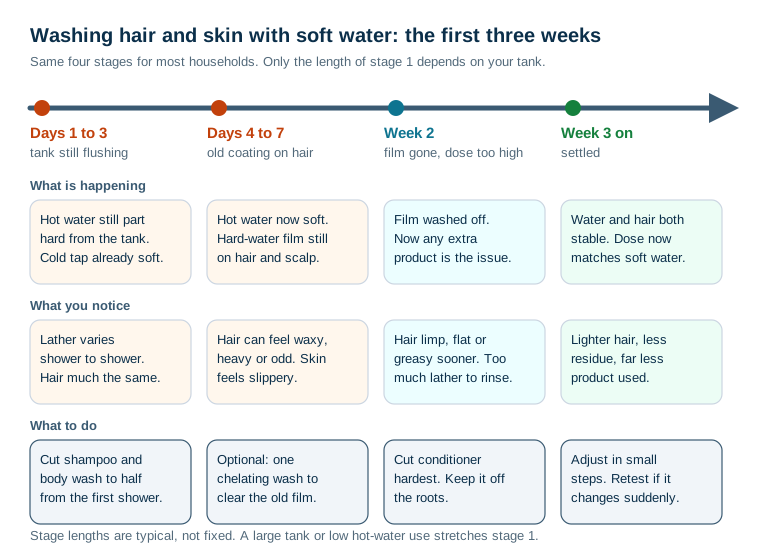
Days 1 to 3: the hot water is not fully soft yet. The cold taps are soft almost at once. The water heater is not, because it is still full of the water it held before the softener went in (see the next section). Lather varies from one shower to the next, and hair feels much as it did.
Days 4 to 7: the old film is still on your hair. Years of hard-water washing leave calcium and soap-curd deposits on the hair shaft and scalp. Soft water with shampoo lifts them gradually rather than all at once. During this stretch hair can feel waxy, heavy or simply unfamiliar. Skin feels slippery. This is the stage that makes people think the water is at fault.
Week 2: the film is gone, and the dose becomes the issue. Once the old coating has washed out, hair is clean in a way it has not been for years. If you are still using a hard-water amount of conditioner, hair now goes limp, flat, or greasy by the next day. Cut conditioner hardest at this point.
Week 3 onward: settled. Water and hair are both stable. Most people end up using well under half the product they used before.
The length of each stage varies. A large water heater, or a household that uses little hot water, stretches the first stage. Very hard water and a long history of heavy product use stretch the second.
Why the Hot Tap Lags Behind the Cold
A softener treats water on its way into the house. Anything already stored downstream, mainly the 40 to 80 gallons in a tank water heater, stays hard until it has been used and replaced.
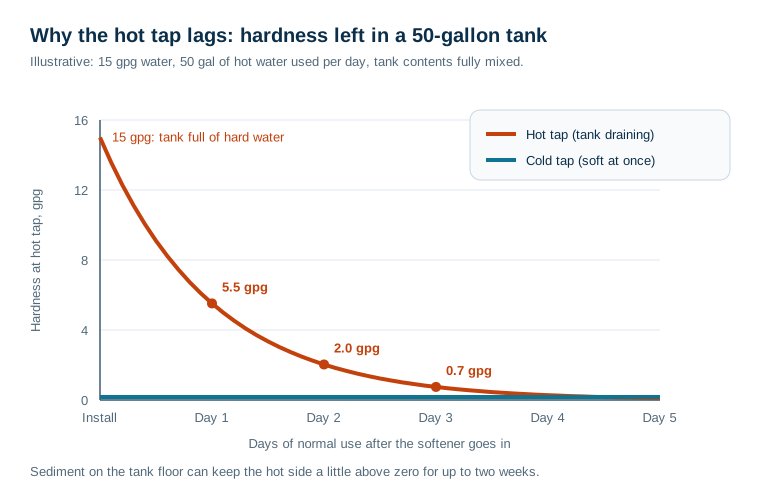
A simple way to estimate it: treat the tank as well mixed and assume a household uses about 50 gallons of hot water a day, the figure used in the WQRF softened water benefits study. Each full tank-volume drawn cuts the leftover hardness to about 37 percent of what it was. On 15-grain water, that works out to roughly 5.5 grains after one day, 2 after two days and under 1 after three. Real tanks mix less than that, so most of the hard water is often gone sooner.
Scale already on the tank floor is the other factor. It can keep the hot side slightly above zero for up to a couple of weeks. This is also why a hot-water test taken on day one says little about whether the softener works. Test the cold tap first.
If you want to speed things up, run the hot water at a tub for a few minutes once the softener is in service, or drain and flush the heater. Neither is required. Normal use gets there on its own.
Shortcut: One Chelating Wash to Clear the Old Film
You can skip most of the "days 4 to 7" stage. A chelating shampoo, one that lists EDTA, tetrasodium EDTA or sodium phytate, binds the calcium and magnesium still on the hair and lifts it off in one wash.
Timing matters:
- Wait until the hot water is soft, roughly day three or four. A chelating wash in water that is still hard puts new minerals straight back.
- Leave it on for three to five minutes before rinsing. Chelation takes time.
- Follow with a small amount of conditioner. A chelating wash strips thoroughly.
- Then stop. On soft water no new mineral film forms, so a routine chelating wash is no longer needed. The occasional clarifying wash for styling product is enough.
If you are not sure whether your hair was mineral-coated in the first place, the two-wash test in hard water and hair settles it.
What Changes for Skin in the Shower
Skin goes through a shorter version of the same adjustment. There is less to clear, because skin sheds its outer layer continuously and never builds the long-term film hair does.
What you will notice:
- Body wash lathers at once and goes much further. One pump or a third of a palm, spread with a pouf or cloth, is usually enough.
- Skin feels slick while rinsing. That is normal. A tacky or sticky film that dries dull is too much product. A slippery film that disappears as you dry is simply soft water.
- Shaving is smoother. Cream lathers more and the razor glides with less pressure. Use half the cream.
- The shower itself stays cleaner. Less soap scum on glass and tile is the easiest early sign the softener is working.
What softening does not change: water temperature, shower length, soap chemistry, indoor humidity, and any skin condition you already had. Hot water and long showers strip skin oils whether the water is hard or soft. If skin is still dry after three weeks of lower doses, the reason is almost always one of those factors. Take it one variable at a time, as set out in why dry skin can continue after installing a softener.
Softened water also does not remove chlorine or chloramine from city water. Penn State Extension's guide to water softening is blunt about it: a softener "simply removes hardness minerals". If your hair or skin reacts to chlorine, that needs carbon treatment, not a softener adjustment. Choosing a softener and carbon setup for each cause of dryness covers that combination.
When It Is Not the Adjustment Period
Give it three weeks. If something is still wrong after that, or it gets worse, look for a cause other than the change of water.
| What you notice after week 3 | Likely cause | What to check |
|---|---|---|
| Hair still waxy and dull, lather still poor | The shower is not getting soft water | Test hardness at that shower. Retrofits sometimes miss a branch |
| Hair suddenly feels coated again after weeks of being fine | Softener has stopped softening | Check salt level and whether it is regenerating |
| Orange or brassy tint on light hair | Iron in the water | Test for iron; a softener only removes small amounts of dissolved iron |
| Water tastes salty; skin feels sticky | Brine reaching the lines | A settings or valve fault, not normal soft water |
| Scalp itchy or flaking | Dandruff, a skin condition, or a product | Not a water problem; see a pharmacist or dermatologist |
| You simply dislike the feel | Preference | A blend valve can leave 1 to 3 gpg of hardness in the water |
The blend valve is a legitimate option, not a failure. Leaving a grain or two of hardness restores some of the familiar "grip" while still preventing most scale. Try it only after cutting your doses. Most people who ask for a blend setting find that the feel they disliked was excess product.
A Simple Reset Plan
- From the first shower: halve shampoo and body wash. Wash hair once, not twice.
- Around day three or four: once hot water is soft, do one chelating wash if hair feels coated.
- Days 7 to 14: cut conditioner to a third or half, applied to the ends only. Reduce leave-in and styling products next.
- Week three: fine-tune in small steps. If hair feels dry, add a little conditioner back. If it feels limp, take more away.
- Anytime: if the feel changes suddenly after weeks of being stable, test the water before changing products again. A sudden change points to the softener, not your hair.
Frequently Asked Questions
Is it good to wash your hair with soft water?
For most people, yes. Soft water lets shampoo lather and rinse completely instead of reacting with calcium and magnesium to form a film on the hair. Hair usually ends up lighter and shinier, and you need far less product. The catch is the first week or two, when hair can feel waxy, flat or greasy while old hard-water residue clears and you are still using a hard-water dose.
How much shampoo should I use with soft water?
Start at about half of what you used on hard water, then reduce further if hair still feels coated or limp. For short hair that is roughly half a teaspoon (2 to 3 mL), for shoulder-length hair about one teaspoon, and for long or very thick hair one to two teaspoons. One wash is usually enough; the second shampoo many people did on hard water is rarely needed on soft water.
Why does my hair feel greasy or flat after getting a water softener?
Usually because of too much conditioner and shampoo, not the water. Soft water rinses product off less aggressively than you are used to judging, and conditioner in particular goes further. Cut conditioner by half or more, apply it from mid-length to the ends only, and give it a week. Fine and oily hair is the most sensitive to this.
How long does it take hair to adjust to soft water?
Most people settle within two to three weeks. The first few days, the water heater is still flushing out hard water, so hot showers are not fully soft yet. In the first week, the hard-water film that built up on the hair is still washing off. By week two the remaining problem is usually dose, and once that is corrected hair feels consistent.
Does soft water help with dandruff or an itchy scalp?
It removes one irritant, soap residue from hard water, but it does not treat dandruff, which is driven by yeast and oil on the scalp, or conditions such as eczema or psoriasis. A softener is a plumbing appliance. If the scalp stays flaky or itchy after the adjustment period, use a medicated shampoo or see a dermatologist.
Can I stop using a clarifying or chelating shampoo with soft water?
Mostly, yes. A chelating shampoo removes mineral deposits, and on soft water no new deposits form. One chelating wash in the first week can clear the old film faster. After that, an occasional clarifying wash for styling product buildup is enough, and many people stop needing it at all.
