
Water Softener Control Valve: How It Works
How a water softener control valve works: it is a flow router that moves through five positions: service, backwash, brine draw with slow rinse, rapid rinse, and brine refill. Each position sends water down a different path through the resin tank, the brine tank and the drain. A motor moves the valve, and a timer or meter decides when. Every mechanical fault is one of those positions failing.
That last point is the reason to learn this. Once you can picture the five paths, the symptoms start naming themselves.
What the Valve Actually Controls
The valve sitting on top of the resin tank controls three things:
- Where the water goes. Down through the resin or up through it; to the house, to the drain, or into the brine tank.
- How fast it goes. Small flow-control washers limit the backwash rate to the drain and the refill rate into the brine tank. A precision injector sets how fast brine is drawn.
- When it happens. A timer or water meter starts the regeneration. The control then holds each position for a programmed number of minutes.
Nothing in the valve measures hardness or brine strength. It carries out the programmed steps whether or not they work. That is why a softener can "regenerate" every night without using salt, a failure explained in why a water softener is not using salt.
The tank it sits on. Water enters the top of the resin tank. The only way out at the bottom is the distributor tube, the pipe running up the middle back to the valve. What happens inside the tank is covered in inside a water softener mineral tank. This article follows the water through the valve.
Three Ways a Valve Moves the Water
Residential valves reach the same five positions by different mechanical routes. Knowing which one you have tells you what wears out.
| Design | Example | How it changes position | How it knows where it is | What wears |
|---|---|---|---|---|
| Piston, seals and spacers | Fleck 5600 / 5600SXT | A motor-driven gear pushes a piston up and down a bore lined with alternating seals and spacers. Each stop opens a different set of ports | Cam switches on the powerhead | Seals, spacers, piston |
| Piston and one-piece stack | Clack WS1 / WS1.25 | A reversible DC motor turns drive gears that screw a piston horizontally through a one-piece spacer stack with lip seals | An optical sensor counts pulses from a reflective gear. Clack's manual says the board zeroes the count each time the piston reaches the service stop, which it detects from a rise in motor current | Stack, pistons |
| Camshaft and valve discs | Autotrol 255 / Logix and Performa | A camshaft rotates. Its lobes push individual rubber valve discs open against a spring, and each disc opens one port | Optical sensor on the camshaft | Rarely the discs. Pentair says they "will usually not need to be changed" |
Many retail cabinet softeners use a fourth design, a rotating disc driven through a cam and switch. The water paths are the same.
If you are choosing a softener rather than repairing one, the valve design is worth weighing too. The Fleck 5600SXT review separates the valve's parts support from what each seller ships with it. Choosing between Fleck and Clack on internal design, wear-part prices and the repairs you can do yourself follows the first two rows of the table into a purchase, and the Tier1 review weighs a ceramic-disc valve, a design that sits outside all three.
When the drive or the position sensing fails, the valve stops partway through the cycle. That failure has its own guide: why a water softener is stuck in regeneration.
How a Water Softener Control Valve Works, Stage by Stage
The diagrams below show a standard downflow softener, the most common residential layout. They are simplified from the flow diagrams in the Fleck 5600SXT and Autotrol 255 service manuals. Every diagram uses the same drawing of the valve, resin tank, brine tank and drain, so you can compare the positions directly. Coloured lines are carrying water and grey lines are not. The bar under each diagram shows the state of the brine line and the drain, and what reaches the house.
Position 1: Service
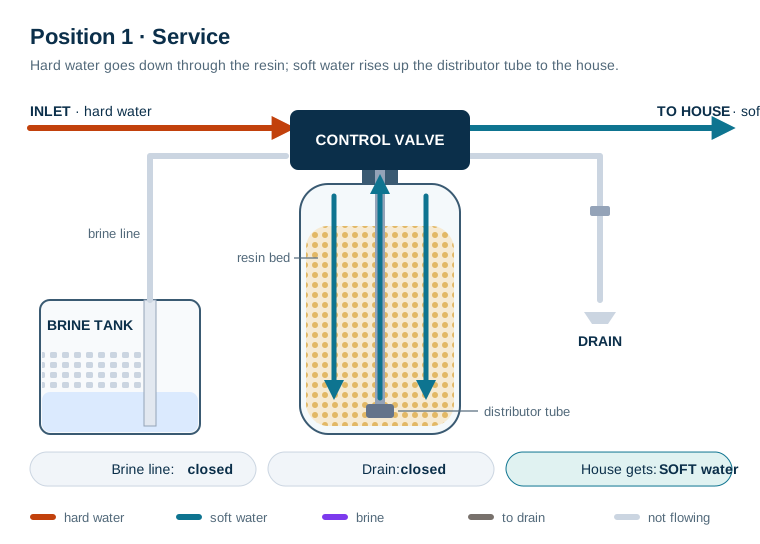
Hard water enters the top of the tank and passes down through the resin, where calcium and magnesium are exchanged for sodium. It rises up the distributor tube and leaves through the outlet. On a metered valve, the meter in the outlet counts every gallon.
When service fails:
- Hard water with a working regeneration. Water is slipping past the resin. Either the bypass is open, an internal seal is leaking, or the distributor tube O-ring has failed. Fleck's troubleshooting table lists all three. Check the bypass first: testing a water softener bypass valve.
- Water trickling to the drain between cycles. An internal seal is passing water. That is the seal and piston job in servicing a water softener control valve.
- Resin beads at the taps. The distributor or its screen has failed. See resin beads in household plumbing.
Position 2: Backwash
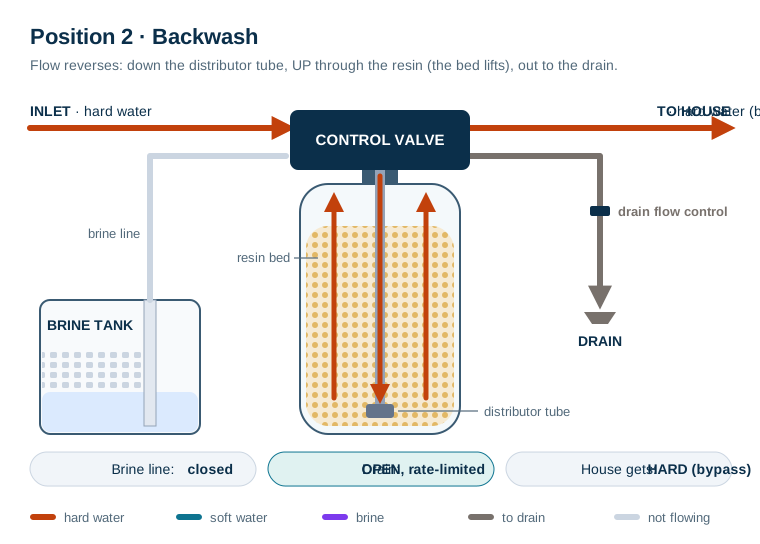
The flow reverses. Water goes down the distributor tube and up through the resin, lifting and loosening the bed and carrying trapped sediment out to the drain. Autotrol's manual describes the bed being "expanded and debris is flushed to the drain." A drain line flow control (a small rubber washer with a precise orifice) caps the rate so the resin lifts but is not washed out.
When backwash fails:
- Resin in the drain or the brine tank. Too much backwash flow. Fleck lists an "improperly sized drain line flow control" and air in the water system among the causes of losing mineral to the drain.
- Drain runs for hours. The valve has stopped in backwash. See why a water softener is constantly draining.
- A packed, dirty bed that softens poorly. A plugged flow control or a backwash that is too short lets sediment build up. That leads to resin channeling and fouling.
Position 3: Brine Draw and Slow Rinse
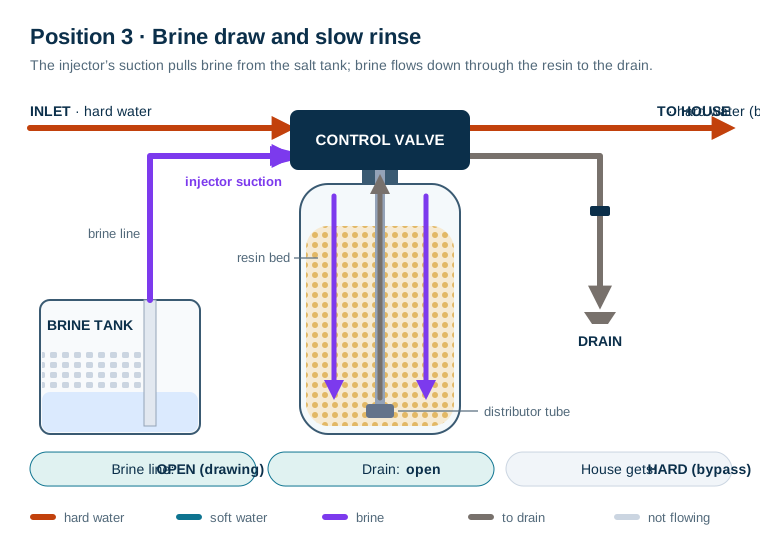
This is the stage that actually regenerates the resin. Water is forced through the injector, a nozzle that sprays into a slightly larger throat. The fast-moving jet creates suction that pulls brine up the brine line from the salt tank. The mix flows down through the resin, and the sodium pushes off the hardness, which goes to the drain. How that suction works, and why it is so easily lost, is explained in what a water softener injector and venturi actually do.
When the brine tank has been drawn down, a float-operated air check at the bottom of the brine pickup closes. Autotrol's manual says "brine draw is completed when the air check closes." Water keeps flowing through the injector, now with no brine, which slowly pushes the remaining brine through the bed. That is the slow rinse.
When brine draw fails:
- Salt never goes down, water turns hard. No suction. Clack's manual lists a plugged injector, a faulty regenerant piston, an air leak in the brine line, a restricted, too-long or too-high drain line, and pressure below 25 psi. Start with how to clean a water softener injector.
- Brine tank fills higher every cycle. The valve refills but never draws, so water builds up. Fleck lists a plugged injector system and a plugged drain line flow control under "excessive water in brine tank." See brine tank full of water or overflowing.
Position 4: Rapid Rinse
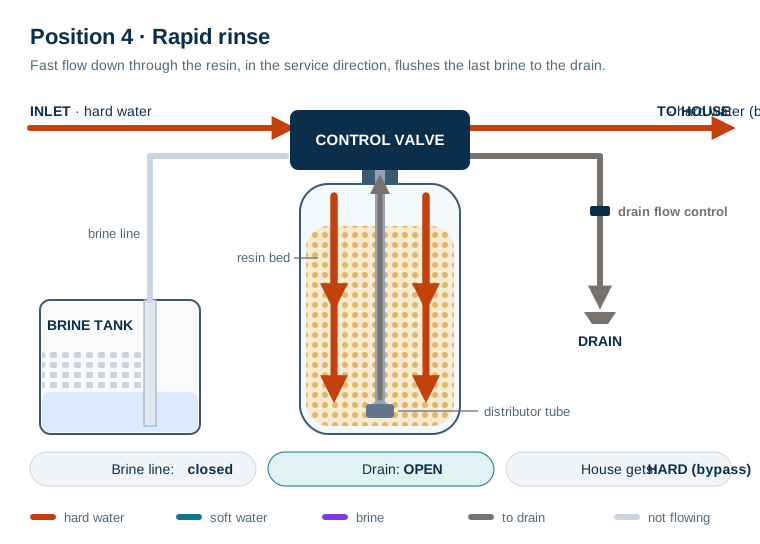
Water runs down through the bed at full service direction and speed and out to the drain. It flushes out the last brine and packs the bed back down so service water will not channel through it. Autotrol describes it as removing "any remaining brine residual."
When rapid rinse fails:
- Salty water after regeneration. Brine is still in the bed when the valve returns to service. Clack's troubleshooting for "residual regenerant being delivered to service" lists low water pressure, an incorrect injector size and a restricted drain line. See why softened water tastes salty.
Position 5: Brine Refill
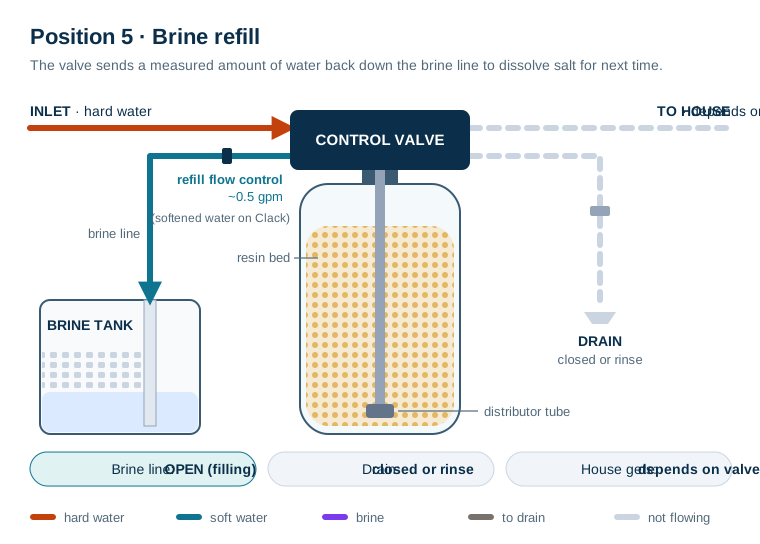
The valve sends a measured amount of water back down the brine line into the salt tank, where it dissolves salt for the next regeneration. A refill flow control limits the rate. Clack's is a washer designed to deliver a steady 0.5 gpm across the pressure range, and Clack notes that on softeners, refill is done with soft water. The refill time or volume sets how much salt the next regeneration uses.
When refill fails:
- Brine tank overflows. Too much water gets in. Fleck lists foreign material in the brine valve or the brine line flow control. Clack lists a missing refill flow control. On many units a safety float is the backup; see water softener brine tank internals.
- Brine tank stays dry. Not enough water gets in. Fleck: "Insufficient water flowing into brine tank. Check brine tank fill time and clean brine line flow control if plugged." See no water in the brine tank.
Same Five Jobs, Different Order
The positions above are the building blocks. Each valve family runs them in its own sequence, and your display's step numbers follow that sequence, so it helps to know which one you have.
| Step | Fleck 5600SXT (single backwash) | Clack WS1 (downflow softener) | Autotrol 255 with 740/760 |
|---|---|---|---|
| 1 | Backwash | Backwash | Backwash (C1) |
| 2 | Brine / slow rinse | Regenerate (brine draw) | Brine / slow rinse (C2, C3) |
| 3 | Rapid rinse | Backwash (second) | Repressurize (C4) |
| 4 | Brine tank fill | Rinse | Fast rinse (C5); second backwash (C6); fast rinse (C7) |
| 5 | Service | Fill | Brine refill (C8), during part of the fast rinse |
The Fleck sequence is from the Fleck 5600SXT downflow service manual flow diagrams. The Autotrol cycle numbers are from the Autotrol 740/760 and 255/Performa manual, where the repressurize step lets air and water balance in the valve before the regeneration continues. Clack's WS1 manual gives the standard downflow order as backwash, regenerate, backwash, rinse, fill, with an optional pre-fill that makes brine two hours before the regeneration starts, while softened water is still available.
Why the order matters for diagnosis. The third step is rapid rinse on a Fleck, a second backwash on a Clack, and the repressurize step on an Autotrol, so "stuck on step 3" means three different things. A valve that fills at the end of the cycle and one set to pre-fill at the start will also leave very different water levels in the brine tank if the cycle is interrupted. Always read the step against your own valve's sequence.
What Decides When It Regenerates
The five positions are the how. The control decides when. Penn State Extension's guide to water softening describes two approaches:
- Timed: "programmable timeclocks that will regenerate on a predetermined schedule," whether or not you used any water.
- Demand-controlled: units that "usually regenerate after so many gallons of water have been softened." On Fleck and Clack valves, a turbine or paddle meter in the outlet counts the gallons.
Timing faults look like valve faults. A control that loses its clock after a power cut regenerates in the middle of the day, and a meter that stops counting never starts a regeneration. Neither is a problem with the five positions. If the valve moves correctly when you press regenerate but never does it on its own, the fault is the control or the meter, and why a water softener will not regenerate is where to go.
The Fault Index
Use this as a map. Find your symptom, and it tells you which stage has failed and where the fix is.
| Symptom | Stage failing | First thing to check | Guide |
|---|---|---|---|
| Hard water, salt is being used | Service | Bypass, then internal seals | Bypass testing |
| Hard water, salt not going down | Brine draw | Injector, brine line, drain, pressure | Not using salt |
| Water trickles to drain in service | Service (seal leak) | Seals and spacers or stack | Servicing the valve |
| Drain runs for hours | Any regeneration step, stuck | Motor, drive, position sensor | Stuck in regeneration |
| Resin beads in drain or brine tank | Backwash | Drain flow control size | Resin beads |
| Brine tank overfilling | Brine draw or refill | Injector, then refill control | Brine tank overflowing |
| No water in brine tank | Refill | Refill flow control, refill setting | No water in brine tank |
| Salty water after regeneration | Slow or rapid rinse | Pressure, injector size, drain | Salty softened water |
| Regenerates at wrong time or never | Control, not the valve | Clock, meter, programming | Will not regenerate |
What This Model Leaves Out
These diagrams are simplified. Upflow-brining valves send brine up through the bed instead of down, and their injector sits in a different port. Clack warns that upflow and downflow bodies are not interchangeable. Twin-tank and alternating valves add a second tank and a switching step. Some valves add a pre-fill or a second backwash. The five jobs are still the same; only the order and the plumbing change.
The model also cannot tell you whether your resin is healthy. A valve that does all five jobs perfectly will still produce hard water from resin that is fouled or worn out.
Once you know how a water softener control valve works, there is not much mystery left in it: one inlet, three destinations, five positions. When something goes wrong, ask which position the valve was in when it happened, and the table above tells you which part to check first.
Frequently Asked Questions
What does the control valve on a water softener do?
It routes water. In service it sends incoming water down through the resin and out to the house. During regeneration it moves through a fixed series of positions: backwash, brine draw and slow rinse, rapid rinse and brine refill. Each one sends water down a different path through the resin tank, the brine tank and the drain. The control also decides when to regenerate, on a timer or after a metered volume of water.
What are the stages of water softener regeneration?
On a typical downflow softener the valve moves from service to backwash, then brine draw with slow rinse, then rapid rinse, then brine tank refill, and back to service. The order varies by valve. Fleck's 5600SXT runs backwash, brine and slow rinse, rapid rinse, then brine tank fill. Clack's WS1 downflow sequence is backwash, regenerate, backwash, rinse, fill. Autotrol's 255 valve refills the brine tank during part of the fast rinse.
Does water go through the softener during regeneration?
Not through the resin to your taps. While the valve is regenerating, most residential valves send untreated water straight to the house so you still have water, but it is hard. That is why regeneration is usually scheduled overnight, and why a valve stuck in a regeneration position leaves the house on hard water.
How does a water softener know when to regenerate?
Either by time or by use. Penn State Extension describes timed models as regenerating on a programmed schedule, and demand-control models as usually regenerating after a set number of gallons has been softened. Metered valves count water through a turbine or paddle in the outlet, subtract it from the programmed capacity, and schedule a regeneration when the remaining capacity runs low.
What is the difference between a piston valve and a disc valve?
A piston valve, such as the Fleck 5600 or Clack WS1, slides a piston through a stack of seals and spacers, and each stop along the bore opens a different set of ports. A disc valve, such as the Autotrol 255, uses a rotating camshaft whose lobes push individual rubber valve discs open against a spring. Both do the same five jobs. They wear differently: piston valves need seal kits, while disc valves rarely need their discs replaced.
