
How to Start a Manual Regeneration Safely
A manual regeneration is the quickest test of whether a water softener still works. Put the bypass in service, hold the regeneration button, then watch four things: drain flow in backwash, the brine tank level during draw, rinse clarity, and the refill. Each one rules a group of faults in or out, so one cycle usually tells you where the problem sits.
Most guides treat the button as the whole job. It is the least important part. The value is in what you measure while the cycle runs.
Manual Regeneration: Water Softener Safety Before You Press Anything
A regeneration sends water to the drain for an hour or more and delivers unsoftened water to the house while it runs. Five minutes of preparation keeps that from causing problems.
Put the bypass in service, not bypass. It sounds backwards, but in bypass the control valve is isolated from supply pressure. Clack's manual describes the bypass position as one where "the control valve is isolated from the water pressure contained in the plumbing system." A regeneration started in bypass has no water to backwash or rinse with, and tells you nothing.
Look at the drain. The drain line should end at an air gap you can see. If it discharges into a laundry tub or standpipe, make sure it will not overflow at full backwash flow.
Stay off the hot tap. Clack's WS1 operation manual is plain about it: "If there is a demand for water when the system is regenerating, untreated water will be used." Hot water drawn during the cycle refills the water heater with hard water.
Do not unplug it partway through. Pentair's Fleck 5600SXT service manual says that if power fails during regeneration, the valve stays in its current position until power is restored. Unplugging during backwash leaves the drain open.
Never turn the drive by hand. Autotrol's Logix manual warns, "Do not rotate the camshaft by hand or damage to the unit may occur," and says to step it electronically instead. The same rule applies to piston valves.
Take Three Baselines First
Without a starting point, the observations during the cycle have nothing to be compared against.
- Hardness at a cold softened tap. Run it for a minute and test. Write the number down. If you have no method yet, how to test water hardness at home compares strips and drop kits.
- Brine tank water level. Lift the lid, push a clean dowel or broom handle down beside the brine well to the tank floor, and mark the wet line. Or measure the height of water from the floor of the tank with a tape.
- Salt level. Put a strip of tape on the outside of the tank at the top of the salt and date it.
Also note what the display says: days since last regeneration, gallons remaining, any error. If the control is showing a code, decode it before regenerating, because some faults get worse when the valve is driven.
Starting the Cycle by Brand
On most electronic controls, a short press schedules a regeneration for tonight and a long press starts one now. For diagnosis you want the long press.
| Control | Start an immediate regeneration | Short press does | Source |
|---|---|---|---|
| Fleck 5600SXT | Hold Extra Cycle for 5 seconds | Queues a regeneration for the set time | Fleck 5600SXT service manual |
| Clack WS1 / WS1.25 | Hold REGEN for 3 seconds | Flashes REGEN TODAY for the delayed time | Clack WS1 manual |
| Autotrol Logix 740 / 760 | Hold REGEN for 5 seconds | Delayed regeneration at the set time | Autotrol 740/760 service manual |
Clack adds that an immediate request "cannot be canceled", so start it only when you have time to watch. On other controls, look for "manual regeneration" or "regenerate now" in your own manual. On a mechanical timer, there is usually a knob that is turned until it clicks into the start of the cycle.
Keep a stopwatch or phone timer running. The display shows each step and its remaining time. You will need those times to know when to look.
Stage 1: Backwash, Read the Drain
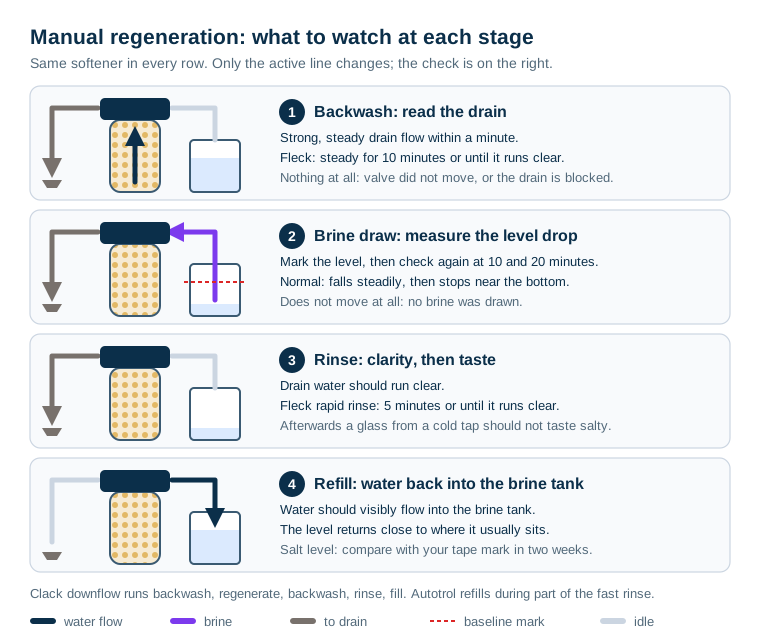
Backwash is first on most downflow softeners. Water runs up through the resin and out of the drain line at a fixed rate set by a flow control in the drain fitting.
Fleck's start-up instructions tell installers to "ensure the drain line flow remains steady for 10 minutes or until the water runs clear." That is also the owner's test.
| What you see at the drain | What it rules in | What it rules out |
|---|---|---|
| Strong, steady flow within a minute | Valve moved; drain line open | Stalled valve, blocked drain |
| Nothing at all | Valve did not move, drain blocked or kinked, or bypass still in bypass | Brine problems (you have not reached them yet) |
| Weak or surging flow | Restricted drain line or flow control, low inlet pressure | A valve that failed to move |
| Discoloured at first, then clearing | Normal flushing of trapped sediment or iron | Nothing; this is expected |
| Stays brown or orange throughout | Heavy iron load in the bed | A clean resin bed |
| Small beads in the drain water | Damaged upper basket, distributor or flow control | Normal operation; beads should never leave |
No flow at all is the most useful result, because it stops the diagnosis early. Either the valve is not moving, covered in why a water softener is stuck in regeneration, or the drain is blocked.
Stage 2: Brine Draw, Measure the Level Drop
This is the stage that decides whether the softener is actually being recharged, and the one most often misread.
In brine draw, water flowing through the injector creates suction that pulls brine from the salt tank into the resin. Fleck calls this step "brine draw / slow rinse," and its start-up instructions say to "ensure the unit is drawing water from the brine tank." Clack calls it "Regenerate." Autotrol splits it into regenerant draw and slow rinse.
How to check it. Once the display shows the brine step, measure the water level against your baseline mark. Check again after 10 minutes and again after 20.
| What the level does | Meaning |
|---|---|
| Falls steadily, then stops near the bottom | Normal. The air check closes when the brine is used and the valve continues with slow rinse |
| Does not move at all | No brine drawn. Injector, brine line, bridge, drain restriction or pressure |
| Falls slowly, far behind previous cycles | Partly blocked injector or screen, or a small air leak |
| Rises instead of falls | Water is flowing into the tank, not out. Refill or brine valve fault |
No movement is the key finding. The control cannot tell whether brine arrived, so a softener with a blocked injector completes every regeneration on schedule and rinses the resin with plain water. Fleck's troubleshooting table lists a plugged injector or injector screen, a plugged drain line flow control and line pressure that is too low among the causes of a softener failing to draw brine. The cleaning procedure is in how to clean a water softener injector, and the full brine-side sequence is in why a water softener is not using salt.
Check for a bridge while you are there. Push the dowel down through the salt. If it meets a hard crust with a hollow beneath, the injector may be fine and the brine was simply never made. See water softener salt bridges.
Stage 3: Rinse, Clarity and Taste at the Tap

After brining, the valve rinses the brine and released hardness out of the bed. Fleck's start-up procedure says to run rapid rinse "for five minutes or until the water runs clear."
What to check:
- Drain water clears. Cloudy or discoloured rinse water that never clears points to fines, iron or a damaged bed.
- Softened water tastes normal afterwards. Fill a glass from a cold tap after the cycle finishes. A distinctly salty taste means brine was not rinsed out, often because rinse time is too short or the brine step overran. Why softened water tastes salty covers those causes.
- Some valves backwash a second time. Clack's downflow sequence is backwash, regenerate, backwash, rinse, fill. A second burst of drain flow is normal on those valves.
Stage 4: Refill, and What the Salt Line Shows Later
The last step puts water back into the brine tank so it can dissolve salt for the next cycle. On Fleck valves this is "brine refill"; Clack calls it "Fill/Dissolve"; Autotrol notes that brine refill occurs during part of the fast rinse.
What to check: water should visibly flow into the brine tank, and the level after the cycle should return close to where it usually sits. A tank that keeps filling toward the overflow points to the refill or brine valve; see brine tank full of water or overflowing. A tank that stays dry points to the refill flow control or brine line; see no water in the brine tank.
The salt line is a slow check. One regeneration uses a few pounds of salt, which may barely move the level in a full tank. Compare against your tape mark after two weeks rather than an hour.
Reading the Four Observations Together
This is the point of the exercise. Put what you saw into one row and the fault is usually obvious.
| Backwash flow | Brine level fell | Rinse clear | Hardness next day | Most likely diagnosis |
|---|---|---|---|---|
| Yes | Yes | Yes | At or near zero | Softener works. Look at settings, capacity, or taps plumbed before the softener |
| Yes | Yes | Yes | Still hard | Brine too weak (fresh salt, bridge), bypass bleeding, or tired resin |
| Yes | No | Yes | Still hard | Brine draw fault: injector, brine line, bridge, drain restriction |
| No | Not reached | Not reached | Still hard | Valve did not move, or drain blocked |
| Yes | Yes | Cloudy, beads or colour | Varies | Bed damage, iron fouling or a failed distributor |
If everything passed but the water is still hard, the fault is outside what a manual cycle tests. How to check if a water softener is working explains how to sample properly, and a bypass that is not fully sealing is covered in water softener bypass valve testing.
When a Double Regeneration Is Worth It, and When It Wastes Salt
A second back-to-back cycle recharges more of a bed that was completely exhausted. Autotrol builds this in: after an immediate regeneration starts, pressing REGEN again "will initiate a second manual regeneration," shown as X2 on the display.
Worth it:
- After the salt ran out and hard water has been passing through for days. The full recovery timeline is in what to do when a water softener ran out of salt.
- After the softener sat in bypass or unpowered for a long period while water was used.
- After a resin cleaner treatment, where the product instructions call for it.
Wasting salt:
- When brine draw failed. A second cycle without brine is just a second rinse. Fix the draw first.
- When fresh salt has not had time to dissolve. Clack's manual says that if the brine tank had no salt, fill it "and wait at least 2 hours before regenerating." If your valve refills at the end of the cycle, the refill water for the second cycle needs the same time.
- As a routine top-up. If the water only stays soft with extra cycles, the hardness or capacity setting is wrong. Correct the setting instead of paying for the salt twice.
What a Manual Cycle Cannot Tell You
- Whether the resin has lost capacity. A worn bed passes all four checks and still runs out early. The pattern shows up as hardness returning days before the next regeneration.
- Whether the timing is right. A valve that regenerates perfectly on demand can still be scheduled at the wrong hour or not at all. That is a clock or programming issue.
- Small bypass leaks. A few grains of bleed-through will not show during the cycle; they show in a careful hardness test afterwards.
Used this way, a manual regeneration is not a reset button. It is the cheapest diagnostic instrument a softener owner has: four observations, a dowel, a glass of water and a test kit, and in most cases you will know which part of the system to look at next.
Frequently Asked Questions
How do I manually regenerate my water softener?
Hold the regeneration button on the control until an immediate cycle starts. Pentair's Fleck 5600SXT manual says to hold Extra Cycle for five seconds, Clack's WS1 manual says to hold REGEN for three seconds, and Autotrol's Logix 740/760 manual says to hold REGEN for five seconds. A single short press on most of these controls schedules a regeneration for the next programmed regeneration time instead of starting one now. Make sure the bypass valve is in the service position first, or the valve has no water to regenerate with.
How long does a manual regeneration take?
Most residential cycles take roughly one to two hours. Clack's WS1 manual lists total downflow softener cycle times from 57 to 107 minutes depending on the salt dose and backwash setting. Your own control shows the remaining time for each step on its display during the cycle.
Can I use water while my softener is regenerating?
You can, but it will not be softened. Clack's WS1 manual states that if there is a demand for water while the system is regenerating, untreated water will be used. Avoid running hot water during the cycle so the water heater does not refill with hard water, and avoid heavy use such as laundry, which also competes with the valve for pressure.
Should I regenerate my water softener twice?
Only when the resin bed is fully exhausted and the brine is known to be good, for example after the salt ran out or after a long period in bypass on hard water. Autotrol's Logix controls have a built-in option for this: pressing REGEN again after an immediate regeneration starts queues a second one, shown as X2. A second cycle does nothing useful if the first one failed to draw brine; fix the brine draw first.
Why is my softener not drawing brine during regeneration?
The usual causes are a plugged injector or injector screen, an air leak in the brine line, a salt bridge, a restricted drain line or low inlet pressure. Pentair's Fleck troubleshooting table lists a plugged injector or injector screen, a plugged drain line flow control and line pressure that is too low among the causes of a softener failing to draw brine. Watching the brine tank level during the draw step tells you whether any brine moved at all.
Is it bad to manually regenerate a water softener often?
It is not harmful to the equipment, but it wastes salt and water if the resin was not close to exhausted. A demand-metered softener already regenerates when its programmed capacity is used. If you find yourself forcing extra cycles to keep the water soft, the hardness or capacity setting is probably wrong, or the regeneration is not fully recharging the resin.
