
Outdoor Water Softener Installation: Freeze and Heat Protection
An outdoor water softener installation works only if the unit stays inside its rated temperature range all year. Most makers rate softeners at roughly 35°F to 100°F, and one lists 40°F to 110°F. Outdoors, winter drops below that range and summer sun rises above it. One freeze can crack a valve body. Years of sun make tanks and tubing brittle. An insulated, shaded enclosure with a little heat handles both.
Outdoor installs are common in the South and Southwest, where houses are built on slabs with no basement and a garage full of cars. The same climates bring months of hard sun and the occasional freeze. Most guides cover only one of those extremes. This one covers both, in the order a year brings them. To compare outdoor with indoor options first, start at where to install a water softener.
Outdoor Water Softener Installation: What Manufacturers Allow
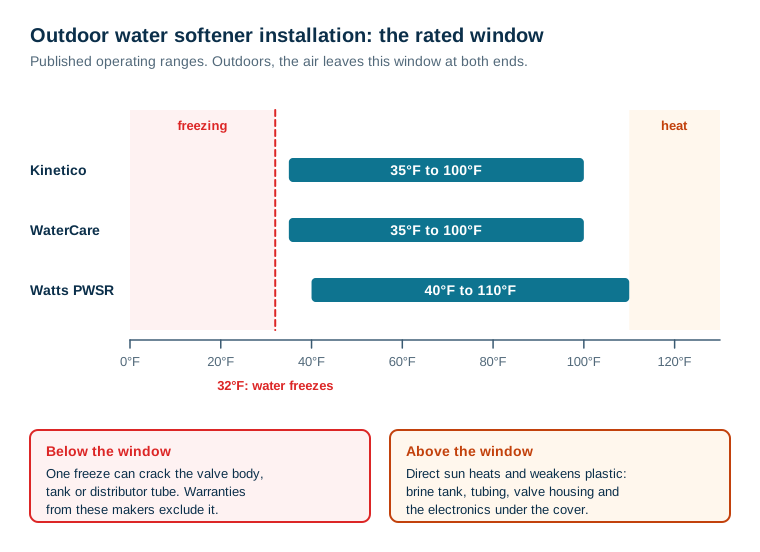
Three manufacturers publish their numbers clearly:
- Kinetico gives "35° – 100° F for most systems," and lists an outdoor installation among the situations that put a system at risk of freezing. Its winterizing guidance also says, twice: "the Kinetico manufacturer's warranty does not cover system damage caused by freezing."
- WaterCare says softeners "are rated to operate between 35 and 100 degrees Fahrenheit." It warns that "direct sunlight should always be avoided" because constant sun "can cause damage to the tank and controller over time" (WaterCare on outdoor installation).
- Watts lists an operating range of 40°F to 110°F for both ambient air and water in its PWSR softener manual. It says to install the system where it will not be exposed to temperatures outside that range "or to direct sunlight," and states that freeze damage "will void this water conditioning systems warranty."
Two things follow. First, the enclosure is your warranty. Freeze damage is excluded, so the protection you build is the only cover you have for the most common outdoor failure. Second, the lower limit is above freezing. The ratings start at 35°F or 40°F, not 32°F. An enclosure that "just stays above freezing" is still below the rating on a cold night.
A Year Outdoors: The Risks Come in Sequence
An outdoor softener does not face heat or cold. It faces each in turn, and its plastic parts take the stress of both. This is how a typical Sun Belt year plays out, and what to check in each season.
| Season | What the unit faces | What fails | What to check or do |
|---|---|---|---|
| Winter | Clear nights that drop below freezing, sometimes several in a row | Valve body, bypass, tank neck, distributor tube, drain line fittings. Freezing is the most expensive single event | Heater working, pipe insulation intact, enclosure lid closed. Before a hard freeze, follow how to winterize a water softener |
| Spring | Rising sun angle, wide day-to-night swings | Brittleness shows here: plastic cooled to near freezing, then heated in sun, day after day | Inspect for chalking, fading and hairline cracks on the brine tank and tubing. Open the summer vent |
| Summer | Peak heat and UV. A dark surface in direct sun gets far hotter than the air | Warped valve covers, brittle brine and drain tubing, faded and weakened brine tank, overheated electronics | Confirm the shade still covers the unit at the sun's summer angle. Check the display is readable and the clock correct |
| Monsoon or storm season | Wind-driven rain, runoff, flooding at ground level | Water in the valve cover, a flooded pad, wet salt that bridges | Pad above grade, lid sealed, no roof runoff falling on the unit |
| Autumn | First cold nights | An enclosure opened for summer and left open | Close the vent, test the heater and thermostat before the first forecast frost |
The sequence explains why fixing one extreme is not enough. A foil cover that works well in July does nothing on a January night. A heated box sealed tight for winter can overheat in August if it is in the sun with the vent closed.
Freeze Protection: Where an Outdoor Unit Cracks First
When water freezes it expands, and it breaks whatever part gives first. On a softener that is usually the control valve body, the bypass valve, or the fittings where the drain and brine lines connect. They hold small pockets of water in thin plastic. WaterCare adds that a frozen media tank risks "fiberglass shell cracking or internal damage to the distribution tube." A cracked distributor tube lets resin beads escape into the house plumbing.
Freeze damage often does not leak until pressure returns. A cracked valve can look fine on the frosty morning and start spraying when the day warms and the water starts flowing again. If yours has already frozen, what to do if a water softener freezes covers the thaw and the staged pressure test.
Protection that works, in order of importance:
- Heat inside the enclosure, from a thermostat-controlled heater or heat cable. Set it to hold the inside above 40°F, not just above 32°F. Insulation on its own only slows cooling. It does not stop a long freeze.
- Insulated, heat-traced pipes from where they leave the ground or the house wall to where they enter the enclosure. The exposed pipe run often freezes before the softener does.
- An insulated enclosure with rigid foam walls and a lid that seals.
- A plan for power cuts. A winter storm that cuts power also stops the heater. If outages and freezing nights come together where you live, know how to bypass and drain the unit quickly.
Heat and UV: What Sun Does to Tanks and Tubing
Sun damage works slowly and does not announce itself the way a freeze does. The parts at risk are all plastic or electronic:
- The brine tank. Usually polyethylene. In constant sun it fades, the surface chalks, and the walls lose flexibility until a knock or the weight of salt splits them.
- Brine and drain tubing. Small-diameter polyethylene tubing hardens and cracks at fittings. A cracked brine line lets air into the brine draw. A cracked drain line leaks during every regeneration.
- The control valve cover and housing. Heat can distort non-metallic parts, which is the reason manufacturers give for keeping softeners out of direct sun.
- The circuit board and display. Heat shortens electronic life, and a display in direct sun can become unreadable.
- The resin tank. Fiberglass-wrapped tanks tolerate sun better than the brine tank. The outer wrap can still weather and fray over years.
How long does it take? No softener manufacturer we found publishes a UV lifespan for its brine tanks or tubing. It depends on the plastic, the color, the stabilizers used and how many hours of direct sun the spot gets. So do not work from a timeline. Inspect on a schedule:
| Check | When | Replace or protect if |
|---|---|---|
| Brine tank surface | Every spring and autumn | It chalks onto your hand, has faded a lot, or flexes less than it did |
| Brine and drain tubing | Every spring and autumn, and at each salt fill in summer | It is stiff, discolored or cracked near a fitting |
| Valve cover | Every spring | It is warped, cracked, or no longer seals against rain |
| Display | Monthly in summer | It fades, flickers or the clock drifts |
Replacement tubing costs little. Replace it when it stiffens, before it cracks.
The Enclosure That Solves Both Problems
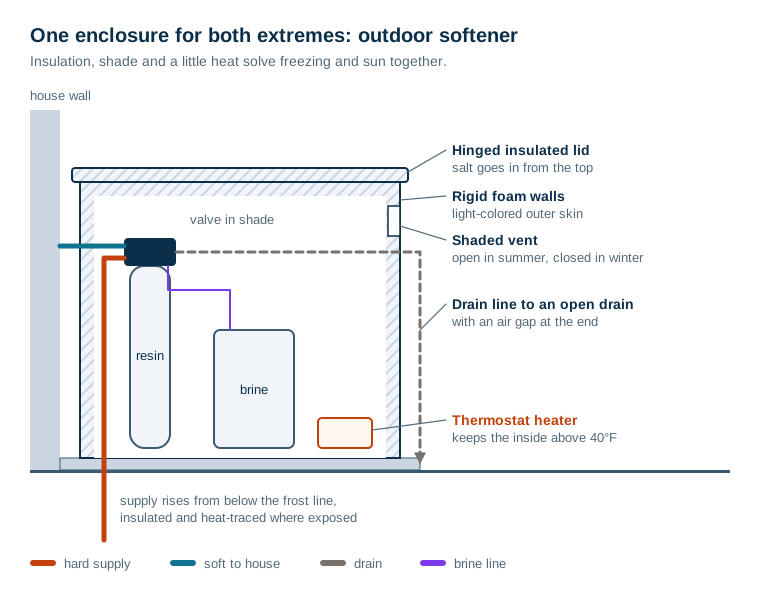
Insulation helps in both seasons. It slows heat loss on winter nights and heat gain on summer afternoons. Add a small heat source for winter and shade plus ventilation for summer, and one box covers the whole year. The parts:
- A concrete pad above grade, level, big enough for both tanks, and raised so storm water drains away from it.
- Rigid foam walls with a light-colored outer skin that reflects sun.
- A hinged, insulated lid so you can add salt without taking anything apart. A softener nobody can fill is as bad as one that freezes.
- A shaded vent that you open in summer to let heat out and close in autumn.
- A thermostat-controlled heater that holds the inside above 40°F, on a protected outdoor circuit.
- Heat-traced, insulated supply, outlet and drain pipes, with the drain line ending at an air gap at an approved drain.
- Shade over the whole enclosure, from an overhang, a lean-to or the north side of the house. Shade the enclosure, not just the unit inside.
WaterCare describes the lighter-duty versions installers use: weather covers "that fit over the top of the valve head," units placed under "lean-tos or storage sheds," and media tanks partially buried "to establish consistent temps." A valve cover on its own is enough only where it never freezes. Everywhere else, use the full enclosure.
Choosing by Climate
| Climate | Winter risk | Summer risk | What the install needs |
|---|---|---|---|
| Never freezes (South Florida, low desert coasts) | None | High UV, heat, storms | Full shade, valve weather cover, raised pad, UV-resistant tubing, drain away from the pad |
| Occasional freeze (Gulf Coast, most of Arizona and Texas, inland California) | A few hard nights a year | High | The full enclosure with heater and vent. Heat trace on exposed pipe. This is where most outdoor failures happen, because freezes are rare enough to forget |
| Regular freezing (upper South and colder) | Weeks below freezing | Moderate | Move the softener indoors if at all possible. Outdoors, it needs a heated, insulated shed, not just a box |
For homes left empty through part of the year, where nobody is there to notice a failed heater, see water softener care for seasonal homes.
Outdoor Install Checklist Beyond Temperature
Temperature decides whether an outdoor softener survives. These points decide whether it works well and can be serviced:
- Power. Use an outdoor-rated outlet with ground-fault protection and a cover rated for use while plugged in. The softener's transformer and the enclosure heater both need it. Keep the plug inside the enclosure, out of rain.
- Drain. The regeneration discharge needs an approved drain, not the lawn or a storm drain. Many local codes restrict where brine can go. Check before you choose the spot.
- Water runoff. Do not put the unit where roof runoff or a downspout lands. Grade the pad so rain runs away from it.
- Pests. Seal pipe entries into the enclosure. Insects and rodents shelter in warm boxes, and they chew wiring and nest around valves.
- Salt storage. Keep spare bags indoors or in a sealed bin. Salt that gets wet outdoors cakes, and damp salt bridges in the brine tank.
- Security and strapping. A lockable lid deters tampering. In earthquake-prone areas, strap the tanks to the wall or the pad, and check whether your local rules require it.
- Permits. Some jurisdictions require a permit to connect a softener or to install a new outdoor circuit. A quick call to the building department before the pad is poured avoids redoing it.
What an Enclosure Cannot Do
An enclosure keeps the softener inside its rated temperatures most of the time. It does not guarantee it. A heater cannot run through a power cut, and insulation only slows a long freeze down. A box that sits in the sun with its vent shut can end up hotter than the air around it. The warranty exclusion for freezing still applies however good the enclosure is. And an outdoor location still has to meet the other location requirements: before the water heater, near a drain and a protected outlet, and reachable for salt. If a garage wall or a utility closet on the main can meet those, it is usually the cheaper place for a softener.
Frequently Asked Questions
Can a water softener be installed outside?
Yes, but only with protection. Manufacturers rate softeners for roughly 35°F to 100°F or 40°F to 110°F, and outdoor air leaves that range in winter, summer or both. An outdoor unit needs protection from freezing, from direct sun and from rain, usually an insulated, shaded enclosure with a small heat source.
What temperature is too cold for a water softener outside?
Anything approaching freezing. Kinetico gives 35°F to 100°F for most systems and the Watts PWSR manual gives 40°F to 110°F. Water freezes at 32°F, and a single hard freeze can crack the control valve, the bypass or the tank. Keep the inside of the enclosure above about 40°F.
Does sun damage a water softener?
Yes. Manufacturers warn against direct sunlight because heat and UV distort and weaken plastic parts. The brine tank, the brine and drain tubing, the valve cover and the circuit board are most exposed. Shade the unit, and inspect plastic parts each spring and autumn for chalking, fading and brittleness.
Does the warranty cover a water softener installed outdoors?
Freeze damage usually is not covered. Kinetico states its warranty does not cover damage caused by freezing, and the Watts PWSR manual says freeze damage voids its warranty. Some manufacturers also restrict outdoor installation. Read the warranty before you choose an outdoor location.
Can you put a cover over an outdoor water softener?
Yes. A weather cover over the control valve is the minimum, and it protects the electronics from rain and sun. On its own it does not stop freezing. In climates with freezing nights, the tanks and pipes also need an insulated enclosure and a thermostat-controlled heat source.
Should an outdoor water softener be insulated?
In any climate that freezes, yes. Insulate and heat-trace the supply, outlet and drain piping, and enclose the tanks in an insulated box with a small thermostat-controlled heater. In hot climates the same insulation slows heat gain, as long as the enclosure is shaded and vented in summer.
