
Can a Salt-Free Conditioner Remove Existing Scale?
Can a salt free conditioner remove existing scale? Only light, loose deposits, and only over the first few weeks to three months. Template-assisted crystallization (TAC) media is designed to stop new scale from forming. It is not designed to dissolve a thick layer that is already there. A heavily scaled water heater or tankless heat exchanger needs mechanical or chemical descaling first, so the conditioner starts from a clean baseline.
That answer sits between two claims you will hear. One is the sales line that a conditioner "cleans your pipes over time". The other is the sceptic's line that it does nothing to old scale at all. The manufacturers' own literature supports something more specific than either, and it changes what you should do on installation day.
Can a Salt-Free Conditioner Remove Existing Scale? What Makers Claim
The most detailed statement comes from Next Filtration's residential ScaleStop installation and maintenance manual. Under "Things to watch for" in the first 30 to 90 days, it warns that "faucet aerators and drains may plug occasionally as old scale is removed from your plumbing system and water heater". It adds that owners may see milky water while this descaling takes place, which it attributes to "an increase in the calcium in the water".
In the same section it recommends draining the water heater tank 30 to 60 days after installation and again at one year. It also suggests a dishwasher cleaner to speed things up if the dishwasher is severely coated at installation.
Read carefully, that describes:
- A time-limited effect. It is framed as a start-up period, not an ongoing cleaning action.
- Shedding, not dissolving. Deposits come loose as particles, which is why aerators clog and the heater needs draining.
- A need for help. The manual itself tells you to drain the heater and chemically clean a badly scaled dishwasher. A system that removed old scale on its own would not need either.
Retail descriptions of other TAC systems describe the same thing in vaguer terms: a descaling effect "during the first few weeks". None of the manufacturer literature reviewed for this article claims that a conditioner will clear a heavily scaled tank or tankless exchanger.
Why a Thick Layer of Old Scale Mostly Stays Put
Scale on a heating surface is mostly calcium carbonate that has crystallised in place as calcite, the hard, dense form. The WateReuse Research Foundation study of softener alternatives described untreated scale as hard calcite that needed acid washing to remove.
For water to dissolve calcite, it has to be undersaturated in calcium carbonate. In other words, it has to be able to hold more than it is already carrying. Hardness is dissolved calcium and magnesium, as the USGS explains. A salt-free conditioner leaves that calcium in the water. It only changes where the calcium goes when it comes out of solution. Conditioned water arriving at your heater is still carrying roughly its original hardness, so it has little chemical reason to take more calcium off a deposit.
That is also why a softener behaves differently. Softened water has had most of its calcium exchanged for sodium or potassium, so it can slowly dissolve carbonate deposits over a long period. A conditioner does not create that condition. What it can do is stop adding new layers, and the thinner, looser material on pipe walls may shed as the surface conditions change. Hard crust on an element does not.
A Realistic Timescale, Deposit by Deposit
| Where the scale is | What to expect after install | Timescale | What to do |
|---|---|---|---|
| Thin film inside supply pipes | Some flakes may shed and travel downstream | First 30 to 90 days (Next) | Clean aerators and showerheads as they catch it |
| Faucet aerators and showerhead nozzles | They catch the shed flakes, so may clog before improving | First 30 to 90 days | Unscrew, rinse and soak in vinegar |
| Sediment layer in a tank water heater | Stays. Loosened flakes add to it | Ongoing | Drain at 30 to 60 days and at one year; see flushing hard water sediment |
| Hard crust on an electric element | Stays | No useful timescale | Descale or replace the element before install |
| Tankless heat exchanger scale | Stays. Restricts flow and heat transfer | No useful timescale | Descale with a pump and descaler before install |
| Kettle, coffee maker, iron | Stays, but stops growing | No useful timescale | Descale once, then watch for regrowth |
| Glass, tile and fixture spotting | Continues. Conditioned water still spots | Permanent | Wipe; a conditioner does not stop this |
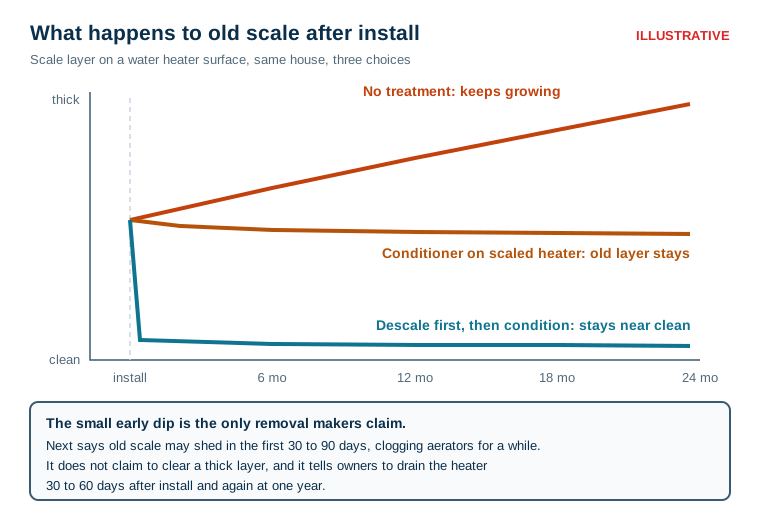
The middle line in that chart is where most disappointment comes from. The conditioner is working. New scale is not forming, as the WateReuse study found for TAC in heated equipment. But a heater that was half-choked on installation day is still half-choked a year later. Its owner concludes the product failed, when the real mistake was skipping the descale.
What to Descale Before Installation
This is the part to do in the week before the conditioner goes in. The order matters. Work from the heater outward, so that loosened material from one step does not end up in something you have already cleaned.
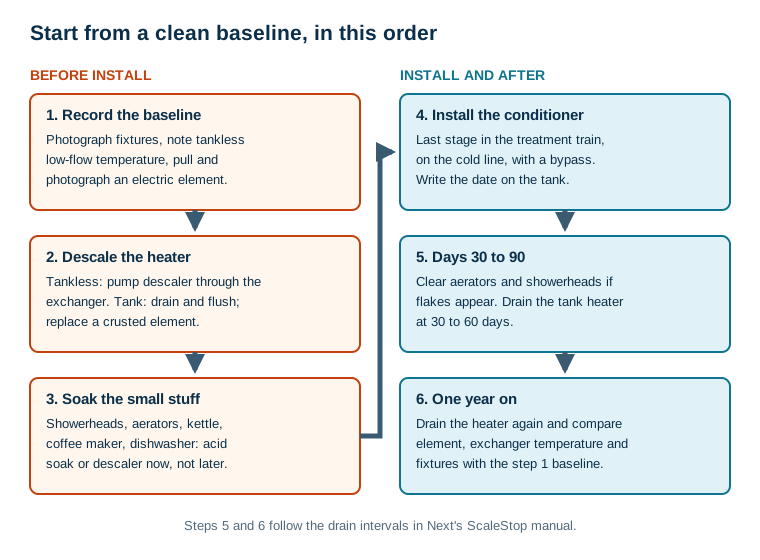
1. Record the baseline. Photograph showerheads, aerators and any visible scale. On a tankless unit, note the outlet temperature at a low, repeatable flow. If you have an electric tank heater and are comfortable doing it, pull an element and photograph it. This takes 20 minutes, and it is the only way to judge the conditioner fairly a year from now.
2. Descale the heater. On a tankless unit, circulate descaler through the heat exchanger with a pump and hoses through the isolation valves, per the manufacturer's instructions. The signs and symptoms of a scaled tankless heater tell you how urgent this is. On a tank heater, drain and flush until the water runs clear. An element that comes out crusted is cheaper to replace than to keep.
3. Soak the small stuff. Showerheads and aerators in vinegar or a descaler. A descaler cycle through the kettle, coffee maker and dishwasher. Do these after the heater, because flushing the heater can send debris to the taps.
4. Install the conditioner. It goes on the cold line as the last stage of any treatment train, with a bypass valve. Write the date on the tank.
5. Days 30 to 90. Expect some aerator clogging if the pipes carried a film. Unscrew and rinse as needed. Drain the tank heater once between 30 and 60 days, as Next recommends.
6. One year on. Drain the heater again. Compare the element, the tankless low-flow temperature and the fixtures with your step 1 photos. If scale has come back, the conditioner or its pretreatment needs attention. If it has not, you have evidence it is working, which a hardness test cannot give you.
Old Scale or a Failing Conditioner? How to Tell
Months after installation, owners often find scale and cannot tell whether it is old deposit that never left or new deposit the conditioner failed to stop. The difference matters: one needs cleaning, the other needs the media or its pretreatment looked at. Four checks separate them.
Compare against the baseline photos. This is why step 1 matters. If the showerhead or element looks the same as on installation day, you are looking at old scale. If there is visibly more, something is letting new scale form.
Clean one thing and watch it. Descale a single showerhead or aerator completely, then check it every few weeks. Fresh white deposit building on a surface you know was clean is new scale. That points to the media, not the history.
Look at what the scale is doing, not just where it is. Loose flakes collecting in aerators during the first three months are the shedding Next describes, and they tail off. Hard, adherent crust forming on a heating surface after that period is new growth.
Check the pretreatment before blaming the media. A clogged or bypassed sediment filter, an exhausted carbon cartridge, or an iron filter that has stopped working will all let the media foul. On a well, the fouling mechanism is the most common cause of a conditioner that worked for a year and then stopped.
Do not use a hardness test for this. Conditioned water tests about as hard as untreated water whether the media is working or not, so the test cannot tell old scale from new.
When Descaling Is Not Enough
Some equipment is past the point where cleaning helps. Decide this before you spend money on water treatment to protect it.
- A tankless exchanger with pitting or leaks. Descaling removes the deposit and reveals the damage underneath. It does not repair it.
- A tank heater with a thick bed of hard sediment that will not drain even after repeated flushing. On an older tank, replacement is often cheaper than fighting it.
- Galvanized supply pipe with heavy internal build-up. That is usually corrosion product mixed with scale, and no water treatment clears it.
For everything else, the right sequence is simple: clean it, then protect it. A salt-free conditioner is a prevention device. How TAC media prevents scale explains why it is good at that and why cleaning is a separate job. If you are still choosing a unit, the SpringWell FutureSoft review holds one maker's scale-prevention figure against the DVGW W 512 test and lists the water conditions its own guide excludes. Plan for that separation on installation day and the product will do what it was designed to do.
Frequently Asked Questions
Will a salt-free water conditioner remove existing scale?
Only in a limited way. Some manufacturers describe a descaling effect early on. Next's ScaleStop manual says aerators and drains may plug during the first 30 to 90 days as old scale comes loose from pipes and the water heater. That is loose, thin deposit shedding. A thick, hard layer on a heating element or tankless heat exchanger will not clear on any useful timescale. Descale that equipment before installing the conditioner.
How long does it take for a salt-free system to remove scale?
The effect manufacturers describe happens within the first few weeks to three months. Next gives 30 to 90 days, and one TAC system retailer says the first few weeks. After that, what is left is mostly hard calcite that the treated water has no chemical reason to dissolve. If scale is still visible on a fixture or element after three months, it is not going anywhere without acid or mechanical cleaning.
Why is my water milky after installing a salt-free conditioner?
Next's ScaleStop manual describes milky water during the early descaling period as a temporary rise in calcium in the water while old deposits are released from the pipes. It should clear within the first few months. Air in the lines after installation can also look milky. Air clears from the bottom of a glass upward within a minute, while suspended mineral settles or stays cloudy. If cloudiness persists beyond three months, investigate rather than wait.
Should I flush my water heater after installing a salt-free system?
Yes. Next's ScaleStop manual recommends draining the water heater tank 30 to 60 days after installation and again after one year, to clear scale that has loosened and settled. On a tankless heater, descale the heat exchanger before installing the conditioner. That way you start from a clean exchanger, and any later rise in scale tells you something about the conditioner rather than the water history.
Does a water softener remove existing scale better than a salt-free conditioner?
Softened water has almost no calcium left in it, so it can slowly dissolve some existing carbonate scale over time. A salt-free conditioner leaves the calcium in the water, so there is much less chemical drive to dissolve old deposits. Neither is a quick fix for a heavily scaled heater. Both work best when the equipment is descaled first and the treatment is left to prevent new deposits.
What should I descale before installing a salt-free conditioner?
Anything that heats water or has a fine screen. That means the tankless heat exchanger (pump descaler through it), the tank water heater (drain and flush, and replace an element that is heavily crusted), showerheads and faucet aerators (acid soak), and kettles, coffee makers and the dishwasher (descaler cycle). Photograph each one first, so you have a baseline to compare against a year later.
