
Signs a Water Softener Is Near the End of Its Life
Four signs a water softener needs replacing rather than another repair: capacity that keeps shrinking in your log, salt use that climbs with nothing else changing, repeat faults whose combined cost passes about half the price of a new unit, and a cracked or bulging tank. Almost everything else, including a softener that stopped working last week, is usually a single fault worth diagnosing first.
The difference between those two situations is time. A decline shows up over months. A failure happens on a Tuesday.
Decline or Failure? Answer This Before Anything Else
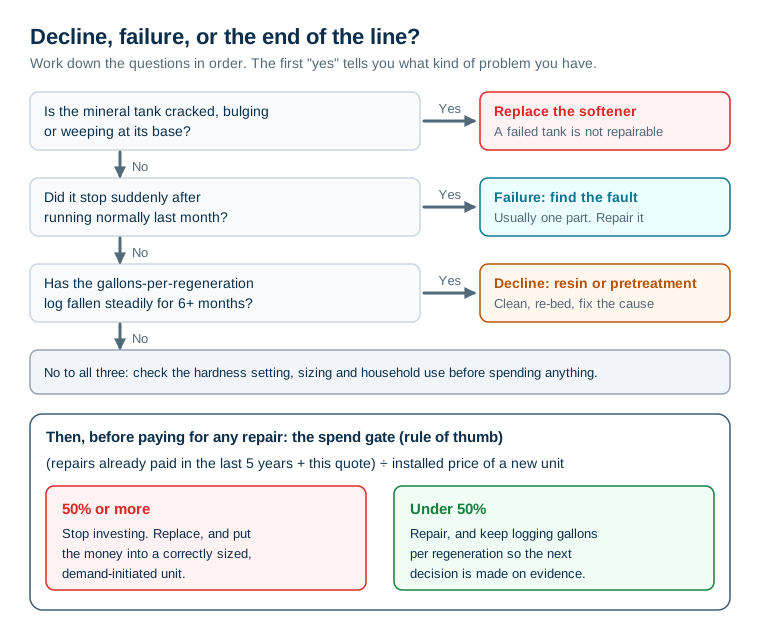
A softener that worked normally last month and delivered hard water this morning has almost certainly failed: one part or one condition. The usual suspects are power loss, a bypass left open, a salt bridge, a blocked injector or a dead valve motor. Every one of those is fixed without replacing the softener.
A softener whose water has slowly got worse over a year or two is declining. That is the resin losing capacity, and the question becomes whether cleaning, re-bedding or pretreatment will reverse it, and whether that is worth paying for on this unit.
Mixing the two up is the expensive mistake. People replace a sound softener because of a blocked injector that costs almost nothing to clear, or keep paying for service visits on a unit whose resin has been dying for two years. The rest of this article is about recognising decline properly and knowing when to stop spending.
Sign 1: Capacity Shrinking in Your Log
This is the most reliable sign, and it needs a record. The monthly routine in the water softener maintenance schedule asks you to write down the gallons treated between regenerations. After a year or two, that column shows the trend.
Illustrative two-year log for a demand-initiated unit:
| Month | Gallons between regenerations | Change from month 0 |
|---|---|---|
| 0 | 2,000 | — |
| 6 | 1,900 | −5% |
| 12 | 1,750 | −13% |
| 18 | 1,550 | −23% |
| 24 | 1,300 | −35% |
How to read it:
- Flat, or a few percent a year: normal. Age alone is not a sign.
- Falling 20% or more in a year and still going: something is attacking the resin. On city water that is usually chlorine or chloramine. On a well it is usually iron, manganese or sediment. Find the cause first, then decide between a resin cleaning, a re-bed or a new unit.
- A sudden step down, then flat: usually not the resin. Look for a changed hardness setting, lost resin from a broken distributor, or a household that has grown.
On a demand-initiated unit, a falling bed can also show as hardness reaching the taps in the day or two before each regeneration. Test then, not the morning after a regeneration, when even a tired bed tests soft.
When decline means replacement: a resin cleaning has been tried and the gallons did not recover. Penn State Extension's water softening guide notes that in some cases resin cannot be washed free of contaminants and has to be replaced. Whether you re-bed this tank or buy a new unit depends on the valve's age and on Sign 3. Our guide to water softener resin life and replacement covers the re-bed side.
Sign 2: Salt Use Rising With Nothing Else Changed
On a demand-initiated softener, salt use follows regenerations, and regenerations follow capacity. If each cycle treats fewer gallons, the unit regenerates more often and the salt goes faster, even though nothing about the house has changed.
Track pounds of salt per 1,000 gallons, not bags per month, because bags per month moves with guests, seasons and irrigation.
Worked example. The unit uses 9 lb of salt per regeneration.
| Gallons per regeneration | Salt per 1,000 gallons | |
|---|---|---|
| Two years ago | 2,000 | 9 ÷ 2.0 = 4.5 lb |
| Now | 1,300 | 9 ÷ 1.3 = 6.9 lb |
That is about 53% more salt for the same water, and it matches Sign 1. The two signs together are strong evidence of resin decline.
When rising salt is not a replacement sign:
- Salt use jumped overnight points to the brine refill running too long, a stuck float or a changed salt setting. Those are repairs.
- Salt use rose with the household, such as a new baby or a teenager's showers, is just more water.
- A timer model always used the same salt whatever the water use. Culligan's list of signs it is time to replace a softener includes an old mechanical timer. Replacing one is an efficiency decision rather than a failure.
Sign 3: Repeat Faults and the Cumulative Spend Gate
One repair is maintenance. A string of them is information. The trap is judging each repair on its own ("it's only $250 to fix") when the useful number is the total.
The spend gate (a rule of thumb, not an industry standard):
(repairs paid in the last five years + the repair you are being quoted) ÷ installed price of a comparable new unit
- Under 50%: repair, and keep logging.
- 50% or more: stop investing in this unit.
Worked example with illustrative prices. A comparable new softener would cost $2,000 installed.
| Year | Repair | Cost | Running total | Share of a new unit |
|---|---|---|---|---|
| 9 | Seal kit and piston, fitted | $250 | $250 | 13% |
| 11 | Circuit board | $300 | $550 | 28% |
| 12 | Resin re-bed, quoted | $550 | $1,100 | 55% |
Each repair looked reasonable on its own. The third takes the total past half the price of a new unit, on a 12-year-old valve that has already had two failures. Replacing now also buys a new warranty and, often, better salt efficiency. Check what each brand's warranty covers, component by component, because a lifetime tank means little if the valve gets three years. Your own numbers will differ, and typical water softener repair costs gives current ranges to plug in.
Two situations move the gate lower:
- The valve parts are obsolete or available only from one dealer. The next repair may not be possible at any price.
- Two clocks run out at once. Resin decline plus a valve needing a rebuild in the same year usually lands near or over 50% in a single step.
The full repair-versus-replace comparison, including how age and component condition interact, is in should you repair or replace an old water softener.
Sign 4: A Cracked, Bulging or Weeping Tank
This is the only single sign that ends the decision on the spot.
- A bulge, blister or soft spot on a fibreglass mineral tank means the pressure shell is failing. Put the unit in bypass and replace it.
- Water weeping at the tank base or around the neck where the valve screws in, when the valve joint itself is dry, points to the tank.
- A cracked brine tank is different. It is a cheap, separate part, and replacing it is a repair, not a replacement.
Mineral tanks rarely wear out. When one fails it is usually after a freeze, a pressure spike or a vacuum. If that is what happened, fix the cause as well. A new tank in the same unheated garage will fail the same way.
Symptoms Mistaken for Signs a Water Softener Needs Replacing
| Symptom | Usual cause | Usually needs |
|---|---|---|
| Hard water overnight, after months of soft | Bypass, power or clock loss, salt bridge, empty salt | Fix |
| Salt level not moving | Bridge, blocked injector, no brine draw | Fix |
| Water running to drain constantly | Worn seals or spacers, debris in the valve | Repair: seal kit |
| Error code or blank display | Power supply, board, motor, sensor | Repair |
| Brown water after regeneration | Iron coming off the resin | Cleaning and pretreatment |
| Salty taste | Slow rinse, blocked drain line, brine refill too long | Fix |
| Loud regeneration noises | Motor, piston or drain restriction | Repair |
| Resin beads in the plumbing | Broken distributor or upper screen | Repair; check the resin at the same time |
Any of these becomes a replacement sign only when it keeps coming back despite repair, or when the repair pushes cumulative spend through the gate.
What Replacing the Softener Will Not Fix
- The water that killed the old one. If chlorine, chloramine or iron wore out the resin, a new softener on the same water wears out the same way. Budget for a carbon prefilter or an iron filter as part of the replacement.
- Wrong sizing. A unit that was too small for the household cycled its valve to death. A like-for-like replacement repeats the problem, so size the new one from a fresh test and your meter readings.
- Problems a softener never solved. A softener removes hardness. It does not remove bacteria, nitrate, arsenic or lead, and a new one will not change a water test for those.
- Leaks outside the softener. A new unit on old, leaking bypass fittings or a loose drain line still puts water on the floor.
Before You Replace: Two Months of Evidence
If nothing is urgent, two months of records will settle the question.
- Test raw and softened water to confirm the hardness setting still matches the supply.
- Log gallons between regenerations and the salt you add, with dates.
- Test the tap the day before a regeneration at least twice.
- Clean the brine tank and injector so a blockage is not mimicking decline.
- Try one resin cleaning if the supply carries iron or manganese, and see whether the gallons recover.
- Add up the last five years of repair invoices and get one quote for the repair and one for a replacement. What a replacement typically costs, with removal fees, gives you a range to check that second quote against.
- Check the tank in good light for bulges, blisters and weeping.
At the end of it you will know which of the four signs you have, if any. That makes the decision a matter of arithmetic rather than a salesperson's opinion.
The signs a water softener needs replacing are slow ones: a shrinking log, rising salt per thousand gallons, a mounting repair total and, occasionally, a failing tank. A sudden stop is a fault to find, not a verdict on the unit.
Frequently Asked Questions
How do I know if my water softener needs to be replaced?
Four signs point to replacement rather than repair: a steady fall in gallons treated between regenerations over many months that cleaning does not reverse, salt use per thousand gallons rising with no change in the household, repeated faults whose combined repair cost is heading past about half the price of a new unit, and a cracked, bulging or weeping mineral tank. A softener that simply stopped working last week is usually a single fault and worth diagnosing first.
What are the signs of a bad water softener?
Hard water at the taps, spots returning on glass and fixtures, salt that is not going down or is going down much faster than it used to, water running to the drain continuously, brown or salty water, loud noises during regeneration, and error codes. Most of these are single faults such as a salt bridge, a blocked injector, a worn seal or a lost setting. They only point to replacement when they keep coming back or the tank itself has failed.
Can a water softener just stop working?
Yes, and when it stops suddenly the cause is usually simple: the unit is in bypass, the power or clock was lost, the salt has bridged, the injector is blocked, or the valve motor has failed. Those are repairs. Resin wearing out does not cause a sudden stop. It causes a slow loss of capacity over months, which is why a sudden stop and a slow decline need different answers.
How often should a water softener be replaced?
There is no fixed interval. Most units last 10 to 15 years, and many run longer because the valve and resin can each be renewed. Replace when the evidence says so, meaning a failed tank, a decline that pretreatment and cleaning cannot fix, or repair costs that no longer make sense, rather than because the unit has reached a certain age.
Is it worth repairing a 15-year-old water softener?
Sometimes. If the tank is sound, the valve parts are still sold and the repair is a seal kit or a motor, a repair is usually cheaper than a new unit. It stops being worth it when the resin and valve both need work at once, when parts are no longer available, or when it is an old timer model whose salt and water use a demand-initiated replacement would cut. Add up what you have already spent in recent years before approving the next repair.
Why is my water softener using more salt than it used to?
If the household and settings have not changed, rising salt use usually means the unit is regenerating more often because the resin holds less hardness per cycle, or that the brine refill is running too long. Divide the salt used by the gallons treated to get pounds per thousand gallons, and compare it with an earlier month. A steady rise alongside falling gallons per regeneration points to the resin.
