
How Much Sodium Does a Water Softener Add?
Sodium in softened water is simple to work out. A salt-regenerated softener adds about 7.9 mg of sodium per litre for every grain per gallon (gpg) of hardness it removes. At 15 gpg that is about 118 mg per litre, or 28 mg in an 8 ounce glass. That is less than a slice of white bread. For most people that is a small share of a day's sodium. For anyone on a sodium-restricted diet, it can be significant.
This page gives you the calculation, compares the result with food labels, gives the potassium figure if you switch salts, and says who should take the number seriously.
The Calculation: Sodium in Softened Water From Your Own Hardness
Ion exchange is a straight swap by electrical charge. Each calcium or magnesium ion carries two positive charges. The resin replaces it with two sodium ions, one charge each. So the sodium added depends only on how much hardness was removed:
- Hardness in mg/L as calcium carbonate. If your test reads in gpg, multiply by 17.1.
- Multiply by 0.46. That is two sodium ions (2 × 23) for each calcium carbonate unit (100).
Put together, sodium added (mg/L) = hardness removed (gpg) × 7.9.
Penn State Extension's water softening guide states the same rule in US units: "The exchange of hardness minerals for sodium adds 7.5 milligrams per quart for each gpg of hardness removed." A quart is 0.946 litres, so 7.5 mg per quart is 7.9 mg per litre.
| Hardness removed | Sodium added per litre | Per 8 oz glass | Per 2 litres a day |
|---|---|---|---|
| 5 gpg | 39 mg | 9 mg | 79 mg |
| 10 gpg | 79 mg | 19 mg | 158 mg |
| 15 gpg | 118 mg | 28 mg | 236 mg |
| 20 gpg | 158 mg | 37 mg | 315 mg |
| 25 gpg | 197 mg | 47 mg | 394 mg |
| 30 gpg | 236 mg | 56 mg | 473 mg |
Three details change your own figure.
- Use hardness removed, not the valve setting. If a blending valve leaves 2 gpg in the water, subtract it.
- Add the sodium already in the raw water. Many supplies carry some. EPA's advisory found a median of 16.4 mg/L across a national survey of groundwater systems. Your utility's water quality report often lists it.
- Iron removed counts too. A softener that also takes out dissolved iron exchanges sodium for it, but at typical iron levels the extra is small.
Two worked examples
City water, 8 gpg, 20 mg/L of sodium already in the supply. The softener adds 8 × 7.9 = 63 mg/L. The softened water carries about 83 mg/L in total, or about 20 mg in an 8 ounce glass.
Private well, 25 gpg, sodium not known. The softener adds 25 × 7.9 = about 197 mg/L, about 47 mg a glass. A well can already carry sodium, especially near the coast or where road salt reaches groundwater, so test the raw water before relying on the added figure alone. For a household member on a restricted diet, this is the case where an unsoftened drinking tap or an RO unit is worth fitting.
What Softening Does Not Add
The salt in the brine tank does not go into your drinking water. It regenerates the resin and then goes to the drain in the rinse water. Only the sodium exchanged for hardness stays in the treated water. That is why the figure depends on hardness and not on how much salt you buy.
It follows that a softener cannot make water much saltier than the arithmetic allows. EPA notes that home softeners "can increase sodium levels to more than 300 mg/L in drinking water." By the calculation above, that is what very hard water, around 38 gpg, produces. If your softened water tastes clearly salty at ordinary hardness, the softener is letting brine through, and why softened water tastes salty explains how to find the fault.
Against Food: A Glass of Water and a Slice of Bread
The fairest comparison is with food, because that is where almost all dietary sodium comes from.
- Bread. USDA's FoodData Central lists commercially prepared white bread at 490 mg of sodium per 100 g. A 25 g slice has about 123 mg, and a 29 g slice about 142 mg.
- Softened water at 15 gpg. About 118 mg per litre and 28 mg per 8 oz glass.
So a whole litre softened from 15 gpg carries a little less sodium than one slice of bread. A glass carries less than a quarter of a slice.
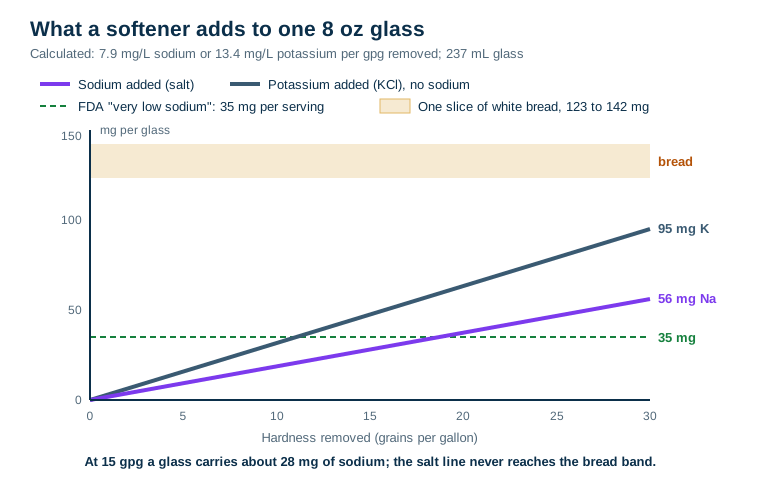
FDA's labelling definitions give another yardstick. On its sodium in your diet page, FDA defines a food as "very low sodium" at 35 mg or less per serving, and "low sodium" at 140 mg or less. Water is not labelled this way, but the numbers are a useful scale. Up to about 18 gpg of hardness removed, a glass of softened water stays inside the "very low sodium" limit. Even at 30 gpg, it is far inside the "low sodium" one.
Against a Day's Sodium
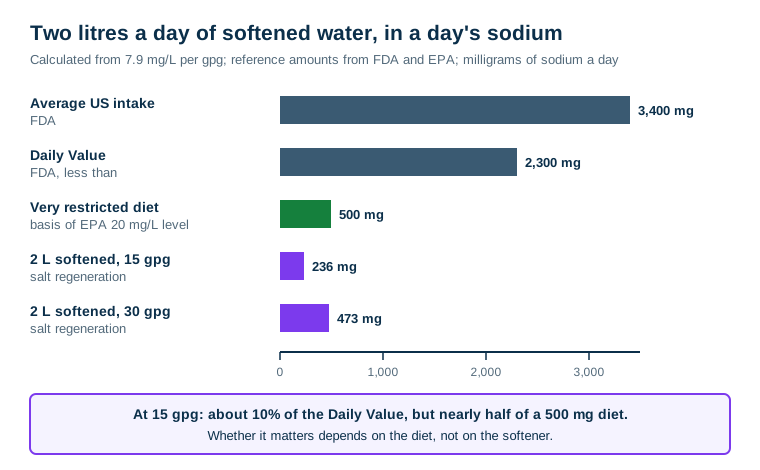
FDA sets the Daily Value for sodium at less than 2,300 mg a day and says Americans eat about 3,400 mg a day on average. Against those:
- Two litres a day of water softened from 15 gpg adds about 236 mg, roughly 10 percent of the Daily Value.
- At 30 gpg the same two litres add about 473 mg, about a fifth of it.
Most people drink less than two litres of plain tap water a day, and cooking water adds only a little. For a typical diet, softened water is a minor source. EPA's drinking water advisory on sodium says so directly: "Drinking water does not play a significant role in sodium exposure for most individuals."
The same advisory explains the number people most often quote. EPA's guidance level of 20 mg/L "was developed for those individuals restricted to a total sodium intake of 500 mg/day and should not be extrapolated to the entire population." For someone on that diet, two litres of water softened from 15 gpg would use up nearly half the day's allowance before any food.
Who Should Take the Number Seriously
The EPA advisory lists groups that are expected to be more sensitive to sodium: people with hypertension, older adults, people with kidney problems, and infants, whose kidneys handle sodium less well. It estimates that about 3 percent of the population is on a sodium-restricted diet. It advises people under treatment for sodium-sensitive hypertension to consult their health care provider about the sodium in their drinking water.
The Minnesota Department of Health gives the practical version. Anyone with a history of high blood pressure should consult a doctor about drinking softened water, and a household can keep an unsoftened tap for cooking and drinking.
Infant formula is the case most parents ask about. It is a special case because the water is most of what the baby takes in. It is covered on its own in softened water for baby formula.
None of this is a finding that softened water harms healthy people. It is a reason to do the calculation and, where a diet is restricted, to share the result with the person managing it.
The Potassium Chloride Figure for the Same Water
Switching the brine tank to potassium chloride replaces sodium with potassium in the same swap. Potassium is heavier, so the milligram figure is higher:
Potassium added (mg/L) = hardness removed (gpg) × 13.4
| Hardness removed | Potassium per litre | Per 8 oz glass | Sodium added |
|---|---|---|---|
| 10 gpg | 134 mg | 32 mg | almost none |
| 15 gpg | 200 mg | 47 mg | almost none |
| 25 gpg | 334 mg | 79 mg | almost none |
For someone limiting sodium, that removes the softener's contribution. It is not automatically the right choice for everyone. Anyone who has been told by a clinician to limit potassium should check with them before drinking potassium-softened water. Potassium chloride also costs considerably more per bag than salt. The trade-offs are compared in potassium chloride vs sodium chloride in a softener.
Four Ways to Keep Sodium Out of Drinking Water
- An unsoftened cold tap at the kitchen sink. The cheapest fix, if the plumbing allows it. Drinking and cooking water comes straight from the supply, and everything else stays soft. Whether it suits your house is covered in should a kitchen tap bypass the softener.
- Reverse osmosis at one tap. An RO unit after the softener reduces sodium along with other dissolved minerals. Check the unit's performance data sheet for its sodium reduction figure before relying on it, and choose an RO unit certified to NSF/ANSI 58 for use after a softener. See reverse osmosis and a water softener together. If you are buying the softener at the same time, softener and RO bundles priced against their two halves bought separately show whether buying them together saves anything.
- Potassium chloride in the brine tank, with the trade-offs above.
- Leave a little hardness. A blending valve set to leave 2 or 3 gpg cuts the sodium by that many grains' worth. The effect is modest, and it lets a little scale form.
For a household on a restricted diet, compare those setups on sodium removed and 10-year cost before choosing.
What the Sodium Figure Does Not Tell You
- Whether the water is safe to drink. Sodium is one question. Bacteria, nitrate, lead and arsenic are others, and a softener does not remove them. The wider question is covered in is softened water safe to drink.
- The sodium your water had before softening. The table shows what is added. Check your supplier's report, or test a well, for the starting figure.
- Your whole diet. The comparison with bread is a sense of scale, not dietary advice. Anyone on a medically restricted diet should take the calculated figure to their clinician.
Living With Softened Water: The Rest of This Guide
Sodium is the first question most people ask about softened water. It is not the only one. Other pages in this section cover the everyday effects:
- Softened water for coffee, tea and cooking
- Softened water for pets, plants and aquariums
- Washing hair and skin with soft water
- Softened water and washing machines
- Does a water softener change pH
- Water softener myths corrected
For sodium itself, the rule is short. Take your hardness in gpg, multiply by 7.9, and you have the milligrams of sodium in softened water per litre. Compare that with your diet, not with a headline.
Frequently Asked Questions
How much sodium is in softened water?
A softener adds about 7.9 mg of sodium per litre for every grain per gallon of hardness it removes, on top of whatever sodium the raw water already had. Penn State Extension gives the same figure as 7.5 mg per quart. At 15 gpg that is about 118 mg per litre, or about 28 mg in an 8 ounce glass.
Is the sodium in softened water bad for you?
For most people it is a small part of daily sodium. EPA's drinking water advisory says drinking water does not play a significant role in sodium exposure for most individuals. People on a sodium-restricted diet are different: EPA's 20 mg/L guidance level was set for people limited to 500 mg of sodium a day, and they should ask their doctor about softened drinking water.
Does softened water have more sodium than bread?
Per litre, usually not. USDA FoodData Central lists commercial white bread at 490 mg of sodium per 100 g, so a 25 to 29 g slice has about 123 to 142 mg. A litre of water softened from 15 gpg gains about 118 mg. A glass of that water gains about 28 mg, less than a quarter of a slice.
How much potassium does a softener add if I use potassium chloride?
About 13.4 mg of potassium per litre for each grain per gallon removed, and almost no sodium. At 15 gpg that is roughly 200 mg of potassium per litre, or about 47 mg per 8 ounce glass. Potassium chloride costs considerably more per bag than sodium chloride.
Should I drink softened water if I have high blood pressure?
Ask your doctor, especially if you are on a restricted-sodium diet. The Minnesota Department of Health advises anyone with a history of high blood pressure to consult a doctor about drinking softened water, and suggests keeping an unsoftened tap for drinking and cooking. A reverse osmosis unit at the kitchen sink is another option; check its data sheet for sodium reduction.
Does softened water taste salty?
Not when the softener is working. The added sodium at normal household hardness is usually below the level most people can identify as salty. A distinctly salty taste, especially one that comes and goes, means brine is reaching the taps and the softener has a fault to fix.
