
Water Main Breaks and Supply Outages: Protecting Your Softener
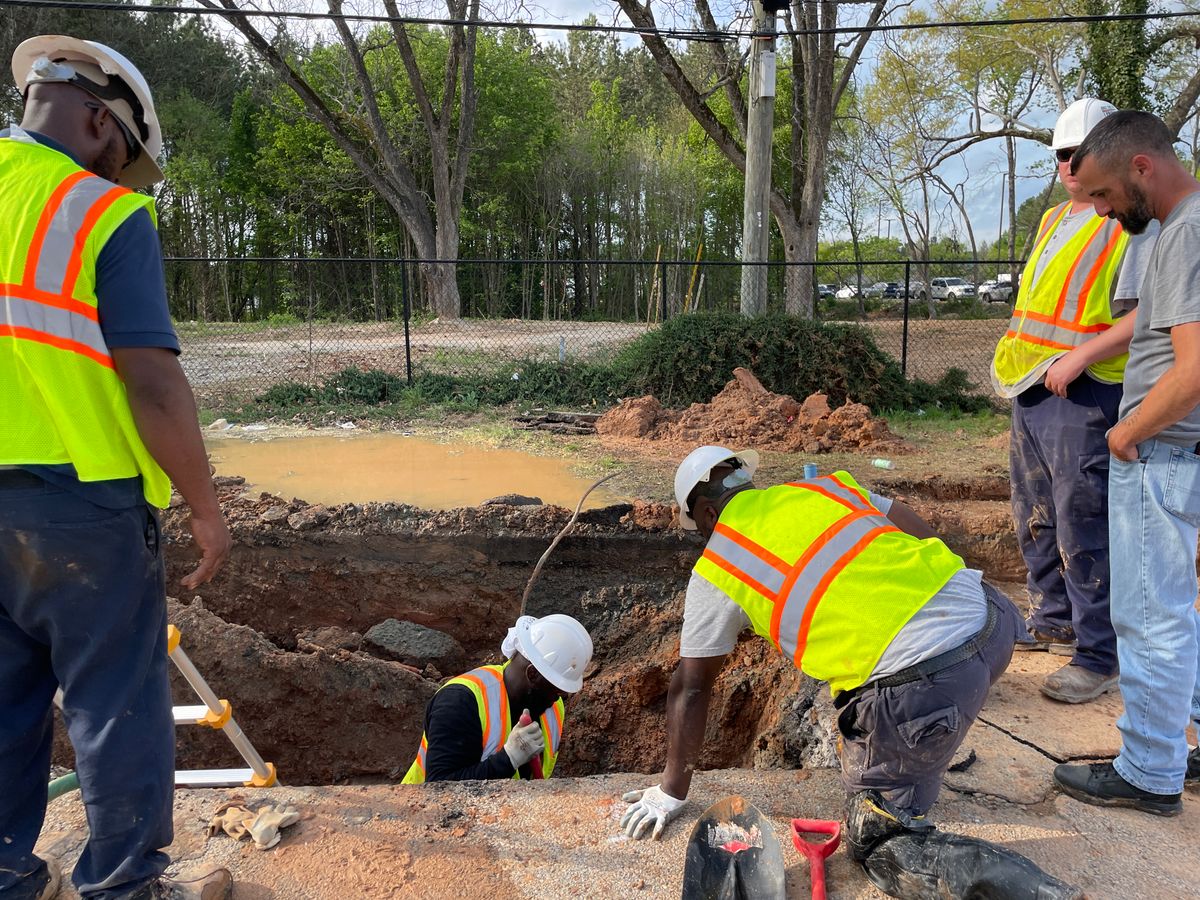
The water main break water softener rule is simple: the softener should be in bypass before the water comes back, and it should stay there until the returning water has been flushed clear. The first water through a repaired main carries grit, loosened rust and trapped air, and it arrives with a pressure surge. In bypass, all of that goes around the resin bed. Then reconnect slowly and run a manual regeneration.
The same four steps apply to every kind of supply disruption. That includes a burst main, a planned shutoff, a storm and a wildfire that took the system down. Only the waiting step changes. This page sets out the protocol, where to flush and how to tell the water is clean enough to reconnect.
What Restored Water Carries Into a Softener
A water main is not empty and clean inside. Iron and manganese deposits line older mains. Sediment settles along the bottom. When a pipe breaks and is repaired, three things happen to the water that reaches your house first.
- Sediment and rust. The break, the excavation and the refill stir up deposits. Refilling often pushes water through the pipe in a direction and at a speed it does not normally see, which scours more loose. Utilities then flush hydrants, and Oklahoma's Department of Environmental Quality warns that customers "may experience discolored water" after that flushing.
- Air. The drained section of main refills from the ends. The air in it has to go somewhere, and some of it goes into service lines. You hear it as spitting taps and banging pipes.
- A surge. Air compresses as water pushes it along. When it escapes, the water behind it accelerates into the space. That first arrival can hit the plumbing harder than normal service pressure.
For a softener, each of these has a cost. Sediment packs the top of the resin bed and blocks the distributor screens. Fine grit scores the seals in the control valve and can lodge in the injector, the part that draws brine during regeneration. Air in the tank makes the bed shift and can upset the next regeneration. Surge pressure is taken by the control head and the tank. A sediment prefilter ahead of the softener catches some of the grit, which is exactly why it needs checking afterwards. See when to replace a sediment prefilter before a softener.
A softener cannot deal with any of this. It exchanges calcium and magnesium for sodium. It does not filter sediment, remove air or disinfect anything.
The Water Main Break Water Softener Protocol
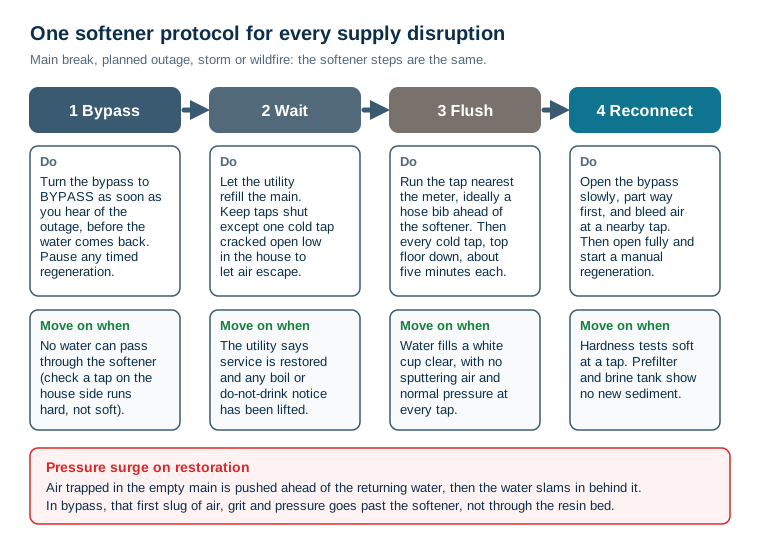
The protocol is short because the aim is simple: keep the dirty first water out of the resin, then let clean water back in gently.
Step 1: Bypass before the water returns
Turn the bypass valve to BYPASS as soon as you learn the supply is off. If you have a three-valve bypass, close the inlet and outlet valves and open the bypass valve between them. Do this even if the water is already off, because the problem arrives when it comes back.
If your softener is electric and a regeneration is scheduled overnight, pause it or unplug the controller. A regeneration that starts on an empty or refilling main draws air and sediment straight through the brine and rinse cycles.
Confirm the bypass actually works. Once water returns, a tap on the house side should run hard water, and the softener should make no sound. A bypass that leaks through sends dirty water into the tank anyway.
Step 2: Wait for the utility
Let the utility refill and pressurize the main. Do not run your whole house while the main is still filling. Pulling water hard draws the heaviest sediment into your service line.
It helps to crack open one cold tap low in the house, such as a laundry sink. That gives trapped air an easy way out instead of forcing it through every fixture. Close it once the air stops and the water runs steadily.
Move on only when the utility says service is restored and any boil-water or do-not-drink notice is lifted. If there is a notice, the softener stays in bypass through it, and the extra steps are in what to do with a softener during a boil-water notice.
Step 3: Flush until clear
Flush the house with the softener still in bypass. Oklahoma DEQ's guidance for after service has been restored is to flush each cold faucet for five minutes, start on the top floor and work down, flush showers for five minutes with mixed hot and cold, and disconnect hoses before running outdoor taps.
Start at the tap closest to the meter, as the next section shows. That clears the service line before the water spreads through the house.
Step 4: Reconnect slowly and regenerate
Open the bypass part way first, not all at once. A softener tank that has been isolated may still hold some air. Opening slowly lets it refill without a hard rush through the bed. Bleed the air at a nearby tap until the flow is steady, then open the bypass fully.
Then start a manual regeneration. The backwash lifts the bed and carries out any fine sediment that got in, and the brine cycle restores full capacity. This matches the recovery guidance from both CDC for building water systems, which says to "run water softeners through a regeneration cycle", and Oklahoma DEQ, which says to cycle the softener per the manufacturer's recommendation.
Finish with a hardness test at a tap. If it reads soft, the softener is back in service.
Where to Flush: The Tap Ahead of the Softener
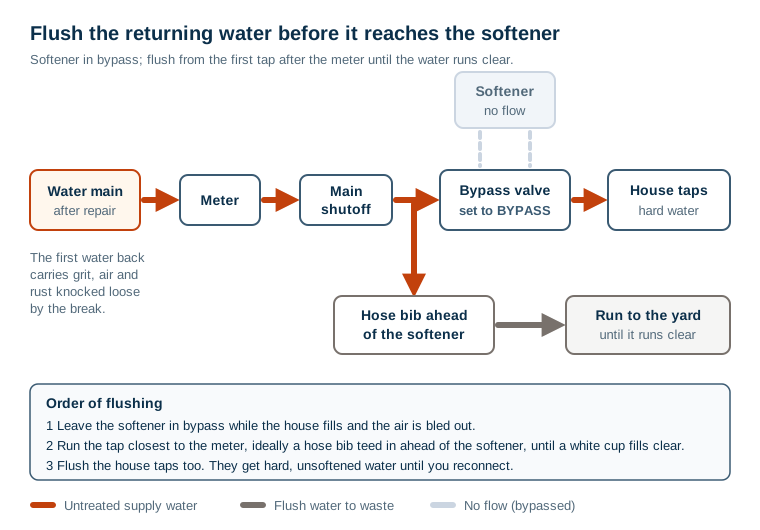
Many houses have an outdoor hose bib teed off before the softener, so irrigation water is not softened. That tap is the best flush point after a main break, for three reasons.
- It is the first outlet the water reaches. Flushing there clears the service line without sending sediment through any interior plumbing.
- It usually flows faster than an indoor tap. Higher flow carries sediment out quicker. It has no aerator to clog.
- The dirty water goes outside. You can watch it clear into a bucket or onto the yard.
If you have no tap ahead of the softener, use the one nearest the bypass valve, often a laundry sink. With the softener bypassed, every tap in the house gets the same unsoftened supply, so any tap works. The nearest one just clears the line fastest.
Remove the aerators from indoor taps before flushing them, as Oklahoma DEQ advises. Aerator screens catch grit, and a blocked aerator after an outage is often mistaken for low pressure from the softener.
The Pressure Surge on Restoration
The surge is the risk most people do not think about. A softener is designed for steady supply pressure. Pentair's Fleck 5600SXT service manual sets a maximum working pressure of 125 psi, and other valves list similar limits.
When a drained main refills, the pressure you see at the house is not smooth. Air pockets compress and release, and water accelerates into the space they leave. The result is the same kind of pressure spike that causes water hammer, but in the supply rather than at a closing valve.
Three things reduce the risk:
- Bypass. In bypass, the surge passes through a simple valve body, not the softener's control head, tank and distributor.
- A pressure-reducing valve, if your house has one, set correctly. It limits how much of a supply spike reaches the house.
- Opening slowly. When you return the softener to service, part-opening the bypass lets the tank refill gently.
After the event, check the control head and the tank neck for drips, and check that the house pressure looks normal. A new drip from the valve body after an outage usually means a seal took the hit.
How to Know the Supply Has Cleared
"Run it until it's clear" is easy to say but harder to judge. Use more than one sign.
| Check | What clear looks like | What it means if it fails |
|---|---|---|
| White cup test | A white mug or cup filled at the tap shows no tint and no specks after a minute | Sediment is still coming through. Pause and flush again later |
| No sputtering | Steady flow with no spitting or bursts of air | Air is still in the line. Keep one tap running gently until it stops |
| Normal pressure | Flow at each tap matches what it was before | Low flow can be a blocked aerator or screen, or the main is not fully back |
| Smell | Normal. A faint chlorine smell is normal on city water | Any other odor is a question for the utility, not something to flush away |
| Utility status | Service restored and no advisory in force | Keep the softener bypassed until any advisory is lifted |
If the water is still brown after several rounds of flushing, stop. Continuous flushing can pull more sediment from the main into your line. Give it an hour or two and try again, and call the utility if it will not clear.
One Protocol for Every Supply Disruption
The softener steps do not change with the cause. What changes is how long you wait and what the utility has to confirm first.
| Event | Why the supply is disrupted | What changes in the wait step |
|---|---|---|
| Main break | Burst pipe, excavation and repair | Wait for the repair and refill. Expect discolored water from hydrant flushing |
| Planned shutoff | Scheduled main work or meter replacement | Bypass before the start time. Ask the utility when flushing is planned |
| Storm or power outage | Pumping stations lose power, or pressure falls across the system | Wait for pressure to recover. A pressure loss may bring a boil-water notice |
| Wildfire | Loss of pressure while the fire burns, and damage to the system | Follow the utility's notice. Some systems issue do-not-drink or do-not-use orders |
| Boil-water notice | Pressure loss or contamination risk | Softener stays bypassed through the notice, then is sanitized before use |
Wildfire is the case to take most seriously. When a burning area loses pressure, the risk is not just sediment. Purdue University's Center for Plumbing Safety publishes wildfire response guidance for households and utilities. A softener does nothing to chemical contamination, and resin exposed to contaminated water may need to be replaced rather than cleaned. Follow the utility's instructions and ask the manufacturer before returning the softener to service.
Storms and power outages add one more check. If the softener was part way through a regeneration when the power or water failed, the valve may be stuck in that position. Some valves resume where they stopped. Others need to be advanced to service by hand. Check the display or valve position before you open the bypass, so the returning water does not run straight to the drain.
If the Water Already Went Through the Softener
Sometimes the water comes back before anyone gets to the bypass. That is common with a main break at night. The softener usually survives it, but work through these checks.
- Put it in bypass now and flush the house as above.
- Check the sediment prefilter. A cartridge that was white yesterday and is brown today did its job. Replace it before reconnecting.
- Look in the brine tank. Sediment or discolored water in the brine tank means dirty water reached it during a refill. Clean it before the next regeneration.
- Run a manual regeneration once the supply is clean. The backwash is the softener's own way of removing fine sediment from the bed. Two back-to-back regenerations are reasonable if the water was very dirty.
- Check pressure and flow. A new pressure drop across the softener after an outage points to a blocked distributor screen or packed bed.
- Listen for air. Spitting taps after reconnecting usually clear within a day. If they continue, see why air appears in faucets after softener service.
If a boil-water notice was issued, or you suspect the water was contaminated while it went through, also sanitize the softener. Regeneration alone does not disinfect the resin.
What a Softener Cannot Do in an Outage
- It does not make restored water safe. A softener removes hardness. It does not remove bacteria, sediment or chemicals. Safety comes from the utility's all-clear.
- It does not protect the rest of the house. Bypassing the softener protects the resin. The water heater, fixtures and appliances still receive whatever comes through the main, which is why flushing comes first.
- It cannot flush itself clean of heavy sediment. Backwash clears fines. A bed packed with grit or rust may need professional service or new resin.
- A bypass is only as good as its seal. If yours lets water through when closed, it gives no protection. Test it before you need it.
The whole protocol takes a few minutes of work: bypass, wait, flush, reconnect. Most softeners that are damaged by a water main break are simply the ones that were left in service while the dirty first water came through.
Frequently Asked Questions
Should I bypass my water softener during a water main break?
Yes. Put the softener in bypass as soon as you know the supply is interrupted, and leave it there until the water has been flushed clear. The first water back after a repair carries sediment, rust and air. In bypass, that water goes around the resin bed instead of through it, and the pressure surge hits a simple valve instead of the control head.
Can a water main break damage a water softener?
It can. Sediment can clog the distributor screens and the injector, loosened rust and scale can foul the resin, and trapped air can make the valve and tank take a hard surge when pressure returns. Most softeners come through fine, especially if they were bypassed. Check the prefilter, the brine tank and the pressure after the event.
How long should I run water after a water main break?
Run cold water until it is clear in a white cup, with no sputtering air. Oklahoma DEQ's guidance after service is restored is to flush each cold faucet for five minutes, starting on the top floor and working down. If the water is still brown after that, stop, wait an hour or two for the main to settle, and try again rather than pulling more sediment in.
Why is my water brown after a water main break?
The break and the repair stir up iron and sediment that settle in the main, and the change in flow direction during refilling scours more loose. Utilities also flush hydrants afterwards. Oklahoma DEQ notes that discolored water after flushing is expected and does not pose a health risk. Keep the softener bypassed until it clears, because that sediment is what clogs the resin bed.
Do I need to regenerate my softener after the water comes back?
It is a good idea. A manual regeneration backwashes out any sediment that got into the tank and restores full capacity. CDC's guidance for building water systems after a disruption includes running water softeners through a regeneration cycle, and Oklahoma DEQ's says to cycle the softener per the manufacturer's recommendation.
What if my softener was regenerating when the power or water went off?
Check the valve before you open the bypass. A control that lost water or power partway through a regeneration may resume where it stopped, or may sit in a position that sends water to the drain. Let it finish or advance it to service according to the manual, then run a full manual regeneration once the supply is clean.
