
What to Do With a Softener During a Boil-Water Notice
Boil water notice water softener guidance starts with one fact: the softener gives you no protection at all. Softening removes hardness minerals and does nothing to bacteria, viruses or parasites. Boil or buy your drinking water exactly as the notice says. Put the softener in bypass so suspect water does not sit in the resin bed. When the notice is lifted, flush the house, then sanitize and regenerate the softener before you use it again.
The last of those steps is the one most notices leave out. A utility's all-clear covers the water in its mains. It does not cover the resin bed and brine tank in your basement, which held that water for the whole advisory.
Why a Water Softener Offers No Protection From Germs
A softener is an ion exchanger. Water flows through a bed of plastic resin beads that swap sodium for the calcium and magnesium in the water. That is the whole process. There is no filter fine enough to stop bacteria, no disinfectant and no light or heat.
The beads do not trap microorganisms in any reliable way. Anything that can pass through your plumbing can pass through a softener. The water that comes out has the same microbiological quality as the water that went in, just with less hardness. Our list of what a water softener does not remove covers this in more detail. Bacteria, viruses and parasites are all on it.
Two other beliefs catch people out during a notice:
- "The water looks clear, so it's fine." Softened water often looks and feels cleaner. The organisms a boil notice is about are invisible.
- "The water heater kills everything." A tank water heater is not a disinfection step. Hot tap water should not be treated as boiled.
Point-of-use filters do not fill the gap either. CDC's guidance on making water safe in an emergency notes that portable filters "will not remove viruses." Unless a device is specifically certified for microbiological reduction, treat its output as unboiled water.
There is also a reason to be careful with the softener itself. A resin bed is a large surface area sitting in water. The Kinetico owner guidance on boil orders tells owners not to put water systems back in service until they have been sanitized. The concern is not the softener adding contamination. It is that water from the advisory period sits in the tank, the resin and the brine tank until it is flushed and disinfected.
During the Notice: Boil, Bypass, Switch Off the Filters
Boil what you swallow. CDC's boil water advisory guidance is to bring clear water to a rolling boil for 1 minute, and for 3 minutes at elevations above 6,500 feet. EPA's emergency disinfection page uses a lower altitude threshold of 5,000 feet. If you live between the two, boiling for 3 minutes satisfies both. Bottled water is the simple alternative. Your notice lists which uses need boiled water, usually drinking, cooking, ice, brushing teeth and preparing baby formula.
EPA adds an important limit: boiling "will not destroy other contaminants, such as heavy metals, salts, and most other chemicals." A boil notice is about microorganisms. A do-not-drink notice for chemicals is a different situation, and boiling can make it worse.
Put the softener in bypass. This is the cautious choice. Kinetico's guidance for owners is to bypass water treatment systems during a boil alert. San Luis Obispo's city water utility tells customers to put a softener or whole-house filter into bypass so the media does not pick up bacteria while chlorine in the supply works through the pipes. In bypass:
- suspect water does not soak into the resin bed for days
- the brine tank does not refill with it during regeneration
- there is less to sanitize when the notice ends
You will have hard water for a few days. That is a nuisance, not a hazard.
Pause regeneration. An electric softener in bypass may still run its scheduled regeneration. There is no benefit to it during the notice, and depending on the valve and bypass design it can mean suspect water moving through the brine system. Unplug the controller or skip the next regeneration.
Switch off drinking water filters too. Turn off the fridge water dispenser and ice maker, and stop using any under-sink filter or reverse osmosis faucet. Their cartridges and storage tanks fill with suspect water just like the softener does.
After the Notice Is Lifted: Flush With the Softener Still Bypassed
When the utility lifts the notice, the water in the mains is safe. The water in your pipes, water heater and appliances is still from the advisory period. Flush it out before reconnecting anything.
Oklahoma's Department of Environmental Quality publishes a clear list for what to do after a boil advisory has been lifted:
- Aerators: remove them and soak in bleach.
- Faucets: flush each for five minutes with cold water. In a house with several floors, start at the top and work down.
- Showers: flush for five minutes with mixed hot and cold water.
- Outdoor spigots: disconnect hoses and flush for five minutes.
- Fridge dispenser: flush for five minutes or at least a quart.
- Ice makers: dump all the ice and keep discarding new ice for another 24 hours.
- Water heaters: run the hot taps until the water runs cold, or drain the heater.
- Food and formula: discard anything prepared with unboiled water during the notice.
Keep the softener in bypass for all of this. Flushing through it would push the advisory-period water in the house lines back past the fixtures, but not through the resin. The resin needs its own treatment.
On city water, a simple check that the flush has worked is chlorine. San Luis Obispo suggests pool or spa test strips and says to run cold taps until you can detect free chlorine. Water with a normal chlorine residual at the tap has come fresh from the main. San Luis Obispo goes further and suggests leaving the softener bypassed for two or three days while you watch the residual. That is sensible if your supply had a serious event.
The Step Most Notices Leave Out: Sanitize the Softener
Utility notices are written for every household, so they rarely go into treatment equipment. When they do, it is one line. Oklahoma DEQ's is "Cycle water softener per manufacturer recommendation." CDC's recovery guidance for building water systems says to "run water softeners through a regeneration cycle."
A regeneration alone rinses and recharges the resin. It does not disinfect it. Brine is not a sanitizer at the strengths a softener uses. So the step that belongs here is sanitize, then regenerate, following your manufacturer's instructions:
- Check the manual first. Some manufacturers specify their own sanitizer. Some resins and valves have limits on chlorine.
- Clean the brine tank if water from the advisory period got into it. If the softener refilled its brine tank during the notice, empty it, wash it and refill it with fresh water and salt.
- Add the sanitizer to the brine well. Most manuals call for a small measured dose of plain unscented bleach per cubic foot of resin. Our guide on how to sanitize a water softener sets out the published doses and how to scale them for stronger bleach.
- Run a full manual regeneration. The sanitizer is drawn through the resin with the brine and rinsed to the drain.
- Rinse until there is no chlorine smell at a nearby tap, then return the bypass to service.
- Test hardness at a tap to confirm the softener is working.
If your softener is a rental or under a service contract, call the dealer. Kinetico, for example, tells its owners to have the dealer sanitize the system and flush the lines.
The Full Boil Water Notice Water Softener Sequence
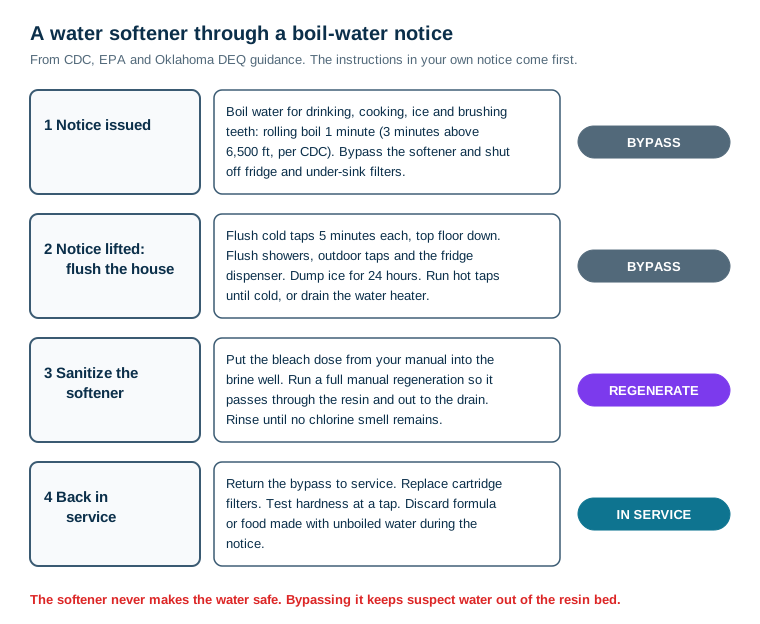
The order matters. Flushing comes before sanitizing, so fresh water from the main is in the lines when the softener goes back in. Sanitizing comes before returning to service, so the first softened water you use has been through a disinfected bed.
| Stage | Softener | What you do | Source |
|---|---|---|---|
| Notice issued | Bypass | Boil or buy drinking water. Turn off fridge and under-sink filters | CDC, EPA; Kinetico |
| Notice in force | Bypass | Skip scheduled regenerations | Manufacturer manual |
| Notice lifted | Bypass | Flush taps, showers, hot water, ice maker | Oklahoma DEQ |
| Sanitize | Regenerating | Bleach dose in the brine well, full regeneration, rinse | Manufacturer manual |
| Back in service | Service | Replace filter cartridges, test hardness | Oklahoma DEQ |
Other Equipment on the Same Line
The softener is one of several devices that held water during the notice. Each has its own fix.
| Device | After the notice |
|---|---|
| Whole-house sediment or carbon filter | Replace the cartridge. Cartridges cannot be reliably disinfected |
| Fridge and faucet filters | Oklahoma DEQ says to consider replacing them per the manufacturer |
| Reverse osmosis unit | Drain the storage tank, replace the prefilters, and sanitize per the manual. San Luis Obispo suggests draining the tank twice |
| Ice maker | Discard ice for 24 hours after the notice, then wash and sanitize the bin |
| Water heater | Run hot taps until they run cold, or drain it |
| UV system | Check the lamp is working. A UV unit that was running throughout may have protected water downstream, but only if it was sized and maintained for your flow |
| Softener | Sanitize, regenerate, test hardness |
Private Wells Are a Different Situation
Boil-water notices come from public water systems. A private well gets no notice. The equivalent event is a positive coliform test, flooding at the wellhead or a well repair.
The softener steps are similar: bypass, disinfect the source, flush, then sanitize the softener. The well is treated by shock chlorination, which uses a chlorine dose far above what resin should see, so the softener must be bypassed throughout. The full sequence is in shock chlorination and your water softener. If coliform keeps returning after shocking, the well needs continuous disinfection, and choosing a whole-house UV system along with the pretreatment it depends on is where that decision starts.
If your city supply lost pressure because of a main break rather than a detected contamination, the same bypass and flush approach applies. Water main breaks and supply outages covers the sediment and pressure surge side of that.
What a Softener Cannot Do During a Boil-Water Notice
- It cannot make water safe to drink. Softened water needs boiling exactly like unsoftened water.
- It cannot tell you when the water is safe. Only the utility's notice can. The softener changes nothing about how the water looks or tastes in a way that signals contamination.
- It cannot disinfect itself. Regeneration recharges the resin. Sanitizing is a separate step with a separate chemical.
- It cannot remove chemicals. If the notice is do-not-drink rather than boil, neither the softener nor boiling is the answer. Use bottled water and follow the utility.
A boil-water notice is one of the few times the right place for a softener is out of the circuit. Bypass it on day one, keep it out until the house is flushed, and sanitize it before it goes back in.
Frequently Asked Questions
Does a water softener make water safe during a boil water notice?
No. A water softener removes calcium and magnesium by ion exchange. It does not remove or kill bacteria, viruses or parasites, and softened water needs boiling exactly like unsoftened water. Follow the boil instructions in your notice. CDC's standard is a rolling boil for 1 minute, or 3 minutes above 6,500 feet.
Should I bypass my water softener during a boil water advisory?
Bypassing is the cautious choice, and it is what manufacturers such as Kinetico and utilities such as San Luis Obispo advise. It keeps suspect water out of the resin bed and brine tank, so there is less to clean afterwards. It does not make the tap water safe. You still boil or use bottled water until the notice is lifted.
What should I do with my water softener after a boil water notice is lifted?
Keep it in bypass while you flush the house. Then sanitize it following the manufacturer's instructions, usually a measured dose of plain bleach poured into the brine well followed by a full manual regeneration. Rinse until there is no chlorine smell, return it to service and check the hardness at a tap. Oklahoma DEQ's post-advisory guidance says to cycle the softener per the manufacturer's recommendation.
Is it safe to shower with softened water during a boil water notice?
The softener makes no difference either way. Whether showering is acceptable depends on your notice, and it is the same answer for softened and unsoftened water. Follow your own utility's wording, and take particular care that infants and young children do not swallow bath water.
Do I need to change my water filters after a boil water notice?
Usually yes. Oklahoma DEQ recommends considering replacing fridge, faucet and in-line filters per the manufacturer after an advisory. Cartridges held suspect water for the whole notice and cannot be disinfected reliably. A whole-house sediment cartridge ahead of a softener should be replaced as well.
Does a boil water notice apply to a private well?
No. Boil-water notices are issued by public water systems. A private well owner who suspects contamination, for example after flooding or a positive coliform test, should stop drinking the water, test it and usually shock chlorinate the well. The softener is bypassed during that process and sanitized afterwards.
