
How a Water Softener Affects a Storage Water Heater
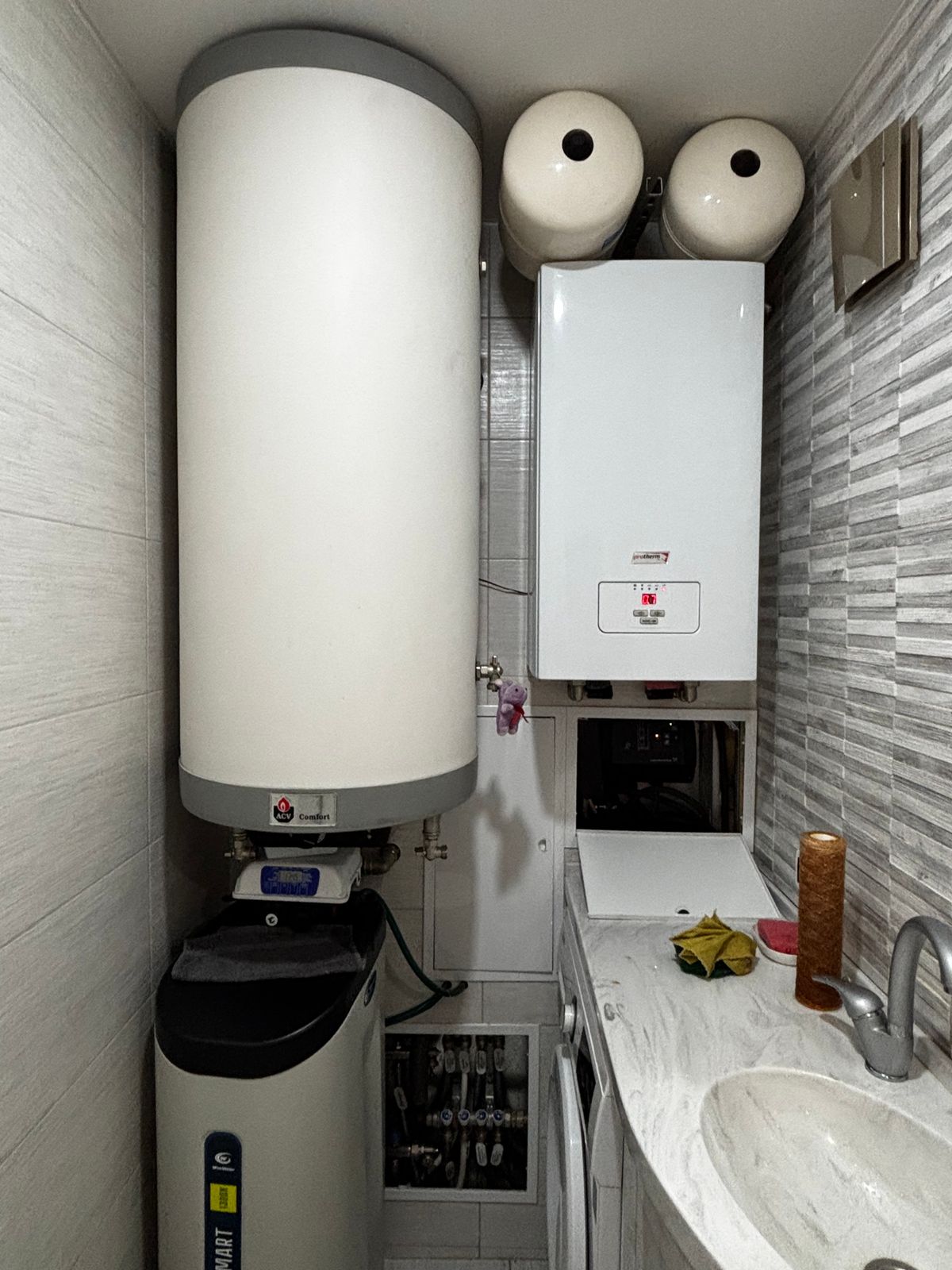
A water softener and water heater work well together. Softened water stops new scale forming in the tank, keeps a gas heater's efficiency from sliding, and protects an electric heater's elements. The catch is the anode rod. Softened water is more conductive, so the rod that protects the steel tank is used up faster. At least one major manufacturer's manual tells you to inspect it more often for exactly that reason.
That trade is usually left out of the sales pitch, because it complicates a simple benefit story. It should not put you off softening. It does mean the heater needs one maintenance check that most owners never do. This page covers the measured benefit, the anode effect in the manufacturer's own words, what the warranty covers, and the schedule that keeps both the tank and the benefit.
What Changes in the Tank When the Softener Goes In
Two things change straight away, and one thing does not.
- New scale stops forming. Heat drives calcium carbonate out of solution, so a storage tank collects scale on its floor, its walls and, in an electric heater, its elements. With the hardness removed upstream, that stops.
- The anode starts working harder. Softening swaps calcium and magnesium for sodium. The water now conducts electricity more easily, and the anode's sacrificial reaction speeds up.
- Old scale stays put. Softened water does not strip years of deposit off the tank floor. It stops the layer growing. The deposit already there has to be flushed out, or it keeps rumbling and insulating the burner.
If your heater is already noisy or old, deal with that first. Hard water sediment in a storage water heater covers the flush, and how to tell whether a tank is still worth maintaining.
Water Softener and Water Heater: What the Lab Measured
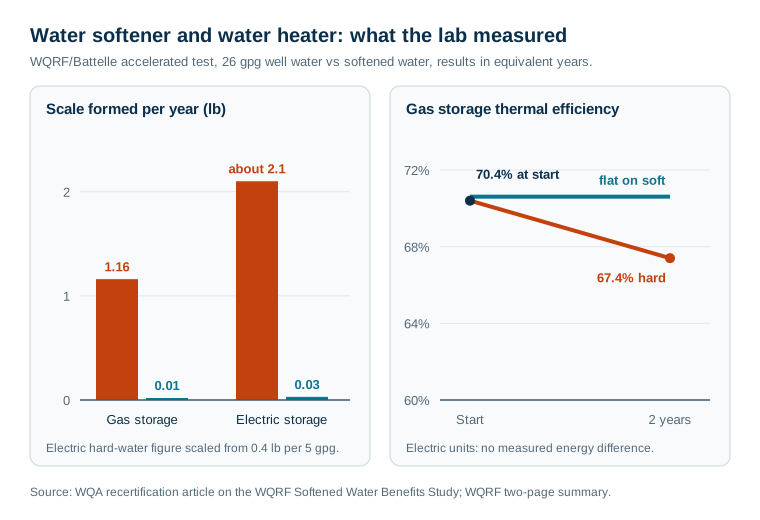
The most useful controlled data comes from a Battelle study for the Water Quality Research Foundation, the water treatment industry's research arm. Battelle ran gas and electric storage heaters for 90 days on 26-grain well water and on softened water, with draws and temperatures set to compress years of scaling into weeks. The WQA's write-up of the study reports:
| Heater type | On 26 gpg hard water | On softened water |
|---|---|---|
| Gas storage | About 528 g (1.16 lb) of scale a year; efficiency fell from 70.4% to 67.4% at two years' equivalent service | About 7 g (0.01 lb) a year; efficiency "remained essentially constant" |
| Electric storage | Scale built up; elements expected to fail sooner. The foundation's summary puts it at 0.4 lb a year for each 5 gpg | About 14 g (0.03 lb) a year |
| Electric energy use | No measured difference | No measured difference |
The foundation's two-page summary of the same work adds a rule of thumb: for gas storage heaters, each 5 grains per gallon of hardness costs about 4 percent in efficiency when the household uses 50 gallons of hot water a day.
Three honest caveats. The study was funded by the industry that sells softeners. It was an accelerated test on one well water that also carried iron. And every hard-water heater in it dropped out early, because scale blocked the outlet piping. Treat the numbers as the direction and rough size of the effect, not a forecast for your tank.
What it means in practice: on a gas heater, softening saves energy that grows with your hardness. On an electric heater the energy bill barely moves, and the benefit is element life and a cleaner tank. The running cost of the softener itself is small by comparison, as how much electricity a water softener uses works through.
The Anode Rod Effect Most Owners Never Hear About
Every glass-lined steel storage heater has at least one sacrificial anode. It is a rod of magnesium or aluminum, usually screwed into the top of the tank, sometimes combined with the hot outlet fitting. It corrodes on purpose, so that any bare steel exposed through tiny gaps in the glass lining does not.
How fast it corrodes depends on how easily the water carries current. Softened water carries it more easily. The manufacturers say this in their own documents:
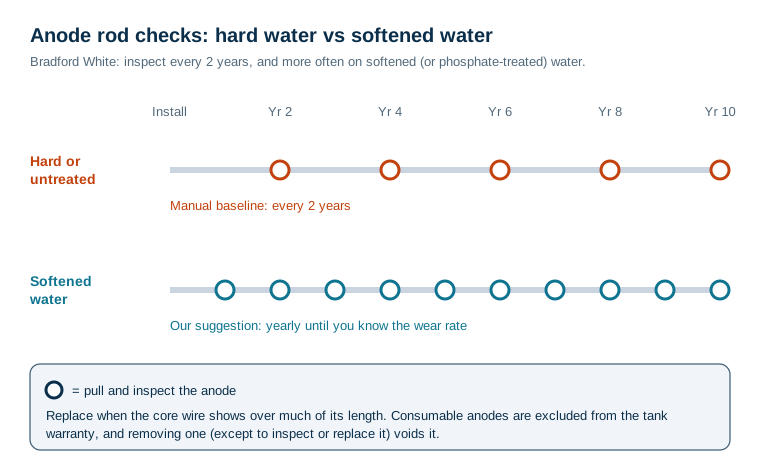
- Bradford White's installation and operating manual for its residential gas heaters says the anode "should be inspected periodically (every 2 years)", that "the use of a water softener may increase the speed of anode consumption", and that "more frequent inspection of the anode is needed when using softened (or phosphate treated) water" (manual PDF).
- Bradford White's anode guidance for professionals adds that where water is more conductive, "i.e. softened water or lower pH levels, this sacrificial process is accelerated", and that "overly softened water will increase conductivity."
This is the part of "a softener extends your water heater's life" that is left unsaid. It does extend it, but only if the anode is replaced when it is spent. Once the rod is gone, the steel is the next thing to corrode, and a tank that stayed free of scale can still leak from the inside.
A sensible schedule on softened water:
- Pull the anode one year after the softener goes in. That tells you how fast your water, at your settings, is using it up.
- Replace it when the core wire is showing along much of its length, or the rod has lost most of its thickness.
- Set your interval from what you saw. If the rod lost little in a year, every two years is probably fine. If it lost a third or more, check yearly.
What the Tank Warranty Actually Covers
The anode question is also a warranty question, and the warranty is clear about whose job it is. Bradford White's residential limited warranty (PDF) says:
| Warranty term | What it means for a softened home |
|---|---|
| Does not cover "consumable anode rods or anode rod consumption" | A rod eaten away early by softened water is your cost, not a defect |
| Excludes "sediment or lime precipitate in the glass lined tank" as an adverse local condition | Scale damage on hard water is not covered either. Softening removes this risk |
| Treats "removal of the anode rod (except for inspection and/or replacement)" as misuse | Never remove the rod to stop an odour or to "reduce corrosion". Replace it with an approved type |
| Excludes maintenance "contrary to the written instructions" | The inspection interval in the manual is part of your side of the bargain |
Other brands word their warranties differently, and the document that came with your heater is the one that governs. The pattern is common, though. The tank is warranted against defects. Scale and anode wear are treated as maintenance.
How to Check the Anode Rod
If you are comfortable with basic plumbing, this is a half-hour job. If not, it is a short service call. Always follow the heater's own manual.
- Turn the heater off. Gas to "pilot" or "vacation", electric at the breaker.
- Shut the cold supply and open a hot tap to relieve pressure.
- Drain a few gallons from the drain valve, so water does not spill when the rod comes out.
- Find the anode. It is usually a hex head on top of the tank, or part of the hot outlet nipple. A 1-1/16 inch socket fits most.
- Loosen and lift it out. They can be tight. A breaker bar and a helper to steady the tank help.
- Judge it. A rod with its full diameter and some pitting is fine. Exposed steel core wire over much of the length means replace it.
- Fit the replacement with thread sealant approved for potable water, refill with a hot tap open until water runs, then restore power or gas.
Low ceiling? Segmented, flexible anodes go in where a rigid rod will not. Rotten-egg smell? That is sulfate-reducing bacteria reacting with the anode. Bradford White's manual says an alternative anode can reduce the odour while still protecting the tank. Removing the anode is not the fix. If the cold taps smell too, the sulfide is coming from the supply, and the answer is a filter matched to your hydrogen sulfide level, not a different rod.
Does Softened Water Corrode the Tank?
Softened water is sometimes described as "corrosive". The accurate version is narrower. Softening does not add acid, and on its own it does not meaningfully change pH. It raises conductivity, and it removes the thin mineral layer hard water lays on metal surfaces. Both make an anode work harder. Neither is a problem while the anode is doing its job.
The same logic applies to the pipework. The question of whether soft water shortens pipe life is covered separately in whether soft water damages or protects pipes. For the heater, the practical answer is simply: keep an anode in it.
New Tank or Old Tank: When Softening Helps Most
The benefit depends heavily on the heater's age and condition when the softener arrives.
A new heater, softened from day one, gets the full benefit. Almost no scale forms, a gas unit keeps its rated efficiency, and an electric unit's elements stay clean. The only extra job is the anode check. If you are replacing a heater and planning a softener anyway, installing the softener first, or at the same time, is the best order.
A heater of three to eight years has some scale, but usually not enough to have damaged the lining. Flush it once when the softener goes in, check the anode at the same visit, and it should settle into the easier maintenance routine above. This is also the group most likely to find a well-worn anode, because nobody has looked at it.
A heater past about ten years with no maintenance history is a different case. Softening stops new scale, but it cannot undo a cemented layer on the tank floor or a lining that has already been overheated. Aggressive flushing of an old tank can also disturb deposit sitting over thin steel. For these heaters the softener is really protecting the next water heater. Budget for replacement rather than expecting the old tank to recover.
Electric heaters show the benefit as element life. Scale on a heating element raises its surface temperature, and the Battelle report expects elements on hard water to fail sooner, even though it measured no difference in energy use. On softened water a failed lower element becomes much less common.
Gas heaters show it as fuel. The burner heats the tank floor, exactly where scale collects, so every layer of deposit is insulation between the flame and the water. That is the efficiency loss in the chart above, and it grows with hardness.
What a Softener Cannot Do for a Water Heater
- It cannot remove scale already in the tank. Flush once after the softener goes in.
- It cannot stop sand, silt or iron particles. Well water can still fill the tank floor with sediment. Bradford White's manual still asks for a gallon to be drained off monthly to remove silt and sediment.
- It cannot protect a tank with a spent anode. That is the one new risk softening brings, and the one you can prevent.
- It cannot fix a failing tank. Rusty water from the hot side only, water at the base, or a tank past 12 years with no maintenance history are replacement signs, not softening questions.
- It does not reduce the temperature and pressure relief valve check. Test it annually, as the manual says.
Maintenance Plan: Before and After Softening
| Task | Hard water | Softened water |
|---|---|---|
| Flush the tank | At least annually, more often above 10 gpg | Once after installing the softener, then as the manual requires |
| Drain a gallon for silt | Monthly (Bradford White manual) | Monthly |
| Inspect the anode | Every 2 years (manual baseline) | One year after softening, then on the interval that inspection suggests |
| Test the T&P relief valve | Annually | Annually |
| Check the softener is working | Not applicable | Test hot and cold taps a few times a year; a softener that stops working puts scale back in the tank |
Softening is one of the best things you can do for a storage water heater. Just treat the anode rod as part of the deal.
Frequently Asked Questions
Is a water softener good for a water heater?
Yes, for scale. In lab testing for the Water Quality Research Foundation, gas storage heaters on 26-grain water built up about 1.16 lb of scale a year and lost efficiency, while heaters on softened water built up about 0.01 lb and held their efficiency. The trade-off is that softened water consumes the anode rod faster, so the rod needs checking sooner.
Does softened water damage a water heater?
Not if the anode is maintained. Softened water is more electrically conductive, which speeds up the sacrificial anode rod that protects the steel tank. Bradford White's manual says a water softener may increase the speed of anode consumption and that more frequent inspection is needed. Once the anode is used up, the tank itself starts to corrode, so the risk comes from neglect, not from the soft water.
How often should I check the anode rod with a water softener?
More often than the usual two years. Bradford White's gas water heater manual gives every two years as the baseline and says more frequent inspection is needed on softened water. A practical approach is to pull the rod one year after the softener goes in, see how much has been used, and set your interval from that.
Does a water heater warranty cover the anode rod?
Usually not. Bradford White's residential warranty excludes consumable anode rods and anode rod consumption, and lists removal of the anode, except for inspection or replacement, as misuse. It also excludes damage from sediment or lime precipitate in the tank. Replacing the anode is the owner's job, and it is what the tank warranty assumes.
Should I use an aluminum or magnesium anode with softened water?
Ask the heater's manufacturer first, because the replacement anode must be one they approve. Bradford White notes that magnesium gives the best protection to a steel tank, while softened or overly soft water increases conductivity and anode consumption. Where a rod wears fast or causes odour, it suggests a less reactive material, such as aluminum in place of magnesium. A powered anode is another option some manufacturers offer.
Do I still need to flush my water heater with a water softener?
Less often, but yes. Softening stops new calcium scale, but sand, silt and iron particles from a well or old main still settle in the tank, and scale already there does not disappear. Bradford White's manual still says to drain off a gallon monthly to remove silt and sediment. Flush once after installing the softener to clear the old deposit.
