
Should a Softener Go Before or After the Water Heater?
For water softener before or after water heater, the answer is always before. The softener goes on the cold main, and the heater takes its cold feed from the softened side. The heater is the appliance hard water damages most, because heat drives calcium carbonate out of solution onto elements and tank walls. Softeners are rated for cold water only, so they cannot be installed after the heater.
That answer is easy. The harder part is plumbing. Several cold lines are commonly branched off before the softener on purpose, and the heater's cold feed ends up among them more often than it should. This page covers which lines may branch off early, why the heater cannot, how to keep hot water out of the softener, and how to diagnose a house that already has it wrong. For choosing the room and spot, see the hub page on where to install a water softener.
Water Softener Before or After Water Heater: Why Before Is the Only Answer
Three reasons, each enough on its own:
- The heater is where hardness does its damage. Calcium carbonate becomes less soluble as water heats. It comes out of solution on the hottest surfaces it finds: the electric element, the tank bottom over a gas burner, the heat exchanger of a tankless unit. Penn State Extension notes that hardness "can also build up on hot water heaters and decrease their useful life." A softener that does not protect the heater misses its most valuable job.
- Softeners are not built for hot water. The Watts PWSR softener manual gives a maximum allowable water temperature range of 40°F to 110°F. Water heaters are commonly set to about 120°F. A softener fed from the hot side would run above its rating every day.
- "After" would soften only half the house. Fed from the hot side, a softener treats only hot water. Fitted on the cold main after the heater's tee, it treats only cold water, and the heater stays hard. Neither version gives you soft water at every tap.
Manufacturer installation guidance says the same. GE Appliances tells installers to put the softener "between the water inlet and the water heater."
The Real Question: Which Cold Lines Branch Off First
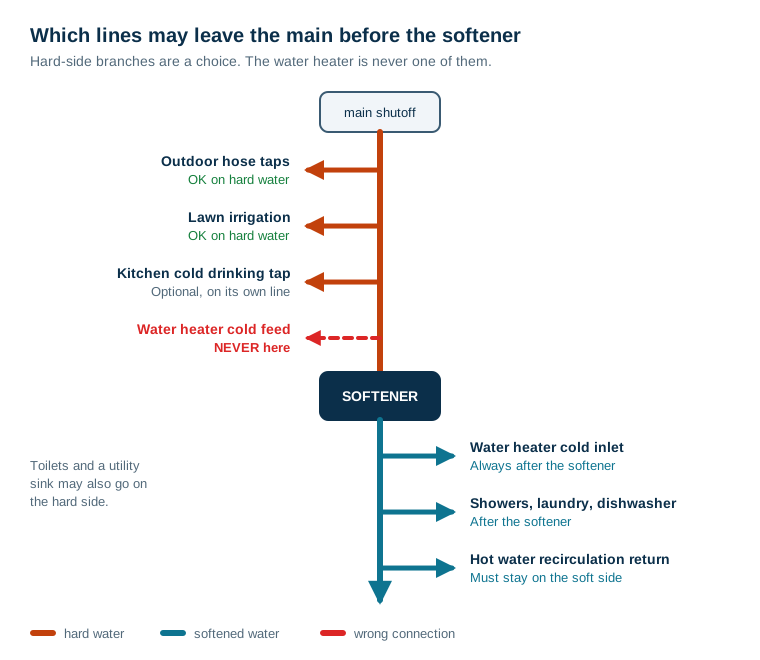
Some water is best left hard, so installers often tee a few lines off the main before the softener. Each of these branches is a deliberate choice. The problem starts when the heater's cold feed is picked up with them by accident.
| Line | Before the softener? | Why |
|---|---|---|
| Outdoor hose taps | Usually yes | Watering uses a lot of water and gains nothing from softening. Watts says to keep outside faucets on hard water "to save soft water and salt." More detail in should outdoor faucets bypass a water softener |
| Lawn irrigation | Yes | Same reason, and it keeps softener sodium out of the soil |
| Kitchen cold drinking tap | Optional | Some owners want unsoftened drinking water. That needs a dedicated line from the hard side, not a tee from a nearby pipe. The trade-offs are in should a kitchen tap bypass the softener |
| Toilets, utility sink | Optional | Penn State lists them among fixtures that "can be bypassed." Most homes do not bother |
| Water heater cold feed | Never | The heater is what the softener is there to protect |
| Hot water recirculation return | Never on the hard side | It feeds back into the heater, so any hard water in the loop reaches the tank |
The mistake happens in one of two ways. Sometimes the tee for the outdoor taps is placed on a pipe that also runs to the heater. Other times the softener is moved a few feet along the main to reach a drain, which puts it past the heater's tee. Either way the plan looked right on paper. Before the pipes are cut, trace the heater's cold inlet back to the main and mark where it joins. The softener's outlet has to be upstream of that mark.
Why the Heater Can Never Be on the Hard Side
Some installers soften only part of a house to save salt. Of all the ways to do that, leaving the heater hard is the worst trade.
- It is the most expensive thing scale damages. Scale on a faucet can be scrubbed off. Scale on a heater element or in a tankless heat exchanger reduces efficiency and shortens the heater's life, and you do not see it until something fails.
- Hot water is where you feel the difference. Showers, laundry and dishwashing mostly use hot or mixed water. Soap curd, spotty dishes and stiff towels all come from the hot side.
- It does not save much salt. Hot water is usually a minority of indoor use. Take it off the softener and you lose most of the benefit while saving only a fraction of the salt.
If salt use is the concern, set the salt dose and regeneration frequency properly instead. Do not take the heater off the soft side.
Keep Hot Water Out of the Softener
"Before the heater" has one practical catch. When the heater tank heats up, its water expands, and on some systems a little hot water can be pushed backward up the cold line. If the softener sits right beside the heater, that hot water reaches the control valve.
The Watts manual addresses this directly. The softener should be "located at least 10 feet away from hot water heater to protect against hot water back-up." When the layout does not allow 10 feet:
- Install a check valve on the cold line between the softener and the heater.
- Add a thermal expansion tank if the check valve makes the system closed. A check valve stops water from flowing back, which leaves the heated water nowhere to expand. Without the tank, pressure rises every heating cycle until the relief valve drips.
- Use a heat trap or a loop of pipe on the heater's cold inlet, which cuts down on hot water rising back up the line.
This matters most when the heater and softener sit side by side in a garage or a small utility closet, which is common.
Getting the Order Right on a New Installation
Most wrong installs come from cutting the pipe before tracing it. On a new installation, work through these steps before anything is cut:
- Find where the main enters and follow it until the first tee. Everything before that first tee is where the softener can go and still treat the whole house.
- Mark the heater's cold feed. Follow the cold pipe from the top of the heater back to the main and tag the tee where it leaves. The softener's outlet must be upstream of this tag.
- List the branches you want hard. Usually outdoor taps and irrigation. Maybe a dedicated drinking water line. Check that none of them also feeds an indoor fixture or the heater.
- Re-pipe hard-side branches that share a line. If a hose bib shares a pipe with a bathroom, move the hose bib to the hard side, or accept soft water outside. Do not move the softener downstream to "catch" the bathroom, because that often moves it past the heater tee too.
- Measure the run from softener to heater. Under 10 feet, plan the check valve and expansion tank now, not after the first hot water back-up.
- After start-up, test hot and cold. Once the heater has turned over its tank, the hot side should test as soft as the cold. If it does not, the diagnostic below applies.
Houses That Already Have It Wrong: The Diagnostic
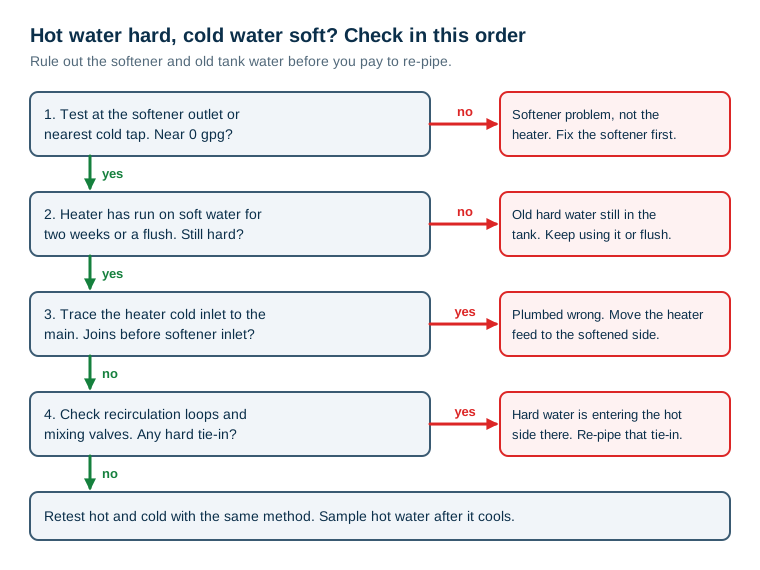
The telltale sign is hard hot water with soft cold water. Before you blame the plumbing, work through the checks in order, because re-piping is the most expensive fix.
- Test the softener outlet, or the nearest cold tap after it. If that water is hard, the problem is the softener, not the heater. Fix the regeneration, the salt or the bypass first.
- Give the tank time. A tank heater installed before the softener still holds hard water, and the sediment on its floor keeps releasing hardness for a while. After two weeks of normal use, or a full drain and flush, the hot side should have caught up. On a tankless heater skip this step, since there is no stored water.
- Trace the heater's cold inlet. Follow the cold pipe from the top of the heater back to where it meets the main. If it joins before the softener inlet, it is plumbed wrong. Moving that feed to the softened side is usually a short job for a plumber where the pipe is exposed, and a bigger one where it runs through a finished wall.
- Check the loops. A hot water recirculation system, or a mixing valve tied into an unsoftened cold line, can feed hard water into the hot side even when the heater's feed is correct.
The full version of this diagnosis, with test methods and look-alike problems, is in why hot water is hard but cold water is soft.
Tankless Heaters, Boilers and Combi Units
The rule is the same for every appliance that heats domestic water. The softener comes first.
- Tankless heaters are the least tolerant of hard water. A narrow heat exchanger scales fast, and there is no tank to hold sediment. Many tankless manuals specify water quality limits, so read yours before assuming any treatment is acceptable. Buying the softener from the same brand as the heater does not change those terms, as checking whether a Rheem softener matters for a Rheem heater shows.
- Combi boilers that make domestic hot water treat their domestic side like a tankless heater. Soften the cold feed to it.
- Closed-loop space heating boilers are different. The heating loop is filled once and treated with its own chemistry. The softener placement question applies only to the domestic hot water the boiler makes, not to the sealed loop.
What Softening Before the Heater Will Not Do
Putting the softener first protects the heater from new scale. It has limits:
- It does not remove scale already in the tank. Existing sediment and scale stay until you flush them out, and a heavily scaled element may still need replacing.
- It does not replace anode rod checks. Some plumbers find anodes wear faster on softened water. Inspect the anode on the schedule in the heater manual.
- It does not protect a heater from a softener that is failing. If the softener runs out of salt or capacity, the heater gets hard water again. Test the hot side now and then, not just the cold.
- It does nothing for iron, sulfide or low pH. Those need their own treatment upstream, and some of them, sulfide in particular, cause heater odor problems that softening does not touch.
The order itself is settled: softener first, heater second, with only the branches you chose left on hard water.
Frequently Asked Questions
Does a water softener go before or after the water heater?
Before. The softener belongs on the cold main ahead of the water heater so the heater receives softened water. Heat drives calcium carbonate out of solution, so the heater is where hard water does the most damage, and softeners are rated for cold water only. One manufacturer lists 40°F to 110°F as the maximum water temperature range.
What happens if a water softener is installed after the water heater?
Two things go wrong. The heater keeps scaling because it is still fed hard water, which defeats the main reason to own a softener. And if the softener is fed from the hot side, it receives water hotter than its rated range, which can damage the control valve and resin. Only the cold taps downstream would be softened.
Why is my hot water hard but my cold water soft?
Either the heater tank still holds hard water from before the softener was installed, which clears after a couple of weeks of use or a flush, or the heater's cold feed joins the main before the softener. Test the softener outlet first. Then give the tank time. If the hot side is still hard, trace the heater's cold inlet back to the main.
How far should a water softener be from a water heater?
Far enough that hot water cannot back up into it. The Watts PWSR manual asks for at least 10 feet between the softener and the hot water heater. On shorter runs a check valve on the heater's cold inlet is the usual fix, with an expansion tank if the system becomes closed.
Should outdoor faucets be on the same side as the water heater?
No. Outdoor faucets and irrigation are the branches most often left on hard water, teed off the main before the softener. The water heater's cold feed must come after the softener. The two decisions are separate, and mixing them up is how heaters end up on hard water.
Is softened water bad for a water heater?
Softened water prevents the scale that shortens a heater's life. Some plumbers report that anode rods wear faster on softened water, so check the anode more often, on the schedule in your heater's manual. That is a maintenance item, not a reason to feed the heater hard water.
