
Brine Tank Internals: Float, Safety Float and Brine Well
A water softener brine float assembly is the valve, float and rod inside the brine well. It does up to two jobs. On float-controlled designs it sets how much water refills the tank, and so sets the salt dose. On every design it should act as a safety shutoff that closes the brine line before the tank overflows. Both jobs fail silently, so test yours.
The rest of the brine tank is simple: a tube, a grid, an elbow and some salt. The parts inside that tube decide whether the softener makes the right amount of brine, and whether a stuck valve ends with a salty puddle or a dry floor.
What Sits Inside the Brine Well
Lift the small cap on top of the tall tube inside the salt tank and you are looking down the brine well. Almost everything that can go wrong in the tank is in there.
| Part | Where it is | What it does |
|---|---|---|
| Brine well | Vertical tube from the tank floor to near the lid | Keeps salt away from the valve so the float can move freely |
| Brine line | Tube from the control valve to the top of the brine valve | Carries refill water in and brine out through the same pipe |
| Brine valve body | Top of the assembly | Holds the shutoff seat the float closes against |
| Float and rod | Hangs from the valve body | Rides up with the water; lifts the shutoff when the level gets too high |
| Float stops or clips | On the rod | Fix the height at which the float closes the valve |
| Air check | Bottom of the assembly | Closes when the brine is drawn down, so air is not pulled into the resin tank |
| Grid plate (not every tank) | Raised platform above the tank floor | Keeps salt out of the water layer beneath |
| Overflow elbow | Side of the tank, below the rim | A gravity escape route to a drain if every shutoff fails |
Fleck's part lists show how standard this layout is: the Fleck 5600SXT service manual lists its 2300 and 2310 safety brine valves with a float assembly, a 30-inch float rod and a separate air check. The same manual tells installers to cut the air check level with the grid plate when a grid is used. It calls this "critical" on 6-, 7-, 8- and 9-inch tanks, because the refill water has to rise above the grid and reach the salt.
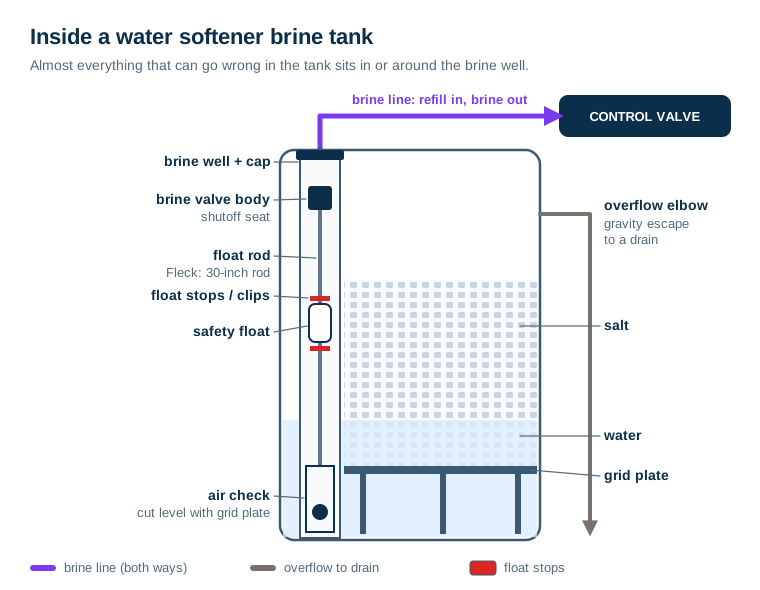
The overflow elbow is not part of the assembly, but check it while the lid is off. If nothing is connected to it, or its tube ends on the floor, it gives you no protection. Draining it properly is covered in why the brine tank is full of water or overflowing.
Two Kinds of Float: Dose Setter or Backstop
This is the difference most owners never hear about, and it changes what "adjusting the float" means.
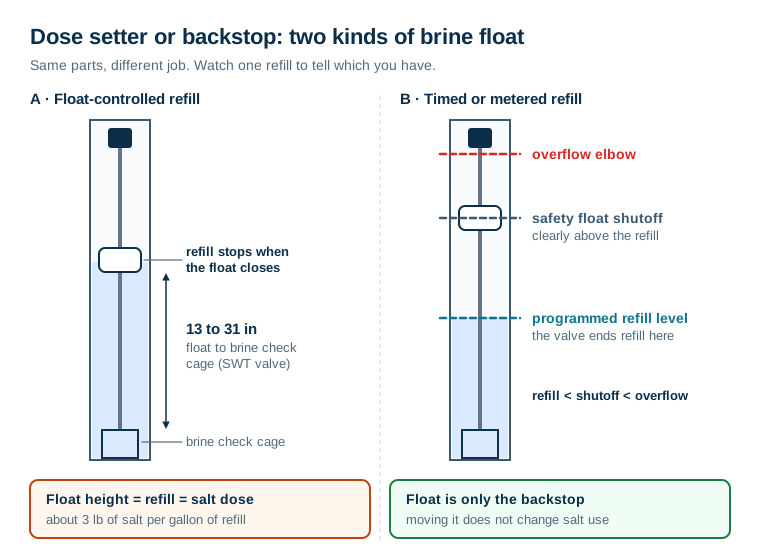
Float-controlled refill. Some brine valves decide how much water goes back into the tank on their own. The float closes the refill when the water reaches its height, so moving the float changes the refill volume. Safe Water Technologies' brine valve assembly instructions spell it out: the distance between the main float and the brine check cage "controls brine refill". It can be set between about 13 and 31 inches, and the float is secured with an O-ring at the height that gives "the appropriate number of gallons of water in the brine tank". The same valve has a second adjustable float inside the check cage, up to about 6 inches, that controls how far the brine is drawn down.
Timed or metered refill. Most modern electronic controls decide the refill themselves. You program a salt amount and the valve runs the refill for the matching time or volume. Here the float is only a backstop. SWT's own description covers this mode too: refill "will continue until the main valve refill cycle time is used", and only if the valve stays in refill does the main float step in to prevent overfilling.
How to tell which you have:
- Your control asks for pounds of salt or a refill time (SXT, Clack WS1, Autotrol Logix and most current brands). The float is a backstop. Its height does not change salt use.
- Your manual has a float-height or "A dimension" chart, often on older or dealer-built units. The float sets the dose.
- You are not sure. Watch one refill. If the water stops rising before the float reaches its stop, the valve timed the refill. If the float rises and the flow stops the moment it closes, the float is setting the volume.
Float Height as a Salt-Dose Control
On a float-controlled valve, every inch of float travel is salt. These three numbers from primary sources explain why.
1. Refill water dissolves about 3 lb of salt per gallon. The Fleck 5600 service manual rates its brine refill flow controls this way. A 0.25 gpm control is listed as 0.75 lb NaCl per minute and a 1.0 gpm control as 3 lb per minute: 3 lb for every gallon of refill.
2. An inch of water in an empty 18-inch brine tank is about 1.1 gallons. That is geometry: a 9-inch radius gives about 254 square inches, and 231 cubic inches make a US gallon. With salt in the tank the water only fills the gaps between pellets, so the same gallon raises the level further. Treat 1.1 gallons per inch as the upper limit.
3. More salt buys less and less capacity. Pentair's whole-house softener spec sheet gives these figures for its 1.5 cubic foot model:
| Salt per regeneration | Refill needed at ~3 lb/gal | Rated capacity | Grains per lb of salt |
|---|---|---|---|
| 5.2 lb | about 1.7 gal | 24,300 grains | about 4,670 |
| 14.3 lb | about 4.8 gal | 37,000 grains | about 2,590 |
| 23.4 lb | about 7.8 gal | 48,600 grains | about 2,080 |
Refill gallons are worked from the Fleck 3 lb/gal rating; capacities are Pentair's.
What this means when you move a float. On a float-controlled valve, raising the float by a couple of inches can add several pounds of salt to every regeneration. Going from the lowest to the highest salt setting in the table multiplies salt use by 4.5 but capacity by only 2. So a float pushed up to "make sure it gets enough" is one of the quiet reasons a softener goes through salt fast. If yours already does, the other causes are in why a water softener uses too much salt.
Lowering it too far gives the opposite fault: not enough brine, resin only partly regenerated, and hardness coming back before the next cycle.
Adjusting a Water Softener Brine Float Assembly
This applies to float-controlled valves, and to resetting the safety float's height on a timed valve after a brine well or tank has been replaced. If you are still choosing a replacement brine tank whose well and float fit your valve, confirm those parts match before you buy.
- Find the target in your manual. For a dose-setting float that is a height or "A dimension" for your salt setting and tank. For a backstop float, the shutoff must sit clearly above the programmed refill level and clearly below the overflow elbow.
- Put the softener in bypass so no refill can start while your hands are in the well.
- Lift the assembly out. Most brine lines unclip or unscrew at the top of the brine valve. Do not twist the valve body hard. SWT warns that over-tightened pipe connections "may cause stress cracks".
- Measure from the fixed reference your manual names. On SWT's valve that is the brine check cage. On others it is the bottom of the valve or the screen.
- Move the stop or clip and lock it. On SWT's design the float is held by an O-ring.
- Refit the assembly vertically, with the rod parallel to the well. SWT lists a riser tube that is not parallel as a cause of overflow.
- Mark the old and new heights on the brine well with a marker so the next person knows it was changed on purpose.
- Run a manual regeneration and measure the refill. The water should stop at the height you intended.
The Safety Float Test
A failed safety float looks exactly like a working one until the day the control valve sticks in refill. Pentair's manual says that a valve losing power mid-regeneration "will remain in its current position until power is restored" and that the system "should include all required safety components to prevent overflows". The float is that component, so prove it works once a year.
You need: a flashlight, a bucket of clean water, a ruler, and the softener able to reach its refill step.
- Start a refill. Start a manual regeneration and advance the control to the brine refill or fill step. On a pre-fill design, use the pre-fill stage instead.
- Watch the brine well. You should see or hear water entering through the brine valve.
- Lift the float by hand to the top of its travel. The flow should stop within a few seconds. If water keeps coming in, the shutoff has failed. Stop the test and put the unit in bypass.
- Let the float go. The flow should start again. A shutoff that sticks closed is a fault too, because the tank will not refill.
- Check the stop height against the overflow. Measure from the tank floor to where the float closes, then to the overflow elbow. The shutoff point must be the lower of the two.
- Take the assembly out and float the float. Drop it in a bucket of water. It should ride high and not slosh when shaken. SWT's test for its air check is the same: if the part does not float, replace it.
- Run a finger down the rod. A white crust or any catch as the float slides is the start of a stuck float. Rinse it in warm water, then check that it slides freely inside the brine well too, since SWT lists a float binding on the well wall as an overflow cause.
- Refit, finish the regeneration and write down the date.
If it fails: clean it and test again. If it still fails, replace the float or the whole safety brine valve. They are inexpensive, and one overflow costs more than a new one.
The Air Check: The Part at the Bottom
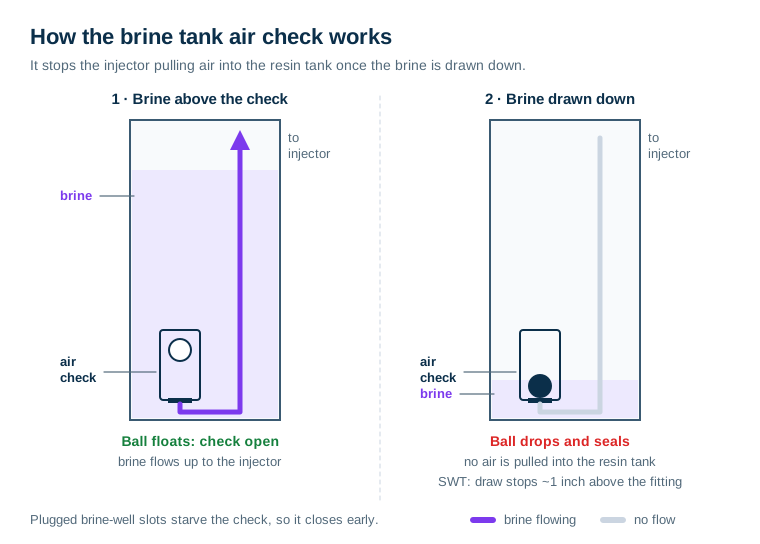
The air check is a small float or ball in a cage at the foot of the assembly. While there is brine above it, it floats open. Once the brine has been drawn down, it drops and seals, so the injector cannot keep sucking and pull air into the resin tank.
SWT's design stops the draw about 1 inch above the draw fitting "to protect against pulling floating matters into the system". Its troubleshooting table points to the check when a softener "does not draw brine or draws air after brine":
- The check will not float. It has a pressure lock or has taken on water. Replace it.
- Foreign matter under the seal. Clean the seat.
- Slots in the brine well are plugged by salt sludge, so brine cannot reach the check fast enough and it closes early. The fix is cleaning the tank. See how to clean a water softener brine tank.
A check that is too short or too tall causes trouble as well. Fleck's instruction to cut the air check level with the grid plate is there because a check set wrong either stops the draw early or lets it run too long.
What the Float Cannot Fix
The float only controls the water level in the brine well. It has no say in whether brine actually leaves the tank. If the level rises a little after every regeneration and never drops, the float may be doing its job perfectly while the injector fails to draw. That fault lives in the valve, not the tank. See what a water softener injector does and how to clean a water softener injector.
Nor does the float know how much salt is in the tank. Brine is only as strong as the salt it has to dissolve, so a float set perfectly still makes weak brine over a salt bridge or an empty tank. Keeping the right amount in is covered in how high salt should be in a brine tank.
The Five-Minute Annual Routine
- Lid off, cap off, flashlight down the well. Is the well vertical, and is the float free of salt crust?
- Identify your float's job, dose setter or backstop, and write it on the brine well.
- Lift-test the float during a refill. The flow must stop.
- Float-test the float and the air check in a bucket.
- Confirm the shutoff sits below the overflow elbow and that the elbow is piped to a drain.
- On float-controlled valves, check the height against your salt setting before blaming the salt bill on anything else.
Ten minutes a year on these parts is cheap next to a flooded basement. It also tells you whether your salt dose is being set by the control valve, or by a float someone moved years ago.
Frequently Asked Questions
What does the float do in a water softener brine tank?
It depends on the design. On a float-controlled brine valve the float height decides how much water refills the tank, which sets how much salt dissolves and therefore the salt dose. On most modern timed or metered softeners the control valve decides the refill volume, and the float is a safety shutoff that only closes if the water rises too far. Either way it is the last thing preventing an overflow if the control valve sticks in refill.
How high should the float be in a brine tank?
On a timed-refill softener, the safety float should shut off comfortably above the normal refill level and well below the overflow elbow, so it never interferes with a normal refill but always acts before the overflow. On a float-controlled valve, the height is set from the salt dose you want, using the manufacturer's chart. Safe Water Technologies' brine valve, for example, allows refill distances from about 13 to 31 inches. Check your own manual; there is no universal number.
How do I know if my brine tank float is bad?
Lift it by hand while the tank is refilling. If the flow into the tank does not stop, the shutoff is not working. Other signs are a white salt crust on the float rod, a float that will not slide freely, a float that feels heavy or sloshes because it has taken on water, a brine well that is not vertical, and a tank that has overflowed even once.
Can a brine float get stuck?
Yes, and it is one of the most common reasons a brine tank overflows. Salt crystallises on the rod, the float binds on the inside wall of the brine well, or the well tilts after the tank is moved. Safe Water Technologies lists a main float binding against the side of the brine well as a cause of overflow and fixes it by turning the valve so the float moves freely.
Do I need a safety float in my brine tank?
Yes. The control valve normally ends the refill on its own, but a power cut, a stuck motor or a leaking brine valve can keep water flowing. Pentair's own manual says a valve that loses power mid-regeneration stays where it is, and that the system should include safety components to prevent overflows. The safety float is that component.
Does raising the brine float use more salt?
On a float-controlled system, yes: a higher float lets more water into the tank, more salt dissolves, and more brine is drawn. On a timed-refill system raising the safety float changes nothing about salt use, because the valve times the refill. It only moves the point at which the backstop closes.
