
How to Inspect and Exercise a Bypass Valve
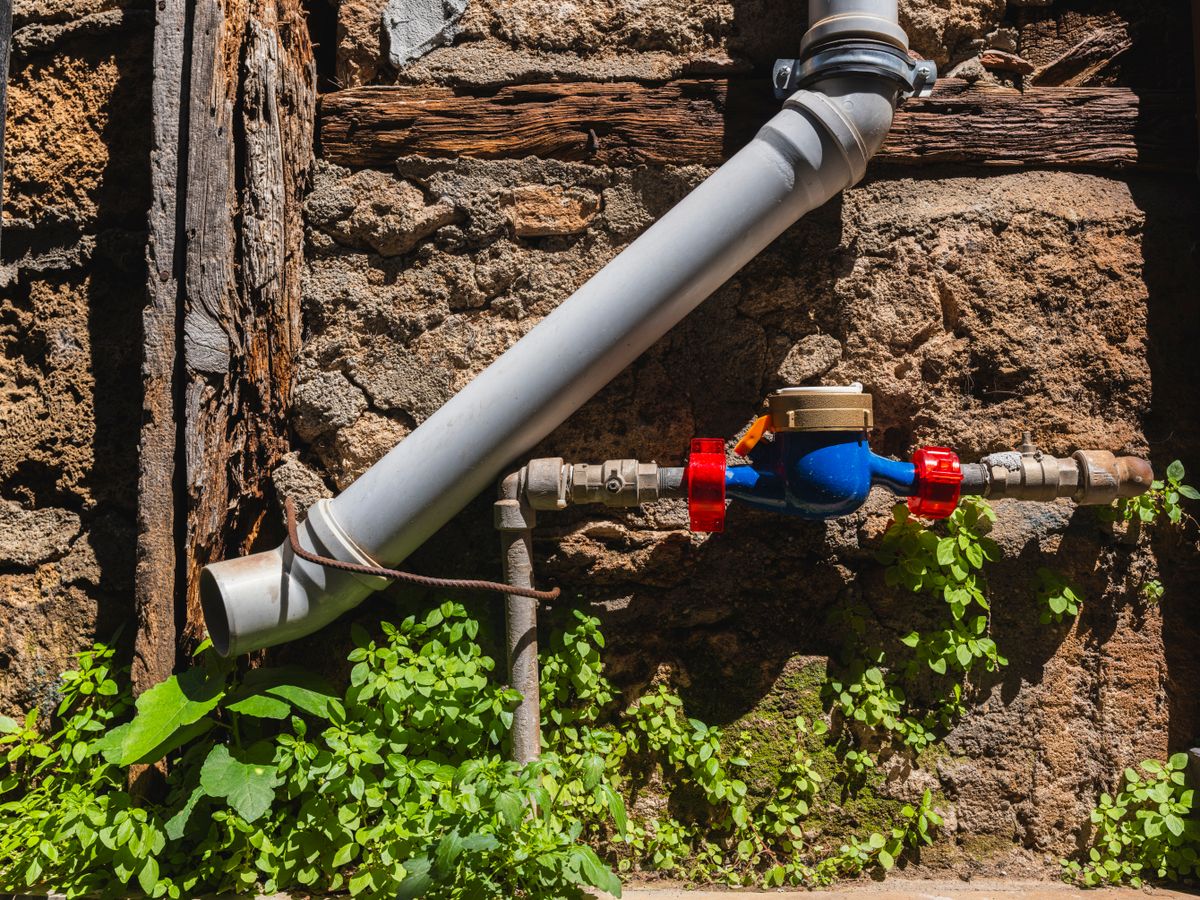
A water softener bypass valve should be tested, not just moved. Twice a year, put it in bypass and check that a tap reads full raw hardness, return it to service and check the tap reads near zero after regeneration, and confirm the handle still turns freely. Those three checks take ten minutes and prove it diverts, seals and will work in an emergency.
A bypass is a set of O-rings sitting still for years under full house pressure. The day you need it, because the control head is leaking or the valve is stuck in backwash, is the worst possible day to find out it has seized.
Know Which Bypass You Have Before You Touch It
Every test below depends on knowing what "bypass" and "service" look like on your valve. There are four common layouts.
| Layout | What it looks like | Bypass position | Service position |
|---|---|---|---|
| Single-lever or push-pull plunger | One lever or knob on a plastic or stainless body at the back of the valve (Fleck lists plastic and stainless versions) | Lever or plunger to the side marked BYPASS | Lever or plunger to SERVICE, fully home |
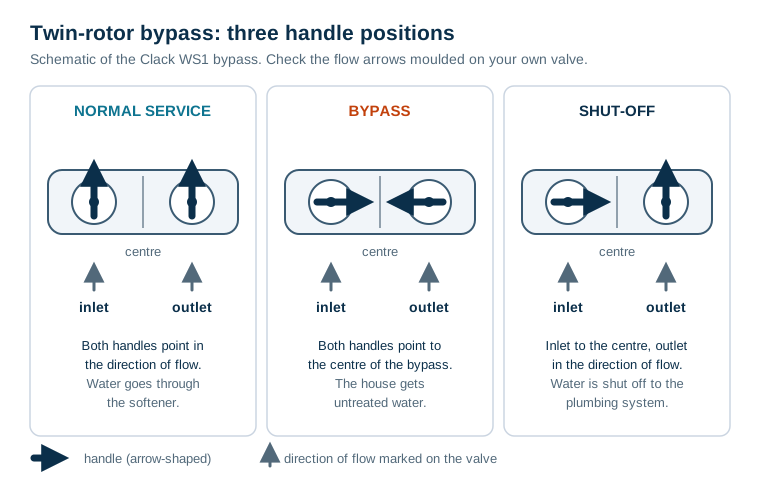
| Twin-rotor (Clack WS1) | Two red arrow-shaped handles | Both handles point to the centre of the bypass | Both handles point in the direction of flow marked on the valve |
| Two-knob (some Autotrol installs) | Two knobs on the bypass body | Both knobs turned to BYPASS | Both turned to the "not in bypass" position |
| Three-valve loop | Two valves in the softener's inlet and outlet pipes and a third in a pipe joining them | Inlet and outlet closed, loop valve open | Inlet and outlet open, loop valve closed |
The Clack positions come straight from Clack's WS1 drawings and service manual, which describes four positions for its bypass: normal operation, bypass, a diagnostic position, and a shut-off position. The last two turn out to be useful test tools.
If you have an integral bypass and a three-valve loop, you have two independent ways to take the softener off line, which is the best layout for servicing. More on that below.
Water Softener Bypass Valve Test 1: Does It Actually Divert?
The point of bypass is that no water passes through the softener. That matters for two reasons: it means you can service the control valve without pressure on it, and it means the house is getting the water you think it is.
What you need: a hardness kit that reads in single grains per gallon (a titration drop kit is better than a strip for this), and your raw water hardness. If you do not know it, test a tap plumbed before the softener, such as an outside spigot on many installations, or use your last lab result. How to test water hardness at home covers the methods.
- Move the bypass slowly to the bypass position.
- Flush the nearest cold tap for two to three minutes. The pipework between the softener and the tap is still full of softened water; you need to push it out.
- Test the tap.
| Reading in bypass | Meaning |
|---|---|
| Matches raw hardness | Bypass is diverting fully. Pass |
| Somewhere between raw and zero | Some water is still going through the softener. The bypass is not fully seated, or its internal seals are leaking across |
| At or near zero | The bypass is not diverting at all, or the tap is fed from softened water stored somewhere (rare), or your raw figure is wrong |
A second check that the control valve is really isolated. Pentair's Fleck 5600SXT service manual tells technicians, after putting the integral bypass in bypass, to relieve pressure "by stepping the control into the Backwash position momentarily" before servicing. Do the same thing as a test: with the valve in bypass, start a regeneration and watch the drain. A short spurt that stops within seconds means the bypass is holding back supply pressure. Drain flow that keeps running means water is still reaching the valve through the bypass. Advance the valve back to service straight away afterwards so it does not sit mid-cycle; on Fleck, pressing Extra Cycle during a regeneration advances one step at a time. Only run this check on a control you know how to step back to service. Clack's manual says an immediate WS1 regeneration "cannot be canceled", so on that valve rely on the hardness reading instead.
A bypass that fails this check is the one that sprays water across the room when someone opens the control valve "because it was in bypass".
Test 2: Does It Seal in Service?
The opposite failure is quieter. In service, the O-rings inside the bypass separate the raw inlet from the softened outlet. When they wear, a trickle of hard water crosses straight to the house and mixes with softened water.
The short version of the test:
- Return the bypass to service, firmly home.
- Run a manual regeneration so the resin is freshly charged.
- Flush and test the nearest cold tap after the cycle.
A reading at or near zero is a pass. A small reading that never reaches zero, even straight after regeneration, is the signature of bleed-through. Clack's troubleshooting table lists "Bypass valve is open or faulty" as the first cause of hard or untreated water being delivered. The full bleed-through method, including how to rule out a blend valve and a distributor tube O-ring, is in why a water softener bypass valve leaks.
If you want to run the regeneration as a full diagnostic while you are at it, how to manually regenerate a water softener lists what to watch at each stage.
Test 3: Is Anything Plumbed Around the Softener?
Some houses have a pipe that joins the hard supply to the soft side somewhere other than the bypass: an old loop left from before the softener was fitted, or a later repair. No bypass test finds that, because the hard water arrives from somewhere else.
On a Clack twin-rotor bypass the manual gives a built-in test. In the shut-off position, with the inlet handle to the centre and the outlet handle pointing in the direction of flow, water is shut off to the plumbing system. "If water is available on the outlet side of the softener it is an indication of water bypass around the system (i.e. a plumbing connection somewhere in the building bypasses the system)."
On other layouts, close the valves that isolate the softener and its bypass completely from the house side (a three-valve loop with all three closed does this), then open a softened tap downstream. Water that keeps flowing after the pipes drain is coming from another connection. Hardness at only a few taps is usually a plumbing split rather than a leak; see why only some faucets have soft water.
Exercising It Twice a Year Without Breaking It
Clack builds its bypass with "self-lubricating EPDM to help prevent valve seizing after long periods of non-use." Designing against seizure tells you that seizure after long periods of non-use is the expected failure. Moving the valve regularly is the owner's side of the same defence.
Pick two dates a year. The clock changes in spring and autumn are easy to remember, and you will be looking at the softener's clock then anyway.
- Choose a time when nobody needs water for ten minutes.
- Move the bypass slowly to bypass and back to service, three times. On a twin-rotor bypass, move each handle separately. On a three-valve loop, open and close each valve fully.
- If it is stiff, stop and work it gently back and forth in small movements. Never lever it with a tool.
- Check for weeping at every joint with a torch and a dry finger.
- Confirm the final position is fully in service. A handle left part-way lets some hard water through.
- Retest hardness at a softened tap the next day and write the figure down next to the date.
On seal care: Autotrol's Logix 740/760 service manual warns against petroleum grease on bypass plumbing, saying to "use only 100% silicone grease products" because non-silicone grease "may cause plastic components to fail over time". It also says plastic bypass nuts should only be hand tightened.
Add both dates to your water softener maintenance schedule so the exercise happens alongside the salt and hardness checks.
If the Bypass Is Already Seized
A plastic bypass that will not move is a part replacement waiting to happen. Forcing it turns an O-ring job into a cracked body and a flooded floor.
What to do:
- Stop pushing. Leave it in whatever position it is in.
- Shut off the water upstream, at the main or at an isolation valve before the softener.
- Relieve pressure by opening a cold tap downstream and letting it run dry.
- Try again gently with no pressure behind the seals. Often it will now move.
- If it still will not move, remove the bypass and inspect or replace the O-rings, or replace the bypass body. Clack notes that its bypass internal O-rings "can easily be replaced". The step-by-step removal and O-ring procedure is in the bypass leak guide linked above.
If you cannot shut the water off upstream without cutting the whole house, that is the real problem, and the next section is the fix.
Planning Shutoffs So Service Never Drains the House
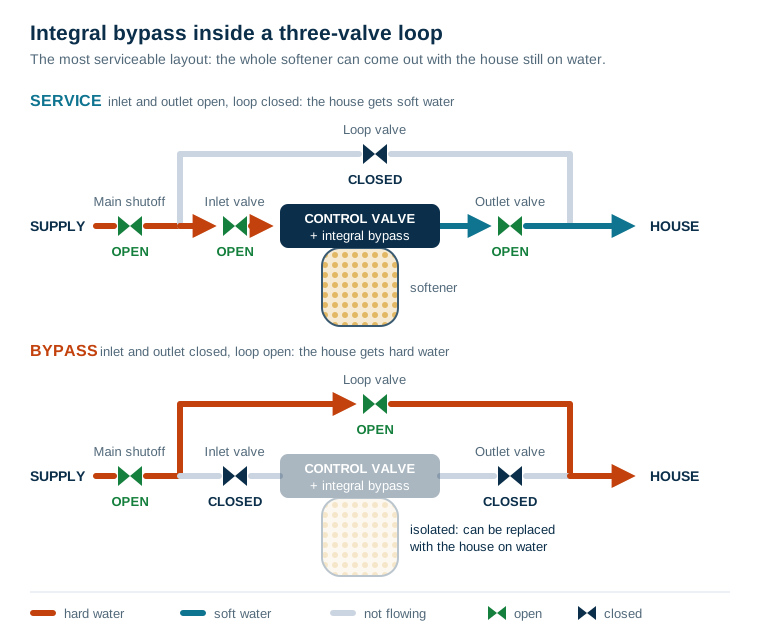
Putting the softener in bypass isolates the control valve. It does not isolate the bypass itself, which still sees full supply pressure. To replace a bypass, or a softener, you need a valve upstream of it, and ideally a way to keep water flowing to the house while the work is done.
Pentair's Fleck manual says: "Always provide for the installation of a bypass valve if unit is not equipped with one." Its service procedure lists three situations: a three-valve bypass system, an integral bypass, or "only a shut-off valve near the conditioner inlet". What you can service without draining the house depends on which you have.
| Layout | Replace control valve with house on water? | Replace bypass with house on water? | What to add |
|---|---|---|---|
| Integral bypass only, no isolation valves | Yes | No, main must be shut | Isolation valves plus a loop |
| Integral bypass plus inlet and outlet isolation valves | Yes | No, isolation valves cut the house supply | A loop pipe with a third valve |
| Three-valve loop, no integral bypass | Yes | Not applicable | Nothing essential |
| Integral bypass inside a three-valve loop | Yes | Yes | Nothing; this is the most serviceable layout |
| Only a shutoff at the softener inlet | Only with the house off | No | A full bypass arrangement |
Things worth doing the next time a plumber is there for any reason:
- Add a three-valve loop around the whole softener and bypass if the house would otherwise lose water during a bypass replacement. It turns a stressful job into a routine one.
- Use quarter-turn ball valves for the isolation valves, so their position is obvious at a glance.
- Label every valve with its purpose and its normal position.
- Find and test the main shutoff so you know it closes fully before you ever need it in a hurry.
This is one of the few softener upgrades that pays off on the day something goes wrong rather than every day. If the softener has to come out entirely, for example after a freeze or a flood, the same valves are what make it possible; see how to winterize a water softener.
What These Tests Will Not Catch
- Hard water at every tap with a good bypass. A bypass that diverts and seals correctly while the house still gets hard water has a softener problem: salt, brine draw, regeneration or resin.
- External leaks. Drips at the bypass connections are an O-ring or cracked body issue, covered in the leak guide.
- The rest of the softener. A free-moving, well-sealed bypass says nothing about the control valve, the resin or the brine system.
A water softener bypass valve earns its place on the day of a leak or a failed control head. Two short sessions a year, moving it, proving it diverts and proving it seals, are what make sure it works on that day, and a plumber's hour spent adding isolation valves means that day never has to include a dry house.
Frequently Asked Questions
How do I know if my water softener bypass valve is working?
Test it rather than just moving it. Measure the hardness of your raw water, put the valve in bypass, flush a nearby cold tap and test again: the reading should match raw hardness. Then return it to service, run a manual regeneration and test the same tap: it should read at or near zero. A bypass reading well below raw hardness means it is not fully diverting, and a service reading that never reaches zero points to a bypass that is letting hard water slip past.
Which way is bypass on a water softener valve?
It depends on the design. On Clack's twin-rotor bypass, both handles pointing to the centre of the bypass is bypass, and both pointing in the direction of flow marked on the valve is normal service. Single-lever push-pull bypasses usually have the words or arrows moulded into the body. On a three-valve loop, bypass means the inlet and outlet valves closed and the valve in the loop pipe open. If in doubt, check the manual or look for moulded labels before moving anything.
How often should I exercise my water softener bypass valve?
Twice a year is a sensible habit, for example at the spring and autumn clock changes. Bypass seals that sit in one position for years can take a set and stiffen. Clack notes that it uses self-lubricating seals in its bypass specifically to help prevent the valve seizing after long periods of non-use, which is the failure regular exercise is meant to prevent.
What do I do if my softener bypass valve is stuck?
Do not force it with pliers or a wrench. Shut off the water supply upstream, relieve pressure by opening a downstream tap, and then try working the handle gently back and forth. If it still will not move, remove the bypass and inspect the O-rings and bore, or replace the bypass body. Use only silicone grease on the seals; Autotrol's manual warns that non-silicone grease may cause plastic components to fail.
Can you leave a water softener in bypass?
Yes, a bypass is designed to supply untreated water to the house for as long as needed, for example while you are away, during repairs or when watering outside. The house simply gets hard water during that time. If the softener will be in bypass during freezing weather or for months, see the winterizing guidance rather than leaving it unattended.
