
Best Water Softener for Low-Sodium Diets: 3 Setups Compared on Sodium and Effort

The best water softener for low-sodium diets is an ordinary, well-sized salt softener with a reverse osmosis (RO) unit at the kitchen tap. There is no such thing as a low-sodium softener. Every salt-regenerated softener adds about 7.9 mg of sodium per litre for each grain per gallon (gpg) of hardness it removes, whatever the brand. What you can choose is where that sodium ends up. RO at the drinking tap removes most of it for the cost of the unit and its replacement filters. Switching the softener to potassium chloride removes it at every tap, but adds the much higher cost of potassium bags to every regeneration for as long as the softener runs. A hard bypass line adds none, but delivers hard, untreated water.
The sodium limit itself is a medical question. Ask the clinician who manages the diet for the number, then use the figures below to pick the setup that meets it.
Disclosure: Hard Water Solved may earn a commission if you buy through links on this page, at no extra cost to you. It does not change which products we include or how we rank them. Read our disclaimer.
The Three Setups at a Glance
| Setup | Sodium the softener adds, at the drinking tap | Raw-water sodium | Taps covered | Up-front cost | Ongoing cost | Effort |
|---|---|---|---|---|---|---|
| RO at the kitchen tap | Roughly 90 to 97% removed | Also mostly removed | One tap, plus a fridge line on some units | The RO unit | Replacement filters | Filter changes once or twice a year |
| Potassium chloride in the softener | Almost none added | Unchanged | Every tap | None | Potassium chloride bags, several times the price of salt | Heavier, pricier bags; a setting change |
| Hard bypass line to the kitchen | None added | Unchanged | One tap | A plumbing job, quoted locally | the plumbing job only | None after fitting; tap runs hard |
How we chose. No equipment was physically tested. Sodium figures are calculated from the ion exchange ratio, about 7.9 mg/L of sodium per gpg removed, which Penn State Extension states as 7.5 mg per quart. RO removal comes from each maker's manual or performance data. Running costs are compared on the makers' published filter-change intervals.
- Included: full under-sink RO units listed on Amazon, and one softener-plus-RO bundle for buyers who still need the softener.
- Excluded: pitcher and faucet filters, which do not remove sodium in useful amounts; "low-sodium" or "salt-free" conditioners sold as softeners, which do not remove hardness; and any figure for a safe sodium intake, which belongs to the clinician.
- Prices are not listed here because they change often. Use the buttons to see the current price on Amazon.
Sodium in a Glass at Your Hardness
Ion exchange swaps each calcium or magnesium ion for two sodium ions, so the sodium added depends only on how much hardness the softener removes. The full derivation is in sodium in softened water. For an 8 ounce glass it comes to about 1.9 mg per gpg.
| Hardness removed | Softened, 8 oz glass | After RO (3 to 10% passes) | Potassium chloride instead | Hard bypass tap |
|---|---|---|---|---|
| 10 gpg | about 19 mg sodium | about 1 to 2 mg | ~0 mg sodium, about 32 mg potassium | 0 mg added |
| 15 gpg | about 28 mg | about 1 to 3 mg | ~0 mg sodium, about 47 mg potassium | 0 mg added |
| 20 gpg | about 37 mg | about 1 to 4 mg | ~0 mg sodium, about 63 mg potassium | 0 mg added |
| 25 gpg | about 47 mg | about 1 to 5 mg | ~0 mg sodium, about 79 mg potassium | 0 mg added |
| 30 gpg | about 56 mg | about 2 to 6 mg | ~0 mg sodium, about 95 mg potassium | 0 mg added |
Sodium added only. The RO column uses the 3 to 10 percent product-water range in the APEC ROES-50 manual, applied to the added sodium. Potassium is about 13.4 mg/L per gpg removed.
Two corrections to your own number:
- Add the raw-water sodium. Many supplies already carry some. EPA's advisory found a median of 16.4 mg/L across a national survey of groundwater systems. Your utility report lists it, or a well test will. RO removes this too. A bypass tap and potassium chloride do not.
- Multiply by what you actually drink and cook with. Cooking water, coffee and tea count. Showering and laundry do not.
For scale, EPA's drinking water advisory on sodium set its 20 mg/L guidance level "for those individuals restricted to a total sodium intake of 500 mg/day". Water softened from 15 gpg carries about 118 mg/L of added sodium. Whether that matters for a particular diet is for the clinician to say. Whether it is generally safe to drink is covered in is softened water safe to drink.
Setup 1: RO at the Kitchen Tap, the Pick for Most Homes
An RO membrane rejects dissolved salts, including the sodium the softener added and the sodium the water carried in. It also protects itself on softened feed: hard water scales membranes. That makes RO and a softener a natural pair, as reverse osmosis and a water softener together explains. The four picks below differ on flow, filter cost and certification.
APEC ROES-50: lowest 10-year cost
- Type: five-stage under-sink RO with a storage tank, no electricity
- Sodium: APEC's ROES-50 manual says product water should be about 3 to 10 percent of the tap water's TDS, and to replace the membrane when it reaches 15 to 20 percent
- Certification: the manual says WQA certifies it to NSF/ANSI 58 for TDS reduction
- Running cost: the lowest filter cost of the RO picks here, with the membrane changed every 2 to 4 years on softened city water
The plain choice for a home that already softens. It has no mineral stage to add anything back, and the TDS certification is the claim that matters for sodium. Its tank holds less than the "4 gallon" label at normal pressure, so a large family cooking with RO water will notice the refill time.
Watch for: waste water. The manual's efficiency rating under NSF/ANSI 58 test conditions is 11.8 percent, so several gallons go to drain for each gallon you keep.
Waterdrop G3P600: fastest flow, highest filter cost
- Type: tankless under-sink RO, 600 gallons a day rating, needs a power outlet
- Sodium: Waterdrop's performance data sheet gives 93.59 percent TDS reduction at a 750 mg/L challenge under NSF/ANSI 58, and the manual puts normal product water at 5 to 10 percent of tap water TDS
- Feed limit: the warranty holds only on municipal water under 7 gpg and 750 ppm TDS, which softened city water meets
- Running cost: the highest yearly filter cost of the RO picks here
The faucet shows a live TDS reading, which is useful in this case. You can see at a glance whether the water at the drinking tap is still low in dissolved salts, without buying a meter.
Watch for: unsoftened well water. If the softener is ever bypassed, the feed breaks the warranty's 7 gpg condition.
Home Master TMAFC: remineralised taste, no system listing
- Type: seven-stage tank RO that adds calcium and magnesium back after the membrane
- Sodium: the membrane removes sodium as the others do; the remineralisation stage adds hardness minerals, not sodium
- Certification: Home Master cites NSF-certified components; we found no system-level NSF/ANSI 58 listing
- Running cost: one filter set once a year or every 2,000 gallons
Pick this one if someone in the house dislikes the flat taste of plain RO water and would otherwise drink from the softened tap. A setup that people do not use removes no sodium.
Watch for: Home Master's 10 gpg feed limit, and waste water of up to about 4:1 without the optional permeate pump.
Aquasure Harmony 32k + Premier 75 GPD RO: if you still need the softener
- What it is: a 32,000-grain Harmony softener (AS-HS32D) bundled with a 75 GPD RO unit (AS-PR75A) and 3-gallon tank
- Sizing: Aquasure lists it for 1 to 3 bathrooms and up to 4 people
- Certification: the bundle page makes no system certification claim for the RO half
Buying both halves at once saves a second shipment and a second install. It only makes sense if the softener is the right size for your hardness and household. Check that first with how to size a water softener, because a bundle sold as one box is still two products.
Watch for: the RO half's missing certification. If a certified sodium or TDS figure matters to the clinician, choose a listed RO unit and buy the softener separately.
Setup 2: Potassium Chloride Instead of Salt
Switching the brine tank to potassium chloride makes the softener exchange potassium for hardness instead of sodium. The softened water then carries almost no added sodium at any tap, including bathroom taps, the fridge line and a second kitchen.
The cost is the drawback. A typical household using 480 lb of salt a year needs about 20 percent more potassium chloride to remove the same hardness, about 576 lb. A bag of potassium chloride costs several times as much as a bag of salt, so the yearly regenerant bill rises by a large multiple, every year the softener runs. Bulk pricing narrows the gap a little, and a softer supply or smaller household shrinks it. The full trade-off, including the setting change your valve needs, is in potassium chloride vs sodium chloride in a softener.
There is a medical caution too. Potassium-softened water adds about 47 mg of potassium to a glass at 15 gpg. Most people handle that easily. People with kidney disease or on some blood pressure medicines may be told to limit potassium, and for them this setup swaps one restricted mineral for another. Ask before switching.
Potassium chloride also leaves the raw water's own sodium in place. If the supply already carries a lot, this setup will not bring the drinking water down to a low figure.
Setup 3: A Hard Bypass Line to the Kitchen
The oldest answer is to run the kitchen cold tap from a pipe teed off before the softener. It adds no sodium, needs no filters and costs nothing to run. A plumber prices it as a one-off job. It is cheap at rough-in and dearer when the pipe has to reach a finished kitchen.
It has two weaknesses. The tap delivers hard water, so the kettle and coffee maker scale up again. And if the tee is placed at the main, the drinking tap skips every other filter in the house: iron, sediment and carbon as well as the softener. If you have those, the tee has to go after the filters and just before the softener. Where to tee it, and why RO usually wins, is covered in should a kitchen tap bypass the softener.
A bypass line also leaves the raw water's own sodium in the glass. On a well near the coast or one affected by road salt, that can be the larger number.
Running Cost, Side by Side
| Setup | Up front | Yearly |
|---|---|---|
| APEC ROES-50 | The RO unit | Filters, the lowest of the RO picks; membrane every 2 to 4 years |
| Home Master TMAFC | The RO unit | One filter set a year or every 2,000 gallons |
| Waterdrop G3P600 | The RO unit | Filters, the highest of the RO picks |
| Potassium chloride | Nothing | About 20 percent more regenerant by weight, at several times the price per bag |
| Hard bypass line | A plumbing quote | Nothing |
RO costs leave out the reject water, which on softened feed also carries a small salt cost. A lighter-use household spends less on both RO filters and regenerant.
The pattern holds at almost any usage. Treating the few litres a day that people drink costs far less than changing the regenerant for every gallon the house uses.
Which Setup Fits Your House
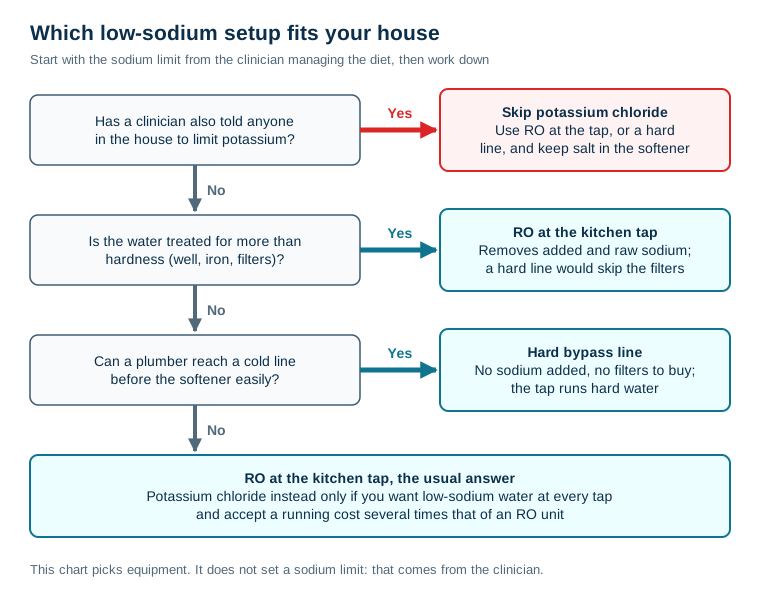
- Most softened homes: RO at the kitchen tap. Start with the APEC ROES-50 on cost, or the Waterdrop G3P600 for flow and the TDS readout.
- Plain RO water goes undrunk: the Home Master TMAFC, accepting the lack of a system listing.
- Low sodium wanted at every tap, and nobody limiting potassium: potassium chloride, with the running cost above.
- New build, city water, no other treatment: a hard line fitted at rough-in is the cheapest option of all.
Who Should Buy None of These
- Anyone who has not yet been given a sodium limit. Get the number first. For many diets, the sodium in softened water is small next to food, and no equipment is needed.
- Households with high raw-water sodium and a bypass plan. A hard tap carries the raw sodium straight to the glass. Test the supply, and use RO if it is high.
- Renters who cannot drill a sink. None of the under-sink units suits you. A countertop RO unit needs no plumbing.
- Homes without a softener at all. If the water is not softened, no sodium is being added. Decide whether you need a softener first, then plan the drinking tap.
The softener brand does not change the sodium. The hardness it removes does. Size the softener for the water, put RO at the tap people drink from, and take the glass figures above to the person managing the diet.
Frequently Asked Questions
What is the best water softener for someone on a low-sodium diet?
Any well-sized salt softener paired with reverse osmosis at the kitchen tap. A softener adds about 7.9 mg of sodium per litre for each grain per gallon of hardness removed, whatever the brand. An RO unit such as the APEC ROES-50, whose manual says product water should be about 3 to 10 percent of the feed water's dissolved solids, takes most of that sodium back out at the one tap people drink from. Over the years it generally costs far less than switching the whole softener to potassium chloride.
Is potassium chloride better than salt for a low-sodium diet?
It removes the sodium the softener adds, at every tap, and adds about 13.4 mg of potassium per litre per grain of hardness instead. That suits some households, but a bag of potassium chloride costs several times as much as a bag of salt, and you need roughly 20 percent more. Anyone told to limit potassium, for example with kidney disease or on certain blood pressure medicines, should ask their clinician before switching.
How much sodium does a water softener add to a glass of water?
About 1.9 mg per 8 ounce glass for each grain per gallon of hardness removed. At 10 gpg that is about 19 mg a glass, at 15 gpg about 28 mg, and at 30 gpg about 56 mg. Add whatever sodium the raw water already carries, which your utility report or a well test will show.
Does reverse osmosis remove sodium from softened water?
Yes, most of it. RO membranes reject dissolved salts, and APEC's ROES-50 manual says a membrane in good condition leaves product water at about 3 to 10 percent of the tap water's TDS. On water softened from 15 gpg, that brings the added sodium from about 28 mg a glass to roughly 1 to 3 mg. Check the TDS of the RO water once or twice a year to confirm the membrane is still working.
Should I stop drinking softened water if I have high blood pressure?
Ask the clinician managing your blood pressure. EPA's drinking water advisory says people under treatment for sodium-sensitive hypertension should consult their health care provider about sodium in their drinking water, and its 20 mg/L guidance level was set for people on a 500 mg a day diet. This page does not set a sodium limit; it compares the equipment that meets whatever limit you are given.
