
Potassium Chloride vs Sodium Chloride in a Softener

The difference between potassium chloride vs sodium chloride in a softener is which ion goes into your water: potassium instead of sodium. Softening is the same. Potassium chloride costs about four times as much per bag, and you need 12 to 20 percent more of it. It helps people on a medically restricted sodium diet and sodium-sensitive soil. It does not reduce the chloride sent down the drain.
So the decision turns on who you are, not on which one works better.
Potassium Chloride vs Sodium Chloride in a Softener: What Changes
A softener's resin swaps hardness for whatever ion the brine loaded onto it. With sodium chloride, that is sodium. With potassium chloride, it is potassium. Nothing else about how the softener works changes.
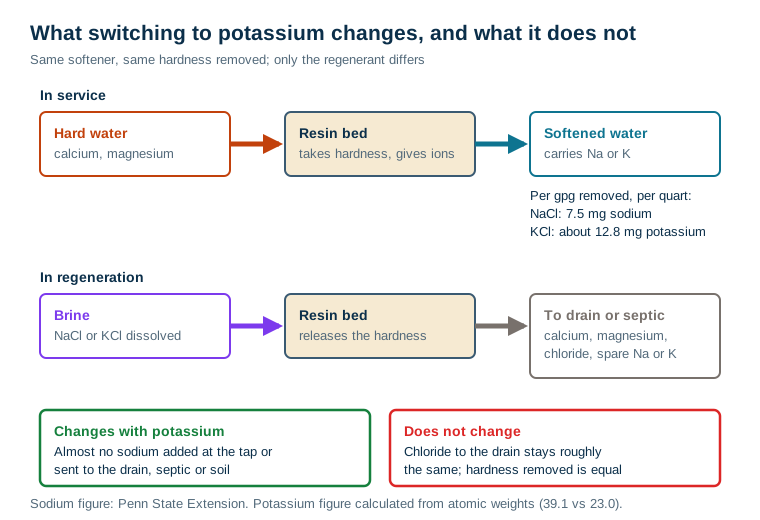
At the tap. Penn State Extension's water softening guide gives the sodium added as 7.5 mg per quart for each grain per gallon of hardness removed. On 15 gpg water, that is about 112 mg per quart. With potassium chloride, the same exchange adds potassium instead, about 12.8 mg per quart per gpg. That figure is calculated from atomic weights, because potassium is the heavier atom.
To the drain. Every regeneration rinses out the calcium and magnesium the resin collected, the leftover brine ions, and the chloride that came with them. Switching to potassium chloride replaces the sodium in that discharge with potassium. The chloride stays roughly the same, because it takes about the same number of chloride ions to regenerate the same capacity. How much sodium ends up in a glass, and what it compares with, is covered in how much sodium a water softener adds.
The Real Annual Cost Difference
Prices vary by region and season, so the figures below use example prices. Plug in yours.
Assumptions: sodium chloride at $7.50 and potassium chloride at $30 per 40 lb bag. Potassium chloride quantity raised by 12 percent (the WaterBoss adjustment) to 20 percent (the GE adjustment) to remove the same hardness.
| Household | Salt a year | Salt cost | Potassium chloride needed | Potassium cost | Extra a year |
|---|---|---|---|---|---|
| Light use | 240 lb | $45 | 269 to 288 lb | $202 to $216 | $157 to $171 |
| Typical | 480 lb | $90 | 538 to 576 lb | $403 to $432 | $313 to $342 |
| Heavy use | 720 lb | $135 | 806 to 864 lb | $605 to $648 | $470 to $513 |
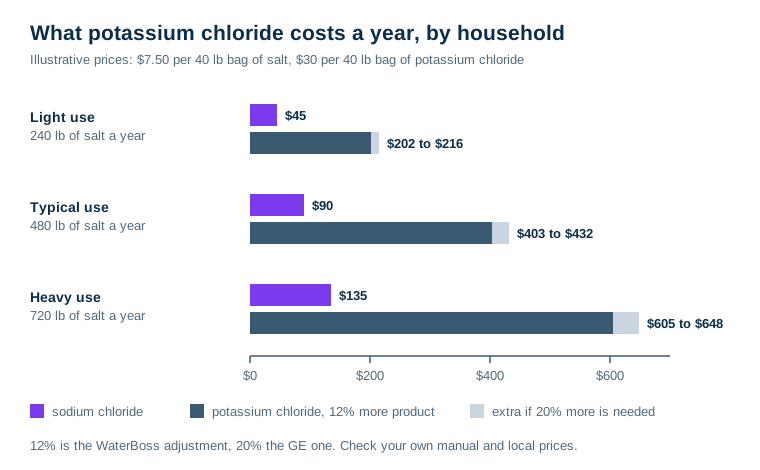
Over a ten-year softener life, the typical household pays roughly $3,100 to $3,400 more for potassium. That is often more than the softener cost.
Your own salt figure comes from your water, not a table. Working it out is covered in how much salt a water softener uses.
Why It Takes More Potassium Chloride
Resin swaps ions one for one by charge. What matters is how many potassium or sodium ions each pound of product delivers, not how much it weighs.
- A potassium atom weighs about 39.1 units and a sodium atom about 23.0. Chloride is 35.5 in both.
- So a pound of potassium chloride (74.6 units per molecule) carries about 22 percent fewer exchangeable ions than a pound of sodium chloride (58.4 units per molecule). That is calculated from atomic weights, not a lab test.
Manufacturers' adjustments of 12 to 20 percent are smaller than that 22 percent. Resin holds potassium a little more readily than sodium, which makes up part of the gap. Treat the manufacturer's figure for your valve as the one to use, and check the result with a hardness test.
The same arithmetic explains why chloride to the drain barely changes. Each regeneration needs roughly the same number of chloride ions whichever salt carries them. A pound of potassium chloride carries fewer of them, but you use more pounds.
The Settings Change Most People Skip
Pound for pound, potassium chloride regenerates less resin than salt. GE's guidance on using potassium chloride is direct about it: "It takes more potassium chloride to remove the same amount of hardness from the resin bed as salt." GE recommends setting the hardness 20 percent higher. The WaterBoss manual says multiply it by 1.12.
Why a higher hardness entry works. A metered valve divides its capacity by the hardness to decide when to regenerate. Tell it the water is harder and it regenerates sooner, before the less fully recharged resin runs out.
What happens if you do not change it. The softener regenerates on the same schedule with less real capacity. Near the end of each cycle, hardness slips through. It is easy to miss, because the water is soft right after each regeneration.
How to switch:
- Run the tank down to a few inches of salt. Do not mix the two.
- Check your manual. Some valves have a salt-type menu that makes the adjustment for you. Others need the hardness raised by hand. Find the right figure for yours.
- Check for iron. WaterBoss says not to use potassium chloride if there is iron in the water. If you have iron, sort that out before switching.
- Fill with potassium chloride and set the new hardness or salt-type setting.
- Test the softened water on the last day before a regeneration after the first full cycle. It should still test under 1 gpg.
Switching back to salt means reversing the setting too. How potassium chloride compares with evaporated, solar and rock salt as a product is covered in water softener salt types compared.
Who Genuinely Benefits
A household member on a doctor-ordered sodium restriction. This is the clearest case. The softener stops adding sodium to every tap in the house. Even here there is a cheaper option: leave the kitchen cold tap unsoftened, or put a point-of-use reverse osmosis unit there, and keep using salt. Whether a bypassed kitchen tap suits you is covered in should a kitchen tap bypass the softener.
Sodium-sensitive soil. If softened water goes on a garden or lawn, or the discharge goes to a drain field in soil that does not shed sodium well, avoiding sodium is a real benefit. Potassium is a plant nutrient, while sodium can build up in clay soils and break down their structure. For septic owners, it is worth reading water softener planning for a home with septic before deciding, because settings and salt efficiency matter there too.
A household that simply prefers it, and has checked the cost. That is a fine reason, as long as the settings are changed.
Who Is Paying a Premium for Nothing
- Households on city sewer with no sodium restriction. The sodium goes to the treatment plant either way, and for most people the sodium in softened water is small next to diet.
- Anyone trying to meet a chloride limit. Where cities restrict softener discharge, the concern is often chloride in wastewater. Potassium chloride sends roughly the same chloride down the drain. Using less regenerant, through a correct hardness entry, an efficient dose and a metered valve, reduces chloride. Changing the product does not.
- Anyone who switches without changing the setting. They pay four times as much for slightly harder water.
- Well owners with iron. At least one manufacturer advises against potassium chloride on iron water, and the premium buys no iron handling.
Cheaper Ways to Get the Same Benefit
If the goal is less sodium in what you drink, potassium chloride for the whole house is the most expensive way to get there. The alternatives, for a typical household using 480 lb of salt a year:
| Option | Sodium in drinking water | Extra cost a year | Trade-off |
|---|---|---|---|
| Potassium chloride, whole house | Almost none added | About $310 to $340 | Pays to treat showers, laundry and toilets too |
| Kitchen cold tap left unsoftened | None added at that tap | Usually a one-time plumbing change | Hard water at that tap: some spotting on the sink |
| Point-of-use reverse osmosis at the kitchen | Most removed at that tap | A filter set every year or so, plus the unit | Another appliance to maintain |
| Better softener settings | Unchanged per gpg removed | Saves money | Cuts salt and chloride discharge, not sodium at the tap |
For a single person on a sodium restriction, the kitchen-tap options nearly always win on cost. Potassium chloride makes most sense when the softened water also reaches something that should not get sodium, such as a garden, an irrigation system or a sensitive drain field.
Three Households, Three Answers
A couple on city sewer, no medical restriction, 15 gpg water. Stay with salt. Potassium chloride would cost them roughly an extra $130 to $250 a year, depending on the salt setting, for no measurable gain. Tuning the settings does more for the environment.
A family where one member has been told to cut sodium. Talk to the doctor first, because potassium brings its own cautions. If potassium is fine for that person, it works. But leaving the kitchen cold tap unsoftened, or adding reverse osmosis there, costs less and deals with drinking water specifically.
A rural home on a septic system, watering a vegetable garden from softened taps. This is where potassium chloride earns its price. It keeps sodium out of the drain field and the garden soil. Check the water for iron first. If iron is present, deal with it before switching, or keep the garden tap on unsoftened water instead.
A Health Caution That Runs the Other Way
Potassium is not harmless for everyone. MedlinePlus, from the US National Library of Medicine, notes on high potassium levels that poorly working kidneys may not clear potassium properly, and lists certain blood pressure medicines as common causes. It advises people told to follow a low-salt diet to limit or avoid salt substitutes.
A softener running on potassium chloride works like a salt substitute in every glass of tap water. If anyone in the house has kidney disease or takes those medicines, ask their doctor before switching. Or leave the drinking-water tap unsoftened.
What Neither Regenerant Can Do
- Make softening cheaper by switching products. The cheapest regenerant is the one you use less of. Settings matter far more than chemistry.
- Remove anything but hardness, plus modest amounts of dissolved iron. Neither affects lead, arsenic, nitrate or bacteria.
- Cut the chloride in your discharge. Only using less regenerant does that.
- Replace medical advice. Whether the sodium or the potassium matters for a particular person is a question for their doctor, not for the brine tank.
Frequently Asked Questions
Can I use potassium chloride instead of salt in any water softener?
Most residential softeners accept it, and the WaterBoss manual says you can switch between the two at any time. You do need to change a setting. WaterBoss says multiply the hardness setting by 1.12, and GE recommends setting the hardness 20 percent higher. Some valves have a salt-type menu that does this for you. Check your manual first: some advise against potassium chloride when the water contains iron.
Is potassium chloride better for you than softener salt?
It removes the sodium a softener adds to your water, which matters if a doctor has told you to limit sodium. It adds potassium instead. Most people handle that easily, but people with kidney disease or on certain blood pressure medicines can have trouble clearing potassium. MedlinePlus lists salt substitutes as something to limit or avoid for them. Ask your doctor before switching for health reasons.
How much more does potassium chloride cost than salt?
Per bag, commonly three to four times as much. You also use 12 to 20 percent more of it to remove the same hardness. For a typical household using 480 lb of salt a year, that works out at roughly $400 to $430 a year for potassium chloride against about $90 for salt, at example prices of $30 and $7.50 per 40 lb bag.
Is potassium chloride better for septic systems and the environment?
It avoids adding sodium, which is the part of softener discharge that can harm soil structure in a drain field or garden. It does not remove the chloride. Regeneration sends roughly the same chloride to the drain whichever salt you use. Where local softener limits are about chloride in wastewater, switching regenerants does very little. Cutting the salt used, through better settings, does more.
Does potassium chloride make water less soft?
No, if the settings are adjusted. It removes the same calcium and magnesium. Because it regenerates less efficiently per pound, the softener needs a higher hardness entry or salt setting to deliver the same capacity. If you switch without changing anything, the resin may run out before it regenerates and let hardness through near the end of each cycle.
Can I mix potassium chloride and salt in the brine tank?
It is better not to. Manufacturers generally say not to mix different types of regenerant, and a mixed tank makes the settings impossible to get right. Let the tank run down to a few inches, then fill with the new product and change the setting at the same time.
