
Is a Water Softener Service Contract Worth It?

Is a water softener service contract worth it? For most households with a single softener, no. A typical contract pays a technician to do what an owner can do in about five minutes a month and an hour a year. A contract earns its price in four cases: a multi-stage well treatment system, an owner who cannot physically do the tasks, a warranty that genuinely needs documented service, and the rare contract that covers major repairs without exclusions.
The rest of this page shows how to tell which case you are in.
What a Contract Covers, Item by Item Against DIY
The owner's schedule below comes from the water softener maintenance schedule. The contract column shows what service agreements commonly list. Yours may differ, so check each line against the contract in front of you.
| Task | How often | Commonly in a contract? | Owner's time | Owner job? |
|---|---|---|---|---|
| Check salt level and top up | Monthly | Sometimes, with salt delivery | 2 minutes | Yes |
| Probe for a salt bridge | Monthly | Only at the visit | 1 minute | Yes |
| Record gallons and regenerations | Monthly | Rarely | 1 minute | Yes |
| Look for leaks at tanks, valve and drain | Monthly | Only at the visit | 1 minute | Yes |
| Test hardness at a tap | Monthly | Only at the visit | 1 minute | Yes, with strips |
| Clean the brine tank | Yearly | Usually | 30 minutes | Yes |
| Clean the injector and screen | Yearly | Usually | 15 minutes | Yes |
| Check the float and safety shut-off | Yearly | Usually | 2 minutes | Yes |
| Test raw against softened water, reset hardness | Yearly | Usually | 10 minutes | Yes |
| Change the sediment prefilter | On pressure drop | Sometimes | 10 minutes | Yes |
| Add resin cleaner on iron water | 1 to 2 times a year | Sometimes | 5 minutes | Yes |
| Rebuild the valve's seals and piston | Every several years | Parts often extra | 1 to 1½ hours | With care |
| Replace the resin | Once in a decade, if at all | Often excluded | 2 to 3 hours | Heavy work |
Every routine line is an owner job. The only lines that need tools, skill or strength are the repairs at the bottom. Those are exactly the lines that contracts most often charge extra for, or exclude.
Is a Water Softener Service Contract Worth It? Four Questions
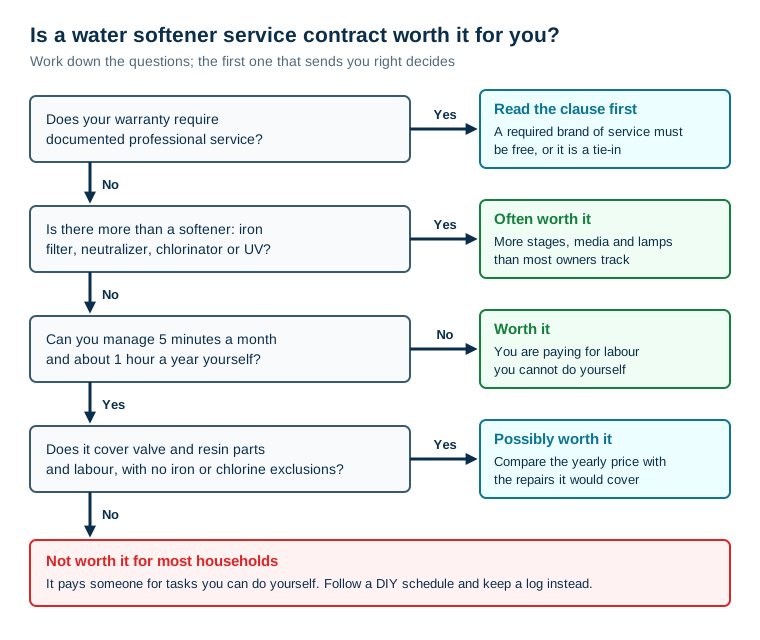
Work down the questions. The first one that sends you to the right decides it.
- Does your warranty require documented professional service? If so, read that clause closely before paying for anything. The rules are in the warranty section below.
- Is there more than a softener? An iron filter, neutralizer, chlorinator or UV lamp changes the answer.
- Can you manage five minutes a month and an hour a year? If lifting a 40 lb bag or kneeling at a brine tank is not possible, a contract buys labour you genuinely need.
- Does it cover valve and resin parts and labour, with no iron or chlorine exclusions? If so, it is insurance against the two big bills, and you can price it against them.
If you reach the bottom, the contract is paying for work you could do yourself.
The Arithmetic: What You Are Really Paying For
Contract prices vary by region and company, so use the price on your own quote. The method works for any price. If the service is folded into monthly payments, as it often is in a RainSoft quote and its cash equivalent, separate the service share from the equipment first.
Step 1. Take out what you would spend anyway. An owner doing the schedule spends about $25 a year on test strips, resin cleaner and small parts, plus salt. Salt costs the same either way unless the contract includes it.
Step 2. Take out the repairs the contract genuinely covers. Over a decade, a softener on reasonable water might need a seal kit and perhaps a motor. That is roughly $230 to $350 each installed, in the illustrative ranges in common water softener repair costs. Spread over ten years, that is about $50 to $70 a year, and only if the contract covers parts and labour.
Step 3. Divide what is left by the owner's hours. The owner's schedule takes roughly two hours a year: an hour of monthly checks and an hour for the annual service.
An illustrative example. A contract at $200 a year that covers labour but charges for parts:
- $200 − $25 of supplies you would buy anyway = $175
- Repairs covered: labour only, so perhaps $35 a year of expected value
- $175 − $35 = $140 for about two hours of work = about $70 an hour
That is what you are paying someone to do the monthly checks, except the contract usually does not do the monthly checks. It does one visit a year. So the real trade is about $140 a year for one annual service hour you could do yourself, while the eleven monthly checks remain your job regardless.
Why One Visit a Year Misses Most Faults
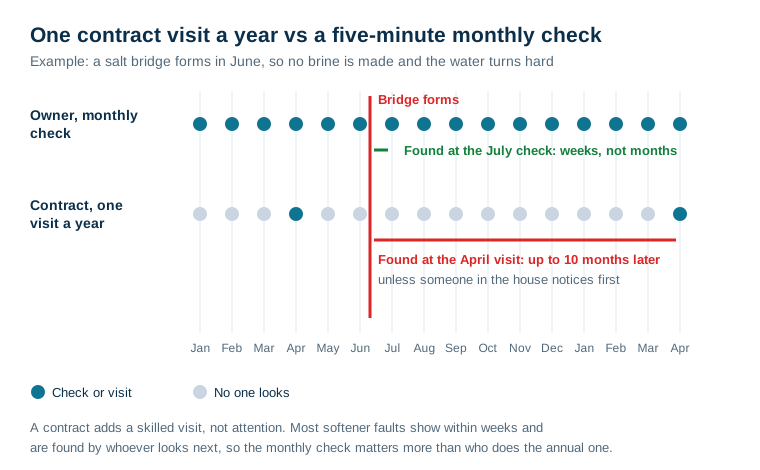
Most softener faults show within weeks. A salt bridge stops brine forming. A clock reset by a power cut shifts regeneration into the day. A bypass is left partly open after plumbing work. A drain line lifts out of the standpipe. Each is found by whoever looks next.
A monthly owner check finds each of these within weeks. An annual visit finds them at the next visit, which can be up to eleven months away, unless someone in the house notices hard water first. A contract replaces the annual hour. It does not replace the monthly five minutes, and those are what catch problems early.
The Genuine Exceptions
Multi-stage well treatment
A well system with several stages is a different job from a lone softener. An iron filter needs its backwash timing and flow kept right. A calcite neutralizer dissolves and needs topping up. A chlorine feed needs solution mixed and a pump checked. A UV lamp needs replacing on its schedule, and its quartz sleeve needs cleaning. Each stage prepares the water for the one after it, so a fault upstream shows up as a failure downstream.
Keeping all of that right is more than most owners track reliably, and a mistake at one stage can damage the next. A contract with a company that knows the whole system is often worth it here. It does not replace testing. The EPA's guidance for private drinking water wells puts responsibility for testing a private well on its owner, and a service visit does not include a bacteria or nitrate test unless the contract says so.
Warranties that require documented service
Some softener warranties ask for maintenance to be done and recorded. A few ask for service by an authorised dealer. Federal law limits how far that can go. The FTC's guide to federal warranty law says that "tie-in sales provisions", which state or imply that you must buy a service from a particular company to keep your warranty, are generally not allowed. The exceptions are when that service is provided free, or when the FTC has granted a waiver. A warranty can still exclude damage caused by neglect or by unauthorised repairs.
In practice:
- If the warranty only asks for maintenance to be done, a dated log is your evidence. The monthly log in the maintenance schedule is designed for this.
- If it names a specific company and that service is not free, ask the warrantor to confirm the requirement in writing before you pay for a contract to satisfy it.
- If a contract comes free for the warranty period, take it. Then decide on renewal using the four questions.
How to read the coverage, exclusions and claim terms of a softener warranty is covered in how to read a water softener warranty. If you are choosing between two dealers, Culligan's and EcoWater's warranty clauses quoted side by side show what each still charges for service.
Owners who cannot do the work
Salt comes in 40 lb bags, often carried down to a basement. The brine tank clean involves lifting out wet salt and sludge. If that is not possible, a contract, or at least salt delivery, buys real help. Make sure it includes the monthly checks, or arrange for someone in the household to do the five-minute look.
Contracts that genuinely cover major repairs
A contract that covers valve and resin parts and labour, without excluding iron fouling or chlorine damage, is insurance against the two expensive failures. Few do. Most resin damage comes from iron or chlorine, so an exclusion for either removes most of the value. If yours genuinely covers both, compare its price with the installed cost of those repairs and how likely they are on your water.
Questions That Expose a Thin Contract
The FTC's advice on extended warranties and service contracts applies directly. It recommends checking what is covered and excluded, hidden costs such as deductibles or fees, whether the company can deny coverage over routine maintenance, and whether a warranty you already have covers the same repairs. For a softener, ask these:
- Exactly what does the technician do at each visit? Get the list in writing.
- How many visits a year? One visit a year leaves eleven months unchecked.
- Are parts included, or only labour? And is there a call-out charge on top?
- Are resin and the control valve covered? Are iron fouling and chlorine damage excluded?
- Does it overlap the manufacturer's warranty? Paying for parts cover the warranty already provides is paying twice.
- What is the response time if the unit floods or stops?
- Does it renew automatically, and what does it cost to cancel?
- Does it transfer if you sell the house, or end without a refund?
A contract with a short task list, labour only, resin and valve excluded, and automatic renewal is a thin contract. It is paying someone to clean a brine tank once a year. The questions work best on two quotes at once, as in comparing a Culligan and a Kinetico dealer quote line by line.
What No Contract Changes
- Faults still need diagnosing when they happen. Signs that a problem is beyond owner maintenance, with or without a contract, are in when to call a water softener technician.
- A contract does not change what a softener removes. It treats hardness. Bacteria, nitrate, lead and arsenic need testing and their own treatment.
- It does not fix the wrong equipment. An undersized softener, or one with no iron pretreatment on iron-bearing water, will keep failing however often it is serviced.
For one softener on reasonable water, keep the log and do the annual hour yourself. Pay for a contract when your answers to the four questions send you there, and read it with the eight questions above before signing.
Frequently Asked Questions
How often does a water softener need professional service?
A single softener on city water or clean well water does not need routine professional service. The owner's tasks are about five minutes a month and an hour a year: salt level, a bridge check, a meter reading, a leak check and a tap test monthly, then cleaning the brine tank and injector and retesting the water yearly. Call a technician when a fault needs the valve opened or the tank depressurised.
What does a water softener service visit include?
Contracts vary, but a visit commonly includes checking the salt and settings, cleaning the brine tank, cleaning the injector and screen, testing raw and softened hardness, inspecting for leaks and running a regeneration. Some add resin cleaner or salt delivery. Read the list in the contract itself, because parts, labour for repairs and emergency calls are often charged separately.
Does a water softener warranty require professional maintenance?
Some warranties ask for maintenance to be carried out and recorded, and a few ask for authorised service. Under federal warranty law, a warrantor generally cannot make coverage depend on using a particular company's service unless that service is provided free, according to the FTC. A warranty can still exclude damage caused by neglect or unauthorised repairs, so keep a dated maintenance log either way.
Is a service contract worth it for a well water system?
Often, yes, if the system has more than a softener. A well with an iron filter, an acid neutralizer, a chlorine feed and a UV lamp has media to replenish, solution to mix, a lamp to change and backwash settings to keep right. That is more than most owners track reliably. A single softener on a well with only hardness is no harder to look after than one on city water.
Can I cancel a water softener service contract?
Check the cancellation, renewal and refund terms before signing. Look for automatic renewal, the notice period, any cancellation fee and whether unused months are refunded. If the contract was sold in your home, the FTC's Cooling-Off Rule usually lets you cancel within three business days of the sale. After that, the contract terms apply.
Is salt delivery worth paying for?
It can be for anyone who struggles to lift 40 lb bags or has no easy way to carry them to a basement. Compare the delivery charge with what you pay in store for the same salt. Salt delivery on its own is not maintenance, though. Someone still needs to probe for bridges, read the meter and look for leaks each month.
