
Why Softened Water Looks Cloudy
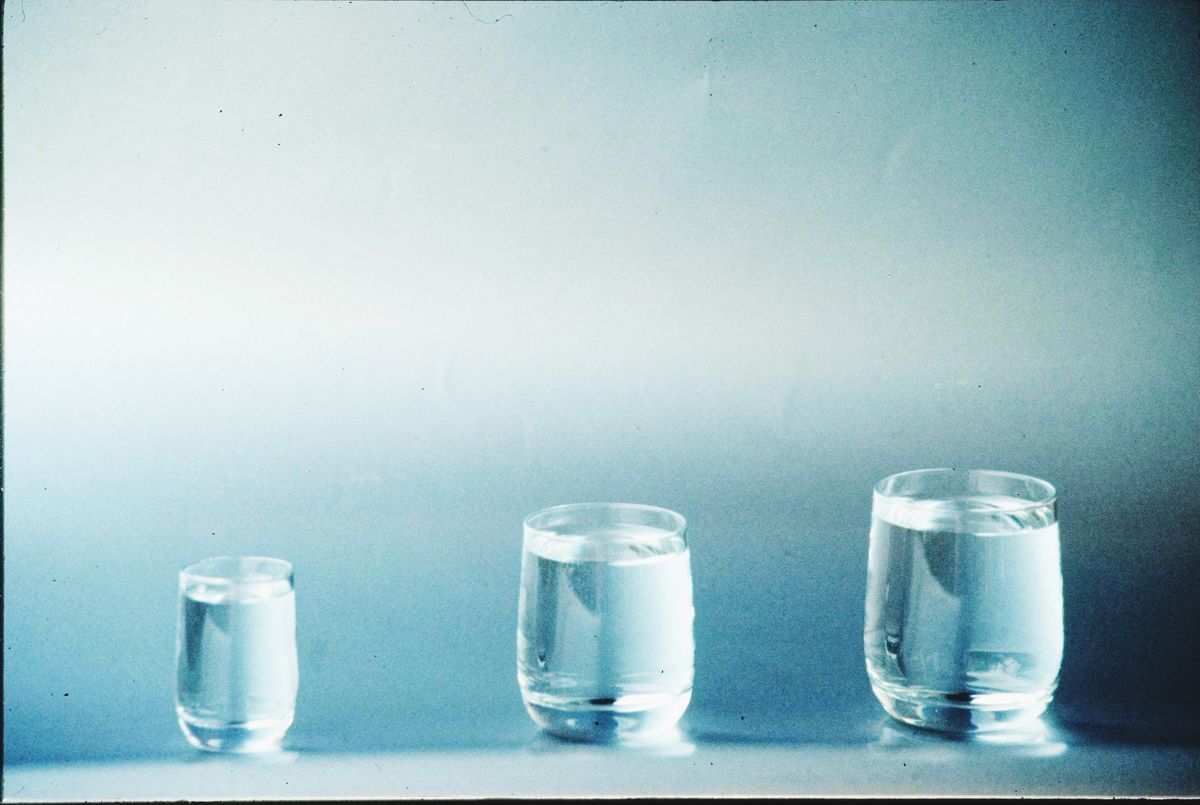
If softened water looks cloudy, one test answers it before you do anything else: fill a clear glass, set it down, and watch which way it clears. Bottom upward within a couple of minutes is dissolved air, and there is nothing to fix. Uniform haze that fades slowly or not at all means the water is carrying something, and that is where the real diagnosis starts.
A softener does not make water cloudy. Ion exchange swaps calcium and magnesium for sodium and changes nothing about clarity — the process is set out plainly in the EPA's WaterSense guidance on cation exchange water softeners, and turbidity is not on the list of things it affects. So when cloudiness appears alongside a softener, the question is what changed: the pressure, the media, or what is arriving at the inlet.
Why Softened Water Looks Cloudy: The Two-Minute Glass Test

Do this properly. It is the whole diagnosis.
- Use a clear, straight-sided glass — a pint glass is ideal, a tumbler with a pattern is not.
- Fill from a cold tap, running it for a few seconds first so you are sampling the supply rather than the standing water in the pipe.
- Set it down on a flat surface and do not touch it. Swirling or lifting the glass re-entrains bubbles and ruins the result.
- Watch the boundary. Photograph it at 30 seconds and again at 2 minutes if you want something to compare later.
| What you observe | Reading |
|---|---|
| A clear zone forms at the bottom and rises to the top, fully clear in 30–120 seconds | Dissolved air. Nothing to fix |
| The whole glass fades uniformly over several minutes, no rising boundary | Fine suspended particles. Resin fines or silt |
| Cloudiness persists, then a thin layer settles on the bottom after 5–10 minutes | Sediment. Heavier particles, usually from upstream |
| No change at all after 15 minutes | Dissolved or colloidal material. Not a softener problem — test the water |
| Clear in the glass but leaves a haze on the glass when dry | Not cloudiness at all — that is a deposit, see the last section |
Everything below assumes you have run this test. The order matters because the causes are wildly different in cost.
Cause 1: Dissolved Air — The Common One

Water under pressure holds more dissolved gas than water at atmospheric pressure. When it leaves the tap, the pressure drops and the excess comes out of solution as millions of bubbles far too small to see individually. Collectively they scatter light, and the water looks milky white.
This is the answer in the clear majority of cases, and it has a few characteristic circumstances:
- Cold weather. Colder water dissolves more gas, so the effect is strongest in winter and on mains that run cold.
- After any work on the plumbing. Air introduced during a repair, a filter change or a softener service takes days of normal use to work out of the system.
- Hot taps specifically. Heating drives gas out of solution, so hot water frequently looks milky when the cold does not. That is physics, not a fault.
- Aerators doing their job. A tap aerator deliberately entrains air. A new or recently cleaned aerator can noticeably increase the effect.
- Well systems. Pressure tanks are a chronic source, which is its own section below.
What to do: nothing, if it clears in the glass. Air causes no harm and treats nothing. If it bothers you aesthetically, run the tap for a few seconds before filling a glass, or fill a jug and leave it in the fridge, which lets the bubbles clear before it reaches the table.
Cause 2: Resin Fines After a Media Change
If the cloudiness started within days of a resin change or a new softener installation, this is almost certainly it.
A bed of fresh resin contains a proportion of broken beads and manufacturing dust. Commissioning should include a thorough backwash to flush that out, and often does not, or does not do enough. What remains passes into the service line for the first few days of use.
The signature:
- Started within a week of a media change or a new install.
- A faint haze rather than a milky white, sometimes with a slight amber sparkle in strong direct light.
- Fades uniformly in the glass rather than clearing bottom-upward.
- Aerators and shower filters collect fine amber grit within days.
What to do:
- Flush hard. Open two or three outside taps or a utility sink fully for ten minutes each. You want velocity, not duration — a trickle will not move fines.
- Run a manual backwash on the softener, twice if the manual allows it.
- Clean every aerator in the house and the washing machine and dishwasher inlet screens. Fines collect there and keep releasing for weeks if left.
- Give it a week of normal use.
If it has not cleared after a week, stop flushing and look at the distributor. Whole amber beads appearing in aerators, rather than fine dust, mean the upper screen or the lower distributor basket is damaged, cracked or missing — a real repair, and one that will also cause the bed to lose media steadily until it is fixed.
Cause 3: Sediment Passing Through the System
A softener is not a sediment filter. It removes dissolved hardness by ion exchange; it does not reliably remove suspended solids, and silt that arrives at its inlet largely leaves at its outlet.
The signature: cloudiness that persists and then settles as a fine layer in the bottom of the glass after five to ten minutes, often with a colour to it — grey, tan or rust.
Where it comes from:
- Municipal mains work or a hydrant flush. Disturbed mains release accumulated sediment. This is temporary and usually clears within a day. Check with the utility before spending money.
- A failing sediment prefilter. A cartridge left in past its life does not just stop filtering; a collapsed or channelled cartridge can release what it previously captured, all at once.
- A well drawing silt. Sand and silt from a well is a formation or screen problem, and it destroys softener valves and injectors over time. It needs a sediment filter ahead of the softener, sized for the particle range — not a cartridge chosen by guesswork.
- Old galvanised pipe shedding. Interior corrosion products release as flakes and grit, particularly after a pressure change.
- A water heater at end of life. If only the hot side is affected and the deposit is gritty, the heater is the likely source, which is the situation described in hard water sediment in a storage water heater.
What to do: identify the side first. Cold only, hot only, or both? Both means upstream of the heater. Hot only means the heater. Then check the prefilter — and if there is not one and you are on a well, that is the finding.
Cause 4: Air Drawn In at a Well Pressure Tank
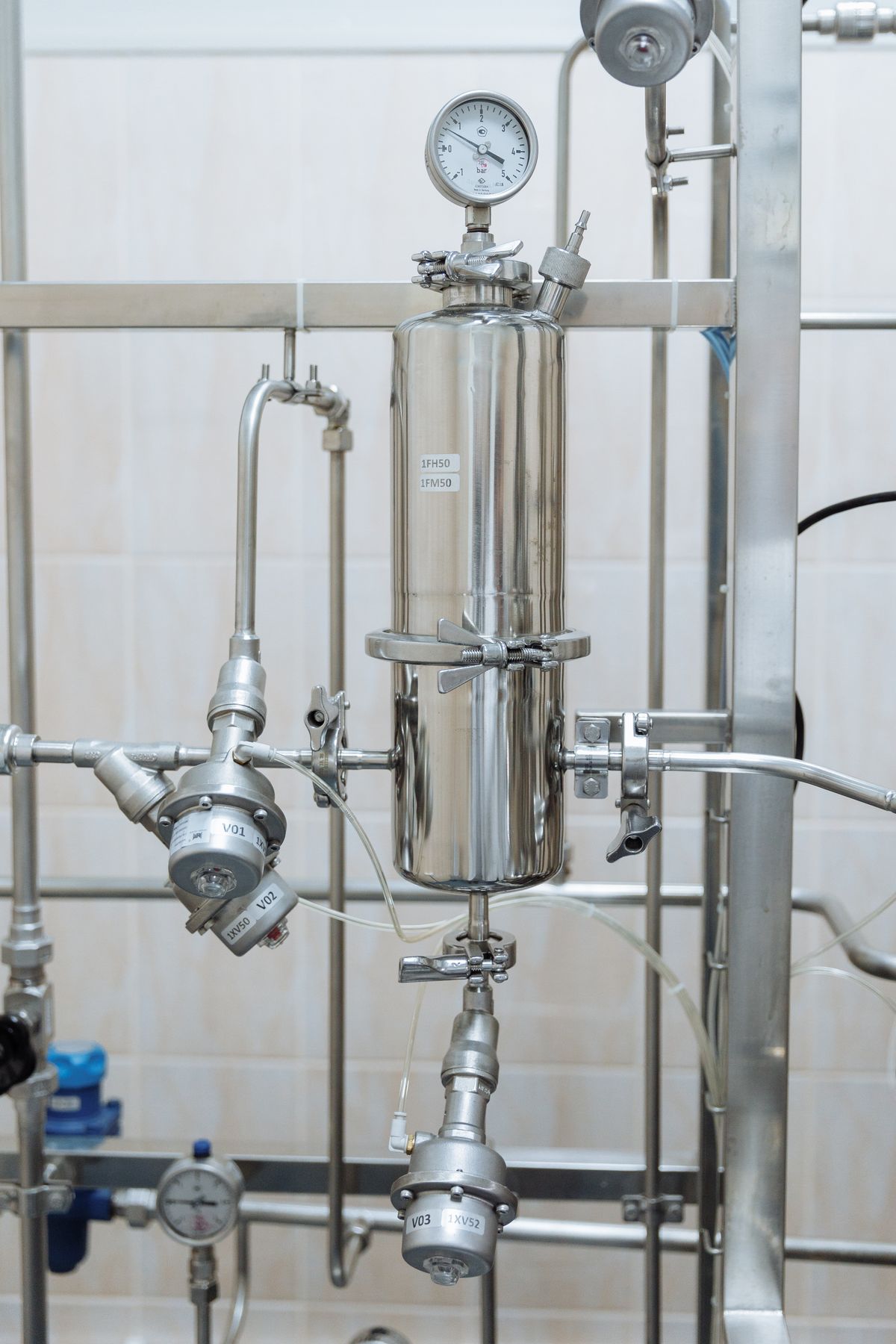
On private wells, persistent air is common enough to deserve its own section, because the fix is at the pressure tank rather than anywhere near the softener.
Causes, in order of frequency:
- A waterlogged pressure tank. The bladder has failed or the air charge has gone, so the tank cycles rapidly and the pump short-cycles. Air distribution through the system becomes erratic.
- A leak on the suction side. Any leak between the water and the pump inlet draws air rather than leaking water, because that section is under vacuum. Common on jet pumps and on old foot valves.
- A low water level in the well. A pump breaking suction at the end of a heavy draw pulls air in with the water. Often seasonal, and often paired with sediment.
- A worn snifter valve or bleeder on older galvanised tank systems, which is supposed to meter a controlled amount of air and instead meters far too much.
The tell that separates this from ordinary dissolved air: the cloudiness is worse right after the pump starts, you can hear the pump cycling more often than it used to, and the pressure gauge swings over a wider range than the pump's cut-in and cut-out settings should allow.
This is a pump-system repair. The softener is downstream of it and has no influence on it either way. The EPA's guidance on private drinking water wells covers testing and maintenance expectations for well systems more generally, and the seasonal variability side of well water is discussed in why is well water often hard.
What Cloudy Is Not
Three things get filed under "cloudy water" that are not cloudy water, and separating them saves a lot of wasted effort.
- A white film left on glasses after they dry. That is a deposit, not turbidity. The water in the glass was clear; something was dissolved in it and stayed behind when it evaporated. If a softener is fitted and the deposit persists, it is likely silica or detergent residue rather than hardness — why a hardness test reads zero but scale remains works through the residue identification.
- Cloudy glasses from the dishwasher. Usually etching or detergent film rather than anything in the water supply, and covered in cloudy glasses after dishwashing: etching or hard water.
- Grey flakes in the weeks after a softener is first installed. That is legacy scale releasing from inside the pipes as softened water slowly dissolves deposits laid down over years. It looks alarming, it is temporary, and it is a sign the system is working. Penn State Extension's overview of water softening is a useful neutral reference if an installer tells you otherwise.
Fix Order
- Run the glass test on cold water, set the glass down, and watch the boundary.
- Clears bottom-upward? Air. Stop here. Check the pressure tank only if you are on a well and it is persistent.
- Fades uniformly, and the softener was serviced recently? Resin fines. Flush hard, clean aerators, wait a week.
- Still hazy after a week? Look for whole beads in aerators — that is a distributor fault, not a flushing problem.
- Settles as a layer? Sediment. Check hot versus cold to place it, then check the prefilter and the utility.
- No change after 15 minutes? Get a laboratory test. Colloidal iron, tannins and turbidity from a well are all possibilities, and none of them are diagnosable by eye — a home test kit versus a certified laboratory test explains where the line is.
- If the softener is also failing to soften, work through why water is still hard after installing a softener first, because a bed shedding media and a bed not exchanging are often the same fault.
Most cloudy water is air, and most of the remainder is a flushing job after a media change. The cases that cost money are the ones where the glass never clears, and those are worth a test rather than a part.
Frequently Asked Questions
Why is my softened water cloudy?
In most cases it is dissolved air coming out of solution as the water leaves the pressure of the pipes — millions of microscopic bubbles that scatter light and make the water look milky. It clears on its own within a minute or two. The alternatives are resin fines after a media change, sediment passing through the system, or precipitate carried from a well. The glass test separates them: set a full glass down and watch which way it clears. Bottom upward is air; uniform fading or settled particles is not.
Is cloudy water from a water softener safe to drink?
Cloudiness caused by air is harmless — it is the same water with bubbles in it, and it clears in the glass. Cloudiness from resin fines immediately after a media change is not a health concern either, though you should flush the system rather than drink it, and it should resolve within a few days. Persistent cloudiness that does not clear, has an odour, or arrived with a change in the source water is worth a laboratory test rather than a guess, because those are the cases where cloudiness is a symptom of something the softener is not treating.
How do I tell whether cloudy water is air or particles?
Fill a clear glass with cold water, set it on a flat surface and do not touch it. Watch the boundary between cloudy and clear. If a clear zone forms at the bottom and rises to the top over 30 to 120 seconds, the cloudiness was air — the bubbles are floating up and popping. If the glass fades uniformly, or if a fine layer settles at the bottom after several minutes, you have particles. A photograph at 30 seconds and at 2 minutes makes the difference obvious.
Why is my water cloudy after the water softener was serviced?
A media change disturbs the bed and releases fine broken beads and manufacturing dust, which pass into the service line for the first few days. It usually shows as a faint haze, sometimes with a slight amber sparkle in direct light. Run several outside taps hard for ten minutes each, clean every aerator in the house, and give it a few days of normal use. If it has not cleared after a week, the upper distributor screen may be damaged or missing, which lets whole beads through and is a different repair.
Why is only my hot water cloudy?
Because heating water drives dissolved gases out of solution. Cold water arriving under pressure holds more air than hot water can, so the bubbles appear as the water warms — which is why hot taps often look milky when cold taps do not. That is normal and needs nothing done. The exception is a water heater at the end of its life shedding sediment, which produces a cloudiness that does not clear in the glass and often comes with grit in the aerators. That is covered by hard water sediment in a water heater.
Can a water softener cause cloudy water permanently?
A correctly working softener does not cause lasting cloudiness. Ion exchange removes calcium and magnesium and adds a small amount of sodium; nothing in that process makes water hazy. Persistent cloudiness traceable to the softener points at a specific fault — a damaged distributor releasing resin, a bed so fouled that it is shedding material, or a sediment problem upstream that the softener was never meant to handle. Each of those is a repair, not a characteristic of softened water.