
Pretreatment Order: Sediment and Iron Filters Before a Softener
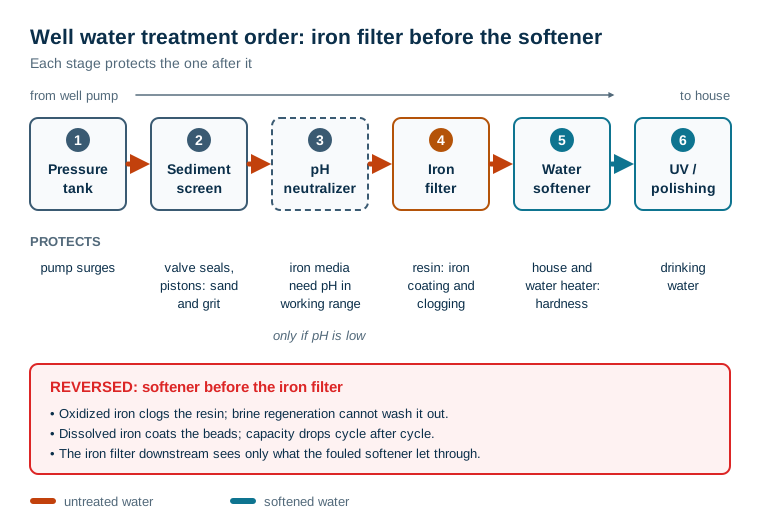
The iron filter goes before the water softener, and sediment control goes before both. The order is: pressure tank, coarse sediment screen, pH neutralizer if needed, iron filter, then softener. If you reverse it, the resin meets the iron first and fouls, and the iron filter downstream ends up treating water the softener has already been damaged by.
In practice, sediment and iron are one decision. The same wells tend to produce both. Both need to be out of the water before the resin. And both usually end up as backwashing tanks that share one pump, which leads to the scheduling problem at the end of this guide.
Iron Filter Before Water Softener: The Order and What Each Stage Protects
| Position | Stage | What it protects |
|---|---|---|
| 1 | Pressure tank | Every stage after it, from pump surges |
| 2 | Coarse sediment screen or spin-down | Valve seals and pistons in every tank after it, from sand and grit |
| 3 | pH neutralizer (only if pH is low) | The iron filter, since many iron media need pH in a working range, and the plumbing |
| 4 | Iron, manganese or sulfide filter | The softener's resin, from iron coating and oxidized-iron clogging |
| 5 | Water softener | The house and water heater, from hardness |
| 6 | UV or point-of-use polishing | Drinking water |
Manufacturers put it the same way. Whirlpool's softener installation manual says "any other installed water conditioning equipment should be installed between the water inlet and water softener." Its installation diagram shows the sediment filter ahead of the softener and adds that the softener "will not remove sediment." Where the softener sits relative to the pressure tank and water heater is laid out in where to install a softener on a well system.
Why reversing it fails both ways. If the softener comes first:
- Oxidized iron hits the resin and clogs it. Brine regeneration can't wash it out. Penn State Extension's water softening fact sheet states that "red-oxidized iron ... will clog the resin," and recommends that "filtration prior to softening" ensures oxidized iron is not processed by the softener.
- Dissolved iron takes up exchange sites and slowly coats the beads. Capacity drops cycle after cycle. See water softener resin fouling.
- The iron filter downstream now sees only what the fouled softener let through. You've paid for a filter that isn't protecting anything.
Thresholds: When Each Stage Becomes Necessary
This is the table to check your water test against. Each row says what level triggers the stage and where that number comes from. Where there is no regulatory threshold, the table says so.
| Measured | Level | Stage it triggers | Source |
|---|---|---|---|
| Iron | Below 0.3 mg/L | None for staining. EPA's secondary (aesthetic) guideline | Penn State Extension |
| Iron, dissolved | Up to your softener's rated limit (one manual rates 2 ppm ferrous) | Softener may carry it, with sizing compensation | Manufacturer manual |
| Iron, dissolved | Below 5 mg/L with pH above 6.7 | Upper end of what softening is suited for | Penn State Extension |
| Iron + manganese | About 3 to 10 mg/L | Oxidizing filter (such as manganese greensand) before the softener | Penn State Extension |
| Iron | Above 10 mg/L | Oxidation (chlorine, air) followed by filtration before the softener | Penn State Extension |
| Iron, oxidized | Any significant amount | Filter before the softener, whatever the total | Penn State Extension |
| Manganese | Above 0.05 mg/L | Treat with the iron stage. The health advisory is 0.3 mg/L | Penn State Extension |
| pH | Below 6.8 | Neutralizer ahead of a Birm-type iron filter | Clack Birm data sheet |
| Hydrogen sulfide | Any present | Remove before a Birm-type iron filter | Clack Birm data sheet |
| Free chlorine (if chlorinating) | At or above 0.5 ppm | Too high for Birm. Remove with carbon before Birm or resin | Clack Birm data sheet |
| Sediment | No regulatory number | Any visible sand or grit, or a well that has pumped sand before: fit a screen. Manufacturers recommend a filter ahead on rural supplies | Hellenbrand manual; Whirlpool manual |
The iron bands come from Penn State Extension's guidance on iron and manganese in private water systems. The Birm conditions come from Clack's Birm media data sheet, which lists a pH range of 6.8 to 9.0, free chlorine under 0.5 ppm, hydrogen sulfide removed first, and dissolved oxygen at least 15% of the iron content. Other iron media (greensand, catalytic carbon, air-injection filters) have their own operating envelopes, so check the data sheet for the media you're buying.
Two notes on reading your result against this table:
- "Dissolved" and "oxidized" are separate numbers. A single "iron: 1.5 mg/L" doesn't tell you which row you're in. Ask the lab for filtered and unfiltered iron on the same sample. Dissolved vs oxidized iron in well water explains the free glass test and the sampling trap.
- Your softener's rating is the real ceiling, not the extension band. If the manual says 2 ppm and your well has 4, you need the iron filter even though 4 is under Penn State's 5 mg/L. What a softener can realistically take is covered in can a water softener remove iron?
Sediment First, but Not Too Fine
Sediment control goes first because sand is abrasive. It scores pistons and seals in every control valve after it. The Hellenbrand ProMate manual warns that on rural supplies unfiltered sand and sediment "may plug up the water softener restricting the flow through the resin bed," which "often requires rebedding." It recommends "an in-line filter system ahead of a water softener."
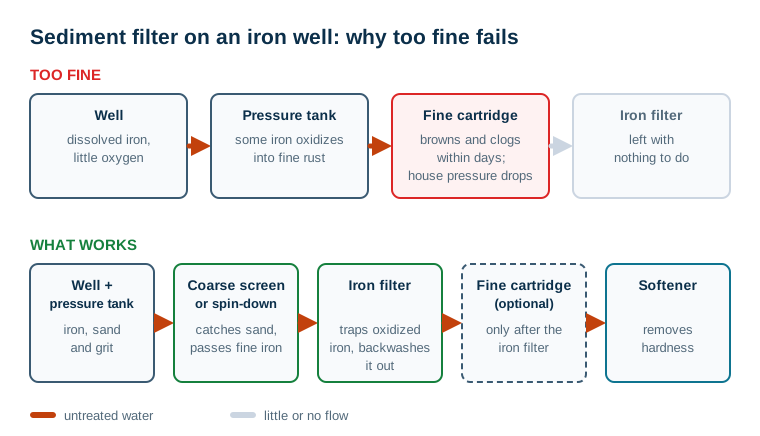
The trap is choosing a filter that is too fine. Here's how it plays out on an iron well:
- Water leaves the well with dissolved iron and little oxygen.
- In the pressure tank and piping, some of that iron starts to oxidize into fine rust particles.
- A fine cartridge catches those particles, so it browns and clogs within days, and pressure drops through the house.
- The iron filter behind it, which is built to trap oxidized iron and backwash it out, is left with nothing to do.
What works instead:
- For sand and grit: a coarse screen or spin-down filter that catches abrasive particles and leaves fine iron for the iron filter.
- For heavy sediment: a backwashing sediment filter tank, which cleans itself the way the iron filter does. It adds a third backwashing unit to the scheduling problem below, though.
- For fine polishing: if you want a fine cartridge, put it after the iron filter, where it only catches what the filter missed.
How to pick the micron rating and when to change the cartridge are covered in when to replace a sediment prefilter before a softener.
The Backwash-Scheduling Conflict Between Two Units
This is the problem that trips up most DIY installs. It shows up weeks later as rusty water or a softener that fouls anyway, and nobody connects it to the clock.
Why it happens. Many controls leave the factory set to regenerate at the same time. The Hellenbrand manual states "the factory setting time is 2:00 a.m." The Whirlpool manual's setup screen also shows 2:00 AM as the default. Install an iron filter and a softener on the same day, leave both at their defaults, and they start regenerating together.
Why it matters: flow. Iron filters need a strong backwash to lift and clean a heavy media bed. The Clack Birm data sheet specifies a backwash rate of 10 to 12 gpm per square foot of bed area. For common residential tank sizes, that works out to:
| Iron filter tank diameter | Bed area | Backwash needed (Birm) |
|---|---|---|
| 10 inch | about 0.55 sq ft | about 5.5 to 6.5 gpm |
| 12 inch | about 0.79 sq ft | about 7.9 to 9.4 gpm |
| 13 inch | about 0.92 sq ft | about 9.2 to 11.1 gpm |
The softener's drain flow is added on top of that. The Whirlpool manual lists a maximum drain flow of about 2 gpm for its units. So a 12-inch iron filter and a softener regenerating together can ask the well for 10 gpm or more, before anyone flushes a toilet. If your pump makes less than that, both backwashes run weak. Grit and iron stay in the iron filter's bed, the softener's bed doesn't lift properly, and both slowly foul.
Why it matters: raw water. Many control valves pass untreated water to the house while they regenerate, so check what your valve does in its manual. If the iron filter is backwashing and someone runs water, iron-laden raw water flows straight into the softener. If the softener is regenerating at the same time, its brine and rinse steps are using unfiltered water as well.
The fix: stagger them, iron filter first.
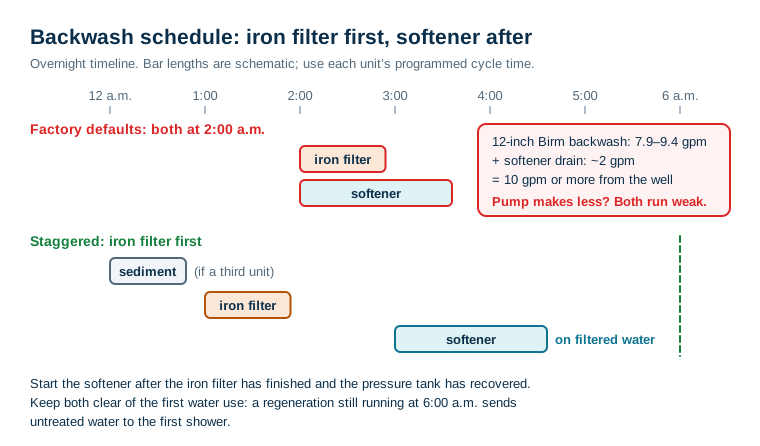
- Find each unit's total regeneration time from its programmed cycle steps. Iron filters are often shorter, softeners longer.
- Set the iron filter earlier, for example 1:00 a.m.
- Set the softener to start after the iron filter has finished and the pressure tank has recovered, for example 3:00 a.m. The softener then regenerates on freshly filtered water.
- Keep both clear of the household's first water use in the morning. A regeneration still running at 6:00 a.m. sends untreated water to the first shower.
- If a backwashing sediment filter is a third unit, put it first (midnight, say), then the iron filter, then the softener.
The key-press sequences for changing regeneration time on common controls are in how to manually regenerate a water softener. Check the clock on each unit after any power cut, because a control that resets to its default puts you back at 2:00 a.m. on both.
Measure Your Pump Before Choosing the Iron Filter Size
The backwash table above explains why the iron filter should be chosen based on the pump, not only on the water test. Here's a quick check:
- Run water until the pump starts, so you're measuring the pump and not the tank.
- Open the tank-tee drain or the nearest hose bib fully and time how long it takes to fill a 5-gallon bucket.
- Divide 300 by the seconds. That's gallons per minute. (20 seconds = 15 gpm. 40 seconds = 7.5 gpm.)
Compare that number with the iron filter's backwash requirement. If the pump can't supply it, a larger tank won't backwash properly. A smaller-diameter tank, a different media with a lower backwash rate, or a non-backwashing approach is a better fit. How to choose between an iron filter and a softener in the first place, or decide you need both, is in water softener vs iron filter. If you do need both, buying the iron filter and softener as a matched pair saves sizing them separately, provided each half still passes the pump and water-test checks above.
What Pretreatment Cannot Do
- It doesn't make the water safe. Sediment and iron filters are aesthetic and equipment-protection stages. Bacteria, nitrate and other health contaminants need their own tests and treatment.
- It doesn't fix iron bacteria. Slimy, rust-coloured growth in toilet tanks means the well needs disinfection. A filter just becomes something else for the bacteria to coat.
- It doesn't rescue resin that's already fouled. If the softener ran for a year without pretreatment, fitting the iron filter stops things getting worse. Recovering the bed is a separate job. See resin and iron cleaners.
- It doesn't stay right forever. Well iron levels change. Retest every year and check the table against the new numbers.
To sum up: sediment screen first, pH correction if needed, iron filter, then the softener. Stagger their regeneration times so they never backwash together. That order, and a pump that can supply the backwash, is what keeps a softener on a well working for its full life. Hub guide for the full well-water series: can a water softener be used on private well water?
Frequently Asked Questions
Does an iron filter go before or after a water softener?
Before. The iron filter removes iron so that the softener's resin never has to handle it. With the order reversed, the softener meets the iron first. Any oxidized iron clogs the resin, dissolved iron uses up capacity, and whatever iron the softener doesn't catch reaches the filter anyway. Manufacturer installation instructions put all other conditioning equipment between the water inlet and the softener.
Do I need a sediment filter before an iron filter?
Usually a coarse one, if the well produces sand or grit. It stops abrasive particles scoring the iron filter's and softener's valves. Avoid a very fine cartridge ahead of an oxidizing iron filter. If iron oxidizes in the pressure tank, a fine cartridge catches it and clogs within days, and backwashing iron filters are designed to trap that iron themselves.
Can an iron filter and water softener regenerate at the same time?
They can, but they shouldn't. Many controls leave the factory set to regenerate at 2:00 a.m., so two new units often clash. An iron filter backwashes at a high rate, and together the two can ask for more water than the well pump makes, which weakens both backwashes. Many valves also send untreated water to service during regeneration. Schedule the iron filter first and the softener an hour or two after it has finished.
At what iron level do I need an iron filter before my softener?
Penn State Extension places softening within range for dissolved iron below about 5 mg/L at pH above 6.7. Many individual softeners are rated lower, and one consumer manual rates its unit for 2 ppm of ferrous iron. Any iron that is already oxidized, visible as rusty water at the tap, needs filtering before the softener whatever the concentration. Above your softener's rated limit, or with any oxidized iron present, put an iron filter first.
What is the correct order for well water filters?
Pressure tank first, then a coarse sediment screen, then a pH neutralizer if the water is acidic, then the iron, manganese or sulfide filter, then the softener, and finally UV or drinking-water polishing if needed. Each stage protects the next. Iron filters need pH in their working range and sulfide removed, and the softener needs iron and sediment removed.
