
Portable Exchange Tank vs Installed Softener
A portable exchange water softener is a rented tank of softening resin that a service company swaps for a freshly regenerated one on a schedule. It needs no drain, no outlet, no salt and no permanent plumbing, which makes it the practical answer for many renters. The catch is cost: for most households of two or more on moderately hard water, exchange service costs more than owning a softener within about three years.
The rest of this page works out exactly where that break-even sits for your household, and the situations where exchange service stays the right choice however the numbers fall.
How Exchange Tank Service Works
The equipment in your home is simpler than an installed softener, because everything complicated happens somewhere else.
- One or two resin tanks sit near where the water line enters, or at the water heater if only the hot side is softened. The resin inside is the same cation-exchange resin used in any softener.
- A connection point, usually a bypass valve or a pair of flexible hoses on a tee, links the tanks into the line. It is small, and it comes out when you leave.
- No control valve, no brine tank, no drain line and no power. The tanks simply soften until the resin is full of hardness.
- Regeneration happens at the company's plant. The technician takes your exhausted tanks away and leaves fresh ones. The brine is rinsed and handled centrally rather than going down your drain.
That last point matters more than it seems. Ion exchange cannot avoid brine. The EPA's overview of cation exchange softeners notes that regeneration flushes the captured ions out and consumes salt and water. Exchange service does not remove that step; it moves it off your property.
What the Service Really Costs Per 1,000 Grains
Most quotes arrive as a monthly or per-swap price, which hides the one number that lets you compare it with ownership: the cost to remove 1,000 grains of hardness.
Here are the assumptions behind every figure on this page. They are typical, not universal, so replace each with your own quote.
| Assumption | Value used |
|---|---|
| Usable capacity per exchange tank | 24,000 grains |
| Exchange price | $30 per tank swap, plus $10 a month rental |
| Indoor water use | 70 gallons per person per day |
| Installed softener | $1,800 including installation |
| Owned softener salt efficiency | 3,000 grains removed per pound of salt |
| Salt price | $0.20 per pound |
| Owned softener upkeep | $50 a year (power, regeneration water, minor parts) |
On those numbers, exchange service costs about $1.25 per 1,000 grains for the swap alone. An owned softener's salt costs about $0.07 per 1,000 grains. The exchange price is roughly eighteen times higher on every grain you remove. What you buy for the difference is having no equipment to own, no drain and no salt to carry.
Because the gap is per grain, it grows with the grains you use. That is why hardness and household size, not the monthly fee, decide the answer.
Portable Exchange Water Softener Break-Even Table
Break-even is the year when cumulative exchange spending passes the cost of buying, installing and running a softener. The formula is simple:
Break-even years = installed cost ÷ (exchange cost per year − owned cost per year)
Grains per year = people × 70 gallons × hardness (gpg) × 365. Swaps per year = grains per year ÷ 24,000.
| Household | 5 gpg | 10 gpg | 15 gpg | 25 gpg |
|---|---|---|---|---|
| 1 person | 8.1 years | 4.8 years | 3.4 years | 2.2 years |
| 2 people | 4.8 years | 2.7 years | 1.8 years | 1.1 years |
| 4 people | 2.7 years | 1.4 years | 1.0 year | 0.6 years |
| 6 people | 1.8 years | 1.0 year | 0.6 years | 0.4 years |
Read your row and column. If you expect to stay longer than the number in that cell, owning is cheaper. If you expect to leave sooner, exchange is.
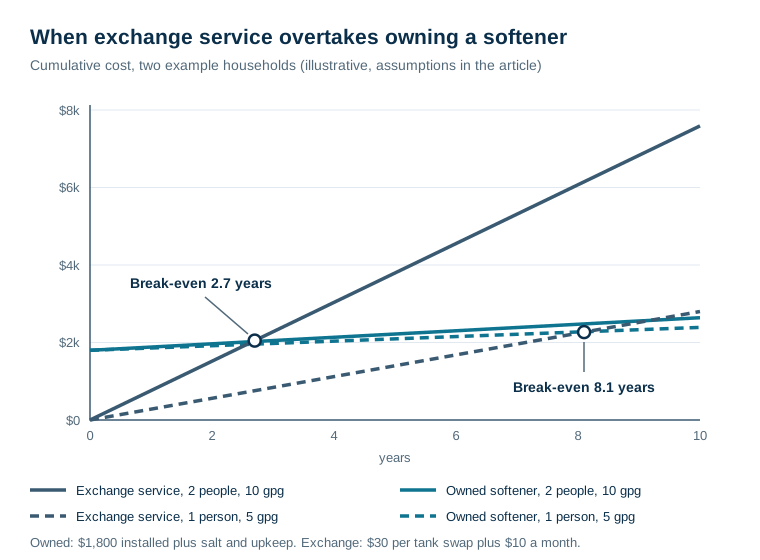
Three things in the table deserve a closer look:
- The typical rental household sits in the 1.4 to 4.8 year band. Two to four people on 5 to 10 gpg water. That is where the "about three years" rule of thumb comes from.
- The right-hand columns are more expensive than they look. Four people on 15 gpg water would use about 64 tank swaps a year on a single 24,000-grain tank. No company swaps every six days; they fit two tanks or larger ones and price accordingly. The per-grain cost does not fall much, so the break-even stays short.
- Only one cell passes six years. A single person on fairly soft water. If that is you, exchange service is a reasonable long-term choice, and the more useful question is whether your hardness justifies treatment at all.
Ways to Cut the Exchange Bill
If exchange service is your only route, the aim is fewer grains through the tanks.
- Soften the hot side only. Connecting at the water heater inlet protects the appliance that suffers most from scale and skips toilets, outdoor taps and cold drinking water. Hot water is a minority of indoor use, so the swap interval stretches considerably.
- Keep outdoor taps and irrigation off the loop. Softening lawn water is a pure waste of grains.
- Ask for a larger tank rather than more frequent swaps. Some companies price a 1.5 or 2 cubic foot tank at less per grain than two small ones.
- Check the hardness figure they sized to. A company that assumes 20 gpg when you test at 12 will schedule swaps too often. Test it yourself and give them your number.
When Exchange Remains the Only Option
The break-even table assumes you could buy and install a softener. Sometimes you cannot, and then the cost comparison stops being the deciding factor.
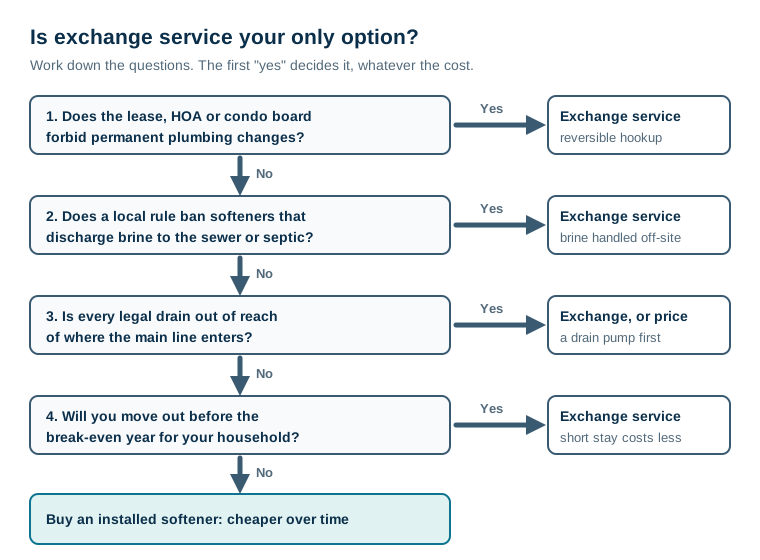
The lease or building rules forbid permanent plumbing changes. Common in apartments and condos. An exchange hookup is small and reversible, which makes it far easier for a landlord to approve than cutting in a softener with a drain. Our guide to water softeners in rental properties covers who pays, who owns and what to put in writing.
Local rules ban on-site brine discharge. A handful of places restrict self-regenerating softeners to protect rivers, recycled water or groundwater from chloride. California's SB 475, the law behind the Santa Clarita Valley removal program, defines the targeted appliances as those that "discharge brine into the community sewer system". An exchange tank regenerated off-site does not.
There is no legal drain within reach. A softener's regeneration water has to go somewhere lawful, with an air gap. If the only drain is two floors away or the unit would sit in a slab-floored closet, exchange service avoids the problem entirely. Before settling on it, read our guide to installing a softener with no drain or outlet nearby. A condensate-style drain pump or a non-electric valve sometimes makes an owned unit possible after all.
You will leave before break-even. A 12-month contract in a two-person household on 10 gpg water costs less than buying. The move itself also costs money if you own: a softener needs uninstalling, draining and reinstalling, and the new home may not suit it.
One case exchange service does not cover: an RV or camper. A softener that moves with you is a different product, a small tank you regenerate yourself with table salt and a hose. Portable softeners for RVs and small spaces compares the options by gallons between regenerations, and the On The Go review turns the best-known one into a trip planner.
What Exchange Service Does Not Fix
A tank of softening resin is still a softener, with a softener's limits.
- It removes calcium and magnesium only. Chlorine taste, lead, bacteria, nitrate and arsenic pass straight through. Those need a filter or a separate treatment method.
- Iron and manganese foul the resin. Small amounts of dissolved iron are tolerated. More than that stains the resin and shortens the tank's useful run, and the company may charge more or decline the account until it is treated upstream.
- Hardness returns between swaps if the schedule slips. Once the resin is exhausted, hard water passes through unchanged. A late swap shows up as spotting on glasses before anything else does, so a hardness test strip every few weeks is a cheap way to confirm the schedule matches your use.
- You do not control the quality of regeneration. An owned softener is set up by you or your installer. With exchange tanks, how thoroughly the resin was regenerated and rinsed is up to the plant.
Exchange, Rent or Buy: Choosing the Model
Exchange service is one of three ways to pay for softening. Renting an installed softener, where a company owns a conventional unit in your home and charges monthly, sits between the two. It needs the drain and outlet but spares you the purchase price. The trade-offs are laid out in renting vs owning a water softener.
| Exchange tanks | Rented installed softener | Owned softener | |
|---|---|---|---|
| Needs a drain | No | Yes | Yes |
| Needs an outlet | No | Usually | Usually (non-electric models exist) |
| Salt handling at home | None | You add salt, or the service does | You add salt |
| Upfront cost | Low | Low | High |
| Cost per 1,000 grains | Highest | Middle | Lowest |
| Moves with you | Yes, cancel and re-sign | Rarely | Possible, with work |
| Best for | Renters, bans, short stays | Owners unsure about staying | Owners staying past break-even |
What to Do Next
- Test your hardness and count the people in the house. That puts you in one cell of the break-even table.
- Get two exchange quotes and rerun the formula with the real per-swap price and tank capacity. Ask each company what hardness they sized the schedule to.
- Check the four blockers in the decision flow. If any one applies, exchange is your answer and the goal becomes minimising grains through the tanks.
- If none apply and you are staying past break-even, price an installed softener. The saving compounds every year after the crossover.
Frequently Asked Questions
How does a portable exchange water softener work?
A service company installs one or two tanks of softening resin on your water line using a bypass or flexible hose connection. When the resin is exhausted, a technician swaps the tanks for freshly regenerated ones and takes the used tanks back to a central plant, where the regeneration and brine handling happen. You get soft water without a brine tank, a drain line, salt or electricity at home.
How often do exchange softener tanks need to be swapped?
It depends on how many grains of hardness you use, not on the calendar. Multiply people by daily water use by hardness in grains per gallon to get grains per day, then divide the tank's usable capacity by that number. A 24,000-grain tank lasts about ten weeks for one person on 5 gpg water but under three weeks for two people on 10 gpg. Very hard water or larger households usually need two tanks or larger ones.
Is a portable exchange softener cheaper than buying one?
Only for small households, soft-to-moderate water, or short stays. Using the assumptions in this article, one person on 5 gpg water takes about eight years to reach break-even, but two people on 10 gpg water reach it in under three years and a family of four in under a year and a half. Get real quotes and rerun the arithmetic with your own numbers.
Can a renter get an exchange tank softener installed?
Often, yes, because the tanks connect without a drain or electrical work and remove cleanly when you move. You still need the landlord's written permission for any connection to the water line, and the lease may specify who pays for water treatment. Get the permission and the connection method in writing before the service is booked.
Do exchange tanks work in areas where water softeners are banned?
In some areas, yes. California's SB 475, which enabled the Santa Clarita Valley removal program, targeted self-regenerating softeners that discharge brine into the community sewer. Exchange tanks regenerate off-site, so they fall outside that definition. Check your own local ordinance before assuming the same applies.
Does an exchange softener remove iron or other contaminants?
It is the same ion-exchange resin as an installed softener, so it removes calcium and magnesium and can tolerate small amounts of dissolved iron. It is not a filter: it does not treat chlorine, bacteria, lead, arsenic or nitrate. Iron above a low level fouls the resin, and the service company may refuse the account or charge more until it is treated.
