
Water Softeners in Mobile, Manufactured and Tiny Homes
A water softener for a mobile home works, but the choice is shaped by five constraints a basement house does not have. A full brine tank puts a lot of weight on a small area of a light floor. The 3/4-inch supply usually branches under the floor before it reaches any closet. There is rarely a floor drain. Anything under the skirting can freeze. And space is tight. A compact softener in the utility closet, draining to the washer standpipe, is the usual answer. A full-size unit is rarely needed.
The same limits apply to manufactured homes, modular homes set on a chassis, and many tiny homes. This page takes each constraint in the order you will run into it.
Constraint 1: Floor Loading of a Full Brine Tank
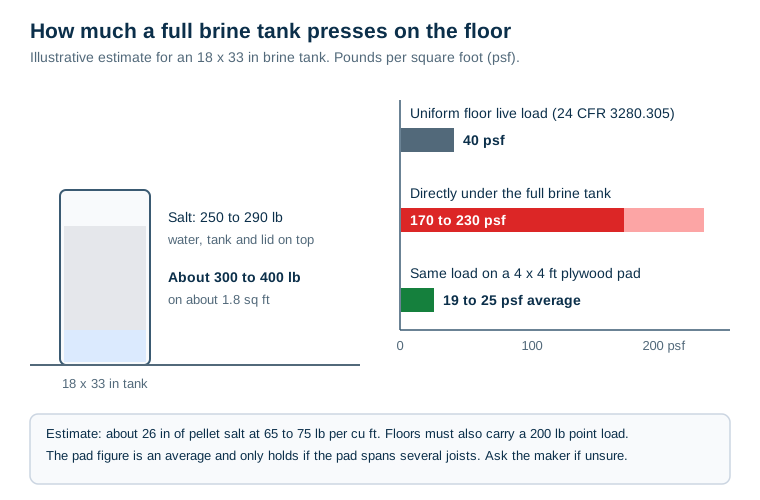
Manufactured home floors are built to a federal standard, not to a site-built house's framing. Under 24 CFR 3280.305, floors must carry "a minimum uniform live load of 40 lb/ft²." Separately, they must support "a 200-pound concentrated load on a one-inch diameter disc" with limited deflection.
Now compare a softener. The figures below are this site's estimate, not a manufacturer's number.
- An 18 x 33 inch brine tank, a common size, covers about 1.8 square feet.
- Filled with pellet salt to about 26 inches, it holds roughly 3.8 cubic feet. At about 65 to 75 pounds per cubic foot, that is 250 to 290 pounds of salt.
- Add the brine water, the tank and the lid, and the total is roughly 300 to 400 pounds.
- That works out to about 170 to 230 pounds per square foot directly under the tank, several times the uniform design load. The media tank next to it adds more weight on an even smaller base.
A refrigerator also weighs 300 pounds or more, and floors carry refrigerators. So the answer is not that a softener cannot go in. The answer is to put it where the floor is strongest and to spread the load.
How to reduce the risk
- Place the tanks near an exterior wall or over the line of the steel chassis beams, where the floor joists have the most support. Avoid mid-span spots in the middle of a room.
- Set both tanks on a pad of 3/4-inch plywood that spans several joists, so the weight is shared across them.
- Keep the salt lower. Filling the brine tank only halfway roughly halves the salt weight. You refill more often, but the floor carries far less.
- Choose a smaller unit. A cabinet softener stores less salt than a two-tank unit with an 18 x 40 inch brine tank.
- Protect the floor from leaks. Many older manufactured homes have particleboard decking, which swells and loses strength when wet. Use a drip pan under the tanks, and check the brine tank overflow and drain connections every time you add salt.
If the floor already feels soft, or you are unsure how it is framed, ask the home's manufacturer or a structural professional before loading it. A sagging floor under a leaking softener is much harder to fix than a missed installation.
Constraint 2: The Supply Branches Under the Floor
Federal standards require each manufactured home to have "a 3/4 inch threaded inlet connection" under 24 CFR 3280.609. The same section sizes the branches inside the home by fixture count, down to 1/2-inch or smaller lines for one or two fixtures. It also says homes are designed for "an inlet water pressure of 80 psi" and recommends a pressure-reducing valve where local pressure is higher.
In practice, that means three things for a softener.
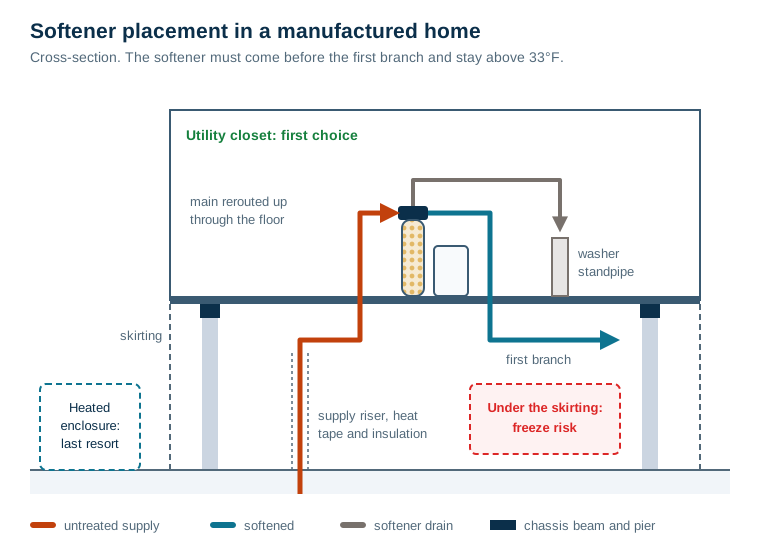
- The softener must come before the first branch. In many homes, the supply rises through the floor near the water heater and splits immediately, or it splits under the floor before rising anywhere. If the first branch is under the floor, the main has to be rerouted up into the utility closet, through the softener and back down. That is the single biggest labor item in most mobile home installations.
- A 3/4-inch supply does not call for a big softener. A softener with 1-inch ports on a 3/4-inch line is fine. The house line limits the flow, not the softener. What matters is choosing a unit whose pressure drop at your flow is modest, because manufactured homes often run at modest pressure to begin with.
- Check what the pipe is made of before you cut. Homes built from the late 1970s to the mid-1990s often have gray polybutylene piping. Connecting to it needs the right fittings, and many plumbers will replace the section at the softener rather than join to old polybutylene.
Constraint 3: No Floor Drain
Few manufactured homes have a floor drain. The softener's backwash and rinse water has to go somewhere approved, and there are three realistic options.
- The washer standpipe. This is the most common choice, because the laundry is often in the same utility room as the water heater. The drain line is secured above the standpipe with an air gap, and regeneration is timed so the washer is not running.
- A laundry sink, if the home has one, with the tube clipped above the rim.
- A drain pump that lifts the water to a drain elsewhere. It must be rated above the softener's drain flow, which rules out a small condensate pump.
Two lines that already leave through the floor are not softener drains: the water heater's temperature and pressure relief line and the drip pan drain. Both exist to discharge in an emergency and must stay open for that. All the drain options, including pump sizing, are compared in installing a softener without a drain or outlet nearby. Which drain points are acceptable, and why, is covered in where a water softener can drain.
The brine tank overflow is a gravity line. It can end at the standpipe only if the standpipe opening is lower than the overflow fitting.
Constraint 4: Freezing Under the Skirting
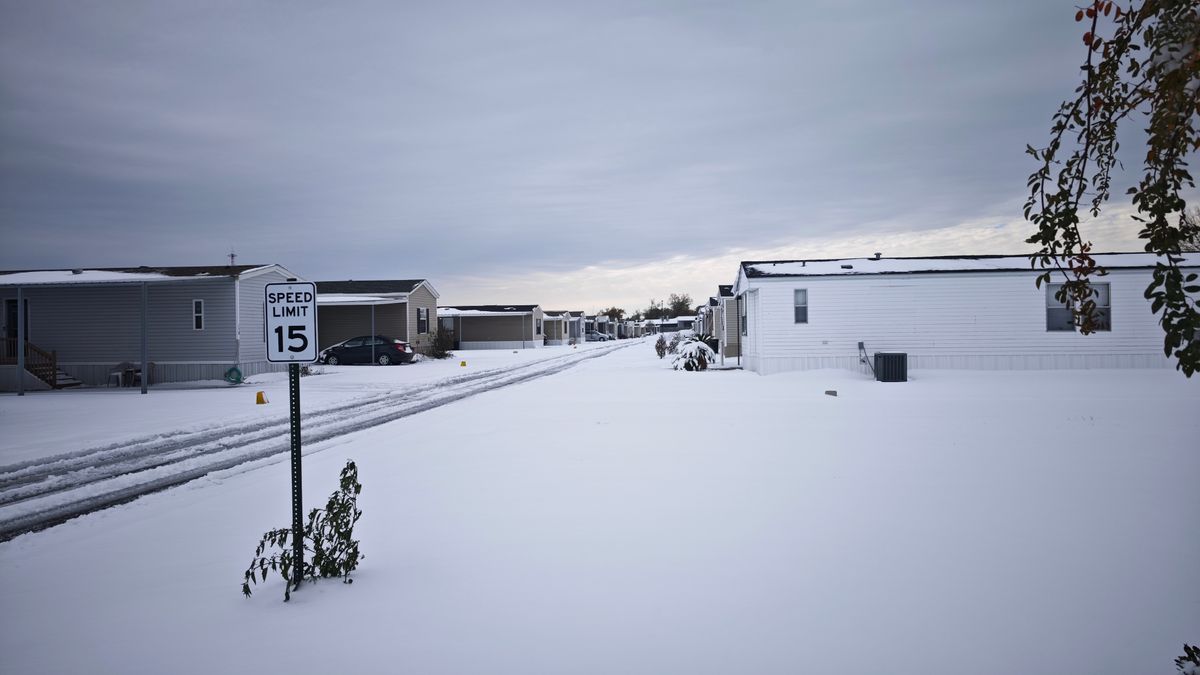
The space inside the skirting is sheltered but not heated. The federal standard in 24 CFR 3280.603 requires that "all piping and fixtures subject to freezing temperatures shall be insulated or protected to prevent freezing." It also says any heat tape used must be listed for that purpose. That is why the supply riser under most homes is wrapped in heat tape and insulation.
A softener placed under the home would need the same protection, and more of it. The Water-Right Impression Plus installation manual says not to locate the unit where it "or its connections (including the drain and overflow lines) will ever be subjected to temperatures under 33°F." Heat tape can keep a pipe from freezing. It cannot keep a brine tank, a valve body and a drain line above 33°F.
Where to put it, in order of preference:
- Inside the living space, in the utility or water heater closet, with the main rerouted up to it.
- In an exterior-access water heater closet, which many manufactured homes have. These can get much colder than the house, so insulate the door and walls and check the temperature on the coldest nights.
- In an insulated, heated enclosure outside, at the riser, only if there is no room inside. You still need a drain the discharge can reach without freezing.
If a softener does freeze, the recovery steps are in what to do if a water softener freezes.
Constraint 5: Sizing a Water Softener for a Mobile Home
Utility closets in manufactured homes are often 24 to 30 inches wide, with the water heater, the furnace or the washer already in them. Check three measurements before buying: the floor area, the height to any shelf overhead, and the door width. Cabinet softeners, which put the resin tank inside the salt cabinet, usually fit where a two-tank system does not.
A smaller home also needs less capacity. Size the softener the normal way: number of people times about 75 gallons per person per day, times hardness in grains per gallon, times the days you want between regenerations. For example, two people at 15 gpg use about 2,250 grains a day. A softener with 16,000 to 24,000 usable grains regenerates every week or so, which is a sensible cycle. An oversized unit takes up space you do not have and weighs more on the floor.
In a mobile home park, the park may supply the water and set rules for plumbing changes. Ask the park office before you buy. Some parks allow softeners only in approved locations or not at all.
Tiny Homes and RV-Style Setups
Tiny homes split into two groups.
- Tiny homes on a permanent supply, with a standard hose or pipe connection and daily use, are small manufactured homes for softener purposes. A small cabinet softener with a metered valve works if there is a drain, an outlet and a warm spot for it. Weight matters even more on a trailer floor.
- Tiny homes and RVs on a hose connection that move or run seasonally usually suit a portable RV-style softener. These are small tanks with hose fittings, regenerated by hand with salt and a rinse. They need no drain line and no outlet, but you have to do the regeneration yourself, and the salty rinse water has to go somewhere acceptable, such as a sewer dump station, not a lawn or a storm drain. How often that happens depends on the unit and your hardness, which is what comparing portable softeners on real gallons per regeneration works out.
What a Softener Cannot Fix Here
A softener removes hardness and a little dissolved iron. It does not fix low pressure from a small service line, it does not treat bacteria in a private well, and it adds weight and one more water connection to a home that is sensitive to both. If the water comes from a well, test for iron, manganese and bacteria as well as hardness before choosing anything. Check the space, the floor and the drain against the numbers above before you order. The general space rules are in how much space a water softener needs.
Frequently Asked Questions
Can you put a water softener in a mobile home?
Yes. The usual approach is a compact cabinet or small two-tank softener in the utility or water heater closet, draining to the washer standpipe. The main line may need to be rerouted up through the floor so the softener comes before the first branch. The unit has to stay above freezing and sit on a well-supported part of the floor.
Will a water softener be too heavy for a mobile home floor?
It can be a concern. By our estimate, a full 18 x 33 inch brine tank weighs roughly 300 to 400 pounds on about 1.8 square feet of floor. Federal standards design manufactured home floors for a 40 pounds per square foot uniform live load. Put the tanks near a wall or over the chassis beams, set them on a plywood pad that spans several joists, and keep the salt level lower if the floor is soft.
What size water softener do I need for a mobile home?
Usually a smaller one than for a house, because there are fewer people and fewer fixtures. Size it the normal way: people times gallons per day times hardness, times the days between regenerations. Two people at 15 grains per gallon use about 2,250 grains a day, so a unit with 16,000 to 24,000 usable grains regenerates about once a week. A unit much larger than that regenerates rarely and takes up space the home does not have.
Where does the water line come into a mobile home?
Federal standards require a 3/4-inch threaded inlet connection. In most homes, the supply rises from the ground under the home, often near the water heater area, and branches under the floor. The riser and its shutoff are inside the skirting and usually wrapped with heat tape in cold climates.
Can a water softener go under a mobile home?
Not safely in most climates. Manufacturers require the softener and its drain lines to stay above freezing. Water-Right specifies temperatures above 33°F, and the space inside skirting is not reliably heated. If the softener has to go outside the living space, it needs an insulated, heated enclosure, and the drain still has to reach an approved drain.
Is there a water softener for tiny homes and RVs?
Yes. Portable RV-style softeners are small tanks that connect with hose fittings and are regenerated by hand with salt, then rinsed. They suit homes with small, intermittent water use. For a tiny home on a permanent water supply with regular daily use, a small cabinet softener with a metered valve works better, if there is a drain and a warm place to put it.
