
Best Water Softener for Well Water, Sorted by Iron Level

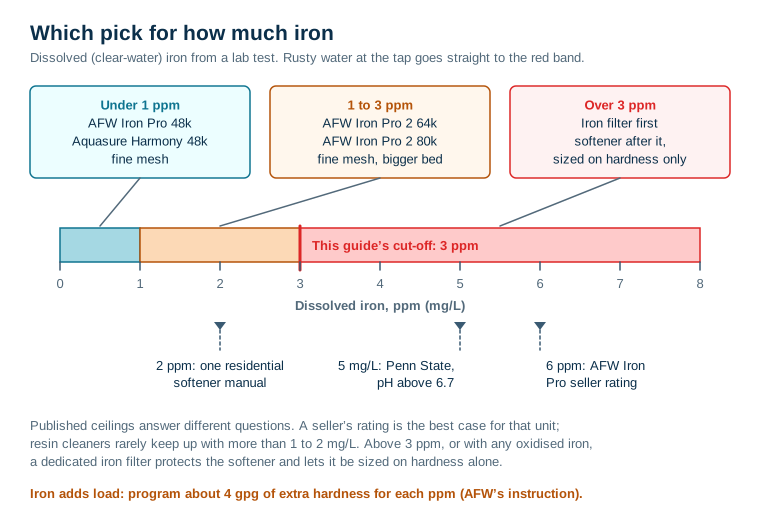
The best water softener for well water is a fine-mesh resin softener whose size matches your hardness and iron together. Under about 3 ppm of dissolved iron, a fine-mesh unit on a metered valve handles both. Above 3 ppm, or with any rusty water at the tap, no softener should work alone: an iron filter goes first, and the softener is sized on hardness only.
That makes the iron result the first number to read on a well test, ahead of hardness. The picks below are sorted into three iron bands, with each model's stated iron rating set beside what that rating leaves out.
Disclosure: Hard Water Solved may earn a commission if you buy through links on this page, at no extra cost to you. It does not change which products we include or how we rank them. Read our disclaimer.
How These Well Water Picks Were Chosen
Method. No unit here was physically tested by us. Each pick is judged from its seller's spec page, owner's manual and warranty wording, with iron ratings quoted as the seller states them and set against extension-service guidance.
Included: complete salt-based softeners sold new on Amazon.com, with fine-mesh resin, a metered valve and a stated iron rating or warranty position on iron.
Excluded: any unit without a fine-mesh option, however high its iron claim. Standard resin with an iron claim is the combination most likely to foul on a well. Also excluded: combination well systems whose Amazon listing we could not open to confirm what is in the box.
Prices are not listed here because they change often. Use the buttons to see the current price on Amazon.
How softeners behave on wells in general, including the full test panel and treatment order, is covered in water softener for well water. This page assumes you have that test and need to choose a unit.
Best Water Softener for Well Water: The Three Iron Bands
| Dissolved iron | What to buy | Pick | Amazon |
|---|---|---|---|
| Under 1 ppm | Fine-mesh softener, 1.5 cu ft for most homes | AFWFilters Iron Pro 48k | Check price on Amazon |
| Under 1 ppm, lowest cost | Fine-mesh softener with sediment pre-filter | Aquasure Harmony 48k fine mesh + pre-filter | Check price on Amazon |
| 1 to 3 ppm | Fine-mesh softener, larger bed, shorter cycles | AFWFilters Iron Pro 2 64k | Check price on Amazon |
| 1 to 3 ppm, large household | Same, 2.5 cu ft in a 13 in tank | AFWFilters Iron Pro 2 80k | Check price on Amazon |
| Over 3 ppm, or rusty water | Iron filter first, then a softener sized on hardness | None of these alone | – |
Read the Iron Result Before the Hardness Result
Two numbers on the lab report decide which band you are in: dissolved (ferrous) iron and total iron. If total iron is much higher than dissolved iron, some of it has already oxidised into particles. Particles foul resin at any level, so the well belongs in the red band whatever the dissolved figure says. Water that looks clear from the tap but turns orange after standing for half an hour is dissolved iron. Water that is already coloured when drawn is not. Why the form matters more than the number is explained in can a water softener remove iron.
Three more results move a well toward or away from a softener:
- pH. Penn State Extension recommends softening for iron only when pH is above 6.7, hardness is between 3 and 20 grains per gallon, and dissolved iron is under 5 mg/L. Low pH needs its own correction first.
- Manganese. It loads resin the same way iron does and is added to the compensated hardness.
- Bacteria. Iron bacteria form slime that clogs any resin bed. A softener is the wrong tool. If you do not have a recent bacteria result, get one: EPA guidance for private wells is to test for bacteria every year in any case.
Why the cut-off is 3 ppm, not 6 or 10
Iron ratings vary a lot because each one answers a different question:
| Source | Iron figure | What it really means |
|---|---|---|
| One residential softener manual (Hellenbrand) | 2 ppm dissolved iron | The ceiling that maker built and warrants its unit for |
| Penn State Extension | Under 5 mg/L, pH above 6.7 | When softening is a reasonable iron treatment at all |
| AFWFilters Iron Pro listings | 6 ppm ferrous iron | The seller's rating for its fine-mesh units |
| Aquasure Harmony manual | No ppm figure | The warranty excludes resin and valve parts on systems used to remove iron |
Water Conditioning & Purification's review of iron removal by softening resins adds the practical limit: resin cleaners "cannot compensate for more than one or two mg/L of iron." Between 1 and 3 ppm a well-programmed fine-mesh softener with regular cleaner works. Above 3 ppm you are relying on the top of a seller's rating, with no margin for a seasonal rise or a little oxidation. That is the reason this guide stops at 3.
Under 1 ppm: Light Iron, Ordinary Softener Sizing
At under 1 ppm, iron adds little to the load and a standard 1.5 cubic foot bed suits most households of up to four or five people. The resin grade still matters, because fine mesh releases the iron it picks up more cleanly at each regeneration.
AFWFilters Iron Pro 48k (fine mesh)
- What it is: 1.5 cubic feet of fine-mesh resin in a 10x54 tank on a Fleck 5600SXT metered valve, with a brine tank and bypass. The seller quotes 6.5 gpm service flow and 9.8 gpm peak.
- Stated iron rating: "low levels of iron (up to 6 ppm)", ferrous only. AFW's instructions add 4 grains of compensated hardness for each ppm of iron and manganese.
- Warranty (seller): 5 years on the control head, 10 years on the mineral tank.
- Same system, second listing: AFWFilters links this product page to the DuraWater "Iron Blaster" 48k listing as well (Check price on Amazon). Compare the two listings on the day you buy.
Wrong for: households whose busiest moment regularly passes about 8 gpm. A 10-inch bed handles roughly that much at its peak design guideline.
Aquasure Harmony 48k, Fine Mesh With Sediment Pre-Filter
The Amazon bundle adds a pleated sediment pre-filter to the fine-mesh unit.
- What it is: Aquasure's Aquatrol metered head on a 10x54 tank of fine-mesh resin, with a sediment pre-filter in the box. Aquasure does not state the resin volume.
- Stated iron rating: none that we could find. Aquasure markets the unit for iron reduction without a ppm ceiling.
- The warranty problem: the Harmony Series owner's manual, which covers the fine-mesh models, says resin and internal control valve parts "will not be covered for systems used to remove iron, manganese." The 5-year term on the valve, electronics and resin also requires registration (2 years without).
Who it suits: a well with only trace iron, where the main appeal is the price and the included pre-filter, and where the buyer accepts the warranty exclusion. Wrong for: anyone counting on warranty cover for an iron-related failure.
1 to 3 ppm: Bigger Bed, Shorter Cycles
In this band iron becomes a real part of the load, and the softener has to regenerate often enough to flush it out. Two changes from ordinary sizing:
- Compensated hardness. Add about 4 gpg for each ppm of iron (AFW's figure). 15 gpg with 2.5 ppm of iron is programmed as 25 gpg.
- Short cycles and a moderate salt dose. Aim for about three days between regenerations, and skip the lowest salt setting. The method, with three worked wells, is in how iron changes water softener sizing.
The bed size then follows from the compensated load. These examples use 58.6 gallons per person per day and about 26,000 grains per cubic foot at a moderate 9 lb salt dose, with three days of service plus one day of reserve:
| Household and water | Compensated hardness | Daily load | Needed for 4 days | Bed |
|---|---|---|---|---|
| 4 people, 15 gpg, 2 ppm iron | 23 gpg | about 5,400 grains | about 21,600 | 1.5 cu ft is ample |
| 4 people, 20 gpg, 3 ppm iron | 32 gpg | about 7,500 grains | about 30,000 | 1.5 cu ft works; 2.0 cu ft adds margin |
| 6 people, 20 gpg, 3 ppm iron | 32 gpg | about 11,250 grains | about 45,000 | 2.0 cu ft, or 2.5 cu ft for margin |
AFWFilters Iron Pro 2 64k
- What it is: 2.0 cubic feet of fine-mesh resin in a 12-inch tank on a Fleck 5600SXT, with an 18x33 round brine tank and 1-inch connections. Seller flow: 10 gpm service, 15 gpm peak.
- Stated iron rating: "ferrous iron up to 6ppm." The seller adds that ferric iron, the kind that is discoloured when drawn, needs "a dedicated iron filter."
- Warranty (seller): 5 years on the control head, 10 years on the mineral tank.
Why it is the 1-to-3 ppm default: the extra half cubic foot keeps a four-person house on three-day cycles at harder water without running short, and the 12-inch bed raises the flow guideline to about 11.8 gpm at peak.
Wrong for: low-yield wells that cannot hold the backwash flow a 12-inch tank needs, and wells with rusty water at the tap.
AFWFilters Iron Pro 2 80k
- What it is: 2.5 cubic feet of fine-mesh resin in a 13x54 tank on a Fleck 5600SXT. Seller flow: 11 gpm service, 16 gpm peak. Backwash flow: 4.5 gpm.
- Stated iron rating: "up to 6 ppm of ferrous iron without additional systems required. If ferric iron or higher levels of iron are present a separate iron filter is recommended."
Who it suits: larger households, or harder water with iron near the top of the band. Wrong for: a well pump that cannot deliver 4.5 gpm for the whole backwash while the house draws water. Note that the 13-inch tank still sits on a 5600SXT valve, so the seller quotes 11 gpm service for it. A 2510-class valve on the same tank is quoted higher.
A DuraWater "Iron Blaster" 80k fine-mesh listing also exists (Check price on Amazon). We could not check it against a seller's own store page, so it is not ranked here.
Over 3 ppm: Buy None of These Alone
Above 3 ppm of dissolved iron, or with any oxidised iron, the right first purchase is an iron filter: air injection, greensand or a similar oxidising filter, depending on the iron, manganese and sulfide results. With the iron removed ahead of it, the softener is sized on hardness alone and can use an efficient salt setting again. The decision between the two is laid out in water softener vs iron filter. Our separate guide to the best iron filters for well water covers that equipment.
Buy none of these picks at all if:
- Hardness is under about 3.5 gpg and iron is the only problem. An iron filter alone is the answer.
- The well has iron bacteria or a slimy, reddish film in the toilet tank. Disinfection and filtration come first.
- pH is below about 6.7. Correct it first, or the iron will not stay in the dissolved form a softener needs.
Well Checks Before You Order Any of Them
- Sediment. Sand and silt pack into a resin bed and wear valve seals. A sediment pre-filter is cheap protection, and a sediment pre-filter before a softener explains how to size one so it does not choke flow.
- Backwash flow. Find your pump's sustained output and compare it with the backwash figure: about 2.7 gpm for AFW's 1.5 cubic foot systems, 4.5 gpm for the Iron Pro 80k. Well pump flow and softener backwashing shows how to measure it with a bucket and a watch.
- Air. Anything that adds air before the softener, such as a leaking pump seal or an aerator, oxidises iron and moves the well into the red band.
- Resin grade. Fine mesh exchanges and releases iron more cleanly but does not raise the iron limit. What it changes, and what it costs in pressure drop, is in standard vs fine mesh resin.
- Programming. Enter compensated hardness, not the raw hardness figure, and set a day override so the unit regenerates at least every three or four days even when use is light.
The best water softener for well water is the one whose iron band matches your lab report, with a bed sized on compensated hardness and a backwash your pump can supply. If the report puts you above 3 ppm, the softener is the second purchase, not the first.
Frequently Asked Questions
What is the best water softener for well water with iron?
For dissolved, clear-water iron under about 3 ppm, a softener with fine-mesh resin on a metered valve is the usual choice. In this guide that is the AFWFilters Iron Pro range: the 48k for under 1 ppm and the Iron Pro 2 64k or 80k for 1 to 3 ppm, depending on household size and hardness. Above 3 ppm, or with any iron that has already oxidised, put an iron filter first and size the softener on hardness alone.
How much iron can a water softener remove from well water?
Published figures range from about 2 to 10 ppm, and they answer different questions. One residential softener manual rates its unit for 2 ppm of dissolved iron. Penn State Extension recommends softening for iron only under 5 mg/L with pH above 6.7. AFWFilters rates its Iron Pro systems for 6 ppm of ferrous iron. This guide uses 3 ppm as the working ceiling for a softener alone, because resin cleaners rarely keep up with more than 1 to 2 mg/L.
Do I need fine mesh resin for well water?
If the well has any dissolved iron, fine mesh is the safer choice. Its smaller beads exchange and release iron more cleanly at regeneration, which keeps the bed from fouling as quickly. It does not raise the amount of iron a softener can handle, and it does nothing for oxidised iron or iron bacteria. On a well with no measurable iron, standard resin works just as well.
Do I need a sediment filter before a well water softener?
On most wells, yes. Sand and silt settle into the resin bed, raise pressure drop and can damage the control valve's seals. A sediment pre-filter ahead of the softener is cheap protection. One of the picks here, the Aquasure Harmony fine-mesh bundle, includes a pleated sediment pre-filter in the box.
Can my well pump handle a softener's backwash?
Check it before buying. A softener backwashes at a fixed flow to lift and clean the resin bed, and a larger tank needs more. AFWFilters lists about 2.7 gpm of backwash flow for its 1.5 cubic foot systems and 4.5 gpm for the 2.5 cubic foot Iron Pro 80k. Your pump must deliver that flow, plus anything the house uses at the same time, for the whole backwash.
Should I set my well softener to the lowest salt setting?
Not if the water carries iron. A lightly regenerated bed leaves iron behind on the resin, and over time it builds up. One manufacturer limits its most efficient salt setting to water with less than 0.5 ppm of iron. On an iron well, use a moderate salt dose and shorter cycles, typically about three days between regenerations.
