
Best Water Softeners for Whole-House Use, Picked by Situation

The best water softener for a whole house is the one matched to your water source, your hardness and your busiest moment of water use, not the one with the biggest grain rating. For most chlorinated city homes that means a 1.5 cubic foot softener with 10 percent crosslink resin. Wells with dissolved iron need fine-mesh resin, and large houses need a wider tank on a 1-inch valve.
The five picks below are grouped by those situations. Every one is re-stated at the same salt dose and judged on flow by its tank size, so a "48,000-grain" label means the same thing from one listing to the next.
Disclosure: Hard Water Solved may earn a commission if you buy through links on this page, at no extra cost to you. It does not change which products we include or how we rank them. Read our disclaimer.
How These Picks Were Chosen
Method. No unit here was physically tested by us. The picks come from the sellers' own spec pages, owner's manuals and warranty documents, with each capacity re-stated at 6 lb of salt per cubic foot of resin and each flow checked against the tank's bed area.
Included: complete salt-based whole-house systems sold new on Amazon.com, with a metered (demand) valve, a published resin volume or tank size, and a written warranty.
Excluded: salt-free conditioners (a different job), dealer-only brands (Culligan, Kinetico, EcoWater, RainSoft, Hague and Rheem sell no whole-house softeners on Amazon), GE softeners (GE lists them as no longer manufactured), and any cabinet unit whose current availability and manual we could not confirm.
Prices are not listed here because they change often. Use the buttons to see the current price on Amazon.
Before choosing, confirm you need a softener at all. Whether you need a whole-house water softener covers the hardness test and the cases where the answer is no.
The Best Water Softeners at a Glance
| Situation | Pick | Resin and tank | Amazon |
|---|---|---|---|
| Chlorinated city water | AFWFilters Fleck 5600SXT 48k, 10% resin | 1.5 cu ft 10% crosslink | Check price on Amazon |
| Lowest upfront cost | Aquasure Harmony 48k | 10x54 tank, volume not stated | Check price on Amazon |
| Well with clear-water iron | AFWFilters Iron Pro 2 64k | 2.0 cu ft fine mesh, 12 in tank | Check price on Amazon |
| Large home, high peak flow | 80k softener with Fleck 2510SXT | 2.5 cu ft, 13x54 tank | Check price on Amazon |
| Least salt per year | SoftPro Elite 48k | 10% crosslink, upflow brining | Check price on Amazon |
The Best Water Softener Comparison, Normalised
Grain ratings are printed at a heavy salt dose that almost nobody should run. At an efficient 6 lb per cubic foot, standard resin removes about 21,000 grains per cubic foot per regeneration, roughly two-thirds of the label. The full reasoning is in advertised vs usable softener capacity. Flow has the same problem. Sellers quote a service flow without saying at what pressure drop, and the same seller can quote different figures for the same tank.
So the table below re-states every pick two ways: capacity at 6 lb per cubic foot, and the flow its resin bed handles at the design guideline of 10 gpm per square foot continuous and 15 gpm per square foot peak. Bed area is the tank diameter in inches, squared, divided by 183, the shortcut from Water Conditioning & Purification's softener surface-loading guidance.
| Pick | Box rating | Resin | At 6 lb/cu ft | Tank | Bed flow, continuous / peak | Seller's flow figure | Valve | Warranty (seller or manual) |
|---|---|---|---|---|---|---|---|---|
| AFW 48k, 10% resin | 48,000 | 1.5 cu ft, 10% | 31,500 | 10 in | 5.5 / 8.2 gpm | 6.5 service, 9.8 peak | Fleck 5600SXT | 5 yr valve, 10 yr tank |
| Aquasure Harmony 48k | 48,000 | Not stated | about 31,500 if 1.5 cu ft | 10x54 | 5.5 / 8.2 gpm | Not in manual | Aquatrol (own) | 5 yr valve, electronics and resin if registered (2 yr if not); 10 yr tanks |
| AFW Iron Pro 2 64k | 64,000 | 2.0 cu ft fine mesh | 42,000 | 12 in | 7.9 / 11.8 gpm | 10 service, 15 peak | Fleck 5600SXT | 5 yr valve, 10 yr tank |
| 80k Fleck 2510SXT | 80,000 | 2.5 cu ft | 52,500 | 13x54 | 9.2 / 13.9 gpm | 20 gpm | Fleck 2510SXT, 1 in | Not stated on listing |
| SoftPro Elite 48k | 48,000 | Not stated, 10% | about 31,500 if 1.5 cu ft | Not stated | Not calculable | "Up to 15 gpm" | SoftPro upflow | Limited lifetime on valve and tanks (brand page) |
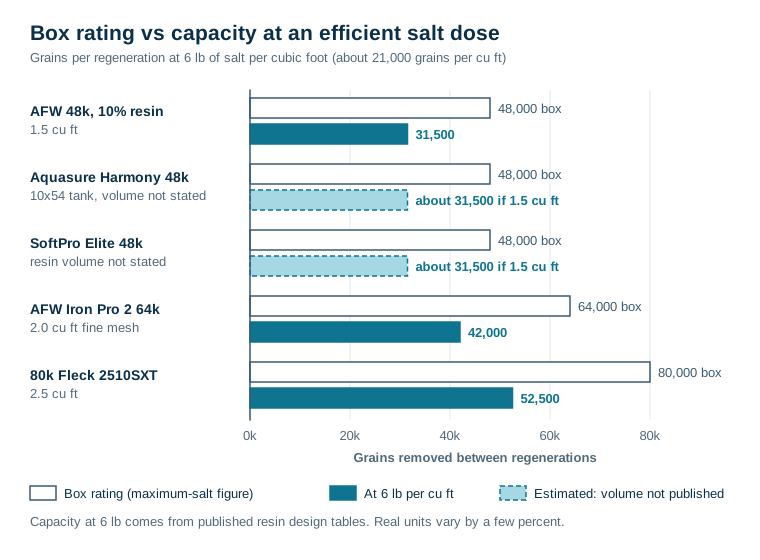
What the normalised table shows:
- Three of the five "48,000-grain" style labels say the same thing, and you cannot confirm it for two of them. AFW states 1.5 cubic feet. Aquasure ships its 48k in a 10x54 tank, the size that normally holds 1.5 cubic feet, but does not state the volume. SoftPro's product pages do not state it either. Until a seller gives the resin volume, its grain rating is a claim, not a spec.
- Flow figures from one seller can disagree with each other. AFW quotes 6.5 gpm service for its 48k 10% unit and 12 gpm service for its 48k high-capacity unit, both 1.5 cubic feet in 10-inch tanks. The bed-area figure, 5.5 gpm continuous and 8.2 gpm peak, is the one to plan around.
- The valve sets a separate ceiling. Pentair rates the 2510 valve alone at 19 gpm at a 15 psi drop on its Fleck 2510 data sheet. The 80k pick's "20 gpm" is close to the valve's own limit, and its 13-inch bed handles about 13.9 gpm at the peak guideline. Plan around the lower number.
How to read any spec sheet this way, line by line, is covered in how to compare water softener spec sheets.
Which Best Water Softener Fits Your Water
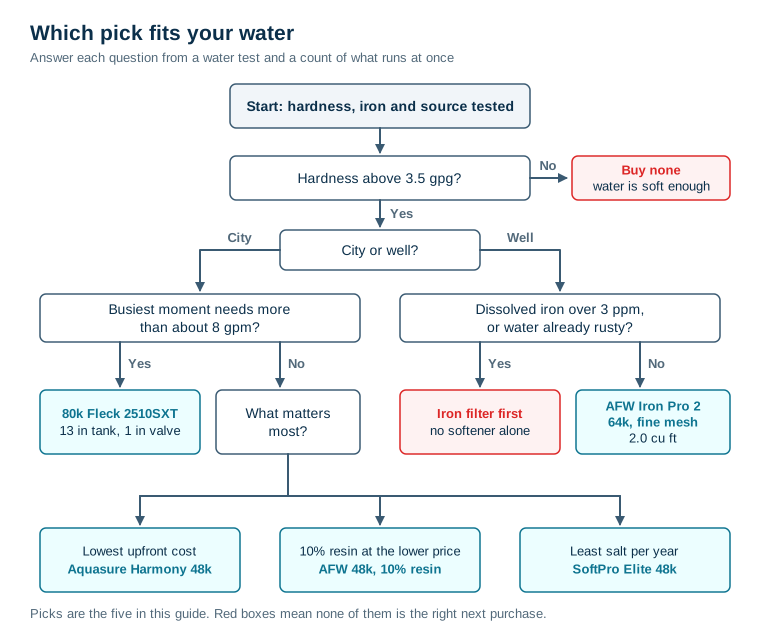
Three numbers drive the choice:
- Hardness. Under about 3.5 grains per gallon, a softener is rarely worth it.
- Source and iron. City water brings chlorine or chloramine, which wears resin. Well water brings iron, and the form of the iron decides whether a softener can handle it.
- The busiest moment. Add up the fixtures that really run at once, using real flows. Two WaterSense showers, a washing machine and a kitchen tap come to about 8.5 gpm. A 10-inch tank handles roughly 8 gpm at its peak guideline. Above that, step up to a wider tank.
Grain capacity comes last, because at an efficient salt setting every pick here covers a typical family for about a week. A family of four using 58.6 gallons each per day at 15 grains per gallon removes about 3,500 grains a day. A 1.5 cubic foot bed at 6 lb gives 31,500 grains, which is about eight days with a day held back as reserve. The full method is in how to size a water softener.
The Picks, by Situation
Best for Chlorinated City Water: AFWFilters Fleck 5600SXT 48k with 10% Resin
This is the default pick for a city home with one to three bathrooms. It is 1.5 cubic feet of 10 percent crosslink resin on a Fleck 5600SXT metered valve, with a brine tank and bypass. AFW gives a 5-year warranty on the control head and 10 years on the mineral tank.
Why it is here: the 10 percent resin. Chlorine in city water slowly breaks the cross-links that hold each resin bead together. A tighter 10 percent bead has more structure to lose, so it lasts longer on the same supply. The life arithmetic is set out in standard vs chlorine-resistant softener resin. The Fleck 5600SXT is one of the most widely serviced residential valves, so seals and boards stay easy to find.
Normalised: 31,500 grains at 6 lb per cubic foot. Bed flow is about 5.5 gpm continuous and 8.2 gpm peak, which suits a house whose busiest moment stays near two showers and an appliance.
Wrong for: a well with iron (no fine-mesh resin), a house whose busiest moment regularly passes 8 gpm, and a chloramine supply where you were hoping the resin alone would cope. On chloramine, 10 percent resin slows the damage but does not stop it.
Best on a Budget: Aquasure Harmony 48k
The Harmony is the cheapest complete 48k system here. It uses Aquasure's own Aquatrol digital metered head rather than a Fleck or Clack valve, in a 10x54 resin tank according to the owner's manual.
What the manual says. The Harmony Series owner's manual gives a 5-year guarantee on the valve, electronics and resin, but only if you register the system. Without registration it is 2 years. The resin and brine tanks carry 10 years. Two lines in it matter before you buy:
- Chlorine. The manual sets a maximum of 2 ppm of chlorine or chloramine and recommends whole-house carbon where either is present.
- Iron. Resin and internal valve parts are not covered "for systems used to remove iron, manganese or with very high chlorine concentrated feed waters."
Normalised: Aquasure does not state the resin volume. If the 10x54 tank holds the usual 1.5 cubic feet, capacity is about 31,500 grains at 6 lb, and the bed flow is the same as the AFW pick.
Wrong for: iron water (the warranty excludes it), anyone who wants a valve any local plumber can rebuild with standard parts, and buyers who will not register within the warranty window. One more caution: the manual's programming worksheet uses 75 gallons per person, which oversizes the reserve for most modern households.
Best for Well Water With Clear-Water Iron: AFWFilters Iron Pro 2 64k
This is 2.0 cubic feet of fine-mesh resin in a 12-inch tank on a Fleck 5600SXT, with an 18x33 round brine tank. AFW rates it for ferrous (dissolved, clear-water) iron up to 6 ppm, and says ferric iron, the kind that comes out of the tap already discoloured, needs a dedicated iron filter instead.
Why 64k rather than 48k on a well: iron adds to the hardness load. AFW's own instruction is to add 4 grains of compensated hardness for each ppm of iron and manganese. A larger bed keeps regenerations frequent enough to flush iron out without running short. The 12-inch tank also raises the bed flow to about 7.9 gpm continuous and 11.8 gpm peak.
The 6 ppm figure needs context. It is the seller's rating, not a lab limit. Extension guidance runs lower. Penn State Extension recommends softening for iron only under 5 mg/L, with pH above 6.7 and no air or chlorine reaching the water first. This guide treats 3 ppm of dissolved iron as the practical ceiling for any softener working alone, which is where the decision chart sends you to an iron filter.
Wrong for: water that is rusty when drawn, iron bacteria, low-pH wells, and low-yield wells that cannot supply the backwash flow a 12-inch tank needs.
Best for Large Homes: 80k Softener With Fleck 2510SXT
Large houses run out of flow before they run out of grains. This system pairs 2.5 cubic feet of high-capacity resin in a 13x54 tank with the Fleck 2510SXT, whose 1-inch internal ports pass more water than the 5600 family. The seller quotes 20 gpm service flow. AFWFilters' own store lists it as the Fleck 2510AiQ, formerly 2510SXT.
Normalised: 52,500 grains at 6 lb. Bed flow is about 9.2 gpm continuous and 13.9 gpm peak, which is the more honest planning figure than 20 gpm. That still covers a busiest moment of three showers, a washing machine and a kitchen tap in most houses.
Wrong for: iron wells (standard resin), houses whose fixture count pushes the busiest moment past about 14 gpm (look at two tanks in parallel instead), and anyone who wants the warranty terms in writing before buying. The listing says "manufacturer warranty" without terms, so ask the seller.
Best for Low Salt Use: SoftPro Elite 48k
The SoftPro Elite uses upflow brining, which pushes brine up through the bed from the bottom. Upflow regenerates the most-exhausted resin first and uses less salt for the same soft water. The mechanism is explained in upflow vs downflow regeneration. It also uses 10 percent crosslink resin and comes with a large brine tank, bypass and tank jacket.
What is claimed and what is checkable. SoftPro claims up to 75 percent less salt and "up to 15 gpm". Neither figure comes with the test conditions, and SoftPro's pages do not state the resin volume or tank diameter, so neither capacity nor bed flow can be normalised here. The brand page describes a limited lifetime warranty on the valve and tanks. Read which parts it excludes before relying on it.
Wrong for: buyers who want every spec on paper before paying the highest price here, and very low water users. If the household uses little water, a smaller, cheaper bed set to a low salt dose gets most of the same saving.
Buy None of These If…
A softener only removes hardness. Several common situations call for something else first, or instead:
- Your hardness is under about 3.5 gpg. The salt and upkeep cost more than the scale they prevent.
- Your iron is over 3 ppm, or any of it has already oxidised. Particles foul resin, whatever the listing says about iron. The matrix in water softener vs iron filter decides between an iron filter, a softener or both.
- You cannot add sodium or run a drain line. Salt-free conditioners do not soften. They change how scale forms, and they come with their own limits. Salt-based vs salt-free water treatment sets out what each one actually does.
- Your local rules restrict softener discharge. Some areas limit salt-based softeners. Check before buying.
- You want healthier water. A softener is not a treatment for bacteria, nitrate, arsenic or lead. Test for those separately.
Before You Order
- Confirm the resin volume in cubic feet. If the listing will not state it, ask the seller. If they still will not say, that is the answer.
- Find your busiest moment in gpm and check it against the tank diameter, not the seller's flow claim.
- Match the connection size to your main. A 1-inch main deserves a 1-inch loop and bypass.
- Read the warranty exclusions, especially for iron, chlorine and registration deadlines.
- Check the listing is sold new and in stock on the day you order, and compare its price against the seller's own store.
Where the Money Goes Across These Picks
The price spread across these picks is not about softening quality. Ion exchange works the same way in all five. The extra money buys four things, and only some of them will matter in your house:
- Resin grade. 10 percent crosslink costs more than standard 8 percent resin and pays back on chlorinated water. On a chlorine-free well it buys little.
- Bed size and tank diameter. More resin and a wider tank buy flow and longer cycles. They are wasted in a small, low-use household.
- Valve family. A Fleck or Clack valve costs more to buy than a proprietary head but less to keep running, because any water treatment supplier stocks its seals and pistons.
- Brining method and support. Upflow brining and a lifetime warranty explain most of the SoftPro premium. Whether that premium over the AFW 10% unit is worth it depends on how long you plan to stay in the house.
The best water softener for your home is the cheapest one on this list that passes your water test, your busiest moment and your warranty questions. Pick the situation that matches your water, check the two numbers the box leaves out, and buy the smallest system that passes both.
Frequently Asked Questions
What is the best water softener for most homes?
For most homes on chlorinated city water with moderate hardness and one or two bathrooms, a 1.5 cubic foot softener with 10 percent crosslink resin on a metered valve is the safest choice. In this guide that is the AFWFilters Fleck 5600SXT 48,000-grain unit with 10 percent resin. It is not the best choice on a well with iron, in a house with a high peak flow, or where the cheapest upfront price matters most.
Is a 48,000-grain softener really 48,000 grains?
Only at a heavy salt dose of around 15 lb per cubic foot of resin. A 48,000-grain softener normally holds 1.5 cubic feet of resin, and at an efficient 6 lb per cubic foot it removes about 31,500 grains per regeneration. That is the number to size from. Two units sold as 48,000 grains can only be compared once you know how much resin each actually contains.
Are Amazon water softeners as good as dealer softeners?
Many online softeners use the same Fleck and Clack control valves found in dealer installs, with standard resin in standard tanks. What you give up is local installation, service and a dealer warranty. Dealer brands such as Culligan, Kinetico, EcoWater and RainSoft do not sell whole-house softeners on Amazon, so any listing using those names for a complete softener deserves a careful look.
Does the brand of the control valve matter?
It matters for parts and service more than for softening. Fleck and Clack valves are widely stocked, so seals, pistons and boards are easy to buy for years. Proprietary valves, such as Aquasure's Aquatrol head, depend on that one company for parts. The valve also sets the flow ceiling: a 1 inch Fleck 2510 passes more water than a 3/4 inch-class Fleck 5600 before the resin bed is even considered.
How long should a good water softener last?
The tanks commonly carry 10-year or longer warranties, and a well-kept valve can run for 15 years or more with seal and piston replacements. Resin is the part that wears. On chlorine-free water it can last well over a decade. On chlorinated city water it wears faster, which is why 10 percent crosslink resin or a carbon filter ahead of the softener is worth paying for.
Should I buy a bigger softener than I need?
Not by grain rating alone. A bigger resin bed on an efficient salt setting can save salt, but only if the household uses enough water to regenerate it at least weekly. In a large house the stronger reason to size up is flow: a wider tank and a larger valve keep pressure up when several fixtures run at once.
