
Why Iron Bacteria Requires More Than a Softener
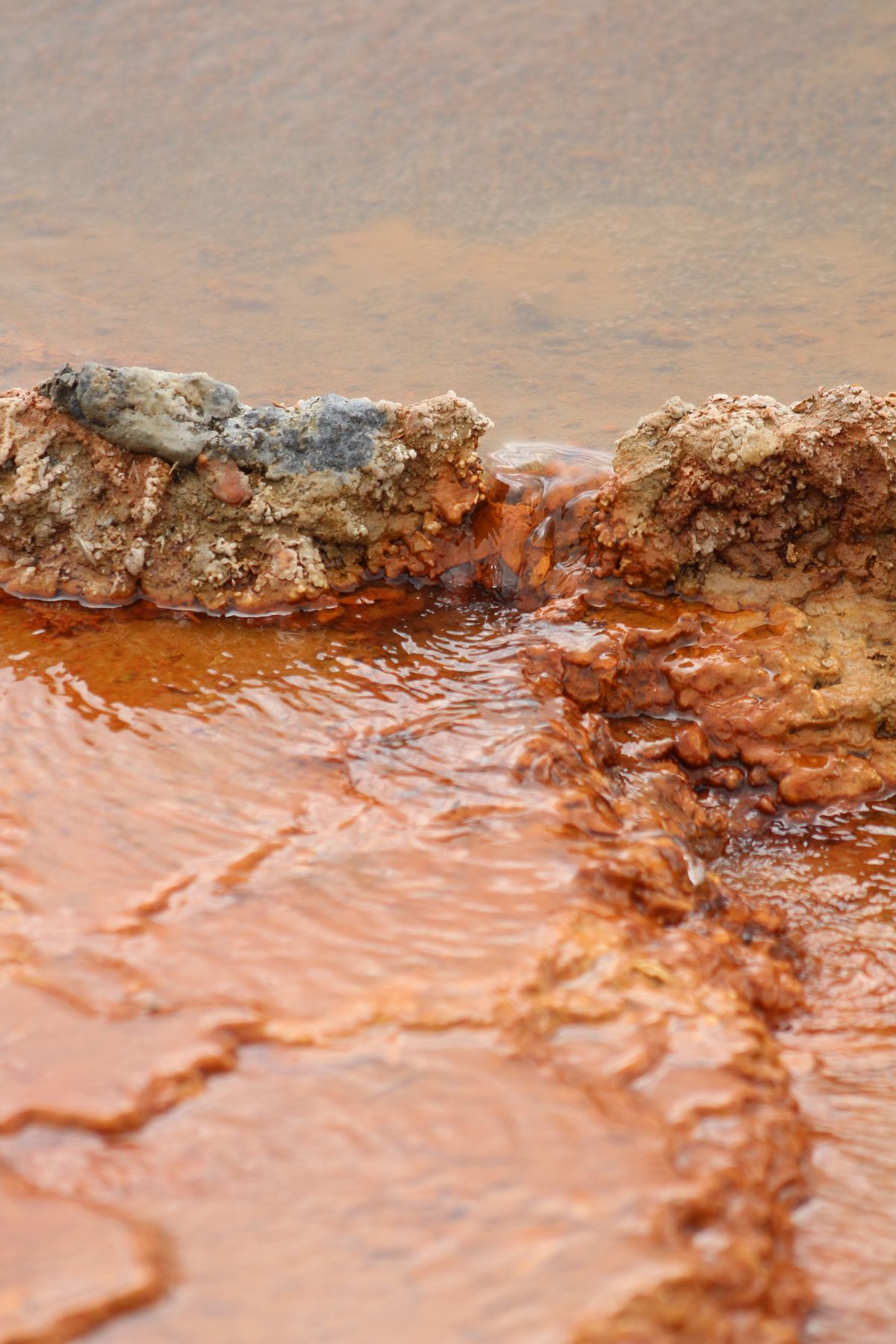
Iron bacteria in well water are living organisms, not a mineral, and a water softener cannot remove them. They feed on dissolved iron and manganese, coat the well and pipes in slime, and settle into a softener's resin bed. Fixing them takes disinfection of the whole system, work on the well itself and ongoing control. Filtering the water alone fails because the colony keeps regrowing upstream.
If you have orange slime in the toilet tank and a softener, both problems are connected. This page covers how to confirm it is bacterial, where it hides, and the order of work that actually controls it.
Slime or Stain? Telling Iron Bacteria From Mineral Iron
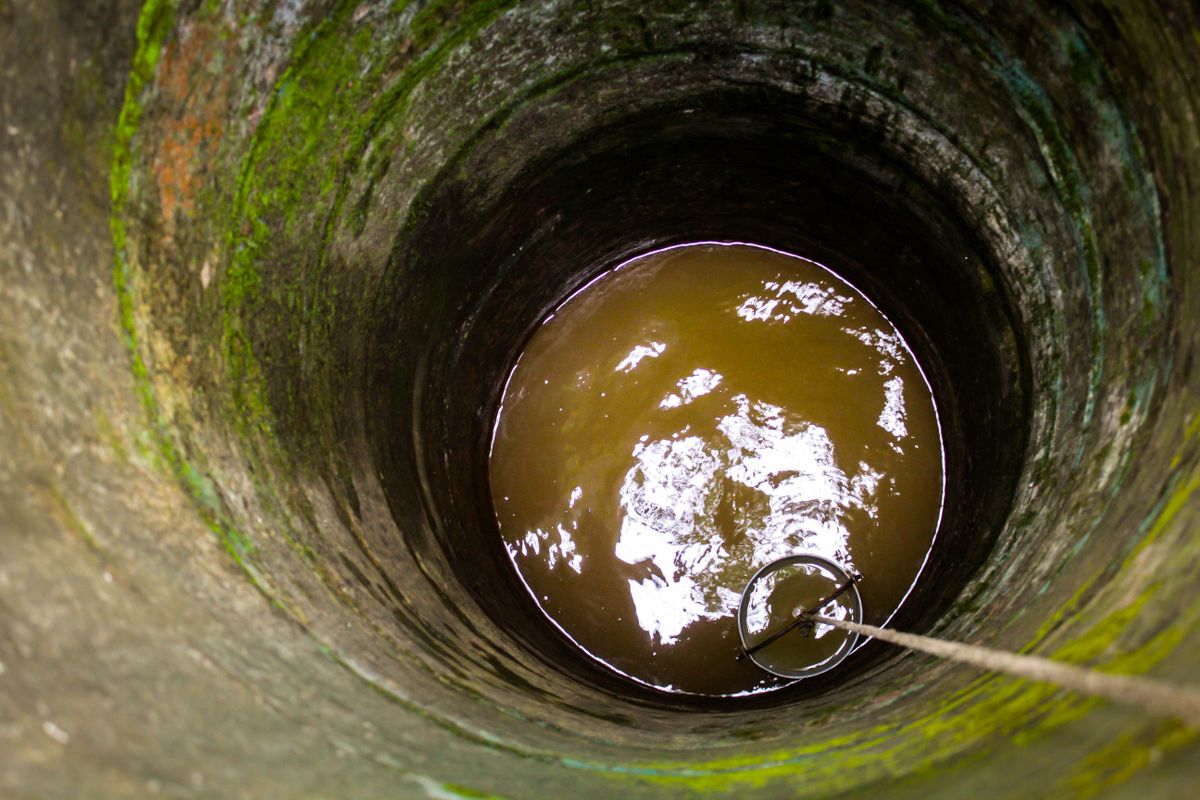
Mineral iron and iron bacteria both make things orange. They behave very differently, and the difference is visible before any lab test:
| Check | Mineral iron | Iron bacteria |
|---|---|---|
| Feel of the deposit | Hard stain or loose grit | Slimy, gelatinous; wipes off with a finger |
| Form in standing water | Settles as sediment | Floats like orange algae, or feathery strands |
| Water surface in the toilet tank | Clean | Oily, rainbow-colored sheen |
| Odor | Metallic taste, no smell | Swampy, oily, cucumber, sewage or musty |
| When it is worst | Fairly constant | After water has sat unused, often first thing in the morning |
| Colors | Orange to red-brown | Orange, red, brown, yellow or gray; black-brown with manganese |
These descriptions come from the Minnesota Department of Health, the Water Systems Council and the Wisconsin DNR, whose publications all describe the same toilet tank check.
The toilet tank test. Lift the lid on a toilet that has not been flushed for several hours. The Wisconsin DNR says that if you see an oily sheen on the surface and can feel a slimy residue on the tank wall at the air and water line, slime-producing bacteria are likely present. Tank cleaners and disinfectant tablets hide the evidence, so check a tank that has not been treated. A common field check for the sheen is to poke it: a bacterial film tends to break into flakes, while a petroleum film swirls and closes back up.
Lab confirmation needs a special bottle from the lab and a sample from the tap nearest the pressure tank. The Wisconsin DNR advises sampling early in the morning or after the system has sat unused for several hours, because slime sheds from pipes unevenly.
What Iron Bacteria Are, and What They Bring With Them
Iron bacteria occur naturally in soil, shallow groundwater and surface water. They get their energy by oxidizing dissolved iron or manganese. The by-product is a mix of rust, bacterial cells and slime that sticks to well casings, pump parts, pipes and appliances.
They are not known to cause disease, but they cause other problems:
- They shelter other organisms. The Wisconsin DNR lists increased infestations of coliform and sulfur-reducing bacteria. The Water Systems Council notes that iron bacteria do not produce the rotten-egg smell themselves but can create an environment where sulfur bacteria do. If that smell is in the mix, see why a sulfur smell remains after softening.
- They clog things. Screens, pipes, fixtures and treatment equipment all lose flow, and a heavily infested well can lose yield.
- They arrive with people. Drilling, pump replacement or any repair that lets equipment touch the ground or uses undisinfected water can introduce them.
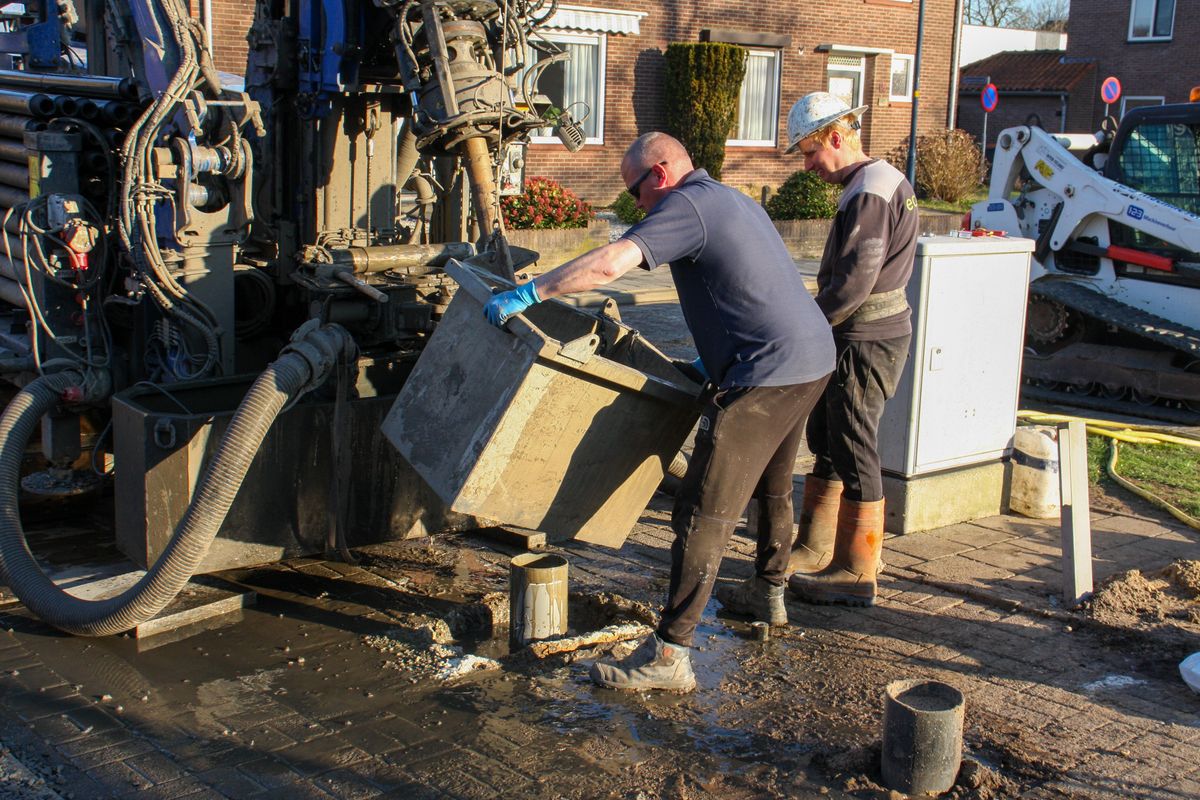
That last point is why the guidance is so insistent on prevention. The Water Systems Council tells well contractors to use only disinfected water, keep pumps and pipe on a clean drop cloth rather than the ground, and disinfect the well, pump and plumbing after any repair.
Why Iron Bacteria in Well Water Defeat a Softener
A softener is an ion exchanger. It swaps sodium for dissolved calcium, magnesium and ferrous iron. Nothing about that process touches a living cell wrapped in slime:
- There is nothing to exchange. Bacteria and their slime are not ions. The resin cannot take them up, and regeneration cannot release them.
- Brine is not a disinfectant cycle. Regeneration is designed to strip ions, not to sterilize the bed. Manufacturers give separate sanitizing instructions for exactly that reason.
- The resin bed is ideal habitat. It is dark, it has an enormous surface area, and on an iron well it is fed a steady supply of iron. Overnight, when no water flows, it becomes still water in a closed tank.
- Slime makes the iron problem worse. Slime holds oxidized iron in the bed where backwash cannot lift it. Exchange sites are blocked, capacity drops, and iron and hardness break through early. The fouling itself is described in what is water softener resin fouling.
Softener manufacturers are explicit about this. Residential manuals list iron bacteria alongside ferric iron and low pH as conditions that need additional equipment, and one says filtration is generally required when iron bacteria are present.
The brine tank is part of the problem too. The fill water entering it carries the bacteria, and slime can build up around the brine well, float and lines. Cleaning it is covered in how to clean a water softener brine tank.
Why Filtering Alone Keeps Failing
The obvious response is to catch the slime with a filter. It helps with symptoms, and it is part of most long-term setups, but on its own it fails for a simple reason: the colony lives upstream of the filter.
Penn State Extension says whole-house units such as cartridge filters, continuous chlorination or oxidizing filters can treat the water after it reaches the house, but "will not control populations within the well itself." The well keeps shedding bacteria and slime, the filter keeps loading, and anything the filter misses settles and grows in the pipes, tanks and fixtures beyond it. The Water Systems Council notes that iron bacteria clog filters and screens and reduce the effectiveness of some treatment devices.
A filter treats the output of an infected well. It does not treat the well.
Where the Colonies Hide
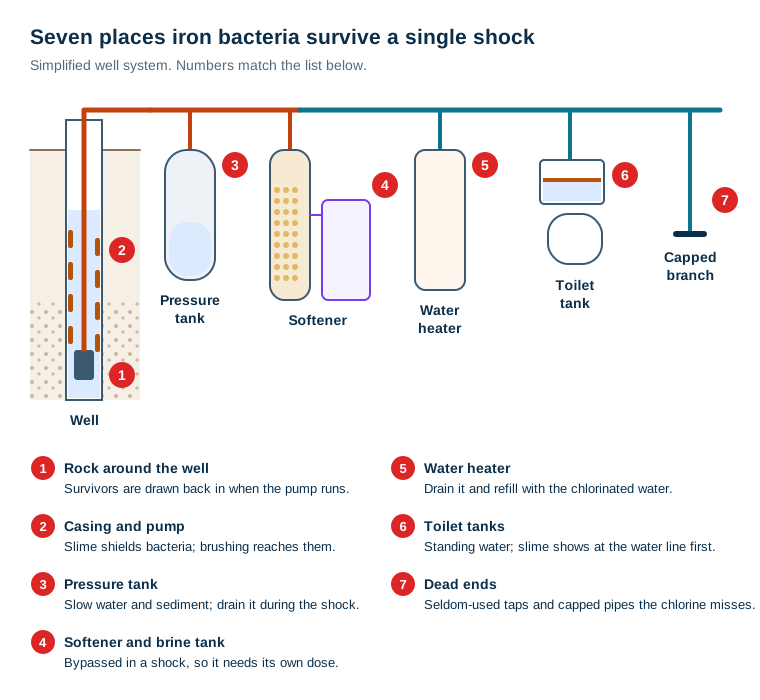
Iron bacteria are a system problem, not a water problem. Each of these places can reseed the rest:
- The rock around the well. The Wisconsin DNR says that even if chlorine kills everything in the well, bacteria in the surrounding formation survive and are drawn back in during later pumping.
- The casing and pump. Thick slime keeps chlorine away from the bacteria inside it, which is why physical cleaning comes first.
- The pressure tank. Low flow and trapped sediment; it needs draining and refilling with chlorinated water during a shock.
- The softener and brine tank. It is bypassed during a shock to protect the resin, which means it misses the treatment unless it gets its own sanitizing dose.
- The water heater. Warm, slow-moving water with sediment; it also has to be drained and refilled during a shock.
- Toilet tanks. Standing water at the air line is where slime usually shows first.
- Dead ends. Seldom-used taps, outside spigots, capped branches and bypass loops. Chlorine only reaches them if each one is opened.
The Remediation Sequence That Works
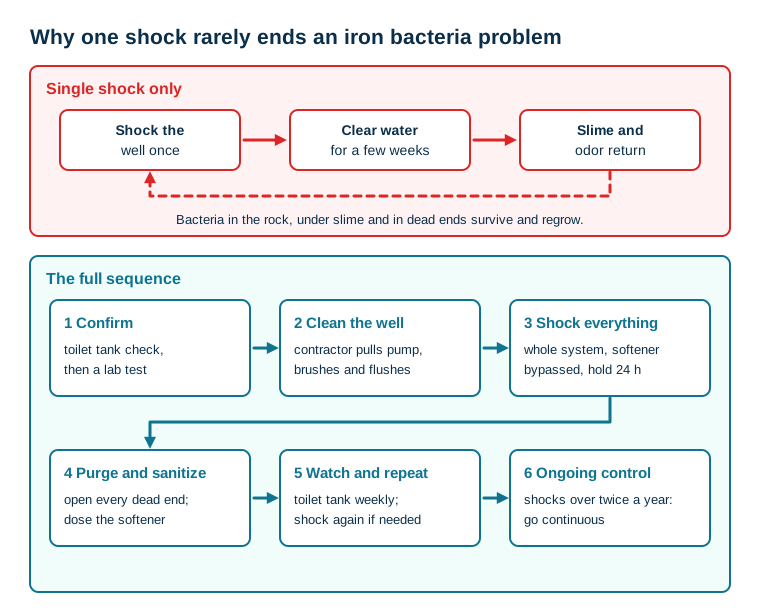
1. Confirm and test. Do the toilet tank check, get a lab result, and test for coliform bacteria and nitrate at the same time, as the Minnesota Department of Health recommends.
2. Clean the well. For anything beyond a light infestation, a licensed well contractor should pull the pump, clean it and scrub the casing. The Water Systems Council describes this physical removal as the usual first step for heavily contaminated wells, followed by disinfection. The Wisconsin DNR adds that flushing should lift debris up and out of the well, not push it into the formation, and warns not to be alarmed if thick rust-colored slime comes out.
3. Shock the whole system. The Wisconsin DNR's homeowner procedure mixes about a quart of 5.25% unscented household bleach per 100 gallons of water in the well, recirculates it down the casing for about an hour, draws it through every faucet until you smell chlorine, and leaves it in the system for at least 24 hours. The Minnesota Department of Health says shock solutions should be close to, but not above, 200 ppm. Bypass the softener before the chlorine reaches it; how to protect it and bring it back online is in how to protect a softener during well shock chlorination.
4. Purge, open every dead end, and sanitize the softener. The Wisconsin DNR's guidance is to disinfect the bypassed softener by adding ¼ to ½ cup of bleach to the brine tank fill tube and starting a manual regeneration, and to check with your equipment dealer first. Run the purge water outdoors, away from plants and surface water. It should not go into a septic system, for the reasons set out in water softener with a septic system.
5. Watch and repeat. Check an untreated toilet tank weekly. If slime or odor returns, repeat the shock. The Wisconsin DNR says to consider a more aggressive cleaning if signs persist after a repeat.
6. Move to ongoing control if it keeps coming back. Penn State Extension warns that frequent shock chlorination can damage private water systems, and says that if you need it more often than every six months, other options should be explored.
One regional caution. In areas with arsenic in the bedrock, chlorinating a well can release arsenic into the water. Wisconsin publishes an alternative procedure for arsenic-sensitive areas, and your state agency or well contractor should know whether that applies to you.
Ongoing Control Options
| Option | What it does | Limits |
|---|---|---|
| Periodic shock chlorination | Knocks back the population in the well and plumbing | Only modestly successful on thick biofilm; damaging if done too often |
| Continuous chlorination, retention tank and filter | Disinfects all incoming water, then filters out the debris | Needs sizing to your flow; the Water Systems Council calls for a backwashing filter rated at 10 microns; carbon removes leftover chlorine |
| Pellet chlorinator in the well | Drops chlorine into the well periodically to stop regrowth | Some states require approval; add carbon to remove chlorine taste |
| Pasteurization | Holds the well at 140°F for 30 minutes with steam or hot water | Effective but expensive; a contractor job |
| Well cleaning and rehabilitation | Physically removes slime from casing, screen and pump | Needs repeating over years on badly infested wells |
If shocking has to be repeated more than twice a year, continuous chlorination is usually the next step, and choosing a chlorine injection system with its contact tank and carbon stage is where the sizing starts.
Whichever you choose, the softener goes after the disinfection and filtration stages, and carbon goes between chlorine and the softener's resin. Where the softener sits in a well treatment train is covered in pretreatment order: sediment and iron filters before a softener. If you also want UV as a final barrier against bacteria, it goes last, on water already cleared of iron and slime. Choosing a UV system and the pretreatment it needs gives each unit's water-quality limits.
When the Resin Has to Go
Sanitizing rescues a softener that was only lightly colonized. It does not rescue every bed. Replacement is usually the answer when:
- slime, odor or brown water keeps coming from the softener's outlet after the well is under control;
- gallons between regenerations stay low after sanitizing and a resin cleaning;
- the bed looks dark, clumped or slimy when sampled.
Order matters. Replacing resin before the well is controlled means the new bed is recolonized within weeks. Treat the well, confirm the tank check stays clean, then decide on the resin. What replacement involves and costs is in water softener resin life and when to replace it.
What to Do, In Order
- Do the toilet tank check on an untreated tank, and sample the water for a lab, including coliform and nitrate.
- Stop relying on the softener or a filter to deal with it. Neither treats the well.
- Call a licensed well contractor if the infestation is heavy, the well has had recent work, or yield has dropped.
- Shock the whole system with the softener bypassed, then sanitize the softener separately.
- Open every tap and dead end during the shock and the purge.
- Check weekly and repeat if it returns; if you are shocking more than twice a year, move to continuous control.
- Decide about the resin last, once the well is under control.
Iron bacteria in well water are a well problem that shows up in the softener, not a softener problem. Treat the well and the whole system, and the softener can go back to the only job it can do: removing hardness and a little dissolved iron.
Frequently Asked Questions
Will a water softener remove iron bacteria?
No. A softener removes dissolved minerals by ion exchange. Iron bacteria are living organisms wrapped in slime, not ions, so the resin cannot exchange them and regeneration brine does not disinfect the bed. Worse, a resin bed fed with iron is a large, sheltered surface where the bacteria can settle. Softener manufacturers list iron bacteria among the conditions that need additional equipment ahead of the softener.
How do I know if I have iron bacteria in my well water?
Lift the toilet tank lid. The Wisconsin DNR describes the quick check: an oily sheen on the water surface and a slimy residue you can feel on the tank wall at the water line suggest slime-producing bacteria. Other signs are orange, red or brown slime, feathery growths in standing water, and swampy, oily, cucumber or sewage odors that are worst after the water has sat unused. A certified lab can confirm it.
Is iron bacteria in well water harmful to drink?
Iron bacteria are not known to cause disease, according to the Minnesota Department of Health, but they can create conditions where other organisms grow, including coliform and sulfur-reducing bacteria. That is why a well with iron bacteria should also be tested for coliform bacteria and nitrate. The practical harm is to the system: clogged screens, reduced well yield, odors, stains and fouled treatment equipment.
Why does iron bacteria keep coming back after shock chlorination?
Because one shock rarely reaches all of it. The Wisconsin DNR explains that slime coating the well protects the bacteria inside it from chlorine, that bacteria in the rock around the well survive and are drawn back in when pumping resumes, and that dissolved iron uses up much of the chlorine. Dead-end pipes, tanks and a bypassed softener also shelter colonies. Physical cleaning of the well plus repeat treatment works better than a single shock.
How do I get rid of iron bacteria permanently?
Usually you cannot eliminate it completely; you control it. State agencies say severe infestations can often only be controlled. The durable approach is a well contractor cleaning the well and pump, a thorough shock of the whole system, and then ongoing control. Penn State Extension says that if you need to shock more often than every six months, you should move to another option such as continuous chlorination with filtration.
Can iron bacteria ruin a water softener?
It can. Slime settles in the resin bed and brine system, traps iron, blocks exchange sites and produces odors and brown water after regeneration. A sanitizing treatment during the well shock helps. If capacity does not recover and slime keeps returning from the softener after the well itself is under control, the resin usually has to be replaced, and it must be replaced after the well is treated, not before.
