
Can a Water Softener Remove Tannins?
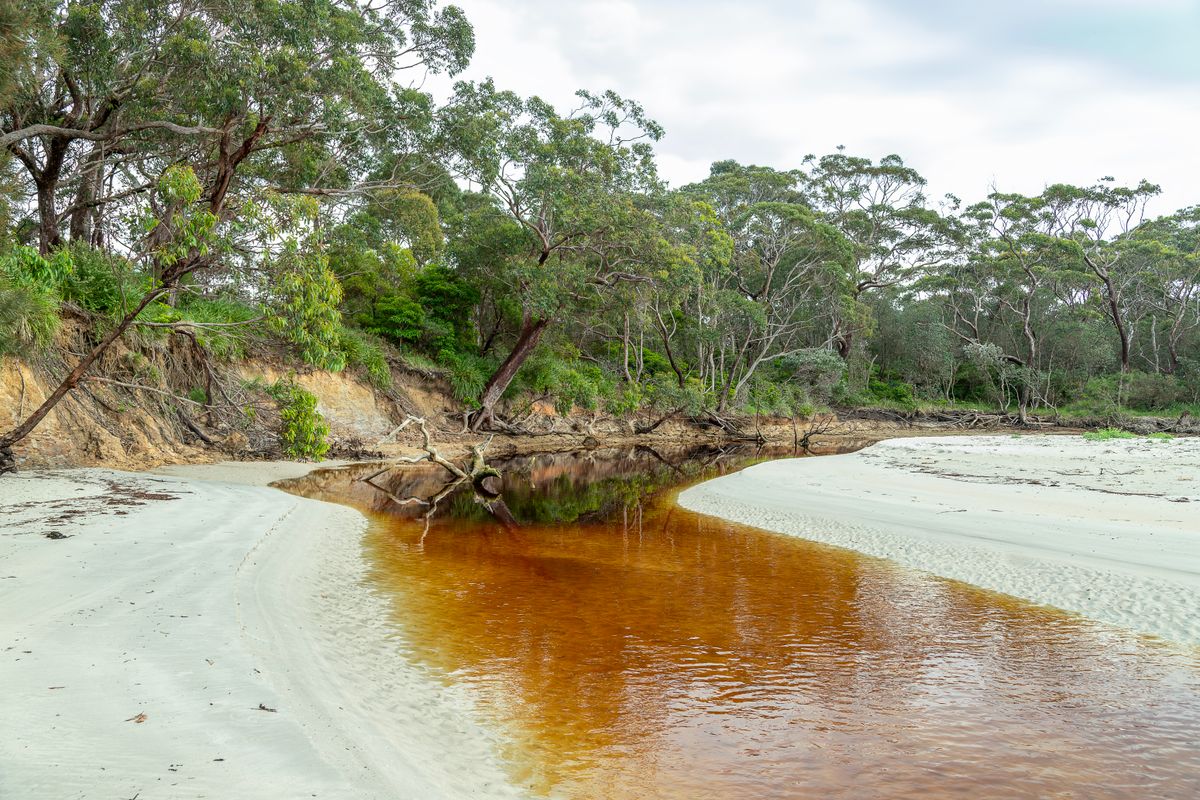
Can a water softener remove tannins? No. A standard softener's resin trades sodium for positively charged minerals, and tannins carry a negative charge, so they pass straight through. Removing tannins takes anion resin, in its own tank after the softener or blended into a combination unit. Where that resin sits, and your well's pH and alkalinity, decide whether it keeps working.
If you have not yet confirmed the yellow color is tannin rather than iron, start with the overnight glass and coffee-filter tests in why softened water looks yellow. This page assumes you have, and deals with what comes next.
Can a Water Softener Remove Tannins? Why Not, and the One Exception
A softener is a cation exchanger. Its resin beads hold fixed negative sites loaded with sodium, which they swap for calcium, magnesium and some dissolved iron and manganese. Tannins are large organic acids from decaying leaves, peat and roots. In water they carry a negative charge. The softener's negative sites repel them. No salt setting, extra regeneration or cleaner changes that.
You will read that a softener "might remove some" tannin. Any reduction a plain softener gives is incidental and unreliable, and it is not a basis for buying one.
The only way a "softener" removes tannins is by containing a second resin. Anion resin has positive sites loaded with chloride, which it trades for tannins and other negative ions. Conveniently, it regenerates with the same sodium chloride brine. The Water Systems Council's information sheet on tannins lists anion exchange among the treatment options. Equipment sold as a "tannin softener" is that anion resin, in one of two arrangements:
- Separate tanks: a softener, then a tannin unit.
- A mixed bed: anion and cation resin blended in one tank on one valve.
Which one suits your water is the real decision, and it comes down to what fouls anion resin.
Does Tannin Damage Softener Resin? The Honest Version
This is where published advice genuinely conflicts, so it is worth being precise.
- One side: AXEON, which makes tannin and softening equipment, states in its guide to tannins that "tannins will pass through softening resin (cation resin) without any detrimental effects."
- The other side: resin-cleaning guidance describes organic fouling of softener beds by tannin and humic acids. Tannins do not exchange onto cation resin, but they can precipitate as pH shifts during regeneration and become trapped in the bed, where ordinary brine does not remove them.
Both can be true on different wells. The fouling that does happen is not tannin sitting on exchange sites. It comes from two things brine cannot undo:
- Precipitated organic material lodged between and on the beads. Salt dissolves ions, not these deposits.
- Iron bound up with tannin. Organic acids can hold iron in a complex that neither exchanges nor backwashes out cleanly, so it builds up in the bed and in the water.
That is why the damage is described as irreversible. It is irreversible with salt: more regenerations or a higher salt dose will not strip it. A resin cleaner or a double-strength brine cleaning recovers part of the capacity, and prevention does the rest. Regenerating at least every two to three days is the interval tannin resin suppliers use to limit organic fouling, and the same logic protects a softener on tannin water. The general pattern of fouling, and how to tell recoverable from terminal, is in what is water softener resin fouling.
The practical takeaway: on low-iron tannin water, the softener is not the part at risk. Iron plus tannin is what fouls it, and that points to iron removal upstream.
Where the Tannin Unit Goes, and Why
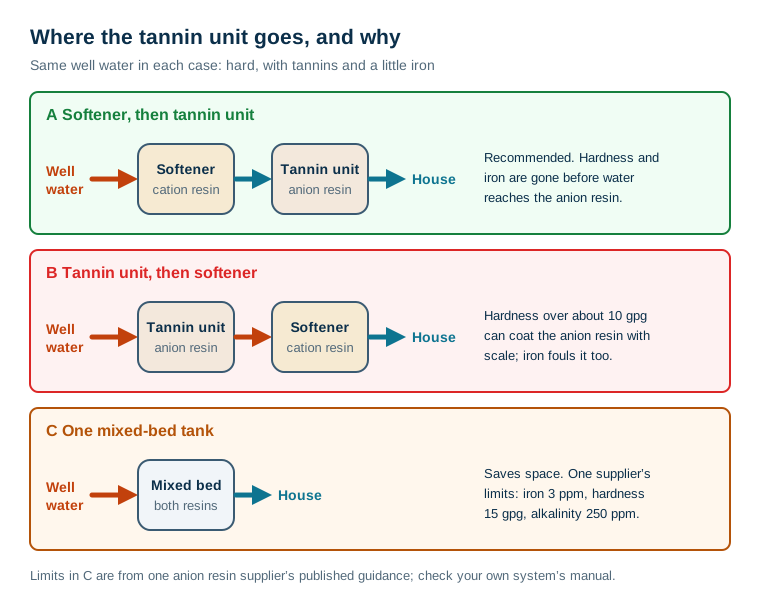
The position is decided by which resin is more fragile. Anion tannin resin is, by a wide margin:
- Hardness scales it. AXEON notes that hardness above 10 grains per gallon passing into a tannin unit may precipitate calcium carbonate, a white floc that restricts flow and blinds exchange sites.
- Iron fouls it. Metals like iron reduce anion resin's ability to remove tannins.
- Oxidizers damage it. Chlorine and other oxidizers should be removed before any anion unit.
A softener tolerates tannin far better than anion resin tolerates hardness and iron. So the softener goes first, where it removes hardness and a little iron, and the tannin unit goes second, where it sees soft water. AXEON states the general rule directly: it is "usually recommended" that water be softened before the tannin unit.
Why not put the tannin unit first to protect the softener? Because it protects the wrong tank. Unless the water is already soft and iron-free, a tannin-first layout sends the full hardness and iron load onto the expensive resin, and the color comes back within a season.
The full order on a problem well is iron removal, then the softener, then the tannin unit, with carbon ahead of the resins wherever chlorine is used. How that fits with sediment filters, neutralizers and UV is set out in well water treatment train order.
Mixed beds: one tank, tighter limits
A combination unit blends both resins in one tank. It saves floor space and valve cost, and many installations work well. It also removes the protective order above, because every bead sees raw water. Urbans Aqua, an anion resin supplier, publishes these limits for its dual-bed tannin guidance:
| Parameter | Limit for a mixed bed | Why |
|---|---|---|
| Iron | 3 ppm or less | Iron fouls the anion resin |
| Hardness | 15 grains per gallon or less | Hardness can form a bicarbonate precipitate that coats the resin |
| Alkalinity | 250 ppm or less | Feeds the same precipitate |
| Hardware | An upper screen | Prevents the lighter anion resin washing out in backwash |
Treat those as one supplier's figures, not a universal standard, and ask any installer quoting a combination unit for the limits in its own manual. If your water is outside them, separate tanks are the more reliable design.
The pH Problem: Why Tannin Removal Is Unreliable on Some Wells
Tannin wells are often shallow and acidic, and anion resin interacts with pH in three ways that catch owners out:
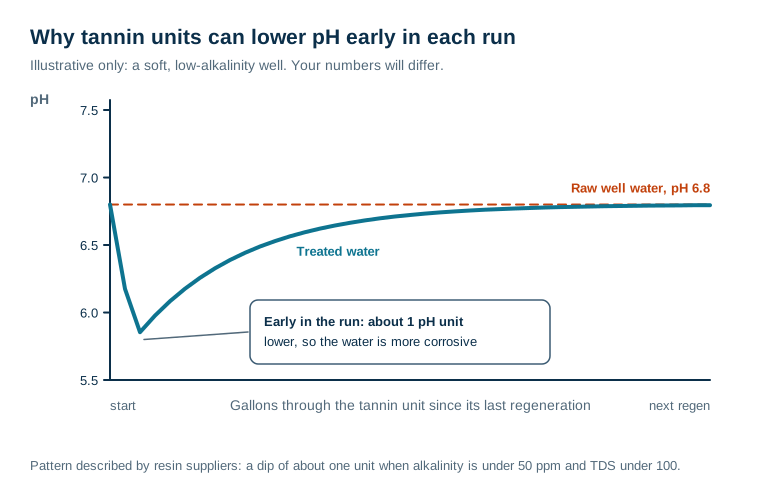
1. It lowers pH for part of each run. Anion resin removes alkalinity along with tannins, and "the pH will be suppressed during the service cycle," as Urbans Aqua puts it. It says the drop may reach a full pH unit when alkalinity is under 50 ppm and total dissolved solids are under 100 ppm. On a well that starts at pH 6.8, that means water around pH 5.8 reaching the plumbing early in each run, which is aggressive toward copper and brass.
2. Fixing the pH changes the order. The usual cure for acidic water, a calcite neutralizer, works by dissolving calcium into the water. That adds hardness, which anion resin must not see. The order then becomes neutralizer, softener, tannin unit. The trade-offs between a neutralizer and a softener are in water softener vs acid neutralizer, and low-pH treatment in general is covered in why low-pH well water needs separate treatment.
3. High pH brings a different problem. AXEON warns that treating water above pH 8 increases the risk of a fishy odor from anion resin, and that high pH combined with chlorine is the worst case.
What to measure because of this: pH, alkalinity and total dissolved solids, alongside the tannin level. A quote based only on color and tannin ppm misses the numbers that predict corrosive water or odor after installation.
Regeneration Settings That Keep Anion Resin Working
A tannin unit that clears the color for the first month and then fades is usually under-regenerated, not defective. The suppliers' guidance is consistent:
| Setting | What suppliers publish |
|---|---|
| Regeneration frequency | Every two to three days (AXEON); no less often than every three days (Urbans Aqua) |
| Salt dose | About 10 lb per cubic foot (AXEON); 8 to 10 lb per cubic foot (Urbans Aqua) |
| Brine contact time | At least 30 minutes so organics can release from the beads (Urbans Aqua); ResinTech's tannin resin sheet specifies over 60 minutes |
| Warning sign | Color returning in the treated water is the best indication of a fouled bed (Urbans Aqua) |
These settings use more salt than a softener regenerating on hardness alone, which is worth including in the running-cost comparison. They also mean a combination unit is regenerated on the tannin schedule, not the hardness schedule, so it usually uses more salt than the softener it replaced.
Keep chlorine away from both resins. If the well is shock-chlorinated or continuously chlorinated, a carbon filter belongs ahead of the resins. How chlorine degrades softener resin over time is explained in how chlorine damages water softener resin.
Separate Tanks or a Combination Unit?
| Your water | Better choice | Reason |
|---|---|---|
| Tannins, soft water, no iron | Tannin unit alone | Nothing for a softener to do |
| Tannins, moderate hardness, iron under 3 ppm, alkalinity under 250 ppm | Combination unit is reasonable | Inside the published mixed-bed limits |
| Tannins, hardness over 15 gpg or iron over 3 ppm | Separate softener then tannin unit, with iron removal first if needed | Outside mixed-bed limits; anion resin needs protecting |
| Tannins, pH under about 6.8, low alkalinity | Neutralizer, softener, then tannin unit | pH correction first; anion resin lowers pH further |
| Tannins mainly a drinking water complaint | Point-of-use treatment at the kitchen tap | Cheaper than whole-house anion treatment |
On that last row, a reverse osmosis unit at one tap removes tannin color and taste from drinking and cooking water without any whole-house resin. How it fits alongside a softener is covered in reverse osmosis and a water softener together.
What a Softener Cannot Do About Tannins
- It cannot remove tannin color, at any salt setting.
- It cannot be converted into a tannin unit by changing its settings. Adding anion resin makes it a different system with different limits.
- It cannot protect a tannin unit from iron above its own iron rating. That needs iron removal first.
- It cannot fix low pH. A tannin unit makes low pH worse for part of each run, so pH correction is a separate job.
- It cannot undo organic fouling with salt. Only cleaning and prevention help.
What to Do Next
- Confirm it is tannin, using the glass and filter tests in the yellow water guide.
- Order a lab test that covers the design numbers: tannin in ppm, hardness, iron, manganese, pH, alkalinity and total dissolved solids. Sample in spring if your color is seasonal.
- Place the tannin unit after the softener unless the water is already soft and iron-free.
- Check any combination unit against its published limits before you buy, and choose separate tanks if you are outside them. When you reach the equipment, comparing standalone tannin units with combination tanks sets each against those limits.
- Plan for pH. If alkalinity is low, expect the pH dip and budget for correction.
- Set regeneration on the tannin schedule, every two to three days, and keep chlorine away from the resins.
So can a water softener remove tannins? Not on its own, but it plays a central part in the system that does, as the stage that protects the anion resin. Put it first, respect the pH and alkalinity numbers, and the tannin unit behind it can do its job for years.
Frequently Asked Questions
Will a water softener remove tannins from well water?
No. A water softener uses cation resin, which trades sodium for positively charged ions such as calcium and magnesium. Tannins are negatively charged organic acids, so the resin has nothing to exchange them for. Removing them takes anion resin, which regenerates with the same salt. It comes either as a separate tannin tank or blended with softening resin in a combination unit.
Does the tannin filter go before or after the water softener?
After, in most homes. Anion tannin resin is fouled by hardness and iron, and one resin manufacturer notes that hardness above about 10 grains per gallon entering a tannin unit can precipitate calcium carbonate onto it. A softener ahead of it removes both. Iron removal, if you need it, goes before the softener, and carbon goes ahead of both resins on any chlorinated supply.
Do tannin and softener combination systems work?
They can, inside tighter limits than two separate tanks. Mixing anion and cation resin in one tank saves space and cost, and many perform well. One anion resin supplier does not recommend a mixed bed when iron is above 3 ppm, hardness above 15 grains per gallon or alkalinity above 250 ppm, because hardness can precipitate in the bed. Outside those limits, separate tanks are the safer design.
Can tannins damage my water softener?
Sources disagree on how much. One tannin equipment maker says tannins pass through softening resin without harmful effects. Others describe organic fouling, where tannin precipitates or iron bound up with tannin lodges in the bed and brine cannot remove it. In practice the risk rises with iron, with long gaps between regenerations and with years of exposure, so regenerate at least every few days and clean the resin periodically.
Why did my water pH drop after installing a tannin filter?
Anion resin removes alkalinity as well as tannins, so the pH of treated water drops for part of each service run. One resin supplier says it may fall by a full point when alkalinity is below 50 ppm and total dissolved solids are below 100 ppm. On an already acidic well, that makes the water more corrosive, so test pH and alkalinity before choosing a tannin unit.
Why does my water smell fishy after a tannin system?
New anion resin can give off a fishy odor, and one tannin equipment maker notes the risk is higher when the water pH is above 8, with chlorine present being the worst case. Rinse a new unit thoroughly as the installation instructions direct, and keep chlorine and other oxidizers away from anion resin with a carbon filter ahead of it.
