
Do You Need a Water Softener on City Water?
A water softener for city water is worth it only when your supply is actually hard. Utilities treat water to make it safe, not soft, so most leave the calcium and magnesium in. Judge by the top of your utility's hardness range: under about 3.5 gpg, skip it; above about 7 gpg, most homes benefit. On city water, budget for the chlorine as well, because it wears out the resin.
That second part is what makes city water different from a well. A well owner buys a softener and forgets about it for fifteen years. A city owner is feeding the resin a disinfectant every day, and is often sizing against a hardness figure that moves through the year. This page covers both, and it is honest about the cases where the answer is no.
What City Treatment Does, and What It Leaves in the Water

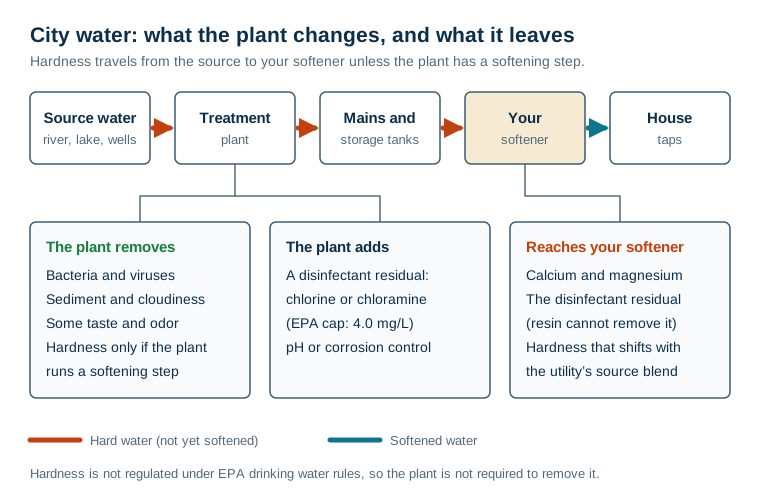
A municipal plant is built to meet federal drinking water standards. Those standards are about health: pathogens, disinfection byproducts, lead, nitrate and the like. Hardness is not on the list. The EPA's National Primary Drinking Water Regulations set limits for microorganisms, disinfectants, chemicals and radionuclides. Calcium and magnesium are not among them, so a plant has no regulatory reason to remove them.
| What city treatment typically does | What it means for a softener decision |
|---|---|
| Removes pathogens and particles | Your softener will not be protecting you from anything the plant already handled |
| Adds a disinfectant residual | The chlorine or chloramine is meant to reach your tap, and it reaches your resin first. EPA caps it at 4.0 mg/L |
| Adjusts pH or adds corrosion control | Helps protect pipes. It does not remove hardness |
| Softens, at some plants | A minority of utilities run a softening step. If yours does, the water quality report says so and the hardness figure will be low |
| Leaves hardness in, at most plants | Whatever the river, lake or aquifer picked up from rock arrives at your meter |
Why source water matters more than treatment. Hardness comes from the ground, not the plant. Surface water from rain-fed rivers is often moderately hard, and groundwater that has spent years in limestone is often much harder. The geology behind that is explained in why well water is often hard, and a city that pumps from the same aquifer as its rural neighbours delivers the same hardness through a pipe.
Do You Need a Water Softener for City Water? Decide on the Top of the Range
The decision itself is short once you have the right number. The right number is the highest hardness your utility delivers during the year, not the average and not a single figure copied from a website.
| Top of your utility's range | Usual verdict | Why |
|---|---|---|
| Under 3.5 gpg (60 mg/L) | No softener | Soft water. Scale is rarely a problem, and running costs outweigh any benefit |
| 3.5 to 7 gpg (60 to 120 mg/L) | Optional | Moderately hard. It depends on a tankless heater, glass showers and how much the spotting bothers you |
| 7 to 10.5 gpg (120 to 180 mg/L) | Usually yes | Hard. Scale builds in heaters, kettles and aerators within a year or two |
| Over 10.5 gpg (180 mg/L) | Yes | Very hard. Appliances, fixtures and water heaters all pay for it |
Those bands are the conventional hardness classes, set out with the reasoning behind each threshold in what water hardness level is too hard. If your figures come in mg/L or ppm, divide by 17.1 to get grains per gallon. The conversions are worked through in water hardness units.
Hardness is only half of the verdict. The other half is whether you stay long enough to recover the cost, and which appliances you are protecting. A tankless water heater on 12 gpg water makes a strong case. A two-person apartment on 5 gpg usually does not. That arithmetic, with a worksheet that is willing to say no, is in do you actually need a whole-house water softener.
Why City Hardness Moves: Source Blends and Switches
This is the first thing city owners are rarely told. Many utilities do not have one source. They blend river water with wells, buy water from a neighbouring system, or run more than one plant. The mix changes with the season, with drought, with plant maintenance and with demand. Every change moves the hardness at your tap.
A real example: the City of Phoenix 2025 Water Quality Report gives total hardness as a range of 172 to 302 mg/L, which is 10 to 17.6 gpg. The water comes from the Salt, Verde and Colorado rivers through five plants, plus a small share from city wells. A household at the bottom of that range and one at the top are living with very different water, under the same utility name.
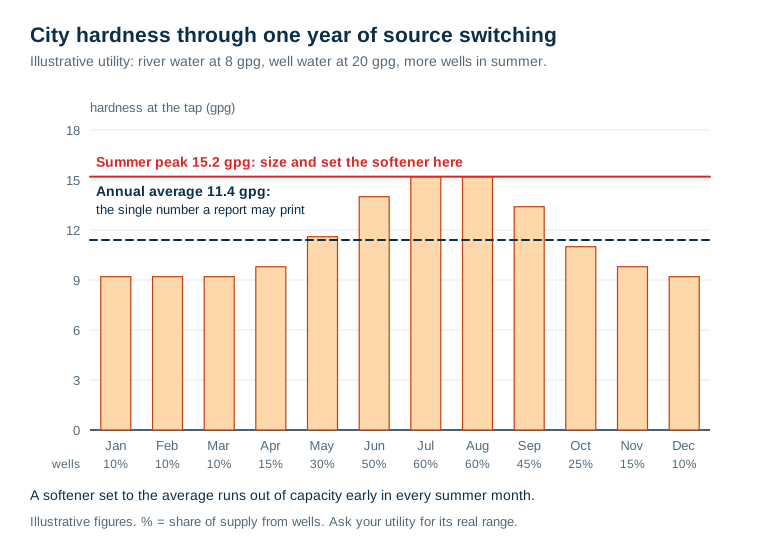
What the chart shows (illustrative numbers). A utility blends soft-ish river water at 8 gpg with well water at 20 gpg and leans on its wells in the summer. The annual average works out at 11.4 gpg, and the summer peak is 15.2 gpg. A softener set to 11.4 gpg treats roughly a third more water per cycle than it can soften through the summer, so hardness slips through for the last part of each cycle. The timing signature of that fault is in why hardness returns before the next regeneration.
Common reasons a city blend changes:
- Summer demand. Wells and secondary sources are brought online when use peaks.
- Drought or river conditions. Surface water gets scarcer or changes in quality, so groundwater makes up more of the supply.
- Plant maintenance. Your neighbourhood can be fed from a different plant for weeks.
- Purchased water. Some systems buy water from a wholesaler, and the wholesaler's own blend changes.
How to Find Your Utility's Real Hardness Range
A single annual average hides all of that. Here is how to get the number you actually need.
1. Read the Consumer Confidence Report. Every community water system publishes one each year. The EPA's Consumer Confidence Report page explains where to find yours. Because hardness is not regulated, it is not in the main compliance table. Look for a later table labelled secondary, aesthetic or other parameters. How to read each column is set out in how to read your water hardness report.
2. Ask the utility five specific questions. A phone call or an email to the water quality desk usually gets an answer within days:
- Which plant or source serves my address?
- What were the lowest and highest hardness readings last year, not the average?
- Does the blend change by season, and when?
- Is any source or plant change planned?
- Which disinfectant do you use, chlorine or chloramine, and what residual range do you carry?
The last question is not about hardness, but you need the answer before you buy anything. It is the subject of the next section.
3. Test at your own tap, twice. Buy a drop-count titration kit and test cold water from a tap that has run for a minute, once in winter and once in late summer. If the two readings differ by more than a couple of grains, you are on a blended supply and should size to the higher one. The method is in how to test water hardness at home.
The Resin Problem Wells Never Have
Every city supply carries a disinfectant residual on purpose. It keeps the water safe for the days it spends in the mains. That residual passes straight through the softener, because resin exchanges charged ions and chlorine is not one it can grab. On the way through, it oxidises the resin.
The mechanism, and how to spot the damage early, is covered in how chlorine damages water softener resin. For the buying decision, what matters is the cost:
| Your utility uses | What it means for the resin | What to budget |
|---|---|---|
| Free chlorine, under about 0.5 mg/L | Slow wear, noticeable over a decade | Nothing extra now. Consider higher cross-link resin at the first re-bed |
| Free chlorine, around 1 mg/L or more | Resin life roughly halved | A whole-house carbon filter ahead of the softener, costed against resin replacement |
| Chloramine | Persistent exposure that standard carbon handles poorly | Catalytic carbon, sized for a longer contact time |
Whether carbon pays for itself at your residual is worked through with real arithmetic in when city chlorine requires carbon pretreatment. If the answer to question five was chloramine, read how chloramine affects a water softener before choosing a filter. A carbon tank sized for chlorine is too small for chloramine.
The trap: buying a softener package on price and adding carbon "later". Later often means after the first resin bed has already paid the cost.
City-Specific Details to Get Right at Purchase
Size on the peak hardness. Use the top of your range in the grain calculation, plus a small margin if your tap tests show seasonal swings. An undersized unit on a blended supply fails quietly every summer.
Choose metered regeneration. A demand-initiated control regenerates on gallons used, not on a timer, which saves salt and water on its own. On a supply whose hardness moves, it also lets you raise the hardness setting for summer without wasting salt all winter.
Check local discharge rules. Some communities, particularly in parts of California, restrict softeners that send brine to the sewer. Ask your city or utility before you buy, not after the plumber has left.
Leave a cold tap unsoftened if you want one. Many people keep the kitchen cold tap on a hard branch for drinking. That is a preference, not a requirement.
What a Softener Will Not Fix on City Water
Being clear about this saves money and disappointment:
- Chlorine or chloramine taste. A softener removes neither. Why the taste survives, and what it tells you about the resin, is in chlorine taste after a water softener.
- Lead from service lines or old plumbing. Ion exchange is not a lead treatment you should rely on. The contaminant-by-contaminant list is in what a water softener does not remove.
- Disinfection byproducts, PFAS and most taste and odour compounds. These need carbon or reverse osmosis certified for the specific claim.
- Low street pressure. A softener costs a few psi. It never adds any.
- Scale already in pipes and heaters. New scale stops forming, but old scale has to be cleaned out.
The Decision, In Order
- Get the top of your utility's hardness range, from the report and a direct question to the utility.
- Test your own tap in two seasons. Size to the higher reading.
- Apply the bands. Under 3.5 gpg, stop here. Between 3.5 and 7, decide on appliances and years in the home. Above 7, a softener usually pays.
- Find out your disinfectant and residual before choosing equipment.
- Price the resin cost of that disinfectant, and budget carbon or a higher cross-link resin accordingly.
- Buy metered, sized for the peak, and check local discharge rules first. Comparing city-water softeners on resin crosslink and carbon stage applies the same chlorine arithmetic to specific units.
Whether you need a water softener for city water comes down to two numbers most buyers never look up: the highest hardness your utility delivers, and the disinfectant it adds. Get both before you talk to a dealer, and the decision becomes simple.
Frequently Asked Questions
Do I need a water softener if I have city water?
Only if your city water is actually hard. Utilities treat water to make it safe, and hardness is not regulated under EPA drinking water rules, so most plants leave it in. Find the top of your utility's hardness range, not the average. If it stays under about 3.5 grains per gallon (60 mg/L), a softener is rarely worth it. Above about 7 gpg, most households with water heaters, dishwashers and glass showers will notice the difference.
Is city water already softened?
Usually not. Some utilities run a softening step at the plant and say so in their annual water quality report, but most treat for pathogens, particles and taste, then add a disinfectant. The calcium and magnesium the source water picked up from rock and soil pass through the plant and the mains to your tap.
Will chlorine in city water damage a water softener?
Yes, slowly. The chlorine or chloramine a utility leaves in the water to keep it safe in the pipes passes straight through the softener and oxidises the resin beads over the years. On a supply around 1 mg/L, a standard resin bed may last roughly half as long as it would on unchlorinated water. That is why carbon pretreatment or a higher cross-link resin is worth budgeting on city water.
How do I find out how hard my city water is?
Start with your utility's annual Consumer Confidence Report, which often lists hardness in a secondary or aesthetic table as a range. Then call or email the utility and ask which source or plant serves your address, and what the lowest and highest readings were last year. Finally, test the water at your own tap with a drop test kit in winter and again in summer.
What hardness level needs a water softener?
There is no legal limit. As a working guide, water under about 3.5 gpg is soft and rarely needs treatment. From 3.5 to 7 gpg it is optional and depends on your appliances. Above 7 gpg, scale shows up in water heaters, kettles and on glass, and a softener usually earns its keep. Above 10.5 gpg the water is classed as very hard.
Can I use a water softener on city water without a carbon filter?
You can, and many people do, but the resin wears out faster. Whether a carbon filter pays for itself depends on your chlorine residual and on what a resin replacement costs you. Near 1 mg/L of free chlorine and above, carbon usually starts paying back. Well below that, a higher cross-link resin at the next re-bed may be the cheaper answer. Chloramine supplies need catalytic carbon.
