
Where to Install a Softener on a Well Water System
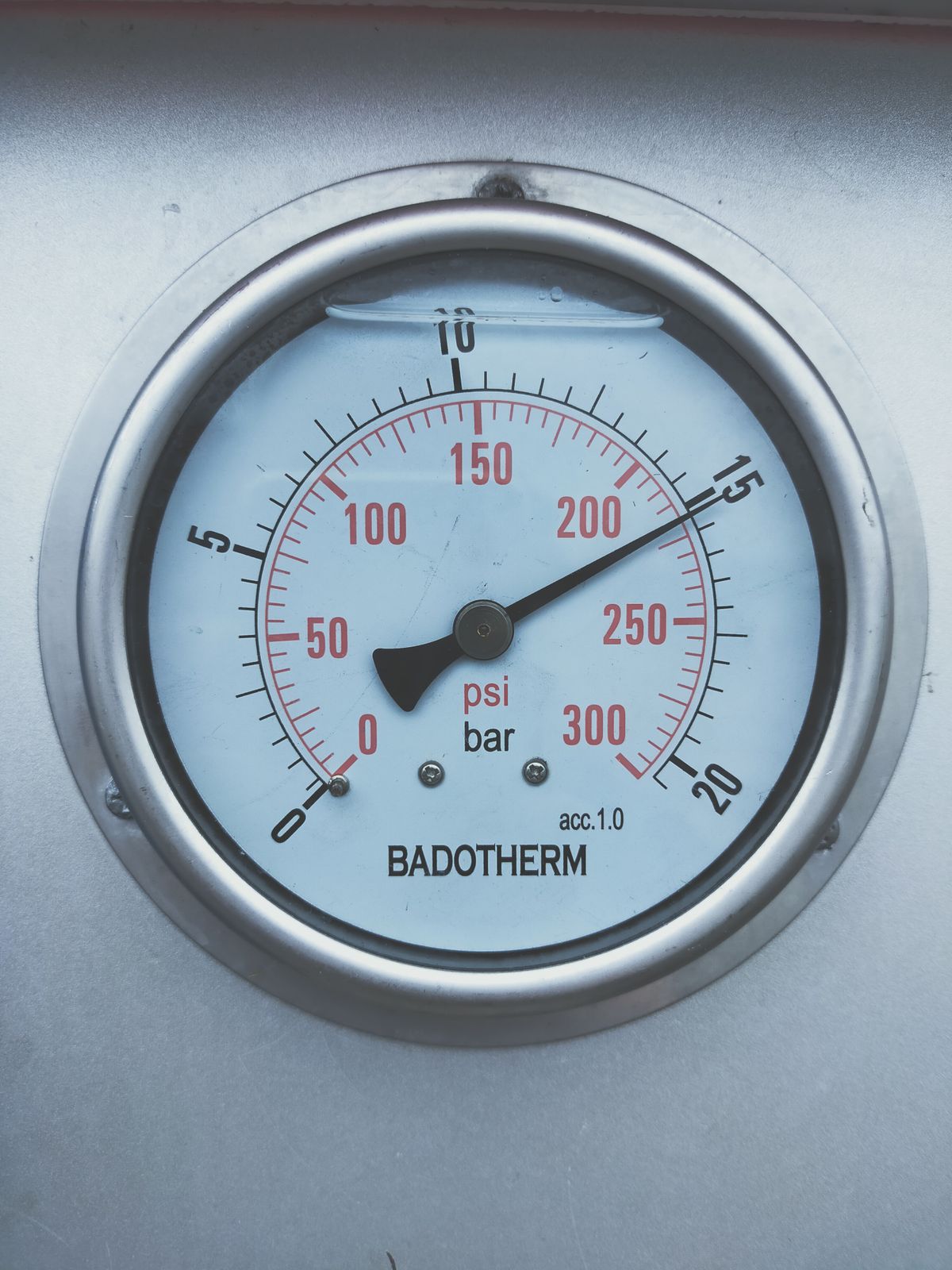
Where to install a softener on a well system: after the pressure tank, never before it. The order is well, pump, pressure tank, sediment prefilter, any iron or pH stages, softener, then the water heater and the house. Tee the outdoor taps off before the softener. The pressure tank shields the softener's valve and resin from pump surges, which is why it has to come first.
The rest of this page is the layout itself, with the reason each part sits where it does.
Where to Install a Softener on a Well System: The Layout
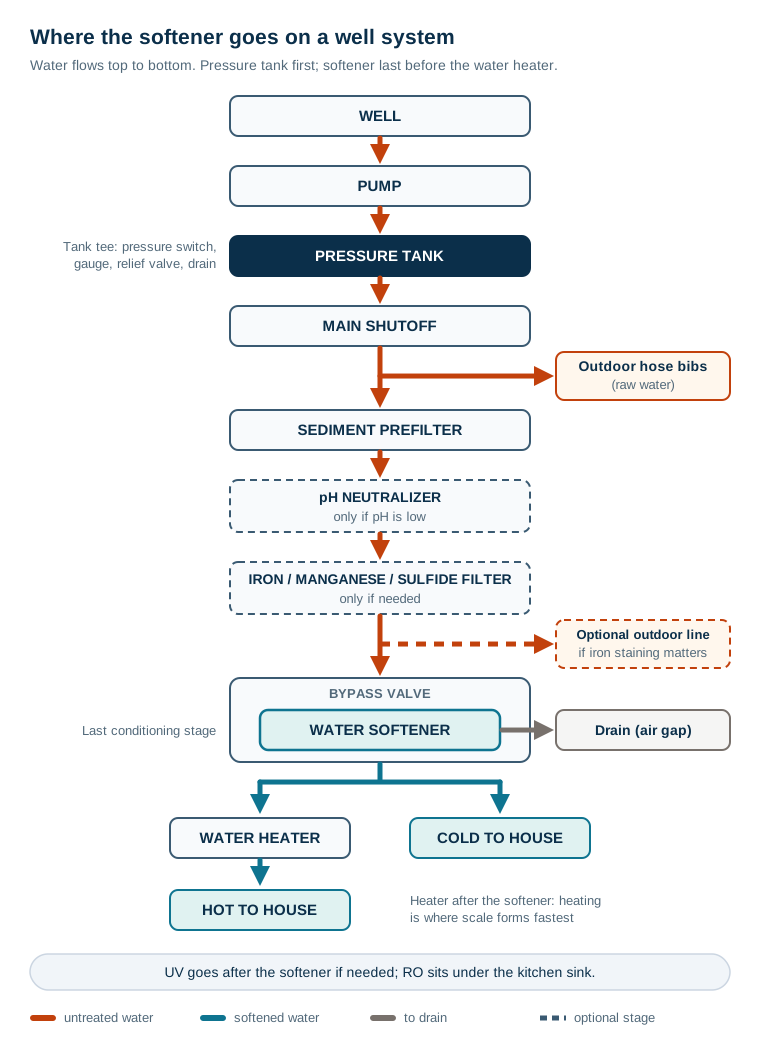
This matches the "proper order to install water treatment equipment" in Whirlpool's softener installation and operation manual. Its diagram runs from well and pump to pressure tank, then an optional sediment filter, then the softener, then the water heater, with outside faucets left on untreated water. The same manual says to install the softener "between the water inlet and water heater" and that "any other installed water conditioning equipment should be installed between the water inlet and water softener."
Here is the reasoning for each position, in flow order.
| Position | Why it is there |
|---|---|
| Pump | Makes flow in bursts. It is either on at full output or off |
| Pressure tank | Turns those bursts into steady, sensed pressure. Everything that needs stable pressure goes after it |
| Main shutoff | Lets you isolate the whole treatment train without touching the pump |
| Outdoor tees | Irrigation and car washing don't need softened water, and every gallon sent outside through the softener uses up capacity and salt |
| Sediment prefilter | Catches sand and grit before they reach any valve with moving seals |
| Neutralizer, then iron filter | Low pH is corrected first because it affects how iron behaves, then iron is removed before it can foul the resin |
| Softener | Last conditioning stage, so it sees only the hardness it is meant to handle |
| Water heater | After the softener, because heating is where scale forms fastest |
Which of the middle stages you actually need is a test-result question. That decision tree is in the hub guide, can a water softener be used on private well water?
Why the Pressure Tank Must Come First
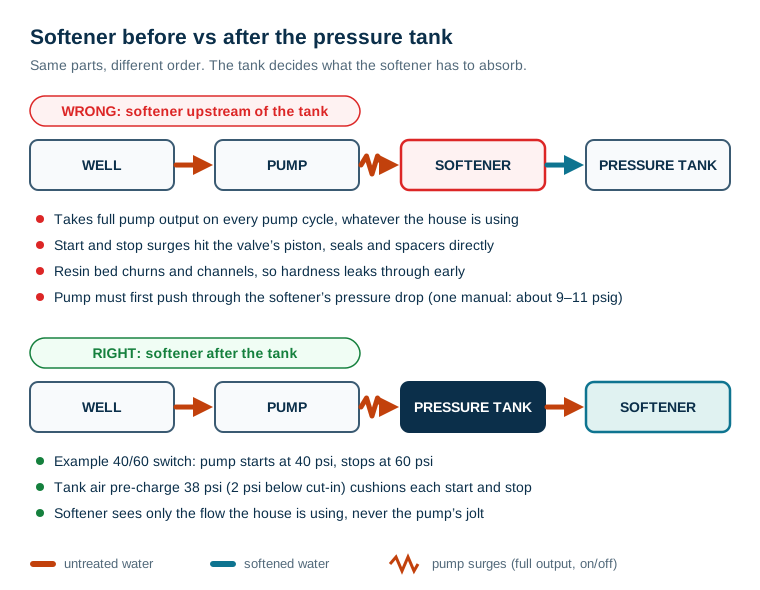
The pressure tank isn't just storage. Amtrol's Well-X-Trol installation and operation instructions describe it as protecting the pump "by reducing surge, dampening pressure spikes, offering a point of pressure control, and providing minimum run time." Each of those four jobs also protects a softener placed after the tank.
How the pressure switch works. The switch sits on the tank tee and senses pressure there. When household use pulls the pressure down to the cut-in setting (40 psi on a 40/60 switch, for example), the pump starts. It runs at full output until pressure reaches the cut-out (60 psi), then stops. Amtrol's instructions set the tank's air pre-charge 2 psi below cut-in, so a 40/60 system has a 38 psi pre-charge. Between cut-in and cut-out, the air cushion in the tank absorbs the pump's start and stop.
What a softener downstream sees. Flow set by how much water the house is using, at a pressure that moves slowly within the switch band. A single faucet draws a single faucet's flow through the resin, and the valve never takes the jolt of the pump starting.
What a softener upstream would see. Every pump cycle, at the pump's full output, whatever the house is using. Here is what that does.
What Goes Wrong When the Softener Is Upstream
This mistake usually happens when a softener is fitted at the point the well line enters the basement, because that's where the pipe is easy to reach, and the pressure tank sits further along the line. It causes three problems.
1. The resin bed takes surges and churns. A softener's resin bed works best with flow that rises and falls gradually. Upstream of the tank, the bed goes from nothing to full pump output every time the pump starts, then stops dead at cut-out. Repeated start-stop surges at full flow can disturb the bed and open preferred paths through it, so water runs through channels instead of across all the resin. The result is hardness leaking through well before the capacity is used up. The symptoms and the fix are in water softener resin channeling.
2. The valve wears early. Without the tank dampening them, the pressure spikes from every pump start and stop hit the control valve's piston, seals and spacers directly. A valve that should cycle a few times a week is now taking a hit every time the pump runs. Leaks at the control head and seal wear show up sooner. The seal-and-spacer service that eventually follows is covered in servicing a water softener control valve.
3. The pressure switch reads the wrong thing. Every softener has a pressure drop across it at flow. The Whirlpool manual above lists about 9 to 11 psig at its rated service flow. Upstream of the tank, the pump has to overcome that drop before the switch at the tank sees any rise. The pump works against extra resistance, runs longer to reach cut-out, and any fouling in the bed makes it worse over time. Downstream, the same drop just shows up as slightly lower pressure at the fixtures, where it's easy to diagnose. For that, see low water pressure after a water softener.
The fix for an upstream installation is to re-pipe it downstream of the tank tee. No setting on the softener makes up for being in the wrong position.
Pump Output: Can the Well Supply the Softener's Regeneration?
The softener doesn't only take water. During regeneration it sends water to drain at a set rate, and on a well that water comes from the pump through the tank.
- Check the softener's requirements. The Whirlpool manual requires at least 3 gallons per minute at the inlet and allows no more than 125 psi. The Hellenbrand ProMate consumer manual requires at least 25 psi for regeneration, also with a 125 psi maximum.
- Measure what your pump delivers. With the pump running, open the drain valve on the tank tee or a nearby hose bib fully and time how long it takes to fill a 5-gallon bucket. Twenty seconds means 15 gpm. Sixty seconds means 5 gpm. Do it after the pressure has dropped enough to start the pump, so you're measuring the pump and not the tank.
- Add up everything that backwashes. An iron filter backwashes at a much higher rate than a softener, and two units regenerating at the same time can ask for more than the pump makes. Staggering them is covered in iron filter before water softener.
If the pump can't keep up, the backwash is weak, grit and iron stay in the bed, and the unit slowly fouls even though it's in the right place.
Choosing the Exact Spot in the Room
Once the order is right, the exact position comes down to four practical constraints. Get these wrong and the order doesn't help.
Temperature. Keep the softener above freezing and away from heat. The Pentair Fleck manual says the unit "cannot be subjected to freezing conditions." The Whirlpool manual says not to locate it where freezing occurs, and that freeze or hot-water damage voids the warranty. That usually rules out an unheated well house, a crawlspace or a cold garage. If the only space available gets cold, read what to do about a frozen water softener before winter, not after.
Drain. Regeneration water needs a floor drain, standpipe, laundry tub or sump within reach of the drain line. The Whirlpool manual calls for a 1½-inch air gap between the end of the hose and the drain, so that sewer water can't be drawn back into the softener. Hellenbrand says to avoid overhead drain runs where possible, and limits them to 8 feet up and 20 feet long when they can't be avoided.
Power. Use a plain grounded outlet that can't be switched off. Hellenbrand's manual asks for a "continuous" supply that "cannot be turned off with another switch." Don't use the pump circuit or an outlet controlled by a light switch.
Access. Leave room to lift a 40-pound salt bag into the brine tank, to reach the bypass valve, and to change the prefilter cartridge. A softener squeezed behind the pressure tank is one that doesn't get maintained.
Five Placement Mistakes on Well Systems
- Softener between the pump and the pressure tank. Covered above. Re-pipe it.
- Outdoor taps downstream of the softener. Salt and capacity go into the lawn. Move the hose bib tees ahead of it.
- Softener after the water heater, or on the cold line only. Hot water goes unsoftened, and that's where scale builds fastest. Hellenbrand's manual recommends softening both the hot and cold supply.
- No bypass valve. Without one, servicing the softener means shutting off water to the whole house. Hellenbrand's manual says to "always provide for the installation of a bypass valve." Testing a water softener bypass valve shows how to confirm yours actually isolates the unit.
- Iron filter after the softener. The resin sees the iron first and fouls. Pretreatment always goes ahead of the softener.
What This Layout Cannot Fix
Getting the position right protects the softener. It doesn't treat anything the softener isn't built for. A correctly placed softener still passes bacteria, nitrate and hydrogen sulfide straight through, and still fouls on iron it was never meant to take. The layout above only works if the stages between the pressure tank and the softener match what your water test found, and that decision starts with the full-panel test described in the well water softener hub.
In short: the pump makes pressure, the tank smooths it, the filters clean the water, and the softener comes last before the heater. On a well, every other part of the system is there so the softener only has to deal with hardness.
Frequently Asked Questions
Does a water softener go before or after the pressure tank?
After. The pressure tank should be the first thing the water reaches after the well, and every treatment stage, including the softener, goes downstream of it. The tank absorbs pump surges, gives the pressure switch a stable point to sense, and lets the pump run in longer, steadier cycles. Manufacturer installation diagrams show well, pump, pressure tank, optional sediment filter, softener, then water heater.
Should the water softener go before or after the water heater?
Before. The softener must feed the water heater so that hot water is softened too, because heated water is where scale forms fastest. One manufacturer's installation manual says to always install the softener between the water inlet and the water heater, and says any other conditioning equipment goes between the inlet and the softener.
Should outside faucets be on soft water with a well?
Usually not. Teeing the hose bibs off before the softener saves salt and resin capacity on water used for gardens, cars and lawns. Manufacturer instructions recommend leaving outside faucets on hard water. If you need filtered water outside, for example because of iron staining on siding, tee the outdoor line off after the iron filter but before the softener.
Can I put a water softener in my well house or garage?
Only if the space is protected from freezing and has a drain and a steady power supply. Softener manuals prohibit freezing conditions and set a water temperature ceiling, and most also need a nearby floor drain, standpipe or laundry tub with an air gap. An unheated well house or garage in a cold climate risks a cracked valve and tank. A heated basement near the pressure tank is the usual location.
How far from the pressure tank can a water softener be?
There is no fixed maximum distance. What matters is that it is downstream of the tank, has a drain within reach of its drain line, has an uninterrupted outlet, and is upstream of the water heater. In most homes that puts it a few feet from the tank, but it can sit further down the main line if the drain and power are better placed there.
