
Water Softener vs Whole-House Water Filter
Water softener vs whole house filter is a question about mechanism, not branding. A softener exchanges calcium and magnesium for sodium, so it removes hardness and nothing much else. A whole-house filter traps particles or adsorbs chemicals such as chlorine, and lets the hardness straight through. Neither does the other's job, and many homes, especially hard-water homes on chlorinated city water, need both.
The problem is that products are named for marketing. Some "whole house filtration systems" are softeners with a carbon tank added. Some "salt-free softeners" do not soften at all. This page gives the real differences, a way to read a spec sheet that tells you what a unit is whatever it is called, and a table that matches each problem to the technology that fixes it.
Water Softener vs Whole House Filter: 8 Differences That Matter
| Water softener | Whole-house filter (carbon or sediment) | |
|---|---|---|
| 1. Mechanism | Ion exchange: resin swaps calcium and magnesium for sodium or potassium | Adsorption (carbon) or straining (sediment media and cartridges) |
| 2. Removes | Hardness. Also barium and radium if certified for them, and dissolved iron and manganese within limits | Chlorine, chloramine (catalytic carbon), taste and odor, organic chemicals, sediment |
| 3. Does not remove | Chlorine, sediment, VOCs, lead, PFAS, bacteria | Calcium and magnesium. Hardness passes straight through |
| 4. Consumable | Salt or potassium chloride, refilled regularly | Replacement media or cartridges |
| 5. Regenerates? | Yes. Brine rinses the resin on a schedule or by meter | No. Carbon adsorbs until spent, then is replaced |
| 6. Needs a drain and power? | Yes, both | Cartridge filters need neither. Backwashing tanks need a drain, and most need power |
| 7. Capacity is measured in | Grains of hardness between regenerations | Gallons or years of service |
| 8. Certification | NSF/ANSI 44 | NSF/ANSI 42 (chlorine, chloramine, taste, particulate); NSF/ANSI 53 for health claims |
Row 3 is the one to hold on to. A softener does not treat chlorine, and chlorine slowly breaks down its resin, as described in how chlorine damages water softener resin. A filter does not treat hardness, so a house with only a carbon filter still scales its water heater. The full list of what ion exchange leaves behind is in what a water softener does not remove.
Why They Look the Same in the Basement
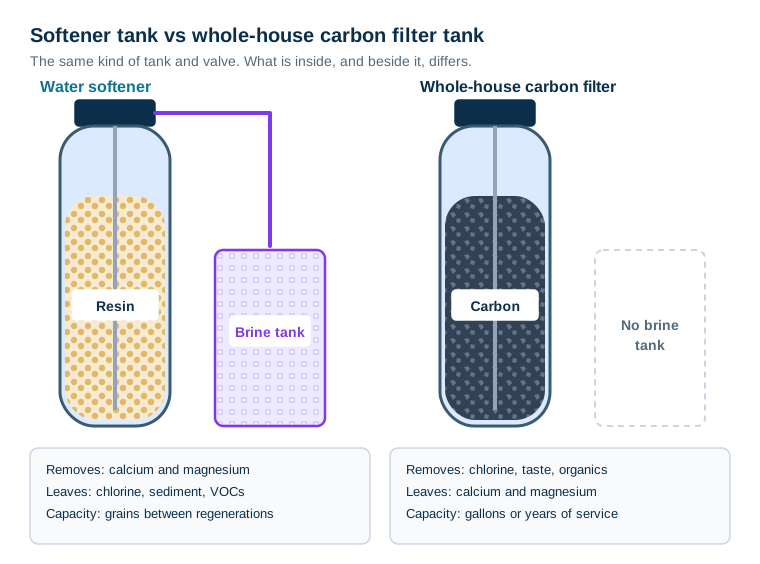
Both are often the same fiberglass pressure tank with a control valve on top. Many backwashing carbon filters use the same valve bodies as softeners. From across the room, the only reliable difference is the brine tank, the second, shorter tank of salt beside a softener. A carbon filter has none, because carbon is never regenerated with salt.
Cartridge filters look different: a clear or opaque housing with a replaceable cartridge inside. A whole-house cartridge system is always a filter, never a softener.
The Marketing Problem: Names That Hide What a Unit Is
These are the naming patterns that cause most wrong purchases:
- "Salt-free water softener." Usually a template-assisted crystallization (TAC) conditioner, sometimes just a carbon filter. It adds no salt because it removes no hardness. TAC media changes how calcium behaves so it is less likely to form scale, but a hardness test after the unit reads the same as before. Scale-reduction devices are tested under their own protocols, such as Germany's DVGW W 512, not under the softener standard.
- "Whole house filtration system." Some of these are a carbon tank plus a softener tank sold as one package. That can be a perfectly good system. But if you are comparing it with a plain carbon filter, you are comparing one unit with two. If you want one package that handles both, check which whole-house filters carry a real scale-control stage before buying.
- "Filter-softener combo" in one tank. A layer of carbon or other media sits on top of softener resin. It softens, but the thin carbon layer has far less contact time than a dedicated carbon tank, so chlorine performance is limited.
- "Water conditioner." Older softener marketing used this word for true softeners. Newer marketing uses it for salt-free devices. On its own, the word tells you nothing.
- "Descaler," electronic or magnetic units. Neither a softener nor a filter. Nothing is removed from the water.
The certification is the tiebreaker. NSF/ANSI 44 covers only residential cation exchange softeners regenerated with sodium or potassium chloride. A product that removes hardness, and can prove it, can be certified to NSF/ANSI 44. A salt-free product cannot be, whatever it is called.
The Spec-Sheet Reading Guide
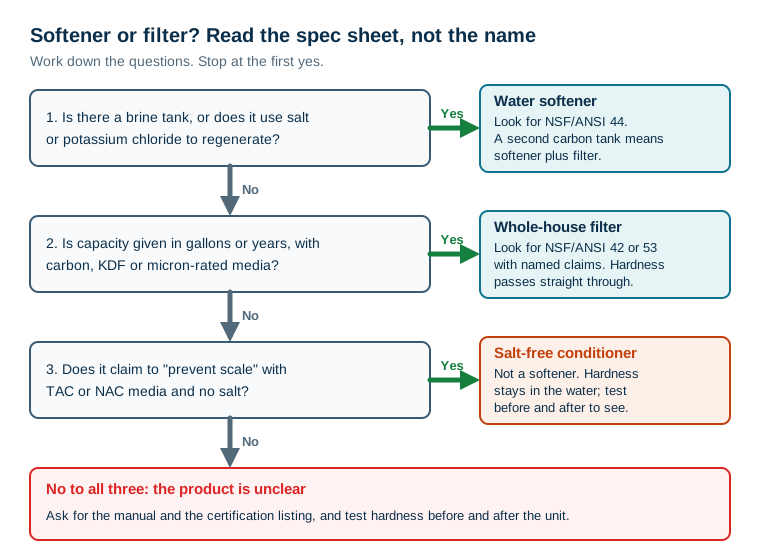
Ignore the product name and read these lines on the spec sheet or manual:
| Spec line | If it says... | You are looking at... |
|---|---|---|
| Capacity | Grains, e.g. "32,000 grain" or "1.0 cu ft resin" | A softener |
| Gallons or years, e.g. "1,000,000 gallons" or "10 years" | A filter or a salt-free conditioner | |
| Regenerant | Salt, potassium chloride, brine tank size | A softener |
| Salt settings | "lb per regeneration", "grains per lb" | A softener |
| Media | "Cation resin", "8% (or 10%) crosslink" | A softener |
| "GAC", "catalytic carbon", "coconut shell carbon", "KDF" | A filter | |
| "Micron rating", "5 micron" | A sediment filter | |
| "TAC", "NAC", "scale control media" | A salt-free conditioner | |
| Performance claim | "Reduces hardness to 0 to 1 gpg" | A softener |
| "Reduces chlorine by X%", "X gallons at 2 ppm chlorine" | A filter | |
| "Prevents scale" with no hardness figure | A conditioner | |
| Certification | NSF/ANSI 44 | A tested softener |
| NSF/ANSI 42 or 53, with named claims | A tested filter | |
| NSF/ANSI 61 or 372 only | Materials only. Says nothing about performance | |
| Installation | Drain and power required | A softener or a backwashing filter |
Two lines on the same sheet can point different ways. A two-tank "system" may list grains and gallons. That means it is both, which is fine, as long as you know it.
Check the certification claim, not just the number. Search the model on the certifier's listing, such as NSF's drinking water treatment unit listings, and confirm the exact claim appears, whether that is "Hardness Reduction", "Chlorine Reduction" or "Chloramine Reduction". A standard number on the box without a listed claim is not proof. Matching each Aquasana certification to the stage it covers shows the check worked through on one filter-plus-conditioner package.
Confirm with a test. Once the unit is installed, test hardness before and after it. A softener brings hardness down to about zero, and a filter or conditioner leaves it unchanged. The method is in how to test water hardness at home.
The Problem-to-Technology Table
Start from what you actually see or measured, not from a product category.
| What you have | What fixes it | Softener? | Whole-house filter? |
|---|---|---|---|
| White scale on fixtures, short water heater life, test above about 7 gpg | Softener | Yes | No |
| Chlorine taste or pool smell on city water | Carbon filter (NSF/ANSI 42, chlorine) | No | Yes |
| Chloramine in your utility's report | Catalytic carbon (NSF/ANSI 42, chloramine) | No | Yes, the right media |
| Sand, grit or cloudy particles | Sediment filter | No | Yes |
| Dissolved iron under the softener's rating | Softener | Yes | Optional |
| Oxidized iron, or iron above the rating | Iron filter ahead of the softener | No | Yes, an iron filter |
| Rotten-egg smell | Oxidation or carbon, depending on level | No | Yes, the right type |
| Lead, PFAS, nitrate, arsenic | Certified point-of-use filter or RO at the kitchen tap | No | Rarely the best fix |
| Bacteria on a well | UV (NSF/ANSI 55 Class A) or chlorination | No | No. A filter is not disinfection |
The iron rows are worked through in water softener vs iron filter. The CDC's guidance on home treatment is plain on the last row: water softeners do not remove parasites, bacteria or viruses, and a standard carbon filter is not a disinfection device either.
When a Home Needs Both, and Which Goes First
A home needs both when it has a hardness problem and a separate filtration problem. The two most common cases:
City water, hard and chlorinated. Carbon first, then the softener. The carbon removes the chlorine before it reaches the resin, and the softener removes the hardness. The details are in should a carbon filter go before a water softener. Two tanks on one line also bring two pressure drops and, with a backwashing carbon tank, two backwash schedules. How a whole-house carbon filter and softener work together covers setting those up so they do not clash.
Well water, hard with sediment or iron. Sediment, then iron treatment if needed, then the softener. The softener sees clean water and is sized on hardness alone. The full order is in pretreatment order: sediment and iron filters before a softener.
When the filter goes after. A small polishing carbon filter or an under-sink RO unit at the kitchen tap sits after the softener by design. Its job is drinking water, not protecting the softener.
Upkeep and Running Costs, Side by Side
| Water softener | Carbon tank (backwashing) | Cartridge filter | |
|---|---|---|---|
| Routine task | Add salt; check for salt bridges | Occasional valve check | Change the cartridge |
| Water to drain | Every regeneration. EPA puts some softeners at 25 gallons or more a day, up to 10,000 gallons a year | Periodic backwash | None |
| Power | Control valve | Control valve on most | None |
| Media life | Resin often lasts many years on chlorine-free water, less on chlorinated water | Carbon replaced every few years, depending on chlorine level and water use | Months, depending on the cartridge |
| Where it fails first | Salt and settings neglected, resin damaged by chlorine | Carbon exhausted, so chlorine passes through | Clogged cartridge and falling pressure |
The water figure comes from EPA's WaterSense page on cation exchange softeners. EPA does not currently label softeners, partly because of concerns about brine discharge to wastewater systems. Softener salt use depends on hardness, household water use and the salt setting. Why a water softener uses too much salt shows how to check yours.
What Neither Unit Does
- Neither disinfects. A well with a positive bacteria test needs UV or chlorination, whatever else is installed.
- Neither is the right tool for lead, PFAS, nitrate or arsenic in drinking water. Those are usually treated at the kitchen tap with a filter or RO unit certified for the specific claim. How a softener and RO share that job is in how reverse osmosis and a water softener work together.
- Neither replaces a water test. Buying first is how houses end up with a carbon filter on hard water or a softener on chlorinated water that did not need one.
The water softener vs whole house filter decision comes down to two numbers from one test: hardness and disinfectant. High hardness means a softener. Chlorine, chloramine or sediment means a filter. Both means both, filter first. Whatever the box calls it, the spec sheet tells you which one you are buying.
Frequently Asked Questions
Is a water softener the same as a whole house water filter?
No. A softener uses ion exchange resin to swap calcium and magnesium for sodium or potassium. A whole-house filter uses carbon, sediment media or other filter media to trap particles or adsorb chemicals such as chlorine. A softener does not remove chlorine, and a filter does not remove hardness. They often look alike in the basement, which is part of the confusion.
Will a whole house water filter get rid of hard water?
Not a standard one. Carbon and sediment filters let calcium and magnesium straight through, so a hardness test reads the same before and after. Some products sold as filters contain a softening resin or a salt-free scale-control media. A hardness test on the water coming out tells you which you actually have.
Do I need a water softener or a filter for city water?
It depends on two results: hardness and disinfectant. City water is always chlorinated or chloraminated, so a carbon filter makes sense if the taste or odor bothers you, or to protect a softener. A softener makes sense only if your utility's hardness figure is high enough to cause scale. Many city homes with hard water end up with both, carbon first.
Should the whole house filter go before or after the water softener?
Before, in almost every case. A sediment filter keeps grit out of the softener's valve and resin, and a carbon filter removes the chlorine that slowly damages softener resin. The exception is a polishing filter meant to treat taste at the end of the line, which some systems place after the softener.
Are salt-free water softeners real softeners?
No. A true softener removes calcium and magnesium. Salt-free units, usually template-assisted crystallization (TAC) media, change how the minerals behave so they are less likely to form scale, but the hardness stays in the water. NSF/ANSI 44, the softener standard, covers only cation exchange units regenerated with sodium or potassium chloride, so a salt-free unit cannot be certified as a softener.
Do I need both a water softener and a whole house filter?
Only if your water has both kinds of problem. Hard water with no taste, odor or sediment issue needs a softener alone. Soft water with chlorine taste or sediment needs a filter alone. Hard, chlorinated city water, or a well with hardness and sediment, usually needs both, with the filter installed ahead of the softener.
