
Research Library
Hard water and water softeners, explained clearly
 Well Water
What Salt Works Best With Iron in Well Water?
Iron-fighting salt is ordinary softener salt with a fraction of a percent of citric acid pressed into it. That small dose genuinely helps a softener shed light, dissolved iron at every regeneration. It does nothing for oxidized iron, iron bacteria or iron above the softener's own rating, and on cost it runs close to a bottle of resin cleaner that you can dose to match the iron you actually have.
Read the guide Well Water
Can a Water Softener Remove Manganese?
A softener can take up dissolved manganese the same way it takes up hardness, and a Minnesota Department of Health study found softeners can reduce it in drinking water. Black staining is the catch. Manganese needs a higher pH than iron to oxidize, so it stays dissolved longer and then turns black downstream in toilet tanks, dishwashers and laundry. By the time you see those stains, the softener is usually not the whole answer.
Read the guide Well Water
Can a Water Softener Remove Tannins?
A standard softener leaves tannin color untouched, because its resin only trades positive ions and tannins are negative. The fix is anion resin, either in its own tank after the softener or mixed into a combination unit. Which of those works on your well depends on hardness, iron, alkalinity and pH, and a tannin unit in the wrong place, or on the wrong water, fouls within a season.
Read the guide Water Treatment
How a Whole-House Carbon Filter and Softener Work Together
Putting the carbon filter ahead of the softener is the easy part. The problems come after installation: two backwashing tanks that regenerate at the same factory-default hour, and two pressure drops that add up to a weak upstairs shower. This page covers how to schedule the pair so they never clash, and gives a worksheet for checking the combined pressure drop before you buy.
Read the guide Water Treatment
When City Chlorine Requires Carbon Pretreatment
A carbon filter ahead of a softener is sold as essential on every city supply. It is not. Whether it pays depends on two numbers: the chlorine residual reaching your softener and what a resin replacement would cost you. This page works the payback at each residual, shows how to size the carbon on contact time, and explains why an oversized, rarely flushed carbon bed can create a bacteria problem of its own.
Read the guide Water Treatment
Do You Need a Water Softener on City Water?
City treatment makes water safe to drink. It does not make it soft, and it adds a disinfectant that wears out softener resin in a way well owners never see. Whether you need a softener comes down to the top of your utility's hardness range, not the average, and to what the chlorine or chloramine will cost you in resin. Here is how to find both numbers and decide.
Read the guide Water Treatment
How Chloramine Affects a Water Softener
Chloramine attacks softener resin more slowly than free chlorine, but it stays in the water much longer and ordinary carbon barely touches it at household flow rates. This page explains why standard carbon underperforms, what catalytic carbon changes, how much bigger the filter has to be, and how to find out which disinfectant your utility uses before a quiet switch shortens your resin life.
Read the guide Well Water
Why Iron Bacteria Requires More Than a Softener
Orange slime in the toilet tank is not a mineral stain. It is a living colony that feeds on iron in the well, shields itself with slime and moves into everything downstream, including a softener's resin bed. A softener cannot kill it and a filter only catches what breaks loose. This page shows how to tell bacterial slime from mineral iron, where colonies hide, and the sequence that controls them.
Read the guide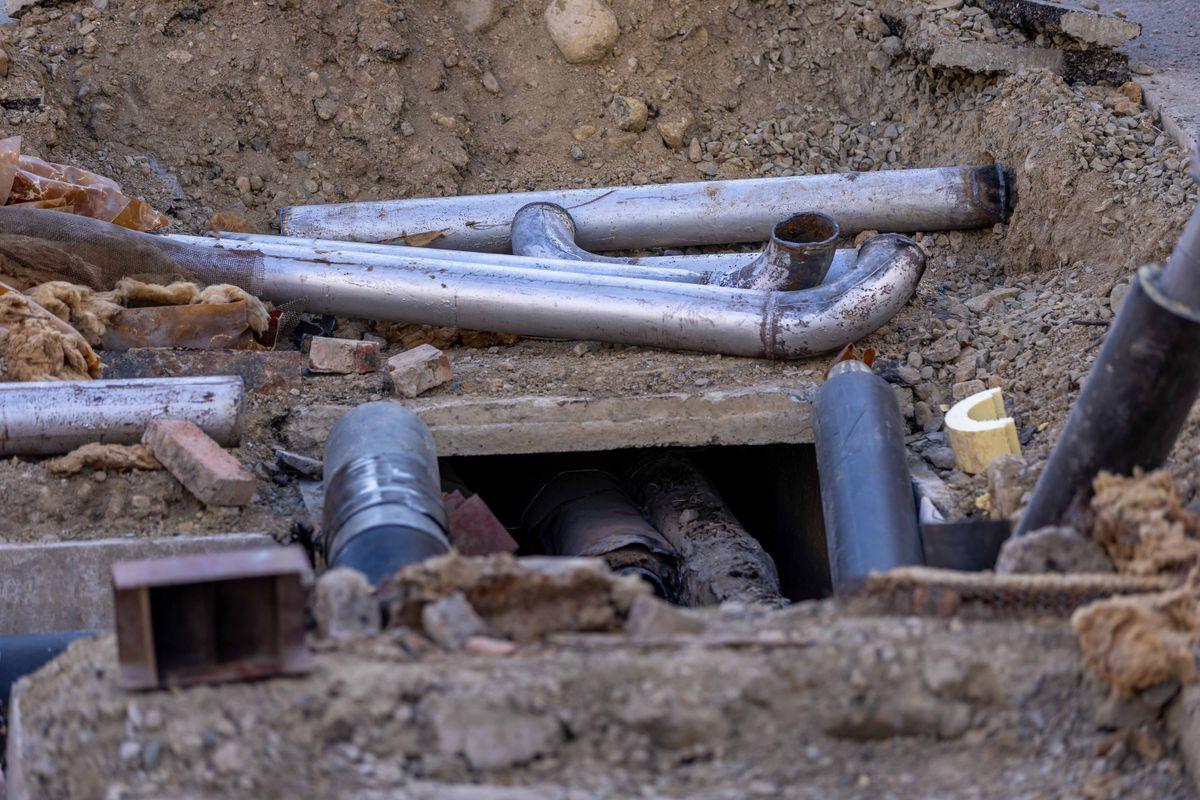 Water Treatment
How Lead Service Line Work Can Affect a Softener
Replacing a lead service line shakes loose lead particles and scale, and the utility's flushing instructions start with bypassing any softener. This page covers what happens to your water during the work, why the softener should sit out the disturbance, how to bring it back, and how to read the lead-free marks on the new parts.
Read the guide Well Water
Why Low-pH Well Water Needs Separate Treatment
Acidic well water dissolves copper, stains fixtures blue-green and can put lead into drinking water. A softener does not fix any of that, and on acidic water it removes the calcium that was slowing the damage. This page covers how to recognize the signs, which of the three treatments fits your pH, and how much hardness the fix adds back.
Read the guide Water Treatment
How Reverse Osmosis and a Water Softener Work Together
A softener and an under-sink RO system solve each other's biggest objection. The softener keeps calcium from scaling the RO membrane, and the RO removes most of the sodium that worries people about softened drinking water. This page covers the layout, what manufacturers actually publish about membrane life on hard and softened water, the sodium arithmetic, and six setup rules.
Read the guide Well Water
How to Protect a Softener During Well Shock Chlorination
A well shock uses chlorine at 50 to 200 ppm, far stronger than anything a softener's resin is built to see, and it knocks loose iron and sediment on the way through. This page sets out the protection sequence hour by hour: bypass before a drop of bleach goes in, keep it bypassed until a test reads zero, then bring it back and sanitize it the manufacturer's way. It also covers what to do, and what to measure, if the softener was left in service.
Read the guide